
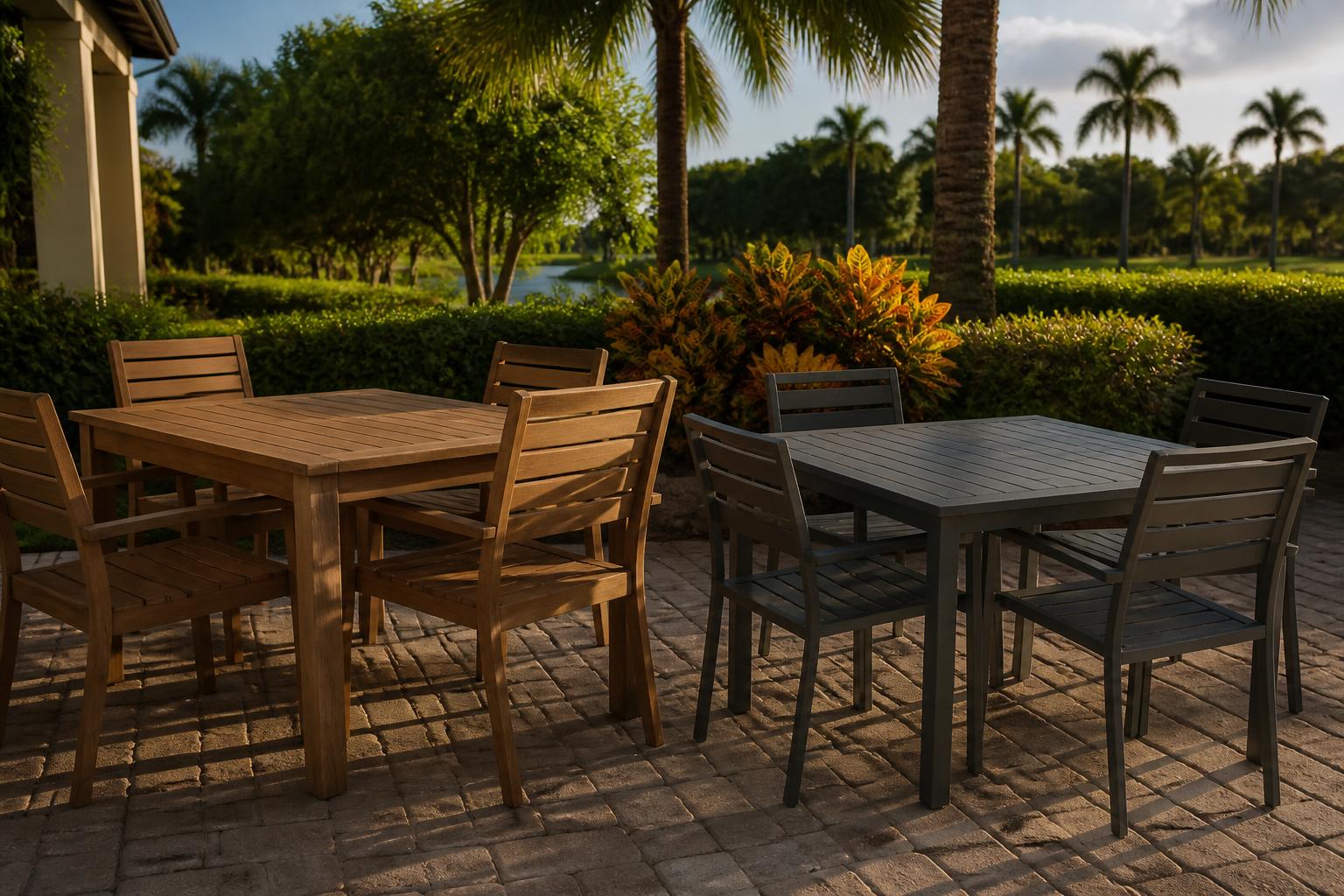
Teak and synthetic materials are the two options we get asked to compare most often when a customer is choosing a new outdoor dining table, and there isn’t a single right answer for every household. Both hold up well in Florida’s climate when they’re the genuine article, but they age differently, require different care, and suit different budgets and aesthetics. We walk through this comparison with customers almost daily in our Jupiter showroom, so here’s the version we’d give you in person.
How Real Teak Handles Florida’s Sun and Humidity
Genuine teak is one of the most naturally weather-resistant hardwoods available for outdoor furniture, thanks to the high natural oil content in the wood that repels water and resists rot even in humid, high-UV climates like ours. Left untreated, teak weathers to a soft, silvery gray patina over twelve to eighteen months of sun exposure, which many of our customers actually prefer for its understated, coastal look. If you want to preserve the original honey-brown color instead, an annual application of teak oil or sealant slows the graying process, though it does require ongoing maintenance that some households would rather skip.
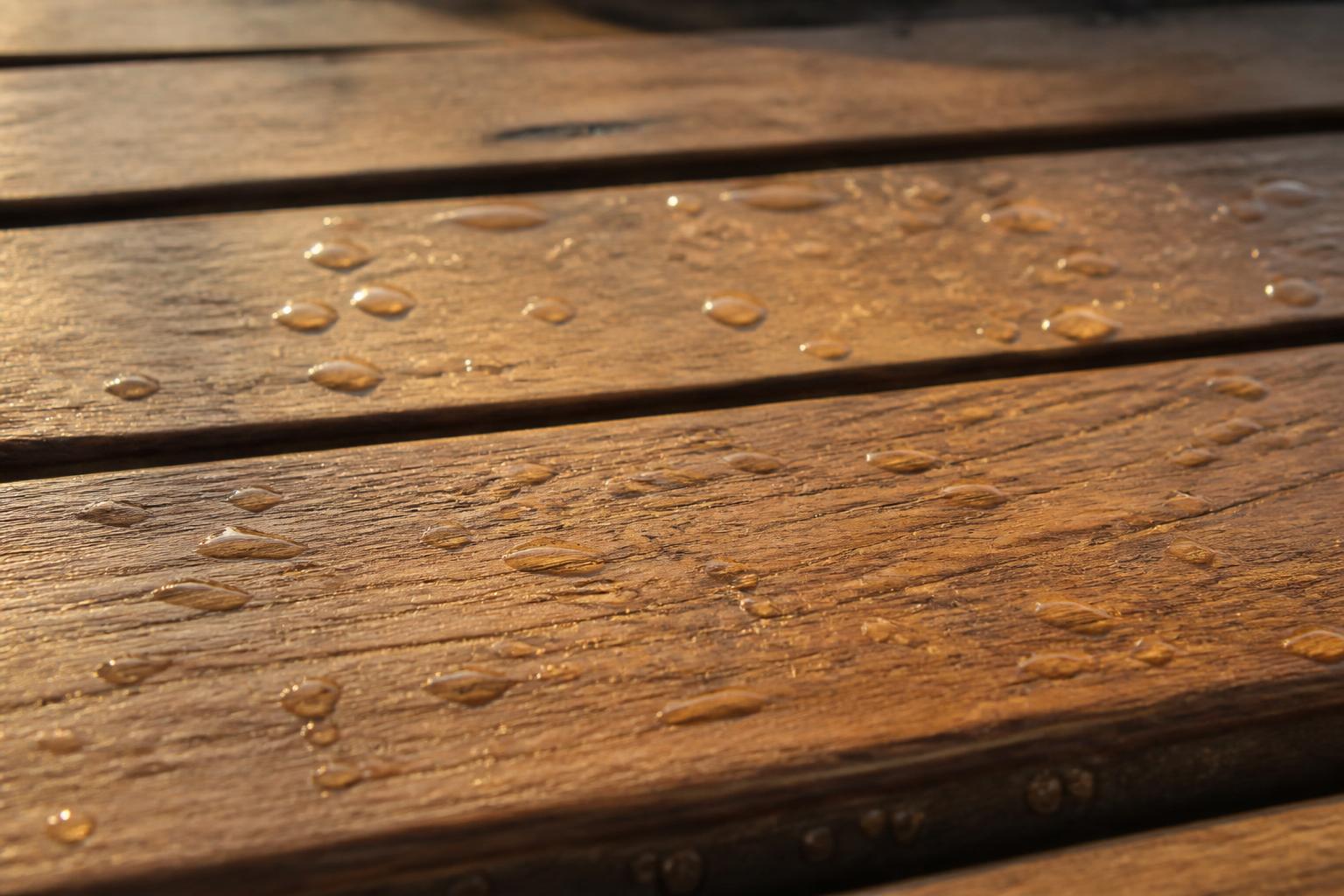
Where teak genuinely shines in our climate is structural stability. A well-built teak table with traditional mortise-and-tenon joinery doesn’t warp, crack, or loosen the way lower-grade woods do under repeated humidity swings, and it can realistically last twenty years or more with basic care. The tradeoff is upfront cost, since genuine teak, especially plantation-grown teak from a reputable source, costs meaningfully more than synthetic alternatives of a similar size.
What “Synthetic” Actually Covers
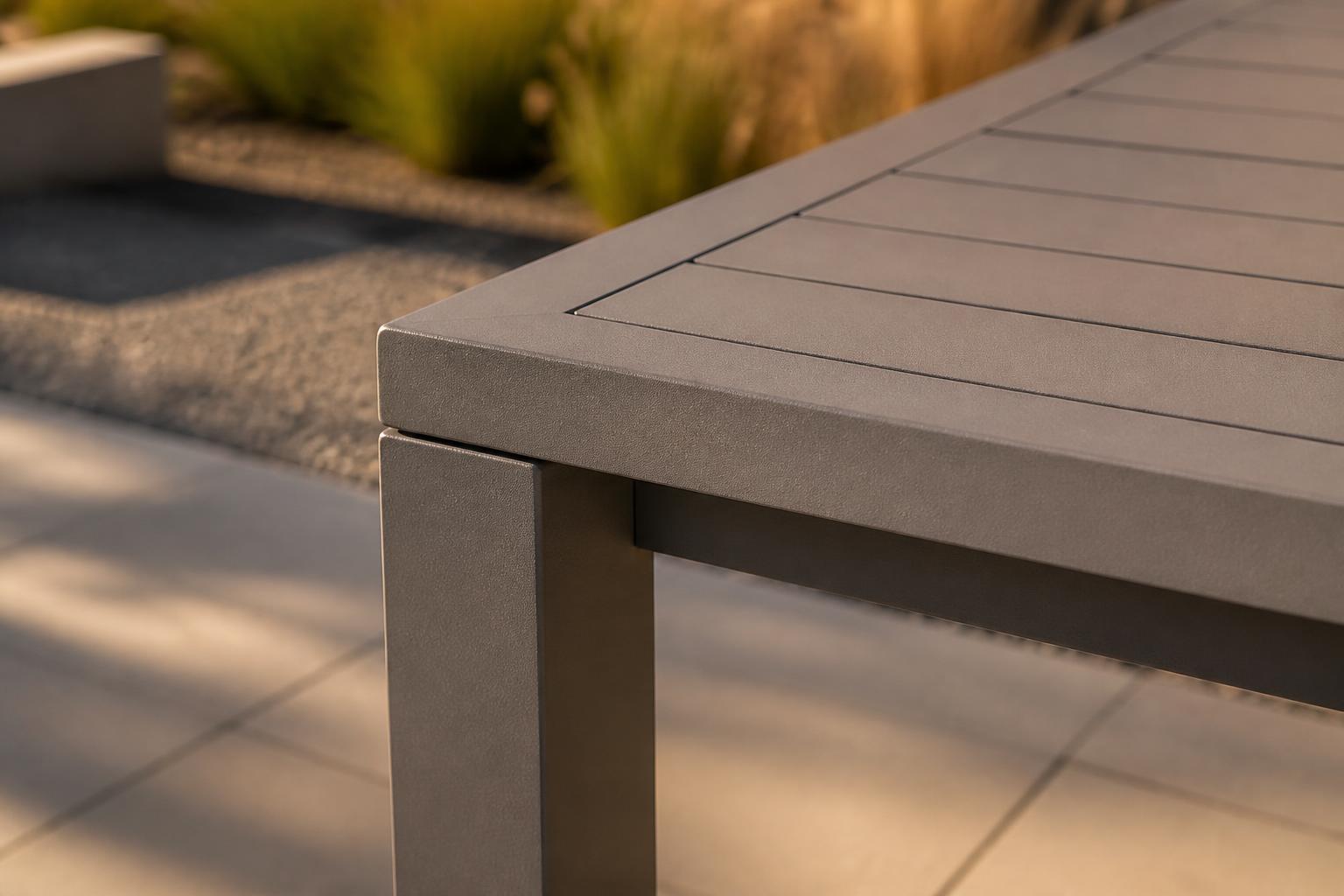
Synthetic outdoor tables aren’t one material, they’re a category that includes powder-coated aluminum frames, high-density polyethylene poly lumber, and resin-wicker-topped designs, and each performs differently. Aluminum-framed tables with a tempered glass or sling top resist corrosion completely, since aluminum doesn’t rust, and they’re usually the lightest option to move if you rearrange your patio seasonally. Poly lumber tables, often used for a farmhouse or Adirondack-style look, are built from recycled or virgin HDPE that won’t rot, splinter, or absorb moisture, and they hold color well under UV exposure because the color runs through the material rather than sitting on a painted surface.
The main advantage synthetic materials offer in our climate is near-zero maintenance. There’s no oiling, sealing, or graying process to manage, and a quick hose-down handles most cleaning. The tradeoff is usually aesthetic and structural feel: even well-made synthetic tables don’t replicate the natural grain, warmth, and weight of real wood, and some lower-quality poly lumber pieces can feel less substantial than a solid teak table of the same footprint.
Salt Air and Coastal Exposure
For homes directly on the water or within a block or two of the Intracoastal, salt air adds another variable. Genuine teak handles salt exposure well thanks to its natural oils, and it’s a traditional choice for marine and dockside furniture for exactly that reason. Powder-coated aluminum also performs well near salt water as long as the coating remains intact, though scratches or chips in the coating can expose the aluminum underneath to pitting over time, so we recommend inspecting coastal aluminum furniture periodically and touching up any nicks. Poly lumber is essentially inert to salt air since it doesn’t corrode or absorb moisture the way wood or metal can.
Comparing Long-Term Cost, Not Just Sticker Price
When customers focus only on the upfront price, synthetic options almost always look like the better deal. But if you factor in a twenty-year ownership window, a well-maintained genuine teak table can actually come out even or ahead, since it rarely needs full replacement and the resale or trade-in value on quality teak furniture tends to hold up better than synthetic alternatives. If you know you won’t keep up with even minimal teak maintenance, or you’re furnishing a rental property where the furniture needs to survive without any owner upkeep, synthetic materials are usually the more practical long-term choice.
How to Tell Genuine Teak From Lower-Grade Imitations
Not everything labeled “teak” in a big box store is genuine, sustainably harvested teak. Look for furniture graded as Grade A teak, which comes from the heartwood of mature trees and has the highest natural oil content, versus Grade B or C teak cut from younger wood or the outer sections of the tree, which weathers less evenly and is more prone to cracking. We’re happy to show you the grading documentation on any teak piece we carry so you know exactly what you’re buying.
What We Recommend Most Often for Palm Beach County Patios
When customers ask us to just pick one, the honest answer depends less on the material itself and more on how the household actually uses the patio. Families who entertain often and want a table that always looks presentable with minimal weekend upkeep tend to be happiest with a quality synthetic option, since there’s no oiling schedule to fall behind on before guests arrive. Customers who see outdoor furniture as a long-term investment, and who genuinely enjoy an annual maintenance ritual the way some people enjoy caring for a boat or a classic car, tend to get more satisfaction out of owning real teak and watching it develop its patina over the years.
We also point out that this decision doesn’t have to be permanent or all-or-nothing. Plenty of households start with a synthetic table while they’re getting a new patio established, then upgrade to teak once they’ve confirmed how much time they actually want to spend on furniture care. Since both material categories hold their value reasonably well when properly maintained, that kind of phased approach isn’t a wasted investment either way. Before comparing price or expected life, ask for the species or material specification rather than relying on a broad label. The USDA Forest Products Laboratory Wood Handbook describes teak heartwood as fairly durable with good resistance to weathering, but the finished table still depends on wood grade, drying, joinery, fasteners, and construction quality. Synthetic tables also differ: HDPE poly lumber, molded resin, powder-coated aluminum, and composite tops should not be treated as interchangeable. Ask what the tabletop, frame, and hardware are made from, then compare the written care and warranty terms for that exact model. You can review our outdoor furniture selection before visiting so you arrive with a short list of materials and table styles to compare.
Frequently Asked Questions
Does teak need to be covered when not in use?
No, genuine teak is designed to be left outdoors year-round, though a cover during extended hurricane-season storage can help protect the finish if you’re preserving the original color.
Will synthetic tables fade in Florida sun?
Quality poly lumber and powder-coated aluminum resist fading well, but lower-cost imports with thinner coatings or unstabilized plastic can fade noticeably within a couple of seasons, so it’s worth asking about UV stabilization before buying.
Can I mix teak chairs with a synthetic table, or vice versa?
Yes, plenty of our customers pair a teak tabletop with powder-coated aluminum chair frames for a look that balances warmth and low maintenance.
Which option is better for a rental or vacation property?
Synthetic materials are usually the more practical choice for a property without regular owner upkeep, since they don’t require oiling or sealing to stay in good condition.
If you’re still torn between teak and synthetic, come see both in person at our Jupiter showroom. Seeing and touching the actual materials side by side usually makes the decision a lot easier than comparing photos online.

About the Author
Chas Crofoot
Chas Crofoot is the owner of Beach House Patio Furniture, a family-owned outdoor furniture company in Jupiter, Florida. Since 1979, Chas and his team have manufactured and sold high-quality patio furniture — specializing in wicker, cast aluminum, aluminum, poly lumber, and PVC pipe styles built to withstand the Florida climate. With over four decades of hands-on experience in outdoor furniture design and manufacturing, Chas brings deep expertise in material selection, durability, and comfort for coastal living.