
A patio umbrella that looks perfect in a photo can feel disappointing in real life if it is too small for the table underneath it. The most common complaint we hear is that the umbrella “only covers the middle” and that people at the ends of the table are still in the sun. The fix is almost always a matter of sizing, not quality. Canopy width, pole height, and the way the sun moves across your patio all decide whether an umbrella actually shades the people sitting at your table.
Start With the Table, Not the Umbrella
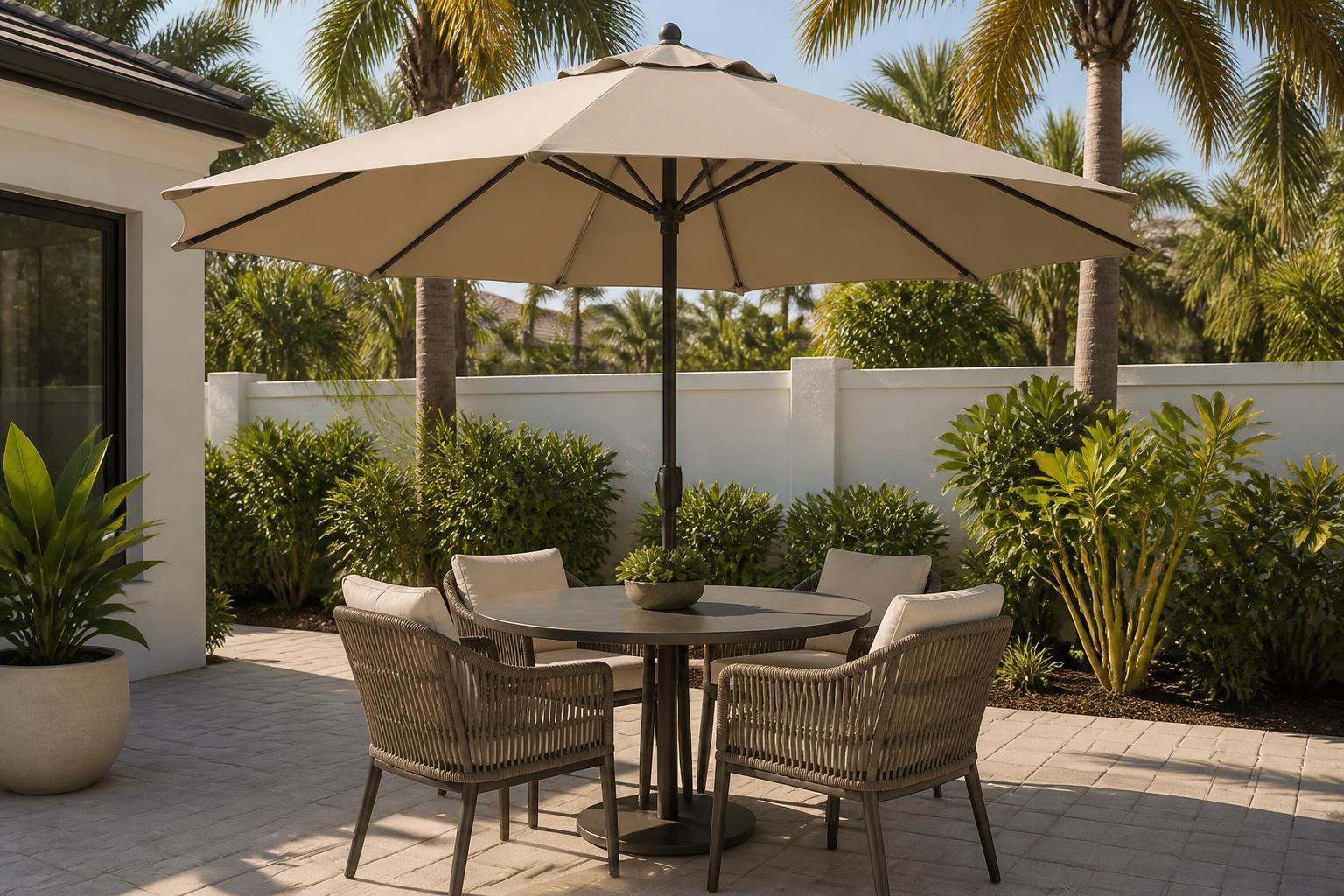
A helpful rule of thumb is that the canopy should extend about two feet beyond the edge of the table on every side. For a round table that is roughly four feet across, that points to a canopy of around eight to nine feet. A longer rectangular table needs a bigger footprint, and often a larger rectangular or oval canopy, because a round canopy over a long table leaves the ends exposed.
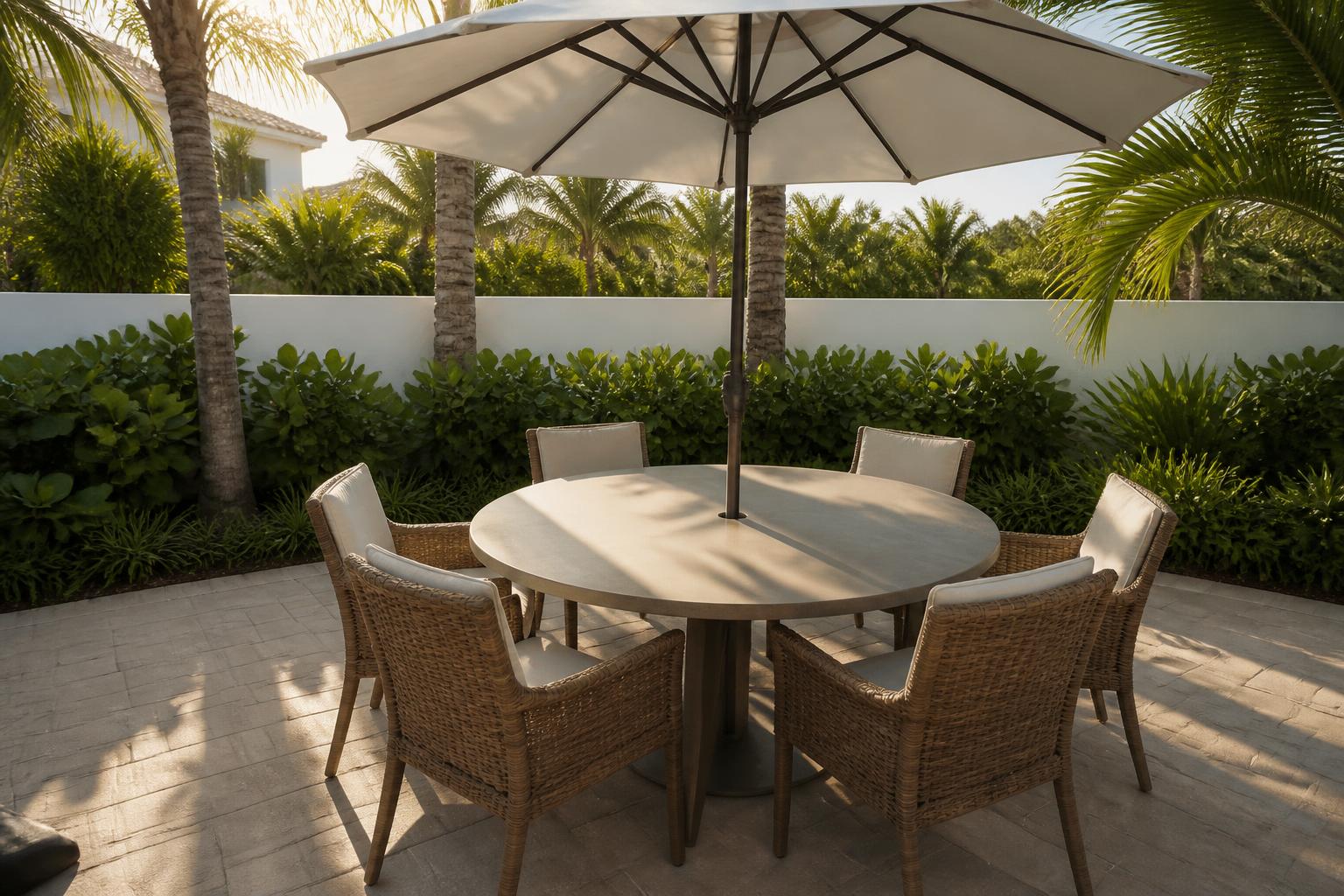
Measure the table’s longest dimension, add about four feet, and use that as a starting target. You will also want to add the chair area. If chairs are pulled back from the table while people are eating or relaxing, they move outside the shaded circle, so it can help to think about the space where people actually sit rather than the tabletop alone.
Our article on outdoor dining table sizes for family cookouts is a useful companion if you have not settled on the table yet.
Canopy Shape: Round, Square, or Rectangular
Round canopies are the most common and look natural over a round or square table. Square and rectangular canopies cover more of a long table and tend to be a better match for a rectangular dining set. Octagonal canopies fall somewhere in between and can suit a wide range of layouts.
Shape also affects how the shade moves. A square or rectangular canopy that lines up with the table’s long edge gives even coverage when the sun is overhead, but the shadow sweeps across the table as the day goes on. If your dining area gets its harshest sun in the late afternoon, think about which direction that light comes from before choosing the umbrella, and consider where the umbrella pole will sit relative to the table.
Pole Height, Tilt, and Low Sun
Height matters as much as width. A canopy that sits too low bumps heads and blocks air movement. One that sits too high leaves the sides open to low sun. Most freestanding market umbrellas leave about seven feet of clearance under the canopy edge, which is a comfortable standing height for most people.
In South Florida, the low sun early and late in the day is the real challenge. A tilt feature lets you angle the canopy toward the sun, which extends shade during those hours without needing a larger umbrella. If you host mostly in the evening, a tilt mechanism can matter more than an extra foot of canopy width.
The Skin Cancer Foundation reminds readers that shade is one part of sun protection and works best combined with other habits, which you can read about in its sun protection overview. In practical terms, a well-sized umbrella is a convenient way to cut the hours people spend in direct sun while they eat outdoors.
Bases, Wind, and Placement
A larger canopy catches more wind, so the base needs to grow with it. A base that works for a seven-and-a-half foot umbrella may not be adequate for a nine or eleven foot canopy, particularly in the gusty afternoons that come with summer storms. Our guide to patio umbrella bases and afternoon wind explains what to look for, and it is well worth reading before you finalize a size.
Placement is the other half. Where the pole sits relative to the table determines how well the shade covers your seating, and our article on patio umbrella placement for afternoon sun covers how to find the right spot. If you are ready to browse options, our umbrella collection shows what is available.
Common Sizing Mistakes to Avoid
The most frequent mistake is choosing the smallest canopy that technically covers the table. That works at noon and fails at four o’clock. The second is forgetting the chairs, which sit outside the tabletop footprint. The third is buying a large canopy on a base that is not heavy enough to hold it in the wind. Avoiding those three mistakes solves most umbrella complaints before they happen.
Special Cases: Balconies, Pool Decks, and Big Groups
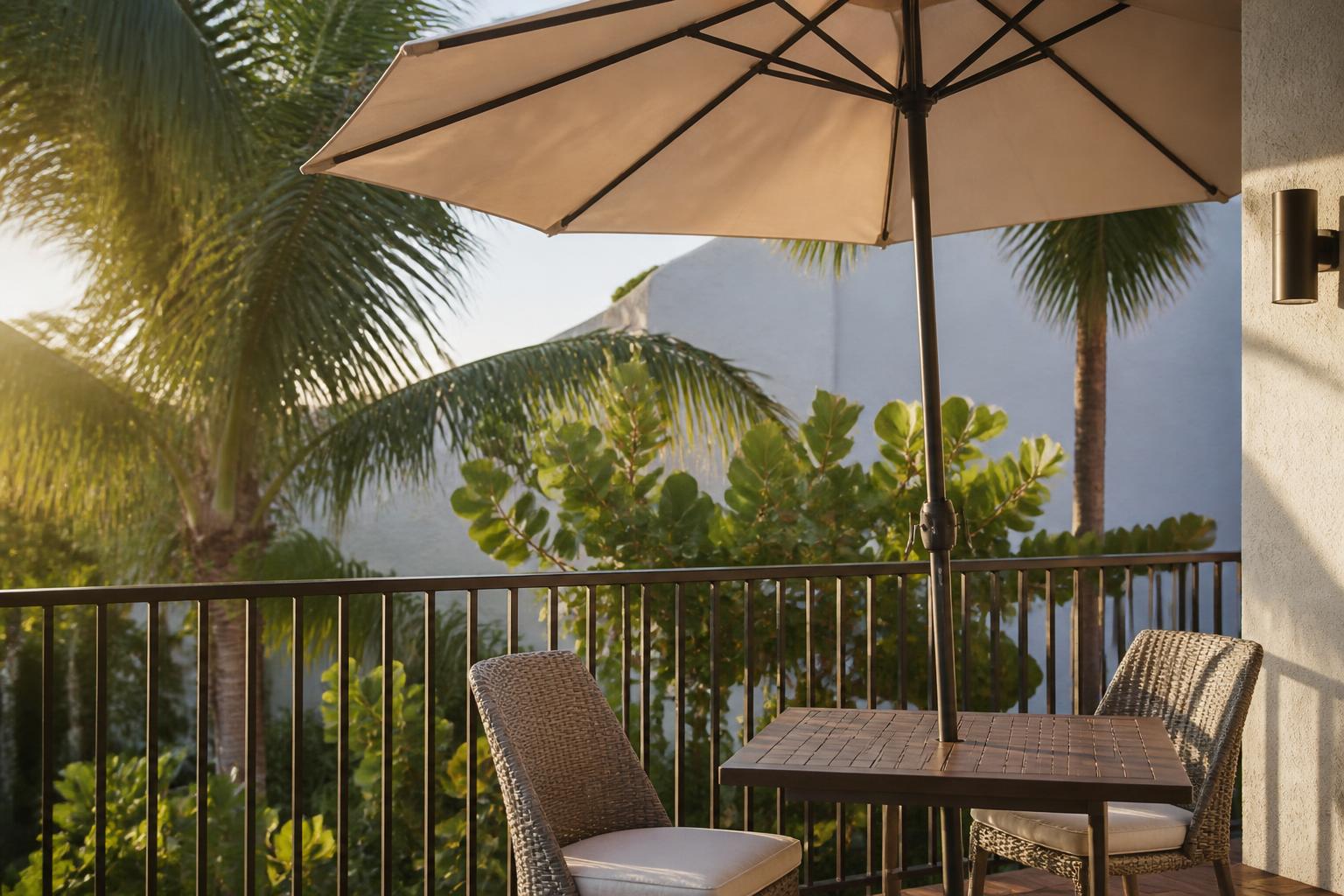
On a condo balcony, space is the limit. A compact seven-and-a-half foot umbrella with a tilt feature can shade a bistro table without overhanging the railing or a neighbor’s space, and rules vary by building, so it is worth checking your association’s guidelines before buying.
Pool decks tend to be open and windy. Cantilever umbrellas can shade a lounge area without a pole in the middle, but they need a heavy base and careful placement, which is why the base and the placement deserve as much thought as the canopy. For big groups that gather around long tables, two smaller umbrellas side by side can outperform one very large canopy, since each canopy stays more manageable in wind and can be tilted independently.
Wind is worth respecting in every one of these settings. Close the umbrella whenever gusts pick up, and never leave a large canopy open during a storm, because even a well-weighted base has limits. Open canopies left up during a sudden thunderstorm are a common cause of umbrella damage, and closing the umbrella after each use helps prevent it.
Finally, remember that the canopy fabric itself matters. A lighter color reflects more heat while a darker color blocks more visible light, and each has trade-offs for glare and warmth. Our article on umbrella fabric choices goes deeper on that decision.
How to Test Your Sizing at Home
You can check an umbrella size before you buy. On a sunny afternoon, mark the canopy diameter you are considering on the ground with chalk or tape, centered where the pole would sit, then position your table and chairs and note whether every seat falls inside the circle. Repeat the test around four in the afternoon, when the sun is lower and the shadow shifts, to see where the coverage really ends.
Frequently Asked Questions
What size umbrella fits a four-person round table?
Many people use an eight to nine foot canopy for a round table of about four feet across, but the exact answer depends on how far the chairs pull out.
Can I use one umbrella over a long rectangular table?
Yes, if the canopy is rectangular or large enough. A round canopy over a long table usually leaves the ends in sun.
Do I need a tilt feature?
It is a helpful feature if your sun angle changes a lot during the day, which is common with late afternoon dining.
Should the umbrella sit through the table or beside it?
Both work. A center-pole umbrella goes through a table with an umbrella hole, while a side-mounted or offset umbrella keeps the middle of the table clear.
If you would like help pairing an umbrella with your table, call us at (561) 972-4661 or visit our showroom at 105 Center Street in Jupiter with your table dimensions in hand.

About the Author
Chas Crofoot
Chas Crofoot is the owner of Beach House Patio Furniture, a family-owned outdoor furniture showroom in Jupiter, Florida. He comes from a family that has been manufacturing outdoor furniture since 1979, specializing in wicker, cast aluminum, aluminum, poly lumber, and PVC pipe styles built to withstand the Florida climate. With decades of hands-on experience in outdoor furniture, Chas helps coastal homeowners choose materials for durability and comfort.