
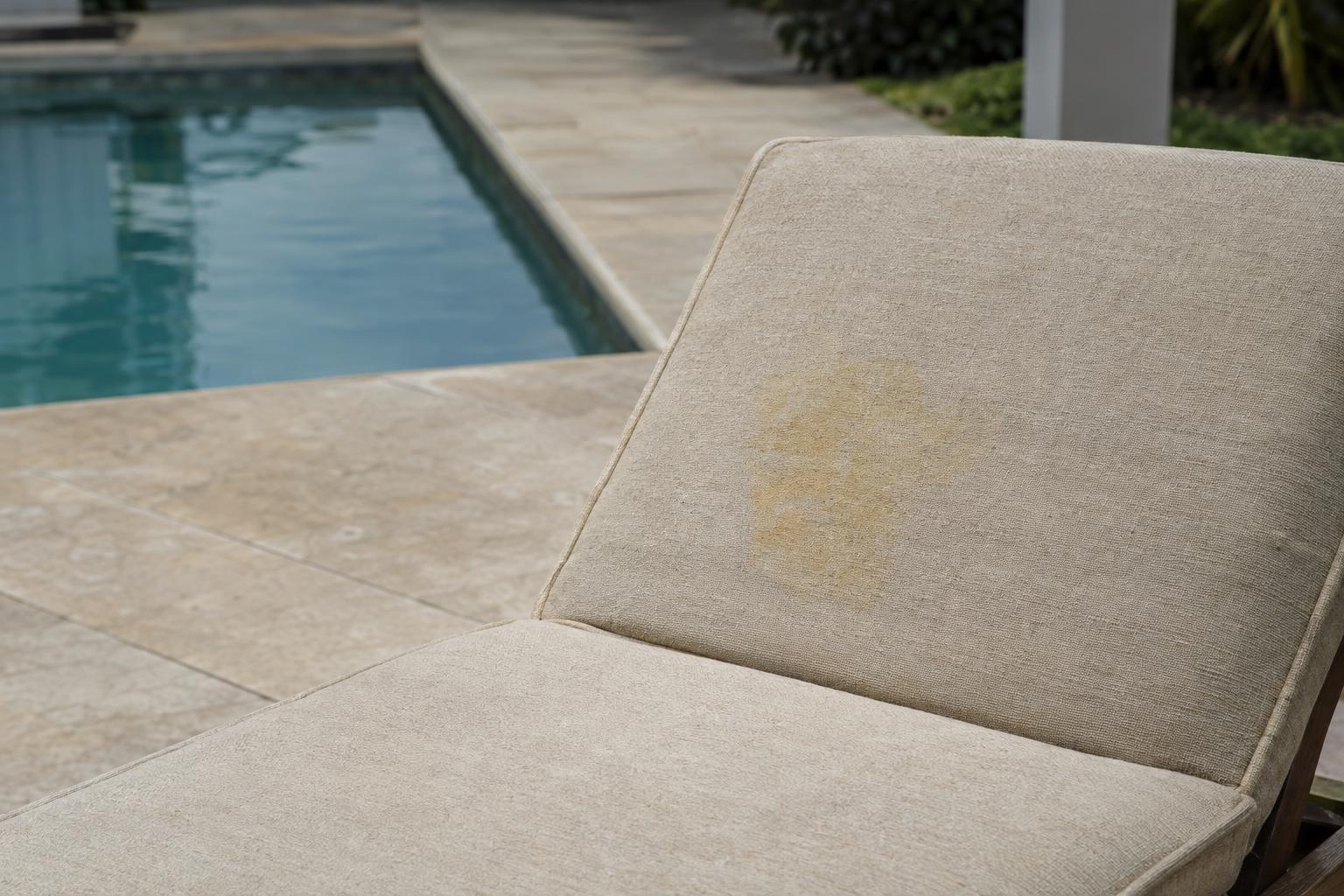

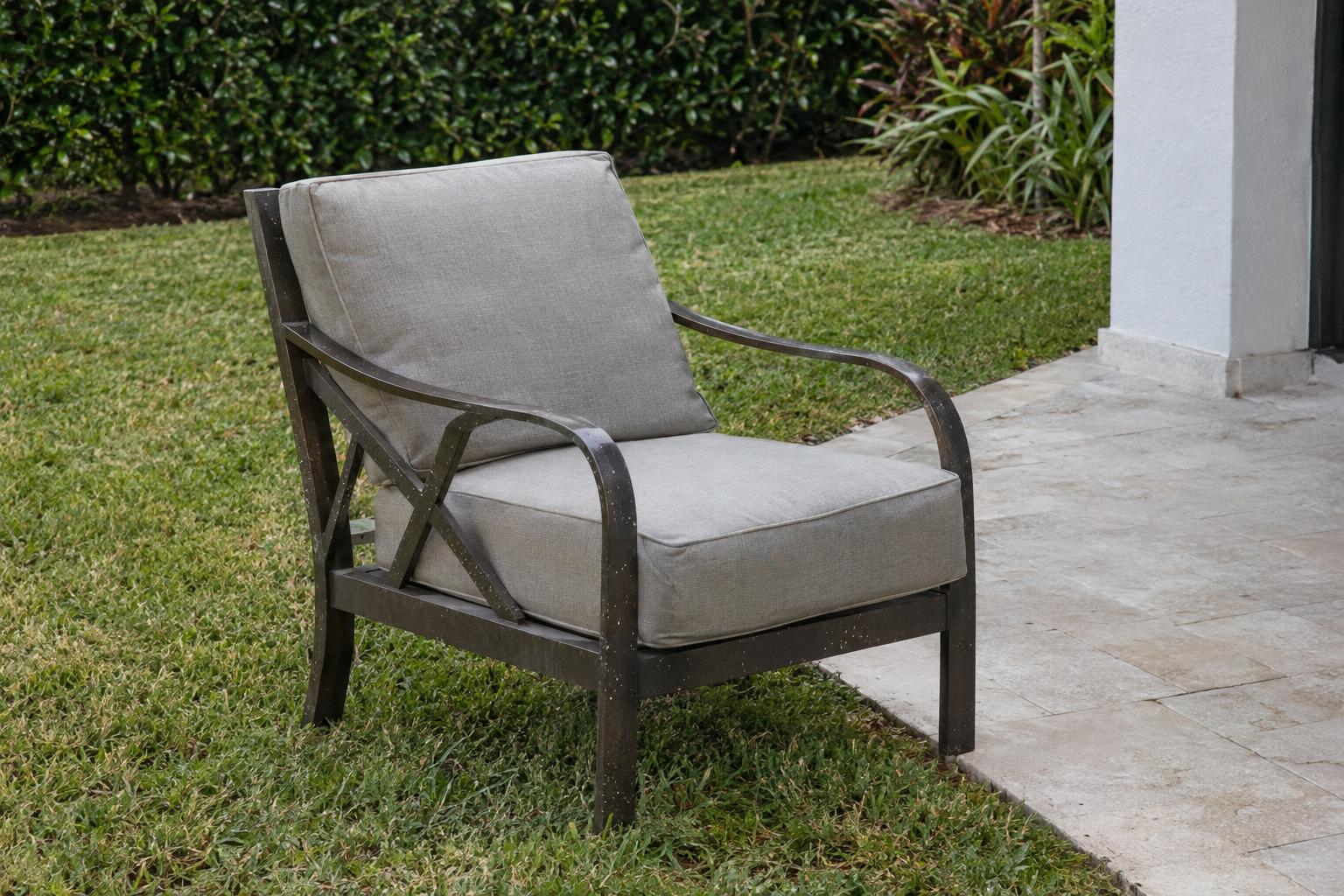
An afternoon by the pool leaves a few things behind: damp towels, a half-finished drink, and sometimes a faint yellow or gray mark on the lounge cushion where someone rested their head. Sunscreen stains on outdoor cushions are one of the most common surprises for Florida homeowners, especially on light fabrics that show every smudge.
The marks look alarming, but they are usually oil-based residue sitting in the fabric, not permanent damage. This guide explains why they happen, how to clean them gently, what to avoid, and how to keep your lounge cushions looking fresh through a long swimming season.
Why Sunscreen and Tanning Oil Leave Marks
Sunscreens, lotions, and tanning oils are made with oils and other ingredients designed to cling to skin. When skin touches a cushion, some of that residue transfers to the fabric. At first it may be nearly invisible.
The color comes later. Sun and heat act on the residue, and it can darken into yellow, orange, or gray patches. Light cushions show this first, which is why a sand or white seat often looks worse than a deeper color. The more often a spot gets touched, the more residue builds up.
Act Early and Blot, Do Not Rub
Fresh residue is far easier to deal with than a mark that has baked in for weeks. If you notice a greasy spot, take care of it the same day when you can.
Blot with a clean, dry cloth to lift any surface oil. Rubbing pushes the residue deeper into the weave and spreads it into a larger patch, so press and lift instead. Keep the cloth soft and use a fresh section as it picks up oil.
Resist the urge to flood the spot with water at this stage. Too much moisture can carry the oil outward and soak into the cushion filling, which takes a long time to dry. A light touch and a clean cloth do more good than a heavy hand.
Check the Care Tag First
Before you add water or soap to anything, find the care tag or the maker’s instructions. Cushion covers vary: some are removable and machine washable, and others should only be spot cleaned. The tag tells you which is which.
If you are not sure how a fabric is rated, our guide to outdoor cushion fabric grades explains what the different grades mean for everyday care. Following the manufacturer’s care guidance is the safest way to protect both the fabric and its water-resistant finish.
A Gentle Method for Cleaning Sunscreen Stains on Outdoor Cushions
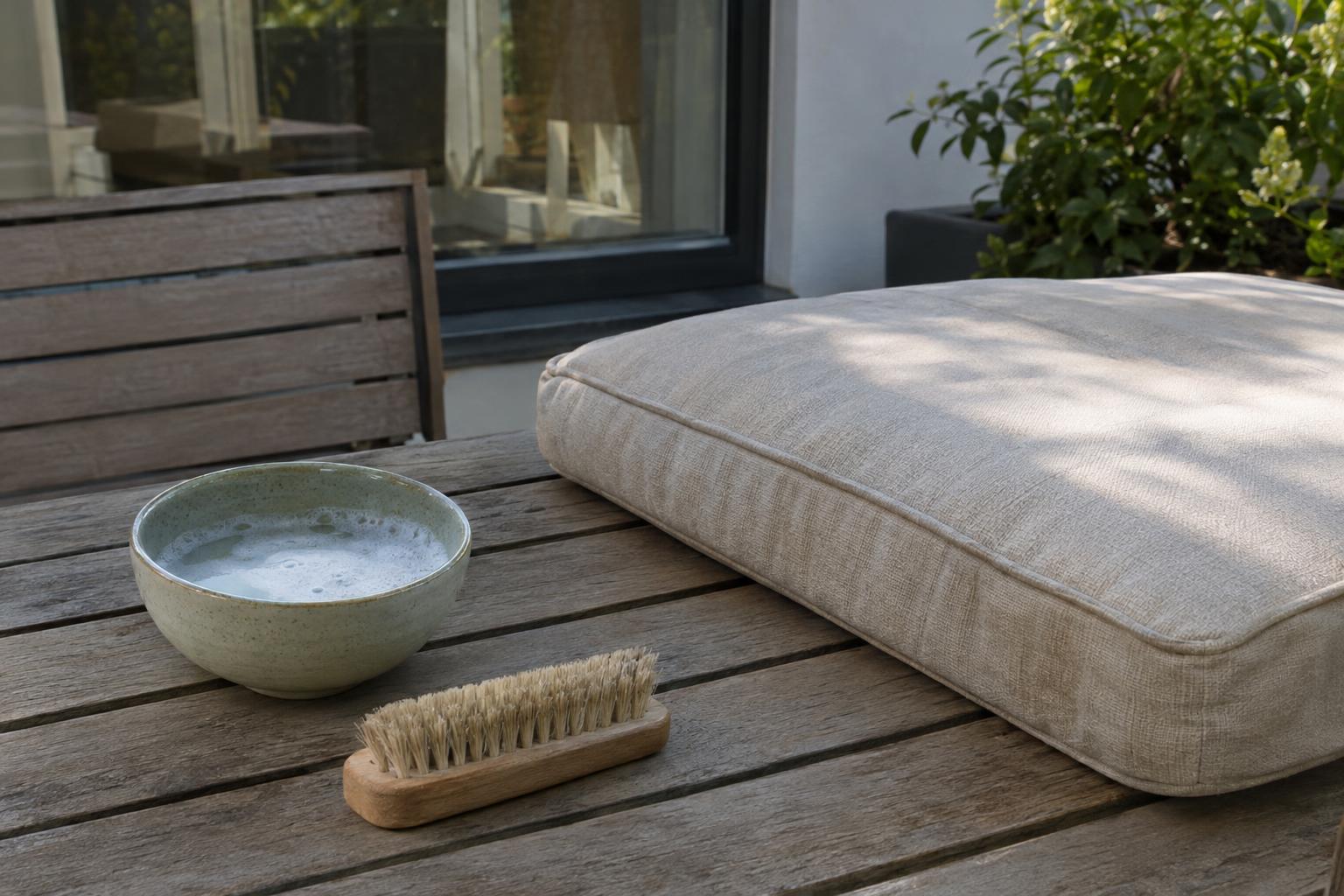
Start simple. Mix a few drops of mild dish soap into a bowl of warm water. Before you treat the visible mark, test a hidden spot, such as the underside of a cushion, and wait for it to dry to be sure the color does not change.
- Blot the area with a soft cloth dipped in the soapy water.
- Work gently with a soft-bristle brush in small circles, moving from the outside of the mark inward.
- Rinse with clean water, taking care not to soak the foam inside.
- Blot dry with a clean towel.
Repeat once or twice if the mark is fading but still visible. Give the cushion time to dry fully between rounds, since a damp fabric can make a faint mark look darker than it really is. We cannot promise that every stain will disappear, particularly older ones, but patience and gentle repetition give you the best chance.
Rinse Well and Dry in the Shade
Leftover soap attracts dirt, so rinse thoroughly. Press out extra water with a towel rather than wringing or twisting the cushion, which can distort the filling.
Let cushions air dry in the shade, standing on their edge so air circulates on all sides. Direct sun can set remaining residue, and damp foam invites mildew. If wet weather is common where you live, our article on quick-dry outdoor cushions for Florida rain offers helpful ideas for drying and airflow.
What to Avoid
When a stain is stubborn, it is tempting to reach for something stronger. Resist that urge. Harsh cleaners and scrubbing can damage fabric, fade color, and strip protective finishes.
Bleach deserves special mention. Do not use it unless the fabric maker specifically says it is safe for that cushion, since it can leave lighter patches that look worse than the original mark. Also avoid hot dryers and high heat, which can set oil into fibers.
Keep scrubbing tools gentle as well. Stiff brushes, rough sponges, and abrasive pads can fuzz the fabric surface, and a roughened patch tends to hold on to dirt and oil more easily in the future.
Prevent Stains at the Pool
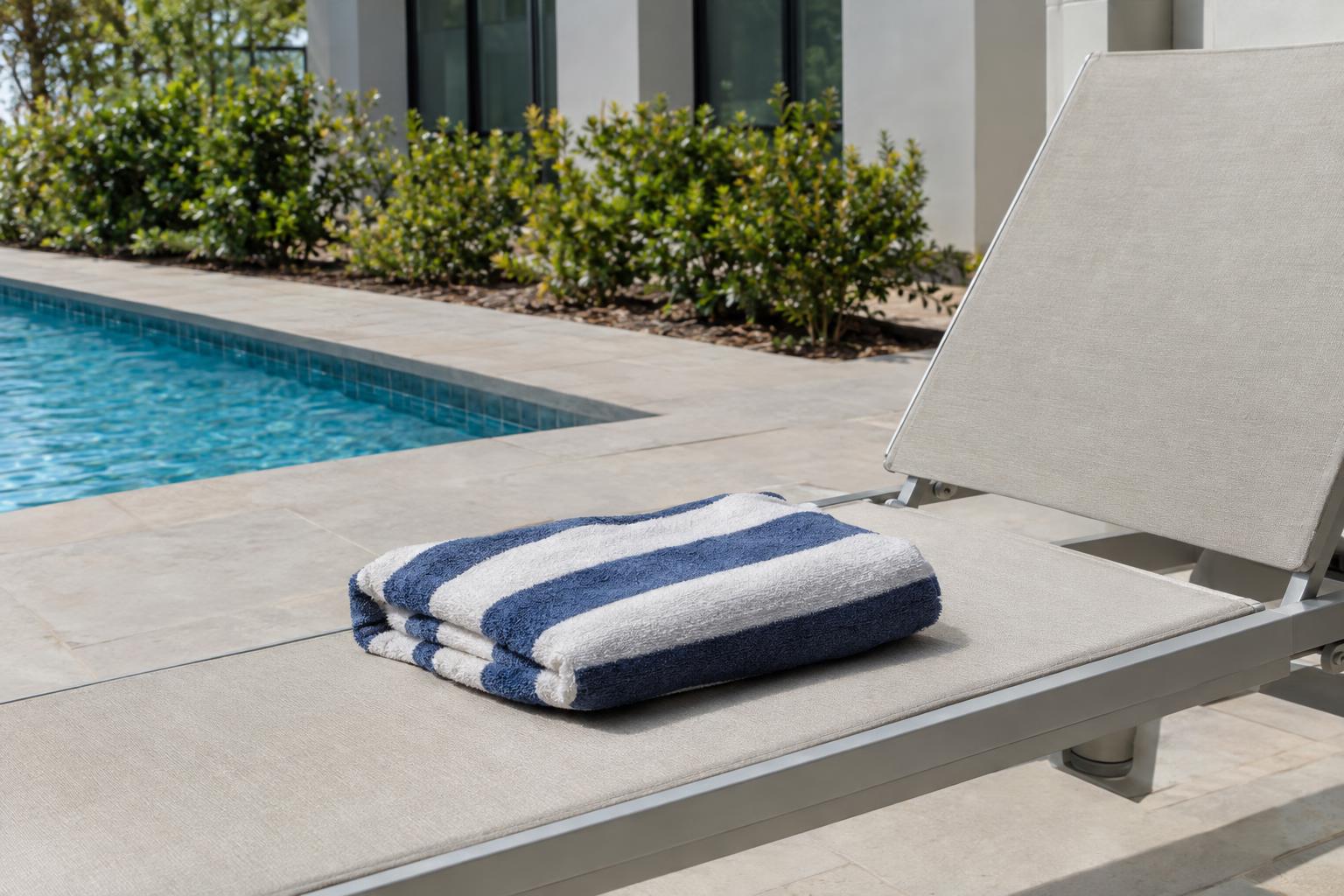
The simplest fix is a barrier. A large beach towel laid over a lounge cushion keeps skin and lotion off the fabric, and towels wash easily. Cushions on a chaise get the heaviest use, so they benefit most.
If you host often, keep a few spare towels in a deck box near the pool so guests have an easy option. A towel that gets oily is far simpler to wash than a cushion cover, and it keeps the seat looking fresh between deeper cleanings.
Habits help too. Let sunscreen absorb for a few minutes before sitting down. Spray formulas can drift and land on seats as well, so consider applying them away from the furniture. Sun protection matters for your skin, and the FDA information about sunscreen is a useful reference on using it properly. Placement around the water matters as well, and our look at pool deck furniture that stays cool in Florida covers comfort for a sunny deck.
Rotate, Refresh, and Know When to Replace
If you have several cushions, swap their positions from time to time so one head-end spot does not take all the wear. Flipping reversible cushions spreads the use evenly, too. Rotation is especially useful for poolside seating, where the same few cushions tend to be everyone’s favorite spot.
A quick monthly check helps catch problems early. Look over each cushion in good daylight, since faint oil marks are easier to spot outdoors than under a dim porch light, and treat anything you find while it is still fresh.
For seasonal care, wash and store cushions properly during slower months, following the steps in our guide to cleaning and storing outdoor cushions. If a stain will not lift after careful cleaning, a professional cleaner may be able to help. When fabric is worn, thin, or permanently discolored, replacement covers or cushions may be the sensible choice.
Frequently Asked Questions
Why are my white cushions turning yellow near the headrest?
That area gets the most contact with skin, lotion, and oils. Sun and heat can darken the residue over time, so light fabrics show it first.
Can I put outdoor cushion covers in the washing machine?
Only if the care tag says so. Many covers are spot clean only, so check the manufacturer’s guidance before washing anything.
Is spray sunscreen better than lotion for cushions?
Neither is stain-proof. Spray can drift onto seats, and lotion transfers by touch, so a towel over the cushion is the most reliable protection.
What if the stain will not come out?
Stop scrubbing, since that can damage the fabric. Ask a professional cleaner for advice, or consider replacement cushions if the fabric is worn.
Questions about outdoor cushions or lounge seating? Call Beach House at (561) 972-4661 or stop by our Jupiter showroom at 105 Center Street.

About the Author
Chas Crofoot
Chas Crofoot is the owner of Beach House Patio Furniture, a family-owned outdoor furniture showroom in Jupiter, Florida. He comes from a family that has been manufacturing outdoor furniture since 1979, specializing in wicker, cast aluminum, aluminum, poly lumber, and PVC pipe styles built to withstand the Florida climate. With decades of hands-on experience in outdoor furniture, Chas helps coastal homeowners choose materials for durability and comfort.