
One of the most common questions we get from customers browsing our Jupiter showroom for outdoor bar stools is a simple one: “Which height do I actually need?” It sounds like a small detail, but it’s the single most important measurement decision in the whole purchase. Buy the wrong height and you end up with stools that either leave your knees jammed against the counter or leave your feet dangling with no support at all. We walk through this with customers every week, so here’s the breakdown we actually give people standing in front of our stool display.
The Core Difference: Counter Height vs. Bar Height
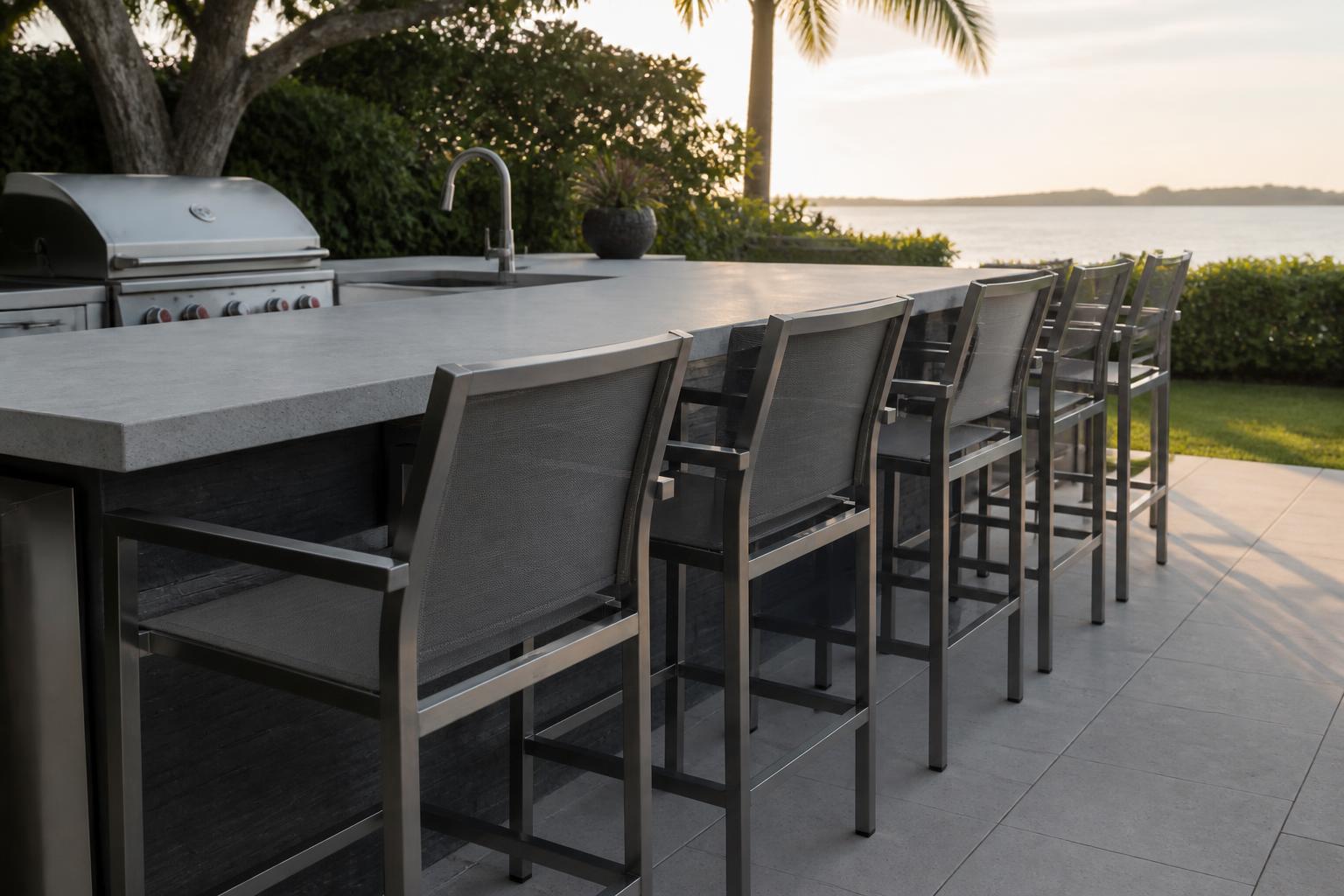
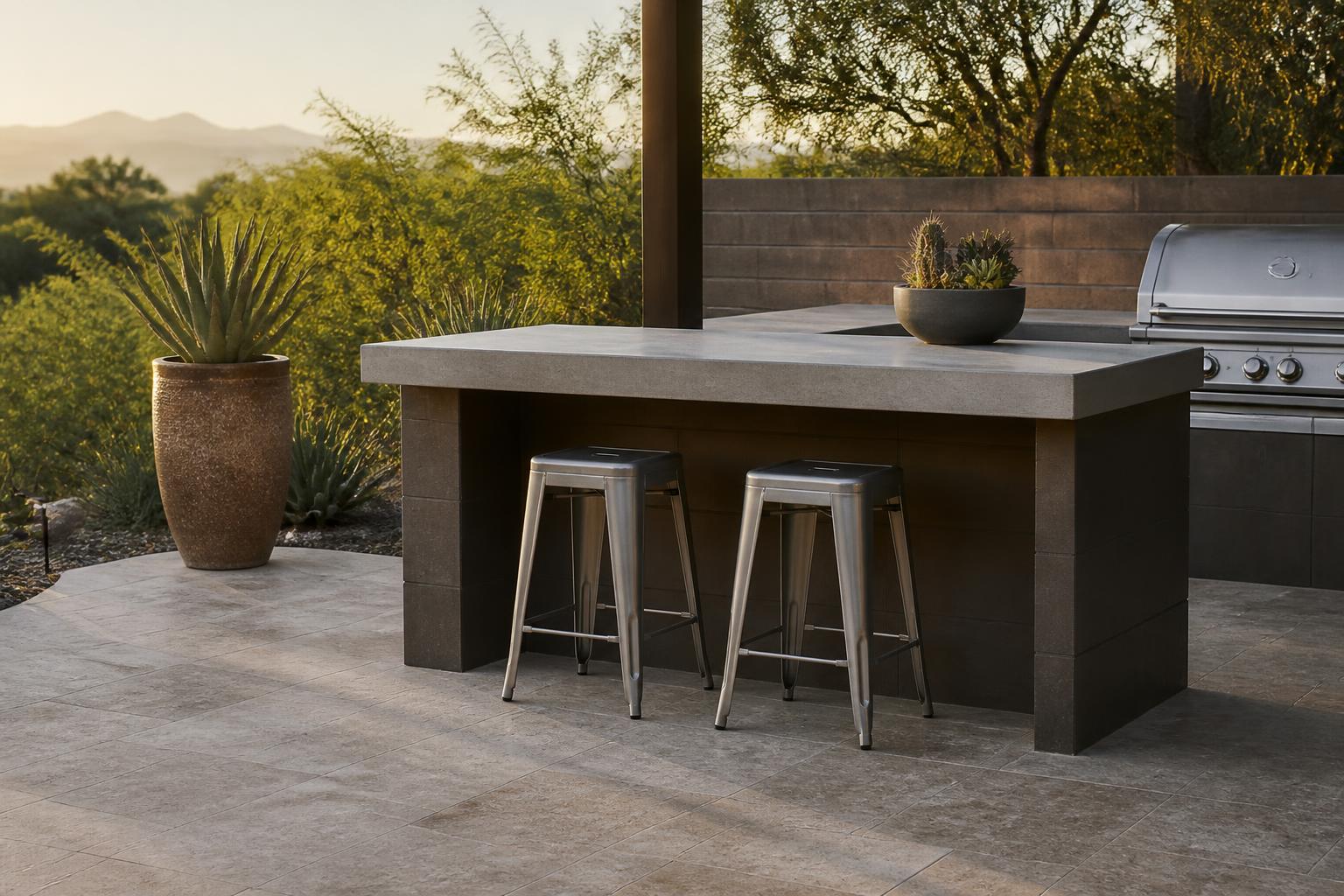
Counter-height stools typically have a seat height in the 24 to 26 inch range, designed to pair with a surface roughly 34 to 36 inches tall — think a kitchen island, an outdoor kitchen counter, or a lower serving bar. Bar-height stools run taller, usually 28 to 30 inches at the seat, meant for a 40 to 42 inch bar-height surface, like a traditional standing bar or a raised counter built specifically for that purpose.
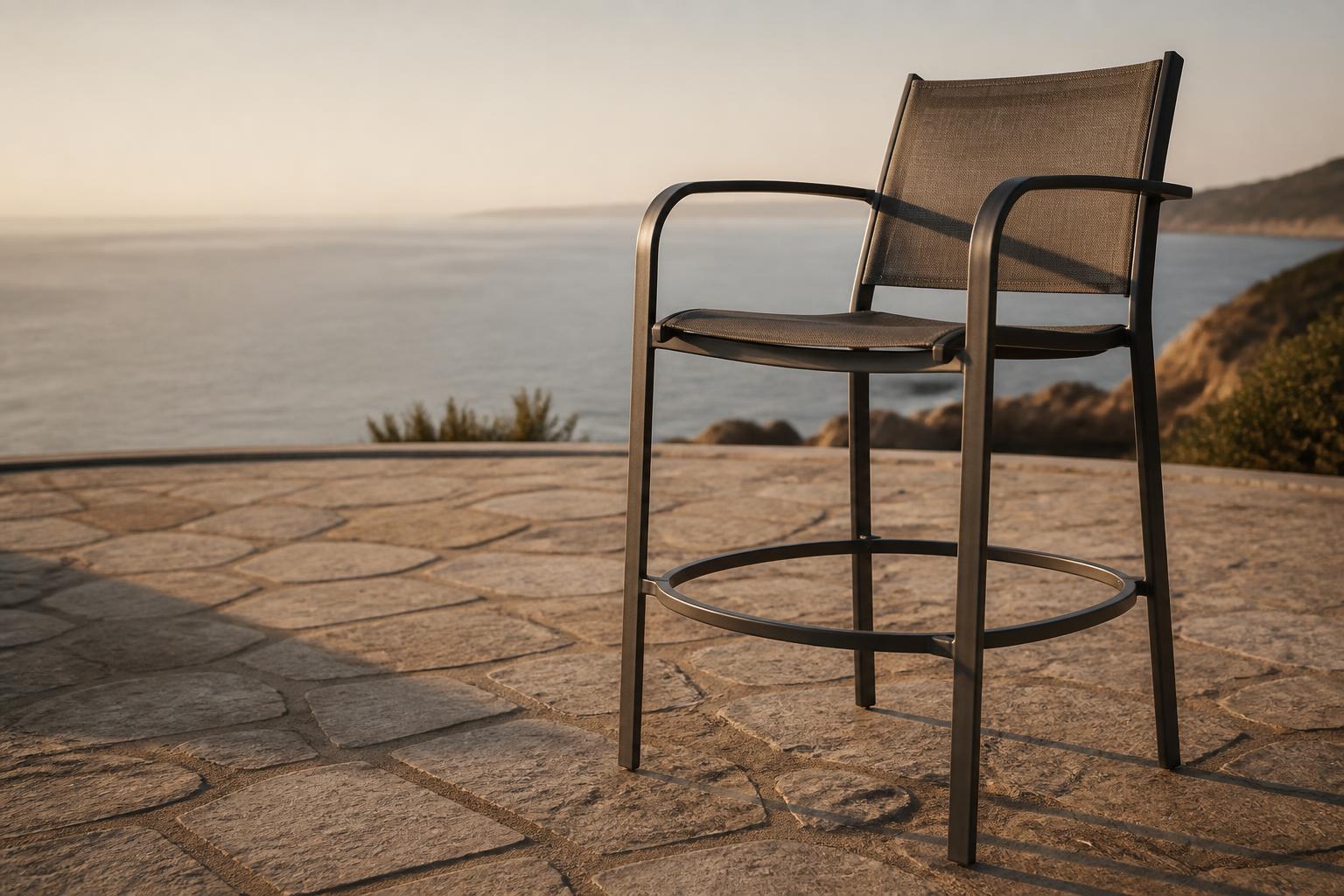
The rule of thumb we use in the showroom is the “12-inch gap” — you want roughly 12 inches of clearance between the top of the seat and the underside of the counter or bar top so a person has room to sit comfortably with their legs tucked in. Too little clearance and knees hit the counter edge; too much and the stool feels disconnected from the surface.
Measuring Your Outdoor Bar or Counter Correctly
Before you fall in love with a particular stool style, measure the surface it needs to pair with. Stand a tape measure at the base of your outdoor kitchen counter, pool bar, or high-top table and record the exact height from the ground to the top of the surface. Subtract roughly 10 to 12 inches, and that number tells you which stool category to shop. If your outdoor kitchen counter was built to standard code height around 36 inches, you’re in counter-height stool territory. If you built (or are shopping for) a dedicated bar-height surface closer to 42 inches, bar-height stools are the correct call.
It’s also worth checking whether your counter has an overhang. Most outdoor kitchen islands and bars are built with a 10 to 15 inch overhang specifically so stools can tuck underneath. If your surface has little to no overhang, a swivel stool with a smaller footprint tends to work better than a fixed four-leg design, since it gives people room to turn in and out without bumping neighboring seats.
Material and Comfort Considerations for Florida Outdoor Use
Because these stools live outside year-round in Jupiter’s sun and humidity, frame material matters as much as height. Cast aluminum and powder-coated aluminum frames hold up well against salt air and repeated sun exposure without the surface rust you’d risk with lower-grade metals. Sling and woven vinyl seats shed water and dry quickly after a rain shower, which matters more for stools than almost any other patio piece since they often sit uncovered near a pool or outdoor kitchen with no umbrella overhead.
Swivel stools are worth a serious look if your bar sees a lot of use — they make it far easier to get in and out of a taller seat gracefully, and they reduce wear on the surrounding deck or pavers since people aren’t scooting the stool itself in and out.
Back Support and Footrests: Small Details That Change Everyday Comfort
Beyond height, two details separate a stool you’ll actually enjoy sitting in from one that gets used twice and then ignored: back support and footrest placement. A backless stool looks clean and tucks away neatly under a counter overhang, but if your household tends to linger at the bar for a full meal or a long conversation, a low-back or full-back stool makes a real difference over time. We generally point families who use their outdoor bar as a regular dinner spot toward a back-supported option, and reserve backless stools for households that mainly use the space for quick drinks or occasional entertaining.
Footrest placement matters just as much as backrest. Bar-height stools should have a footrest roughly 24 to 28 inches off the ground so your legs aren’t left dangling, and counter-height stools typically sit around 18 to 20 inches. If a stool’s footrest ring is fixed rather than adjustable, check that measurement against your own leg length before buying more than one — a footrest that’s comfortable for a taller adult can leave a shorter person’s feet hanging, which becomes noticeable fast during a long meal or gathering.
Spacing between stools is another detail that’s easy to get wrong when ordering online. Plan for roughly 26 to 30 inches of center-to-center spacing between stools so elbows don’t collide during a meal, which usually means measuring your counter length and dividing carefully rather than assuming a set number will simply fit.
Weather Exposure at an Outdoor Bar
Outdoor bars and kitchen counters in Jupiter are frequently positioned with less overhead cover than a main lanai seating area, since they’re often built along an open kitchen wall rather than tucked under a full roofline. That means the stools sitting at them tend to see more direct rain and sun than the rest of your outdoor furniture. A sling or woven vinyl seat that drains and dries quickly is worth prioritizing here specifically, and a powder-coated aluminum frame resists the surface rust that a lower-grade steel frame can develop faster in a spot with less protection from the elements. If your bar area has zero overhead cover at all, ask about UV-rated seat materials specifically, since standard-grade vinyl can stiffen and crack over a few unprotected Florida summers faster than a UV-treated version.
Stools for Entertaining vs. Everyday Use
How often you actually entertain at your outdoor bar changes what’s worth prioritizing. Households that host regularly tend to benefit from a slightly more generous stool count than the counter technically requires, since extra seating gets pulled in from elsewhere for larger gatherings anyway — having two or three purpose-matched stools already on hand looks more finished than mismatched dining chairs borrowed from inside. For everyday use by just one or two people, a smaller matched set with a bit more per-seat comfort, like a back-supported swivel stool, tends to get more genuine daily use than a larger set of basic backless stools bought mainly with entertaining in mind.
For a manufacturer’s reference on dining, counter, and bar seating, see POLYWOOD’s chair-to-table height guide. Compare actual measurements before selecting a stool.
Frequently Asked Questions
Can I mix counter-height and bar-height stools at the same bar?
No — mismatched heights at a single continuous surface look uneven and create an uncomfortable dining experience. Keep one height per surface, and if you have two separate areas (say, a lower island and a taller bar), it’s fine for each area to use its own matched height.
What if my outdoor counter is a nonstandard height?
Measure it directly rather than assuming it matches a “standard” counter or bar height. A number of custom outdoor kitchens fall between the two categories, and in that case we’ll walk you through the closest stool option in person.
Do swivel stools cost more to maintain than fixed stools?
Not meaningfully — a quality swivel mechanism in an aluminum frame is built for continuous outdoor use and doesn’t require special care beyond what any outdoor furniture piece needs.
If you’re not sure which height your setup calls for, bring a photo and a few measurements by our Jupiter showroom and we’ll help you match the right stool to your counter or bar on the spot. Stop by and see the full lineup of counter-height and bar-height options in person before you decide. Call (561) 972-4661 to discuss your measurements and current options.

About the Author
Chas Crofoot
Chas Crofoot is the owner of Beach House Patio Furniture, a family-owned outdoor furniture company in Jupiter, Florida. Since 1979, Chas and his team have manufactured and sold high-quality patio furniture — specializing in wicker, cast aluminum, aluminum, poly lumber, and PVC pipe styles built to withstand the Florida climate. With over four decades of hands-on experience in outdoor furniture design and manufacturing, Chas brings deep expertise in material selection, durability, and comfort for coastal living.