
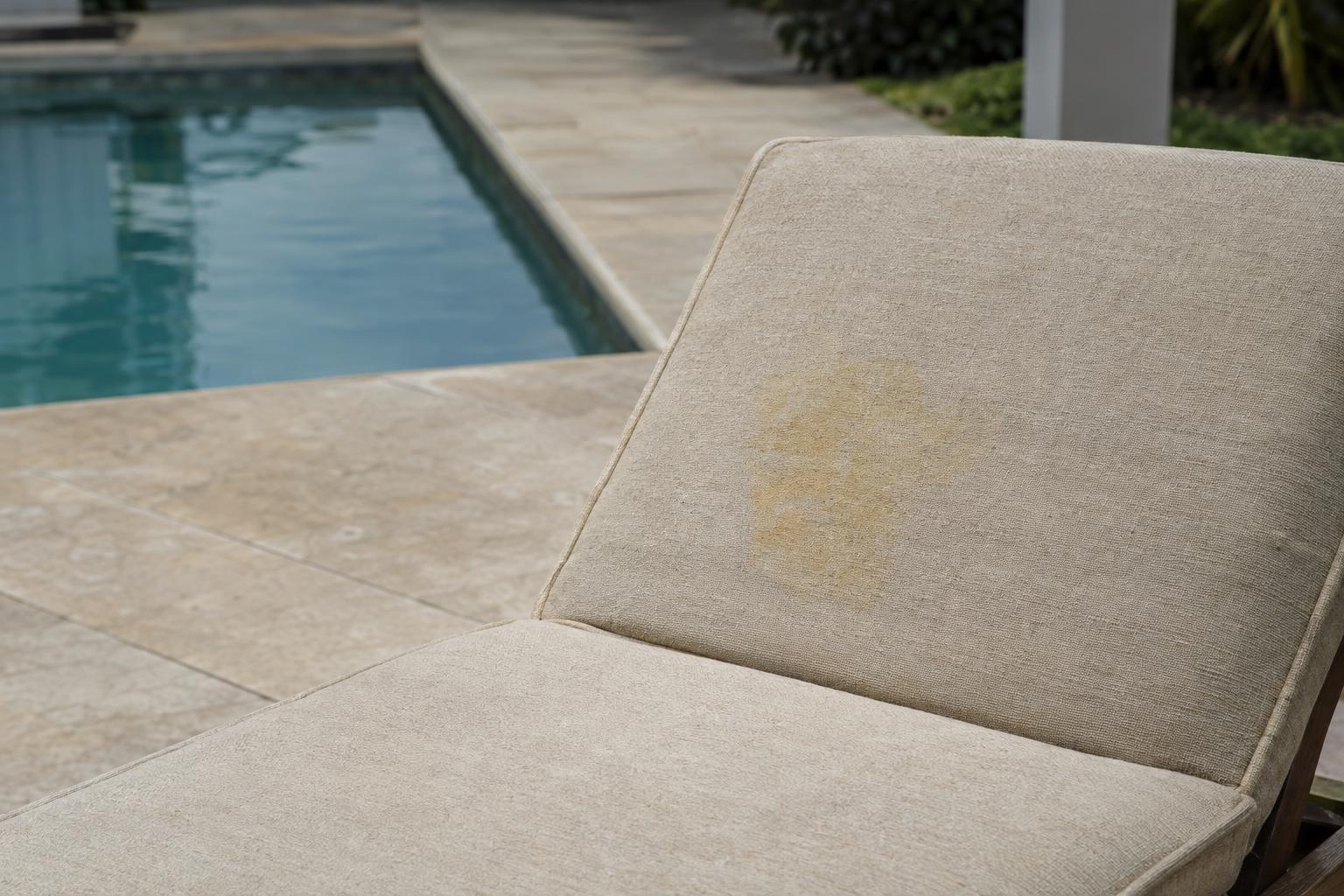
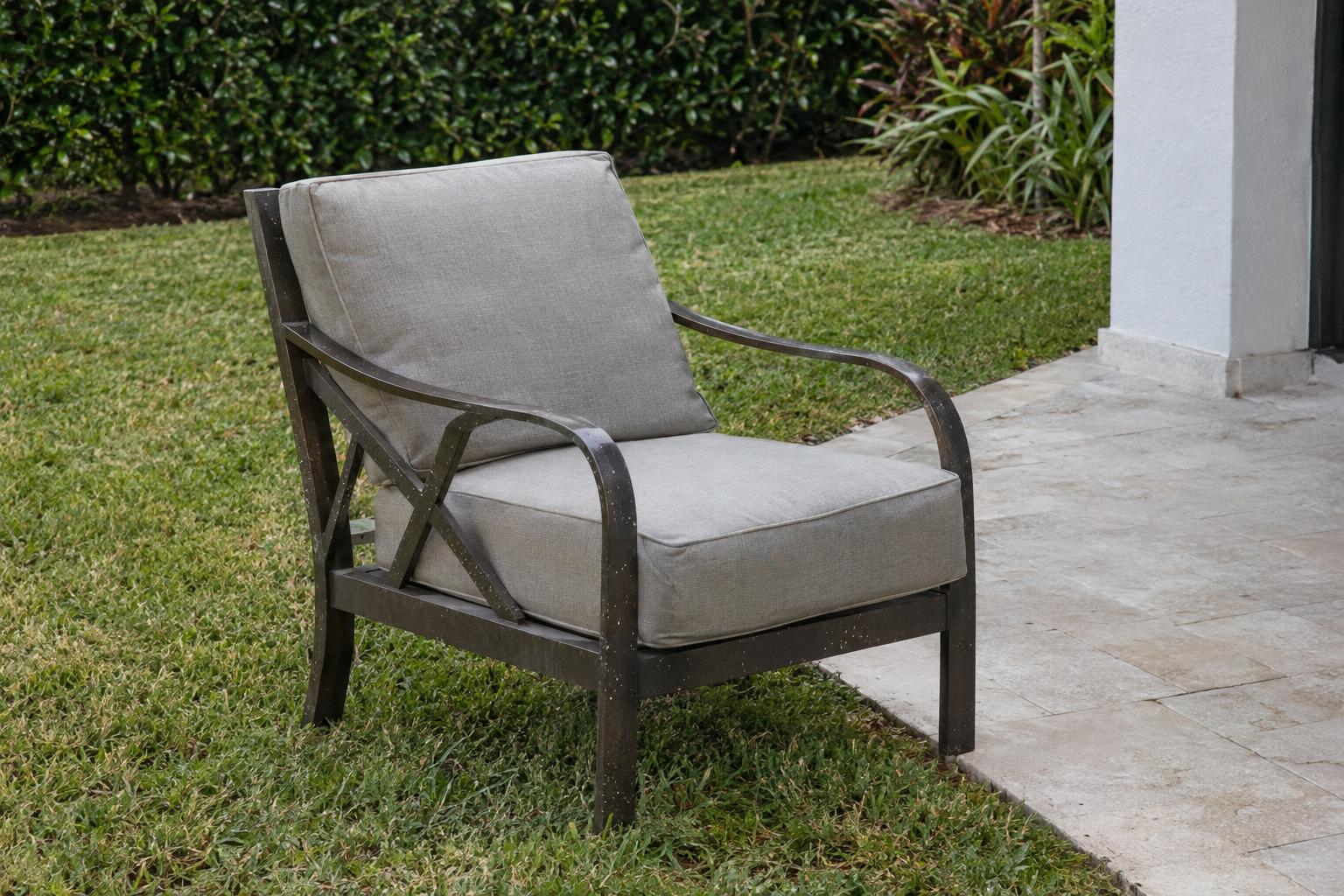
You set the chairs out on a clean patio, and a few days later there are chalky white dots on the frame and a faint orange haze on the legs. Nothing spilled, and nobody sat there with muddy shoes. The usual culprit is the lawn sprinkler. Sprinkler water stains on patio furniture are one of the most common complaints from Florida homeowners, and they show up on even well-kept outdoor sets.
The good news is that most of these marks are surface deposits, not damage, and a gentle routine handles many of them. This guide explains why the spots appear, how to tell them apart from rust or mildew, how to clean them safely, and how to keep them from coming back.
Why Sprinkler Water Stains on Patio Furniture Happen
Water itself does not stain. What it carries does. Well water and reclaimed irrigation water often contain dissolved minerals, and when a fine spray lands on a frame and the Florida sun dries it quickly, the water evaporates and the minerals stay behind as a thin crust.
That is why the marks tend to look like small rings or dots. Each droplet dries into its own tiny deposit. Repeated cycles, morning after morning, build the spots up until they look like a stubborn film rather than a few specks.
White, Orange, or Brown: Reading the Spots
The color of a spot gives you a clue about its source. Chalky white or gray spots are usually dried mineral deposits. Orange or rusty brown tints often come from iron in the water, which can tint anything it dries on, including light frames, stone, and fabric.
It helps to know what you are looking at before you clean:
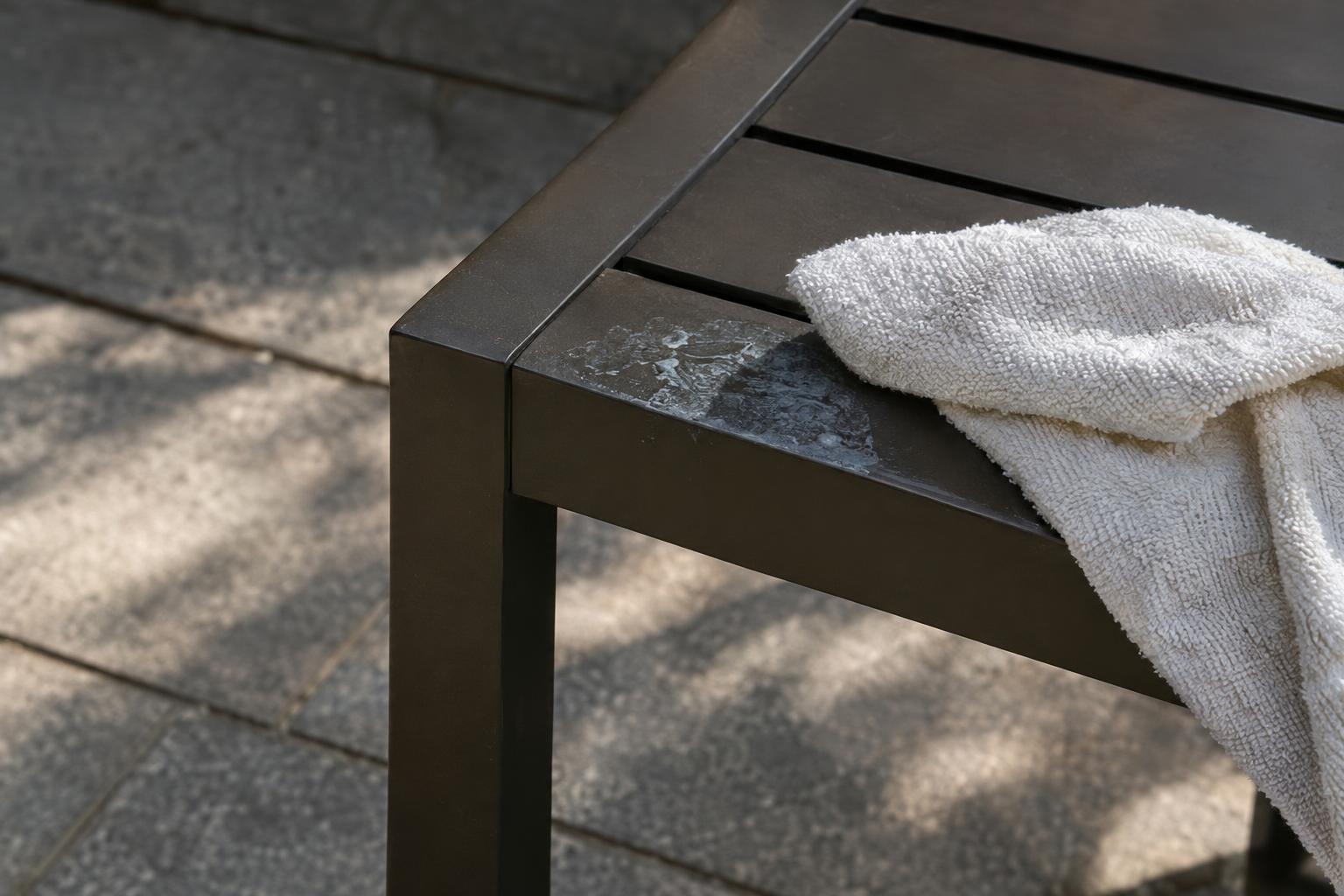
- Mineral deposits feel slightly rough and wipe away as a powdery film.
- Iron-tinted spots look like a faint orange wash, often in a spray pattern that matches your sprinkler heads.
- Mildew is usually darker, fuzzy or speckled, and shows up in shaded, damp areas rather than in the path of a sprinkler.
Is It Mineral Buildup, Rust, or Mildew?
Pattern is the best test. Spots that appear on only one side of a chair, or only on the pieces closest to the lawn edge, point to irrigation. Spots that appear everywhere in a shady, damp corner point to mildew, which our guide on how to maintain your outdoor furniture covers in more detail.
Real rust on a metal frame looks different. It usually starts at scratches, welds, or screw heads and spreads outward, rather than appearing as scattered dots. If you see bubbling or flaking where the finish has been broken, the issue is the finish, not the sprinkler water. Understanding the finish helps here, and our comparison of powder-coated and anodized aluminum explains how each one behaves outdoors.
A Gentle Cleaning Routine That Works
Start with the mildest approach, since you can always step up but you cannot undo a scratched finish. Mix a few drops of mild dish soap into a bucket of warm water. Wipe the spots with a soft cloth, working with the surface rather than scrubbing hard. A soft-bristle brush helps on textured areas.
- Rinse the surface with clean water so no soap film dries on it.
- Dry it with a soft towel right away, so the rinse water does not leave new spots.
- Repeat once if needed, then stop and reassess.
Test a small hidden spot first, such as the underside of a rail, and follow the manufacturer’s care guidance for your particular finish. Skip abrasive pads and harsh cleaners, which can dull or scratch a surface and make future spots stick more easily. We cannot promise every mark will lift, especially older deposits, but this routine is a safe place to begin.
Fix the Source: Adjust the Sprinklers
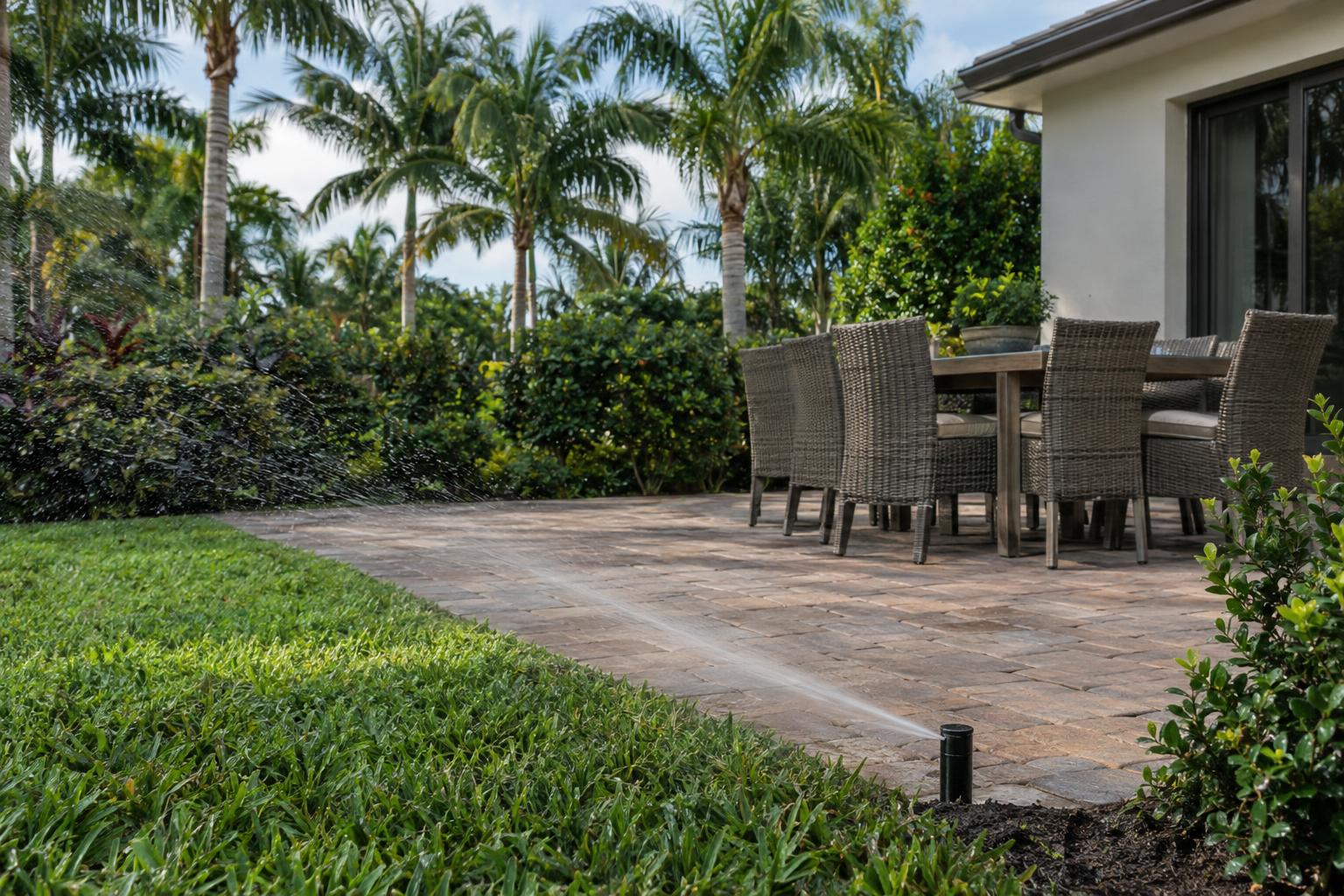
Cleaning is temporary if the spray keeps hitting the furniture. The most effective step is often a ten-minute walk around the yard while the system runs. Look for heads that throw water onto the patio, and ask your irrigation installer or landscaper to adjust the arc and direction so the spray stays on the grass and plants.
Timers matter too. If the system runs at dawn, furniture that is still wet at sunrise dries in the sun and spots quickly. Shifting the schedule, or simply moving the furniture before a cycle, makes a visible difference. For general guidance on efficient outdoor watering, the EPA WaterSense program offers practical information on irrigation and outdoor water use.
Smart Placement, Covers, and Cushions
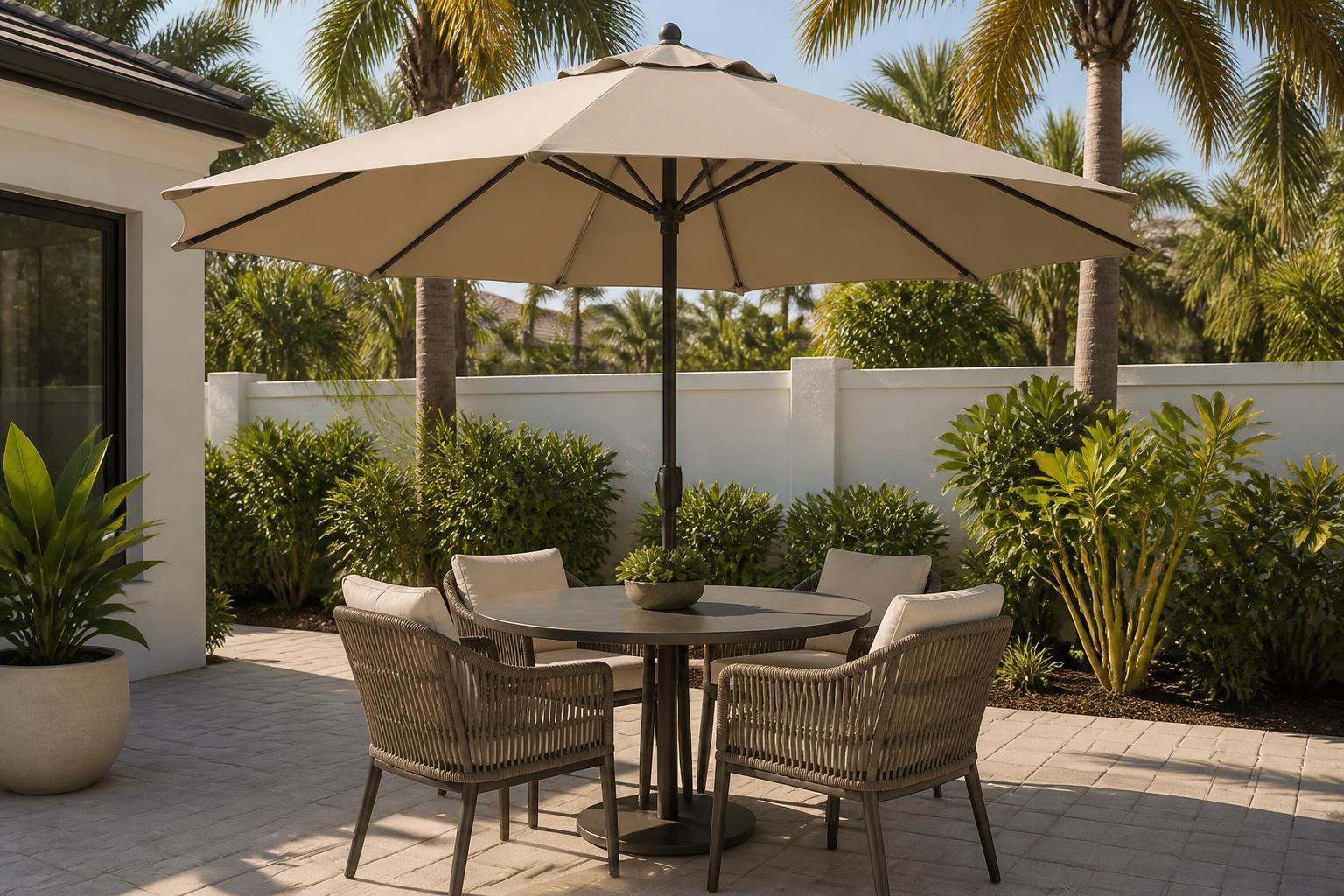
Even with careful aim, sprinklers can drift in the wind. Setting furniture a few feet back from the lawn edge keeps most overspray off the frames. Dining sets and lounge chairs near the grass are the usual victims, so they are worth a second look.
Fitted covers are a simple option when you are away or when the system runs often, though covers should go on dry furniture to avoid trapping moisture. Cushions need extra care, since damp fabric invites mildew and can hold mineral spots. Store them indoors or in a ventilated spot on irrigation days. Our article on touching up scratches on aluminum patio furniture is also worth a read, since a damaged finish catches deposits more readily than a smooth one.
Build a Quick Wipe-Down Habit
The easiest spots to remove are the ones that have not had time to bake on. After a sprinkler cycle, a quick pass with a dry soft cloth over the tabletop and chair arms takes a minute and prevents the crust from forming.
A weekly habit works well too. Check the pieces closest to the lawn, wipe off any fresh film, and make sure nothing is sitting in standing water. Around a pool, where furniture already gets splashed, the same routine applies, and it pairs well with the advice in our post on poly lumber furniture poolside for keeping a wet area safe and tidy.
When Spots Need More Than a Wipe
Sometimes the spotting has been building for a season or two and a soft cloth will not shift it. Do not escalate to scouring pads or strong chemicals. That tends to turn a cosmetic issue into a permanent one by wearing through the finish.
At that point, contact the maker of the furniture for care guidance, or ask a professional refinisher whether the surface can be restored. Deep etching, flaking, or true rust are signs that the finish itself needs attention. A knowledgeable showroom team can also talk through what you are seeing and point you toward sensible next steps.
Frequently Asked Questions
Are sprinkler stains permanent?
Not always. Fresh mineral deposits often wipe away with mild soap, water, and a soft cloth. Older deposits can be harder to shift, and we cannot promise a mark will come out completely.
Can I use a stronger cleaner on the spots?
We suggest sticking with mild dish soap and water, a soft cloth, and the manufacturer’s care guidance. Test any method on a hidden spot first, since finishes vary.
Why do the spots keep coming back after I clean them?
Usually because the sprinkler is still reaching the furniture. Adjusting the spray direction, changing the schedule, or moving the furniture away from the lawn edge addresses the cause.
Do sprinkler stains hurt the furniture?
Light surface deposits are mostly cosmetic. Over time, repeated wetting can make a worn or scratched finish look worse, which is why prompt wiping and good placement are worthwhile.
Have questions about caring for your outdoor furniture? Call Beach House at (561) 972-4661 or visit our Jupiter showroom at 105 Center Street, and we will be glad to talk it through.

About the Author
Chas Crofoot
Chas Crofoot is the owner of Beach House Patio Furniture, a family-owned outdoor furniture showroom in Jupiter, Florida. He comes from a family that has been manufacturing outdoor furniture since 1979, specializing in wicker, cast aluminum, aluminum, poly lumber, and PVC pipe styles built to withstand the Florida climate. With decades of hands-on experience in outdoor furniture, Chas helps coastal homeowners choose materials for durability and comfort.