
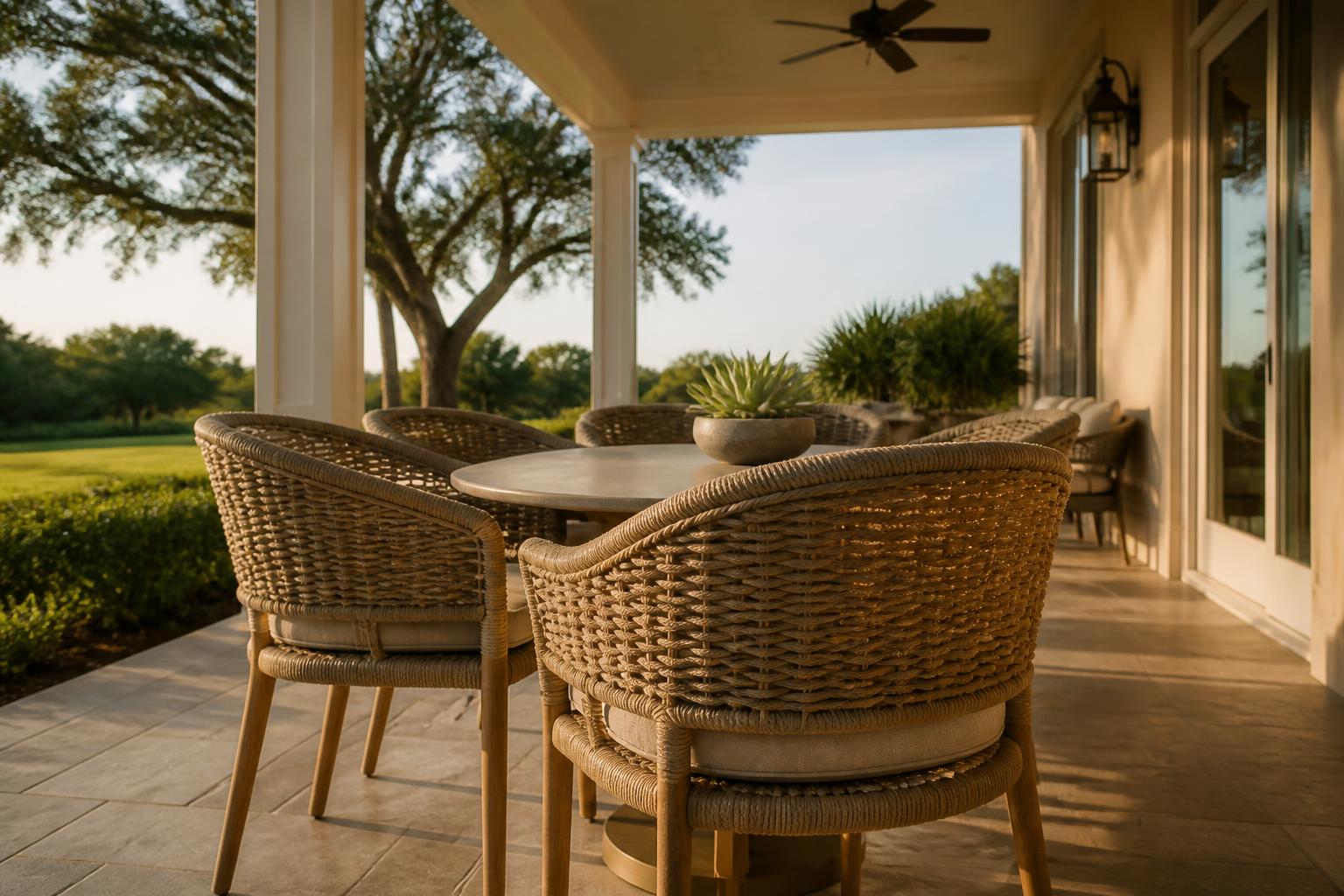
Rope and woven-frame dining chairs have become one of the more popular upgrades customers ask about when they’re replacing an older, more traditional outdoor dining set in our Jupiter showroom. The look is distinctive — a metal frame wrapped in a woven marine rope or synthetic cord rather than a solid sling or cushion seat — and it comes with a few real tradeoffs worth understanding before you commit an entire dining set to the style.
What Makes Rope and Woven-Frame Chairs Different
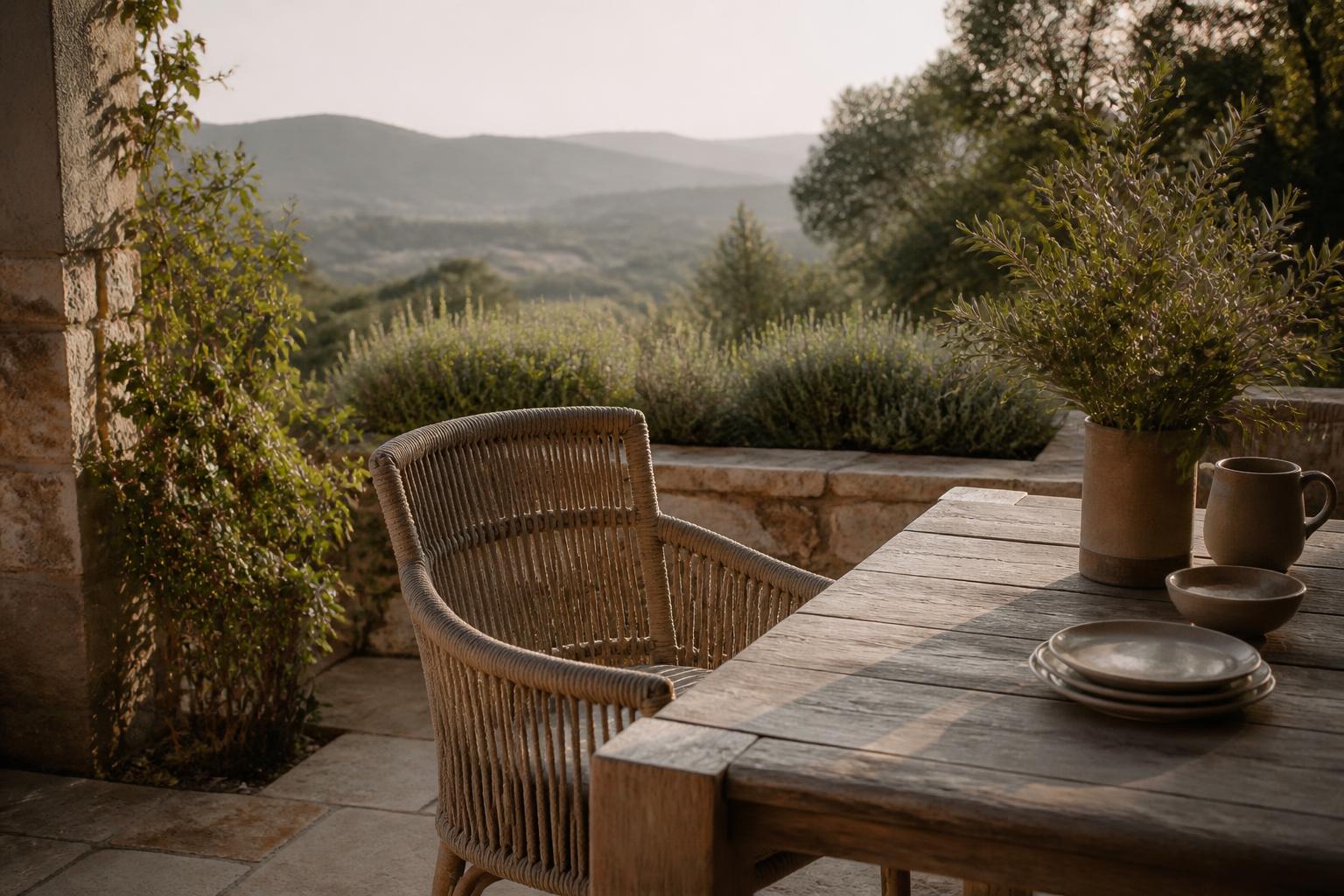
Instead of a solid seat pan or sling fabric, these chairs use a continuous cord — often a UV-stabilized polypropylene rope designed to mimic the look of natural marine rope — wrapped around an aluminum frame in a woven pattern. The construction naturally flexes slightly with body weight, which a lot of customers find more comfortable over a long meal than a rigid sling seat, and the open weave allows water to drain through rather than pooling on the seat after rain, so chairs dry faster and are ready to use again sooner.
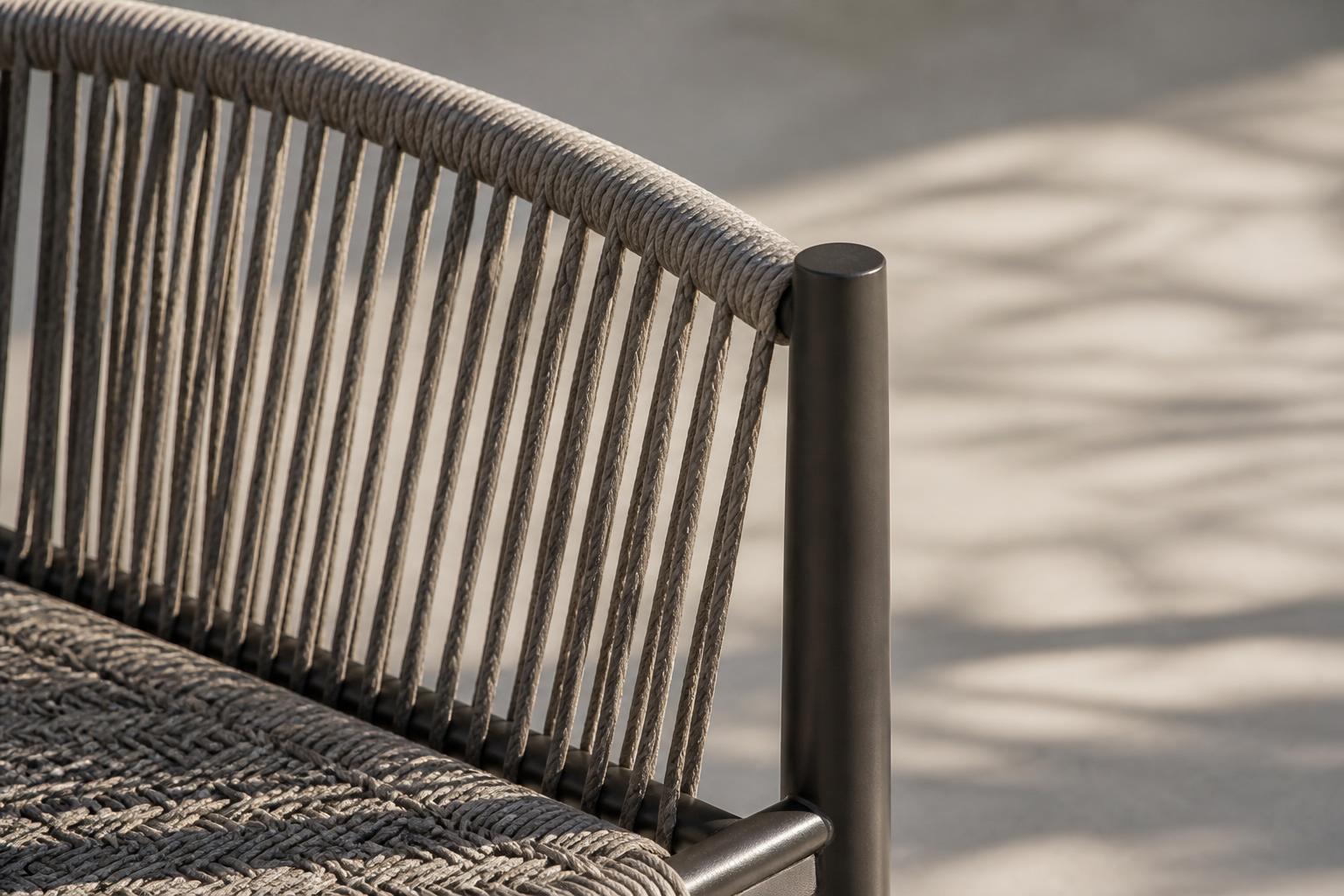
The tradeoff is texture: the woven rope has more surface detail than a smooth sling seat, which means it can trap more pollen, dust, or sand between the cords over time and needs a slightly more thorough cleaning pass than a flat surface would.
Comfort and Fit for Dining Use
Because the seat is a continuous woven surface rather than a padded cushion, rope-style dining chairs tend to have a firmer feel than a cushioned sling or upholstered chair. Most customers find this comfortable for typical meal-length sitting, but if you know your household prefers a softer seat for long, lingering dinners outside, ask about models that include a slim cushion pad designed to sit on top of the woven seat without hiding the look of the weave.
Arm height and back angle vary more between rope-chair collections than with standard sling chairs, so if dining comfort is the top priority, sit in the actual chair at our Jupiter showroom rather than judging from a photo — the woven look can appear similar across very different actual seating angles.
Mixing Rope Chairs With an Existing Dining Table
A number of customers already own a dining table they’re happy with and are only looking to replace worn-out chairs, which raises a fair question: do rope-style chairs need to match a specific table style? In practice, the woven rope look pairs comfortably with most frame finishes already common on outdoor dining tables — powder-coated aluminum, teak, and glass-top tables all sit well alongside a woven rope chair, since the chair’s visual texture contrasts nicely rather than needing to match exactly. The one detail worth checking is seat height relative to your existing table, since rope-chair collections vary slightly in seat height by manufacturer, and you want at least 10 to 12 inches of clearance between the seat and the underside of your table for comfortable knee room.
Cleaning and Long-Term Care
Because the open weave collects more debris than a flat surface, a monthly rinse with a garden hose and a soft brush worked through the rope pattern keeps chairs looking sharp and prevents pollen or salt residue from building up in the cord’s texture over time. Avoid pressure washing directly into the weave at close range, since a high-pressure stream can fray or loosen individual cord strands over years of repeated use — a hose and brush is gentler and just as effective for routine cleaning.
Look for chairs with a UV-stabilized rope specifically, since standard synthetic cord not rated for continuous sun exposure can stiffen and discolor faster in our climate than a UV-treated version.
Stackability and Storage Between Uses
Many rope and woven-frame dining chairs are designed to stack, which is worth confirming before you buy a full set if you plan to store chairs during the off-season, ahead of a storm, or simply to free up lanai space when they’re not in use. Stacking capability varies by frame design — some woven chairs stack four or five high without issue, while heavier or more ornately woven frames may only stack two or three safely without risking damage to the weave at the point of contact. If storage flexibility matters to your household, ask specifically about stacking height and any recommended stacking limit before committing to a full set.
Pairing Rope Chairs With Armchairs and End Seats
Most rope-style dining collections offer both an armless side chair and a wider armchair version, typically meant for the head of the table. If your table seats six or more, using armchairs at both ends and armless side chairs along the length is a common configuration that adds a bit of visual variety while keeping the overall set cohesive, since the weave pattern and frame finish stay consistent across both chair types. Confirm seat depth is consistent between the armless and armchair versions in the collection you’re considering, since a mismatch there can make the head-of-table seats feel noticeably different from the rest.
Color and Finish Options Beyond Natural Rope Tones
While a natural rope-toned finish is the most popular choice, many collections now offer the same woven construction in a range of colors, from charcoal and espresso tones to brighter accent colors for a more modern look. Darker cord colors show less visible soiling between cleanings than a very light natural tone, which is worth factoring in if your dining area sees heavy daily use or sits in a spot with more dust or pollen exposure than a fully enclosed lanai.
Pairing With Placemats and Table Settings
The textured surface of a woven rope seat can interact with certain placemat materials differently than a smooth sling or upholstered chair would — a heavier woven placemat tends to sit more securely against the chair’s texture during a meal than a very lightweight or slick material that can shift more easily. This is a small detail, but customers who entertain often tell us it’s one they notice quickly once they’re actually using a full rope-chair dining set for regular meals rather than just admiring the look in a showroom.
Trying the Weave Before You Commit to a Full Set
Because the woven texture is such a defining part of these chairs, we always suggest sitting in a full-size sample before ordering an entire dining set, rather than judging from a small fabric or rope swatch alone. The way a chair’s weave feels at full scale, including the flex in the seat and the exact arm height, can read differently than a swatch suggests. Our Jupiter showroom keeps working samples on the floor specifically so customers can sit through a full meal-length test before committing to six or eight chairs at once.
Use instructions for your chair’s actual weave and frame. Tropitone’s material-specific care guidance is a useful example of why a single cleaning method does not suit every material.
Frequently Asked Questions
Are rope-style dining chairs comfortable enough for a full meal?
Most customers find the natural flex of a woven rope seat comfortable for standard dining use; if you prefer extra cushioning, ask about slim seat pads made to sit on top of the weave.
Do these chairs work on an exposed pool deck with no cover?
Yes, as long as the rope is UV-stabilized and the frame is powder-coated aluminum — the open weave actually drains and dries faster than a solid sling seat after rain or pool splash.
How often do rope dining chairs need cleaning?
A monthly rinse and brush is usually enough for chairs used regularly; homes near heavier pollen or sand exposure may want to clean a bit more often.
If you’re considering rope or woven-frame dining chairs for your patio or lanai, stop by our Jupiter showroom to sit in the actual chairs and compare the weave styles and cushion options in person. Call (561) 972-4661 to discuss your measurements and current options.

About the Author
Chas Crofoot
Chas Crofoot is the owner of Beach House Patio Furniture, a family-owned outdoor furniture company in Jupiter, Florida. Since 1979, Chas and his team have manufactured and sold high-quality patio furniture — specializing in wicker, cast aluminum, aluminum, poly lumber, and PVC pipe styles built to withstand the Florida climate. With over four decades of hands-on experience in outdoor furniture design and manufacturing, Chas brings deep expertise in material selection, durability, and comfort for coastal living.