
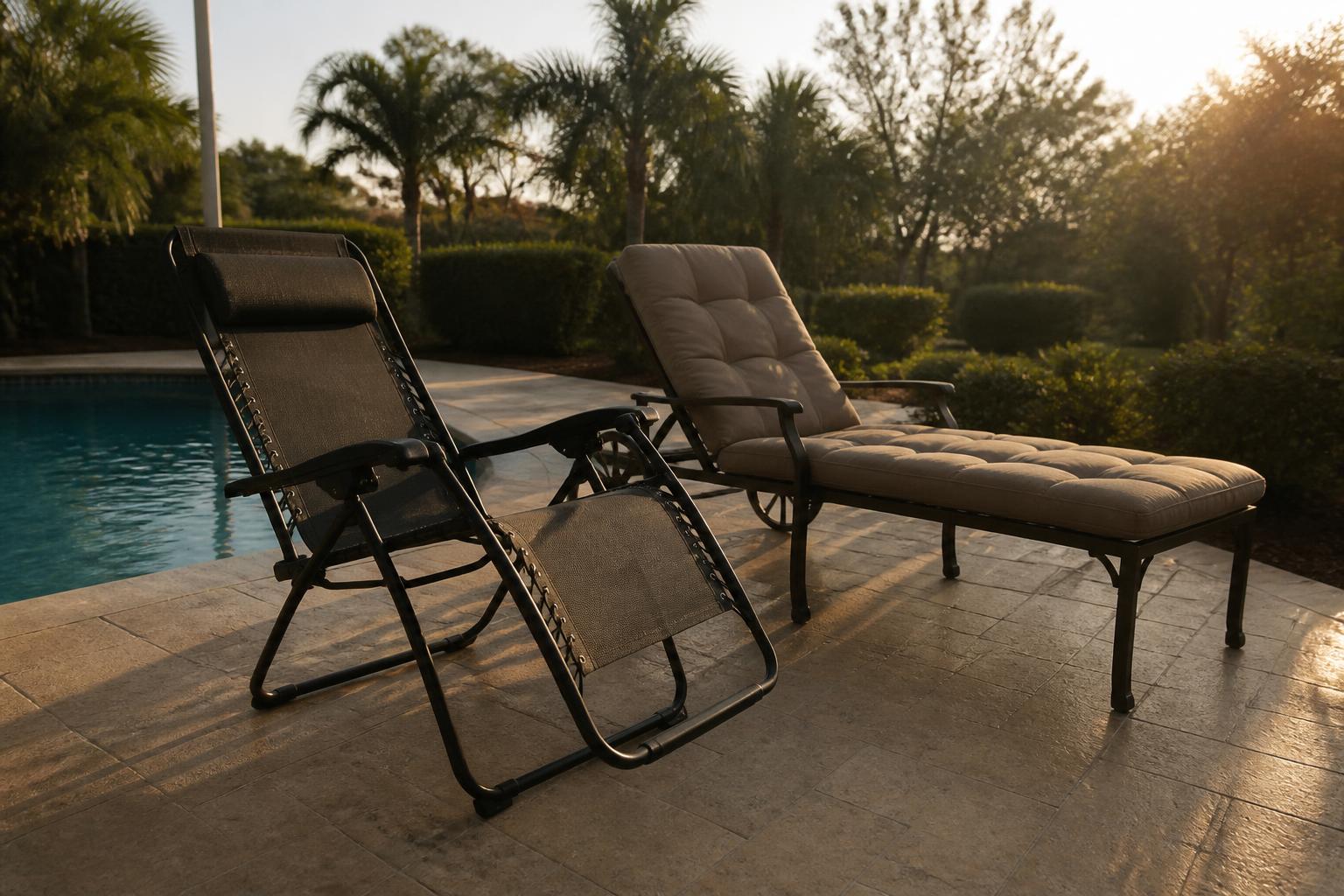
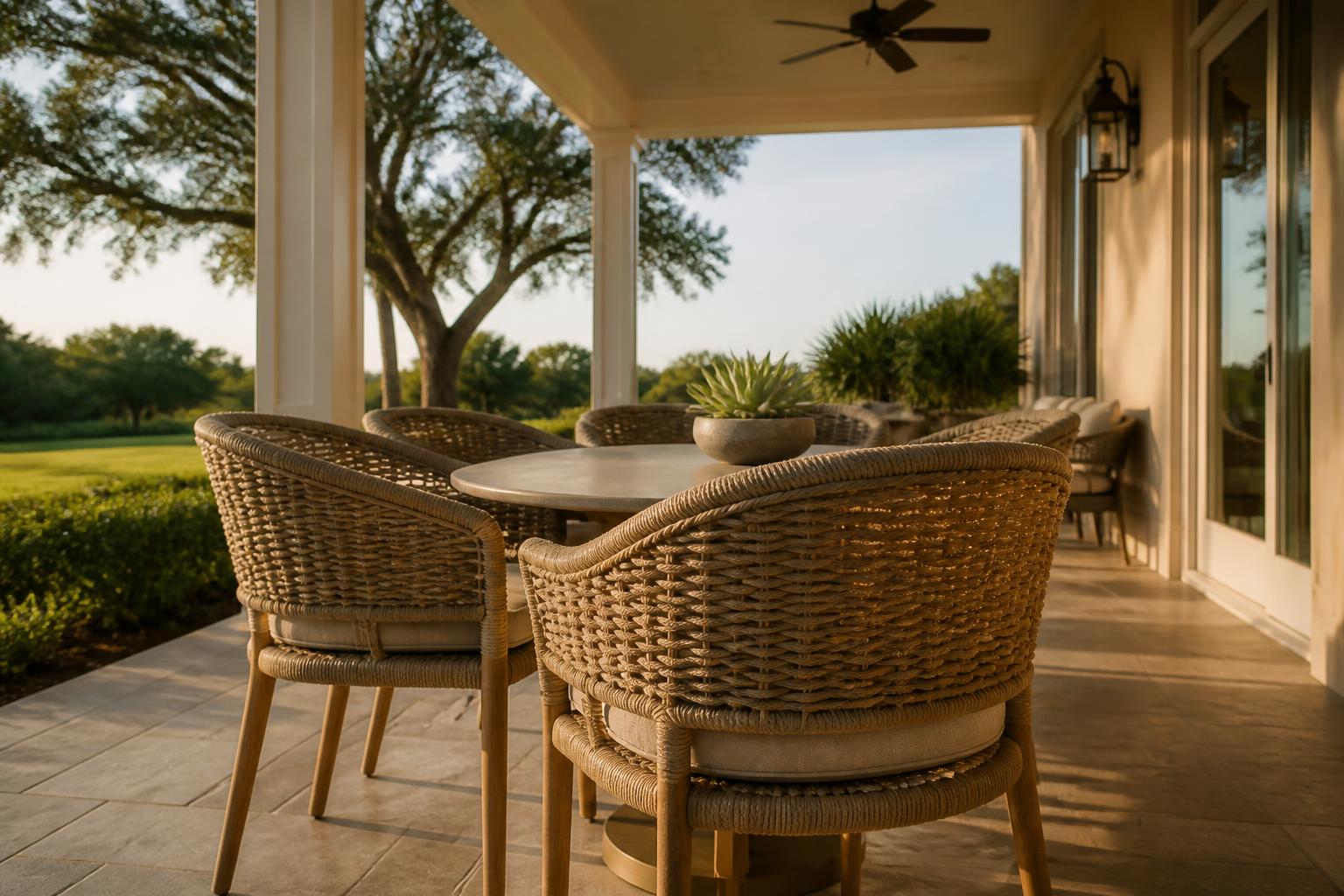
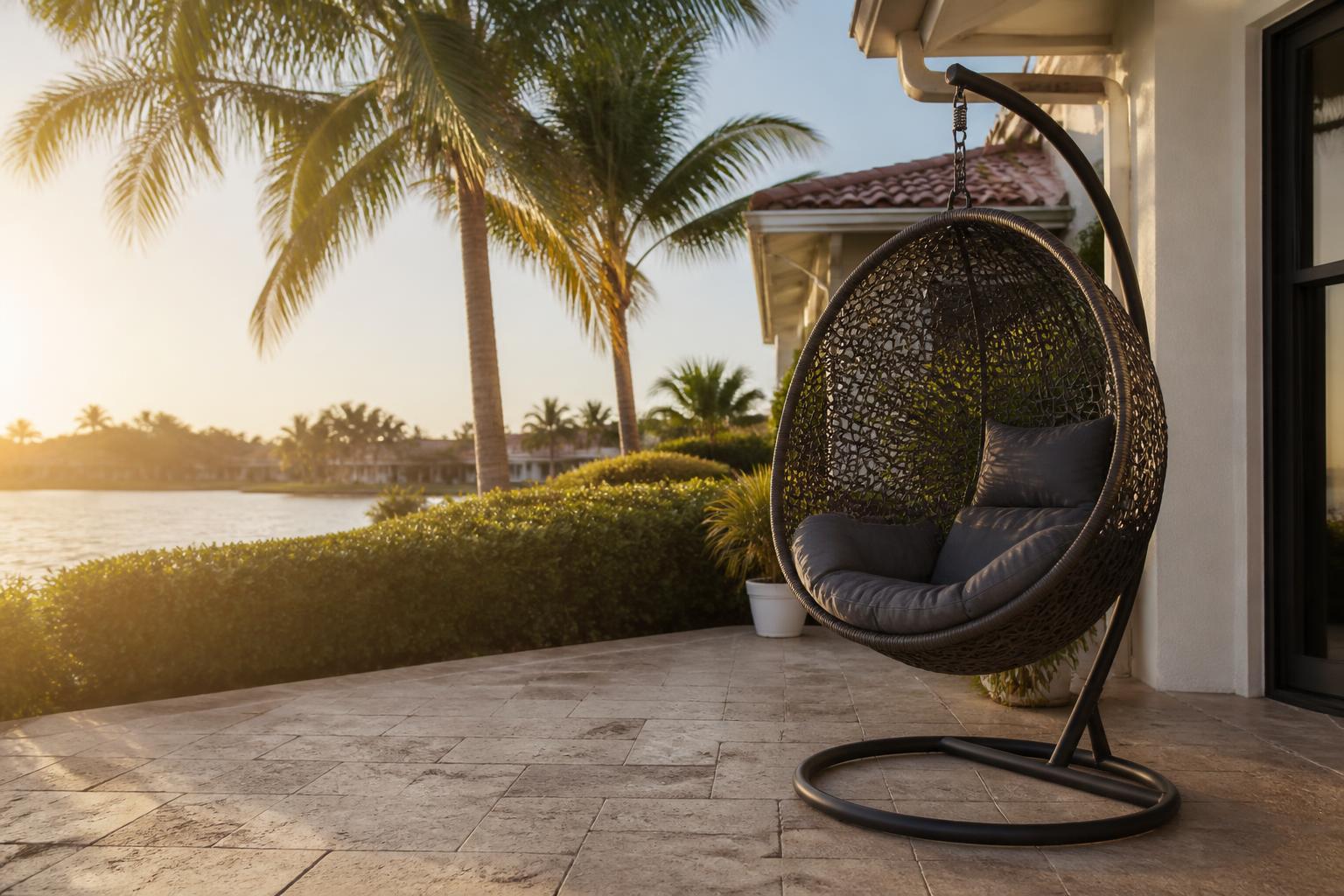
Hanging egg chairs and swivel lounge chairs have become two of the most requested items in our Jupiter showroom over the past couple of seasons, and they get asked about together often enough that it’s worth explaining how they actually differ and what to check before buying either one.
Hanging Egg Chairs: Stand, Frame, and Placement
A hanging egg chair is a rounded, cocoon-style seat suspended from a stand or ceiling mount, usually built with a powder-coated steel or aluminum frame and a woven resin or rope-style exterior. The single biggest decision is whether you’re mounting it to a covered structure — a pergola beam, a lanai ceiling, or a porch — or buying a freestanding stand. A freestanding stand gives you flexibility to move the chair around the patio and doesn’t require any structural mounting work, but it does take up more floor footprint than a ceiling-mounted version, so measure the total swing radius (chair plus stand base) before deciding where it goes.
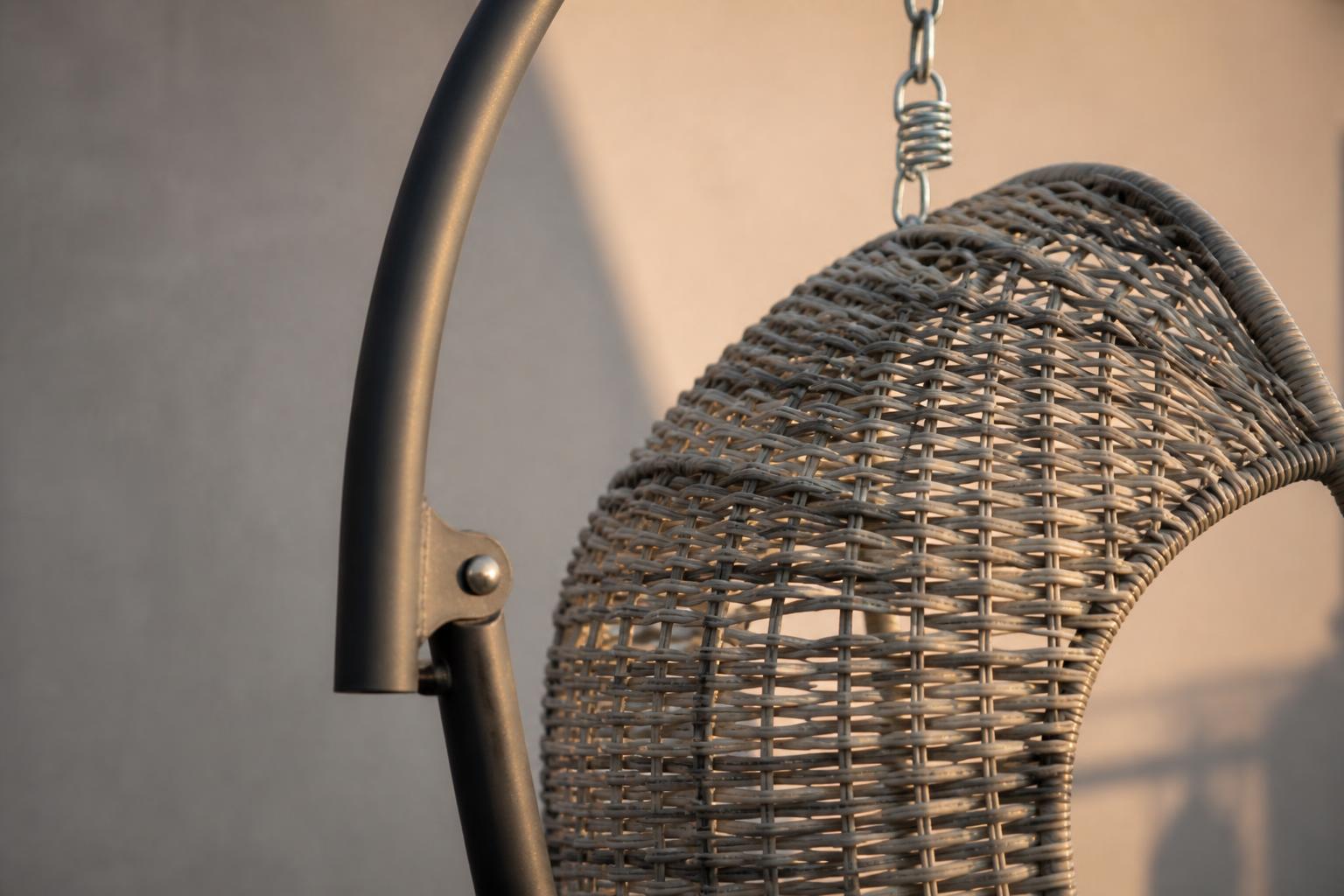
If you’re mounting to an existing structure rather than using a stand, confirm the beam or ceiling point can support the combined weight of the chair, cushion, and an adult before installing — this is one detail we always tell customers to verify with whoever installed their lanai or pergola, since not every structure is built to support a swinging load.
Swivel Lounge Chairs: What Makes Them Different
A swivel lounge chair is a more traditional single-seat chair — usually deep seating depth with a thick cushion — mounted on a rotating base rather than fixed legs. The appeal is mostly about flexibility: you can turn the chair to follow the sun, face a conversation grouping, or angle toward a view without physically dragging the chair across the deck. Because the swivel mechanism sits at the base, look for a sealed, weather-rated swivel unit rather than an exposed mechanism that can collect sand, pollen, or salt spray over time and eventually stiffen up.
Both chair types work well as an accent piece alongside a more traditional sectional or conversation set rather than as the sole seating in a space, since neither is really designed to seat more than one person at a time.
How Many to Add and Where They Work Best
Most households add one or two egg chairs or swivel loungers as an accent rather than building an entire seating area around them, and that’s usually the right call — a single dramatic egg chair in a corner reading nook, or a pair of swivel loungers flanking a fire table, tends to read as an intentional design choice rather than the room’s primary seating. Placing one near a favorite view, a pool corner, or a quiet reading spot away from the main traffic path also lets it be enjoyed without competing for space with a dining set or main conversation grouping.
If you’re adding a hanging egg chair specifically, leave enough swing clearance on all sides — at least 3 feet is a safe minimum — so the chair can move naturally without knocking into a railing, a nearby table, or another piece of furniture whenever someone gets in or out.
Cushion Comfort and Sizing Inside the Chair
Both chair styles typically come with a fitted cushion set that lines the interior of the woven shell or the seat and back of the swivel frame. Cushion thickness varies more than people expect between collections — a thin cushion can leave the woven texture noticeably pressing through during extended sitting, while a properly thick, well-shaped cushion distributes weight more evenly and holds its shape over years of use. If comfort for long afternoons is the priority, ask to sit in the display model with its actual cushion in place rather than judging comfort from the bare frame alone, since the difference between a basic cushion and an upgraded one can be significant for a chair you plan to use regularly.
Weight Rating and Frame Sizing
Both hanging egg chairs and swivel loungers come in a range of frame sizes and rated weight capacities, and it’s worth checking that number rather than assuming one size fits everyone. A wider egg chair shell generally accommodates two people sitting together for shorter periods, while a standard single-seat size is built and rated for one adult. Reputable manufacturers list a combined weight capacity for wider models, and matching that number to how your household actually plans to use the chair avoids both discomfort and unnecessary strain on the stand or swivel mechanism over time.
Indoor-Outdoor Versions and Covered Space Considerations
Some egg chair and swivel lounger collections are sold in both an indoor-rated and a true outdoor-rated version that look nearly identical at a glance but use different frame coatings and fabric treatments underneath. If you’re placing the chair on a fully screened, covered lanai with no direct rain or sun exposure, an indoor-outdoor hybrid piece can be a reasonable and often more budget-friendly choice. For anything on an open patio, balcony, or pool deck with real weather exposure, confirm you’re getting the fully outdoor-rated version specifically, since the visual difference between the two versions is often too subtle to catch without asking directly.
Fabric and Frame Durability in Our Climate
Whether you go with an egg chair or a swivel lounger, the woven exterior and cushion fabric take the brunt of Jupiter’s sun and humidity, so look for a marine-grade or all-weather resin weave rather than an indoor-rated wicker look-alike, and a quick-dry foam cushion wrapped in a performance fabric like Sunbrella rather than standard outdoor-labeled fabric that isn’t rated for constant exposure. Powder-coated aluminum or steel frames resist the surface rust that untreated metal frames develop after a season or two of coastal humidity.
Cleaning and Seasonal Care
Because the woven exterior on both chair styles has more surface texture than a flat sling or solid cushion, pollen and dust tend to settle into the weave more visibly than on a smooth surface. A regular rinse with a garden hose, followed by a soft brush worked gently through the weave, keeps both chair types looking sharp without damaging the resin strands. Avoid harsh solvents or abrasive cleaners on woven resin, since they can dull the finish or weaken the weave’s flexibility over repeated use.
For the hanging chair’s stand or the swivel base, a periodic check of the hardware — bolts, the swivel bearing, or the stand’s joints — helps catch any early stiffness or looseness before it becomes a bigger repair, especially on pieces that see daily use near a pool or in an uncovered spot.
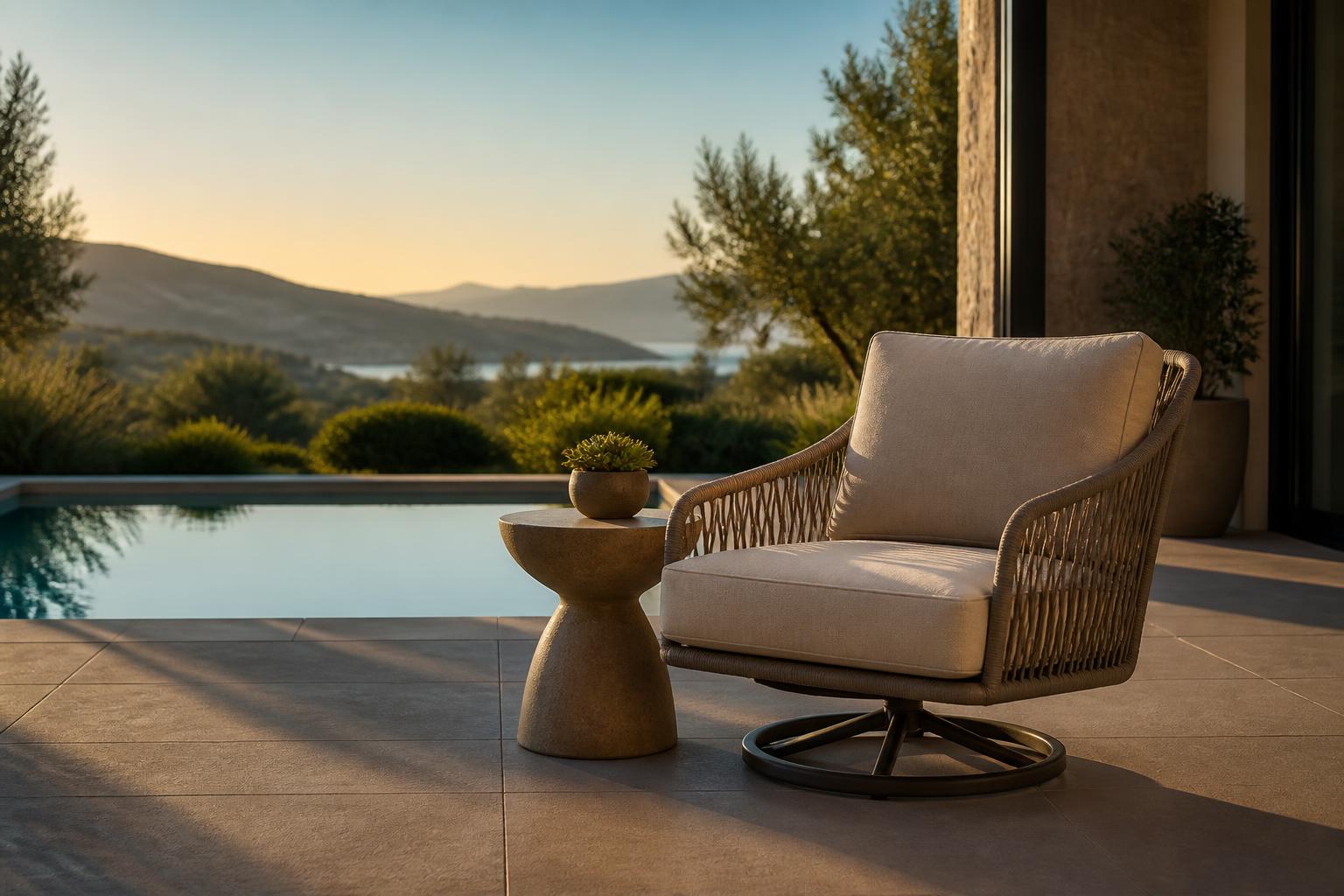
Plan a sheltered storage location for movable seating and review National Weather Service wind-safety guidance. Follow the chair manufacturer’s instructions for disassembly and storage.
Frequently Asked Questions
Do hanging egg chairs need to be brought in during storms?
Yes — any hanging or freestanding chair should be taken down or secured ahead of a named storm, the same way you’d treat any other lightweight outdoor furniture piece.
Can a swivel lounge chair sit in direct, uncovered sun?
Yes, as long as the frame is a weather-rated aluminum or steel and the cushion fabric is a performance-rated material — just expect to clean pollen and expect some fading over time faster than under a covered lanai.
Do you have egg chairs and swivel loungers set up to try in the showroom?
Yes, we keep working samples of both on our Jupiter showroom floor so you can sit in each style and feel the difference before buying.
If you’re considering a hanging egg chair or a swivel lounge chair for your patio or lanai, stop by our Jupiter showroom to sit in both styles and talk through stand, mounting, and fabric options before you decide. Call (561) 972-4661 to discuss your measurements and current options.

About the Author
Chas Crofoot
Chas Crofoot is the owner of Beach House Patio Furniture, a family-owned outdoor furniture company in Jupiter, Florida. Since 1979, Chas and his team have manufactured and sold high-quality patio furniture — specializing in wicker, cast aluminum, aluminum, poly lumber, and PVC pipe styles built to withstand the Florida climate. With over four decades of hands-on experience in outdoor furniture design and manufacturing, Chas brings deep expertise in material selection, durability, and comfort for coastal living.