
“Zero-gravity” gets used as a catch-all marketing term online for almost any outdoor chair that reclines, which leaves a lot of customers confused about what they’re actually buying when they walk into our Jupiter showroom looking for one. There’s a real, meaningful difference between a standard reclining chair and a true zero-gravity design, and it affects comfort more than most people expect.
What “Zero-Gravity” Actually Means
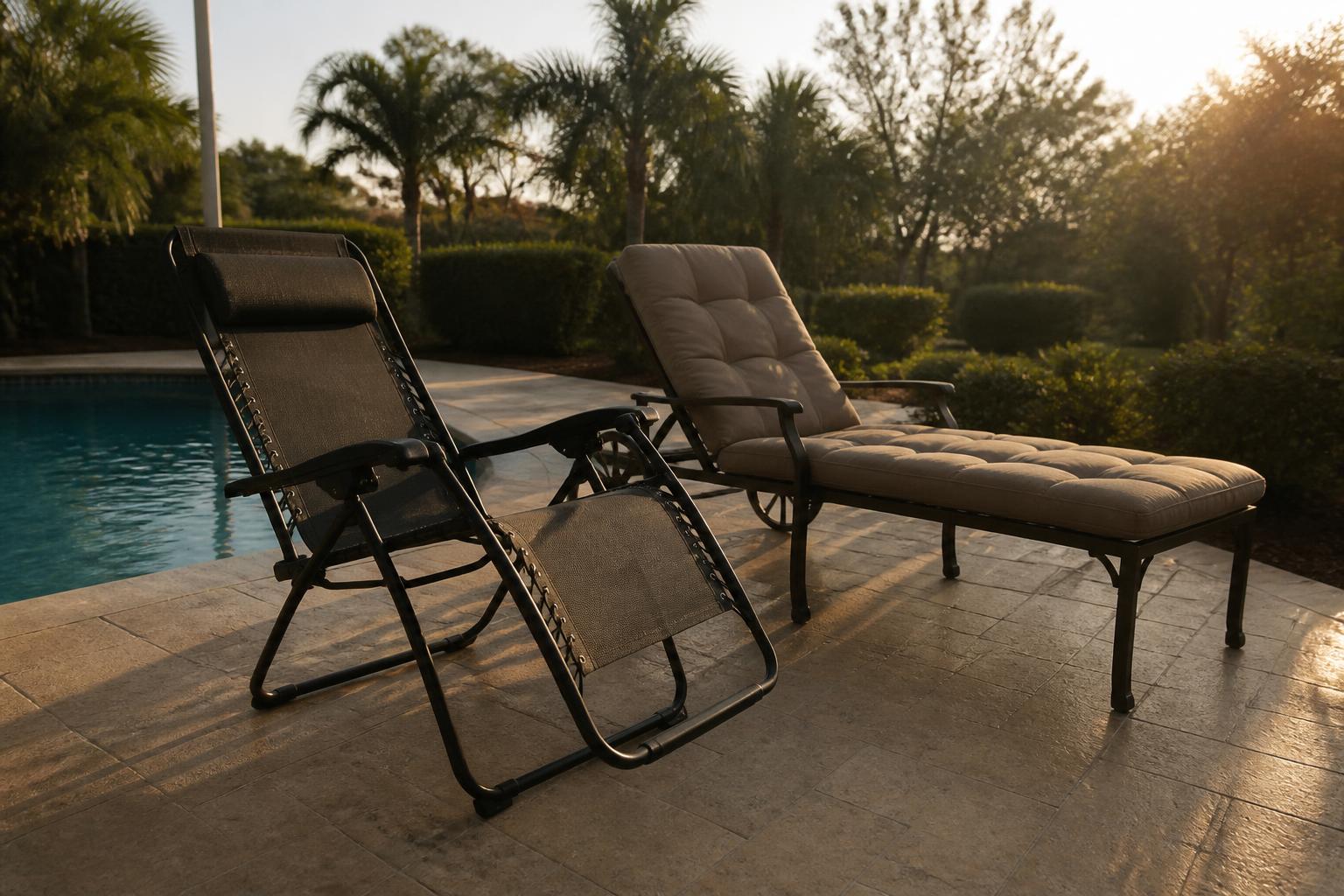
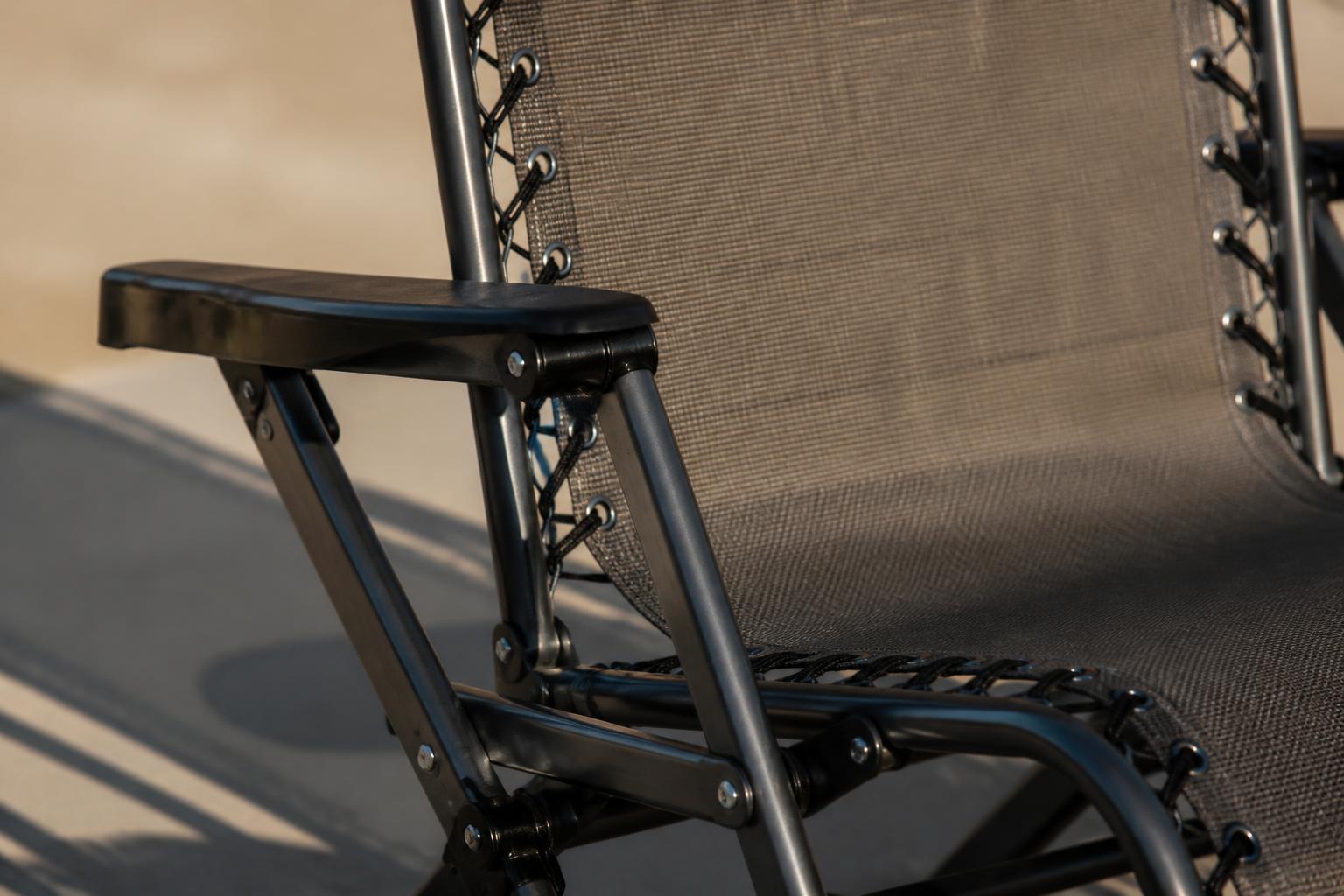
A true zero-gravity chair uses a specific reclining geometry that evenly distributes body weight along the frame at a particular angle — originally developed for astronaut seating during launch — so that your legs end up slightly elevated above heart level while your spine settles into a neutral, low-pressure position. The frame typically uses a sling fabric on a folding, spring-tensioned aluminum frame that locks at the zero-gravity recline point, rather than a padded cushion on a rigid frame.
A standard reclining chair, by contrast, simply adjusts backrest angle — sometimes through multiple positions, sometimes just one or two — without the specific weight-distribution geometry that defines true zero-gravity seating. Both can be comfortable, but they’re solving slightly different problems: a zero-gravity chair is built specifically around pressure relief and circulation, while a standard reclining chair is more about adjustable lounging angle with a familiar padded feel.
Choosing Between the Two for Your Space
If you’re buying chairs mainly for extended, still lounging by the pool — reading, napping, or simply relaxing for an hour or more — a true zero-gravity chair’s pressure-relief design tends to hold up better over a long stretch than a standard recliner’s padded-but-static position. If you want a chair that also works well for shorter, more social lounging near a fire table or conversation area, a standard reclining chair with a cushioned frame usually looks and feels more like the rest of a matched seating set, since zero-gravity chairs have a distinct folding-frame look that doesn’t always match a cushioned sectional or dining set nearby.
Weight and portability are worth considering too — most zero-gravity chairs are lightweight and foldable by design, which makes them easy to move for cleaning or to shift with the sun, while a padded reclining lounge chair with a heavier aluminum frame tends to stay in one place more permanently.
Recline Positions and Locking Mechanisms
Not all reclining chairs offer the same number of positions, and this is worth checking closely if you have specific preferences. Multi-position reclining lounge chairs typically lock at three to five distinct angles, from fully upright for reading to nearly flat for sunbathing, using a ratchet or pin-lock mechanism along the frame. True zero-gravity chairs generally lock at just one or two specific recline angles, since the geometry is engineered around that particular weight-distribution point rather than offering a wide range of adjustment.
If you like the idea of adjusting your position throughout the day — upright for a book in the morning, reclined for a nap in the afternoon — a multi-position reclining chair gives you that range. If your priority is finding the single most restorative position and staying there, a zero-gravity chair’s more limited but purpose-built recline angle is the better fit.
Cushions, Headrests, and Add-On Comfort
Many zero-gravity and reclining chairs are sold with an optional separate headrest pillow or lumbar cushion, and it’s worth trying the chair with and without one before deciding whether you need it. A zero-gravity chair’s engineered angle is designed to support the neck and lower back on its own, so an add-on cushion is more about personal preference for softness than a functional necessity. On a standard reclining chair with a flatter cushion profile, a supplemental headrest can make a bigger practical difference, particularly during longer, fully-reclined use.
Assembly and Portability Trade-Offs
Zero-gravity chairs are typically sold ready to unfold with minimal or no assembly, which is part of their appeal for households that want to set up extra seating quickly for guests or move chairs seasonally. Padded reclining lounge chairs more often require some assembly on arrival and are meant to stay in a more fixed position once set up, given their heavier frame and larger footprint. If you anticipate needing to store chairs seasonally, ahead of storms, or simply prefer furniture you can rearrange easily, that portability difference is worth weighing alongside comfort and looks.
Side Tables and Drink Holders
Because both chair styles are typically used for extended lounging rather than a quick sit, having somewhere within reach to set a drink matters more here than with most other seating. Some zero-gravity chair models include a clip-on side tray or an attached cup holder built into the arm, which is worth asking about if you don’t plan to pair the chair with a separate side table. Padded reclining chairs more often rely on a nearby side table instead, so if you’re buying reclining chairs as a pair, budgeting for a low side table between them is worth factoring into the overall layout from the start.
Fabric and Frame Durability
Zero-gravity chairs typically use a breathable mesh or textured sling fabric rather than a full cushion, which dries quickly after a pool splash or rain and doesn’t hold heat the way a dark cushion fabric can in direct sun. Look for a UV-treated sling and a rust-resistant aluminum or steel frame, since the folding hardware on a zero-gravity chair sees more mechanical wear over time than a fixed-frame recliner. For cushioned reclining chairs, Sunbrella or an equivalent performance fabric on a powder-coated aluminum frame holds up well to Jupiter’s combination of sun and humidity.
Where Each Style Fits Best Around the Pool
Placement often follows naturally from the chair’s design. Zero-gravity chairs’ lightweight, foldable frames make them a good fit for households that want flexible seating they can reposition daily — following the shade line around a pool deck, for example, or folding them away entirely when the space is needed for a gathering. Padded reclining lounge chairs, being heavier and typically set on a fixed base or wheeled frame, tend to work better as a permanent fixture in one spot, paired with a side table and positioned as part of a more settled poolside layout.
A mixed approach works well for a lot of households: a row of two or three padded reclining chairs as the primary poolside lounging spot, with one or two lightweight zero-gravity chairs kept nearby for extra guests or for moving to a shadier spot later in the day.
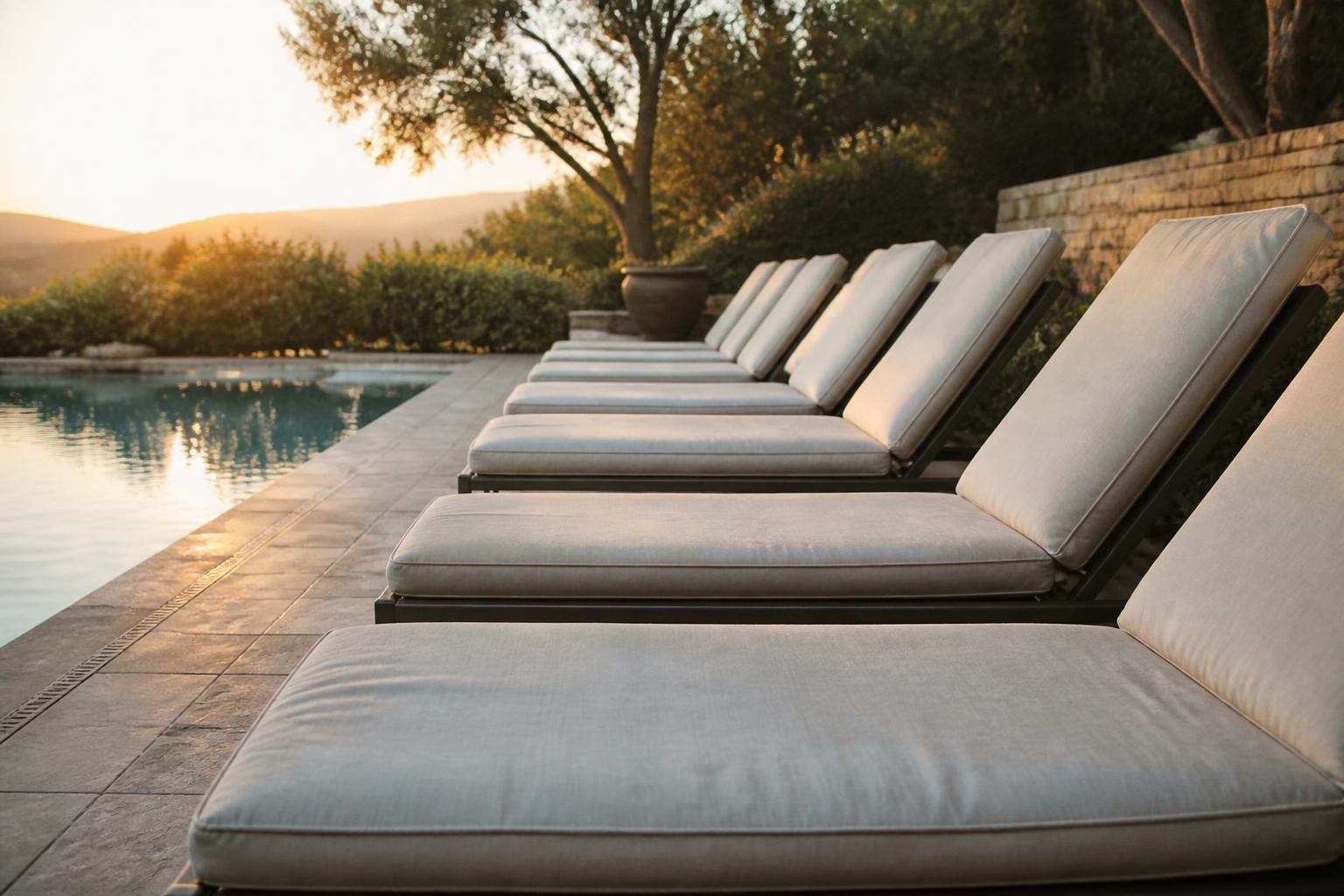
For recliners fitted with Sunbrella cushions or upholstery, consult Sunbrella’s fabric-cleaning guide. Other fabrics should be maintained according to their own manufacturer’s instructions.
Frequently Asked Questions
Are zero-gravity chairs less comfortable than a padded recliner?
Not less comfortable — just different. Zero-gravity chairs prioritize pressure relief and circulation through their recline angle, while padded recliners prioritize a familiar cushioned feel; which one suits you best often comes down to personal preference.
Can zero-gravity chairs stay outside uncovered year-round?
Yes, as long as the sling fabric is UV-treated and the frame is rust-resistant, though we still recommend folding and storing them ahead of a named storm.
Can I try both styles before deciding?
Yes — our Jupiter showroom keeps working samples of both zero-gravity and padded reclining chairs so you can feel the difference in person.
If you’re deciding between a zero-gravity chair and a standard reclining lounge chair, stop by our Jupiter showroom to try both and see which recline actually feels right for the way you use your pool deck or lanai. Call (561) 972-4661 to discuss your measurements and current options.

About the Author
Chas Crofoot
Chas Crofoot is the owner of Beach House Patio Furniture, a family-owned outdoor furniture company in Jupiter, Florida. Since 1979, Chas and his team have manufactured and sold high-quality patio furniture — specializing in wicker, cast aluminum, aluminum, poly lumber, and PVC pipe styles built to withstand the Florida climate. With over four decades of hands-on experience in outdoor furniture design and manufacturing, Chas brings deep expertise in material selection, durability, and comfort for coastal living.