
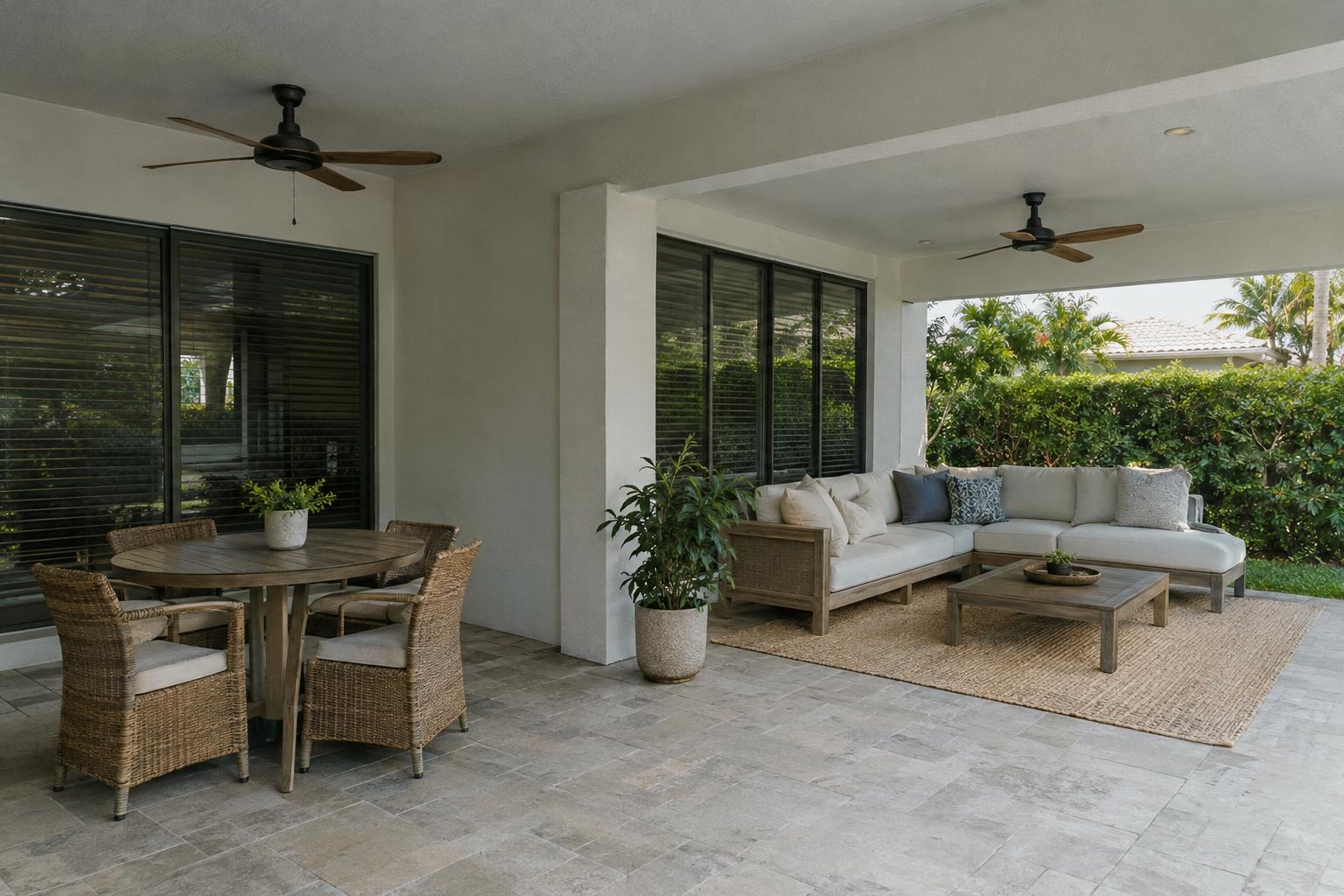
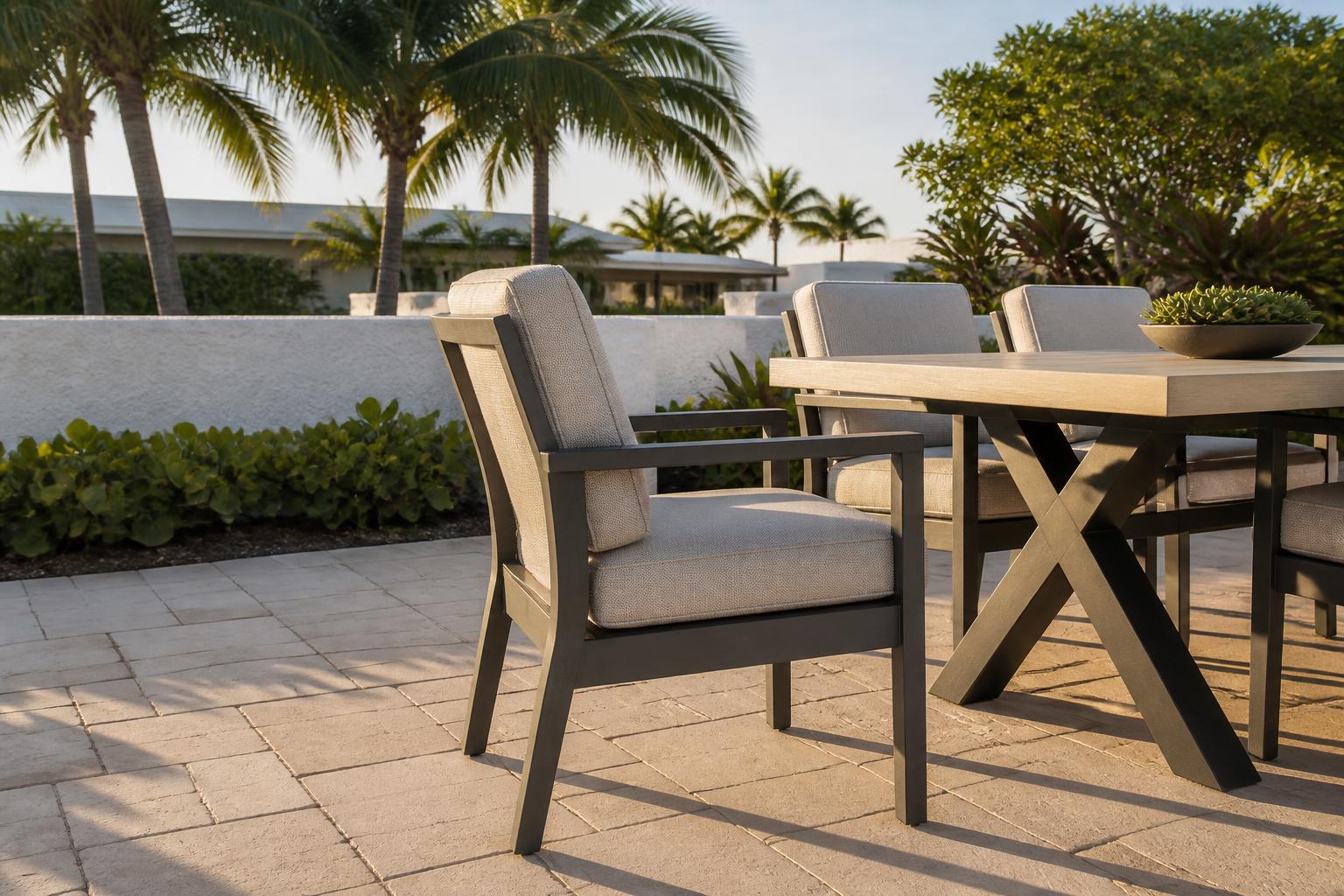
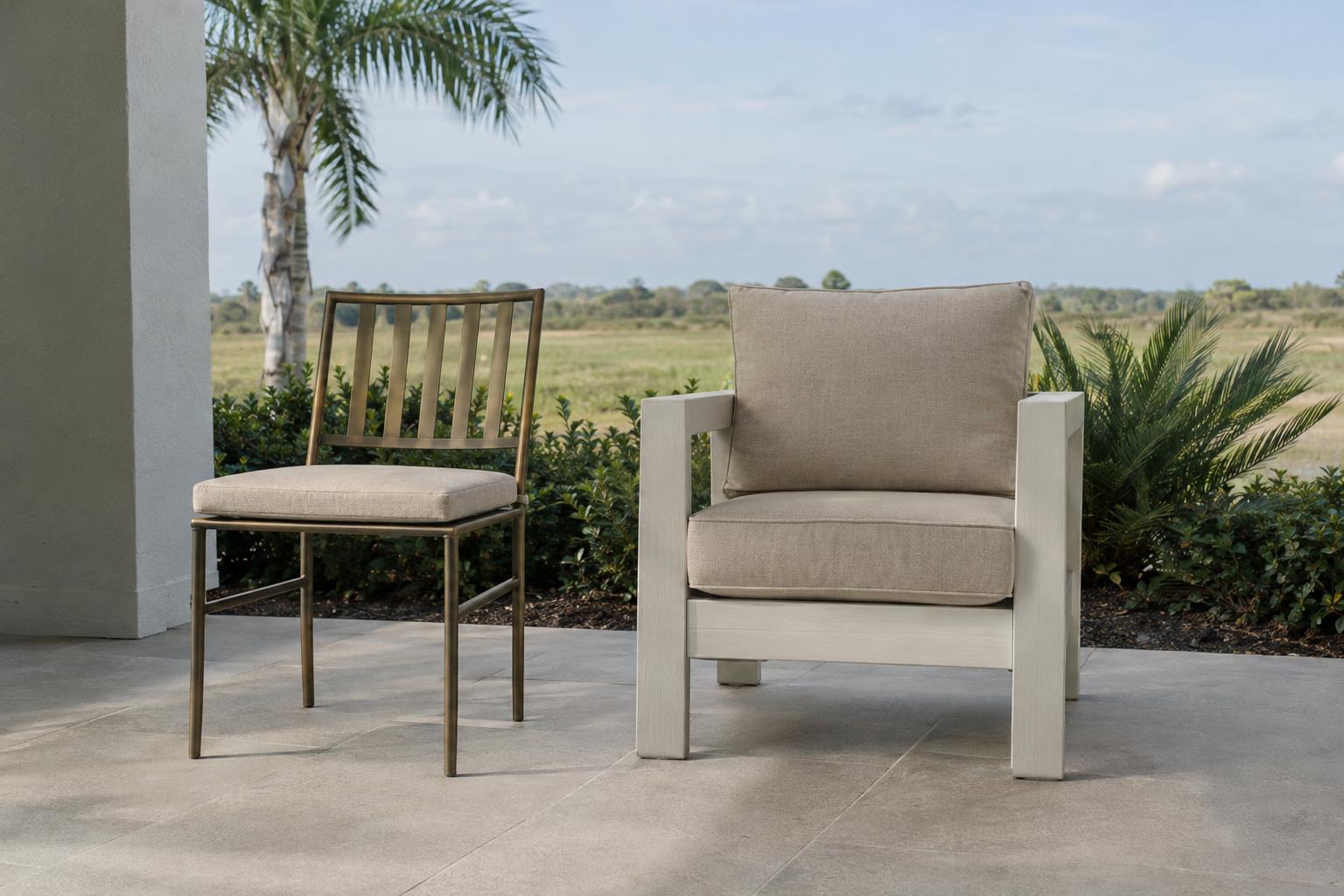
Outdoor chairs are usually chosen for how they look and how they hold up in the weather, but for many of our customers, the more important question is how the chair feels when you sit down and stand up. Parents, grandparents, and retirees who spend a lot of time on the patio notice quickly when a seat is too low, too soft, or too wobbly. A chair that is easy to use makes people want to sit outside more often, and a few practical features make a big difference.
Seat Height Makes Standing Easier
A seat that sits too low forces your knees and hips to do more work every time you stand. Most standard dining chairs have a seat height of roughly seventeen to nineteen inches, which is comfortable for many adults, while very low lounge seating can sit closer to fourteen inches. Someone with stiff knees or a sore back often finds the higher seat far easier.
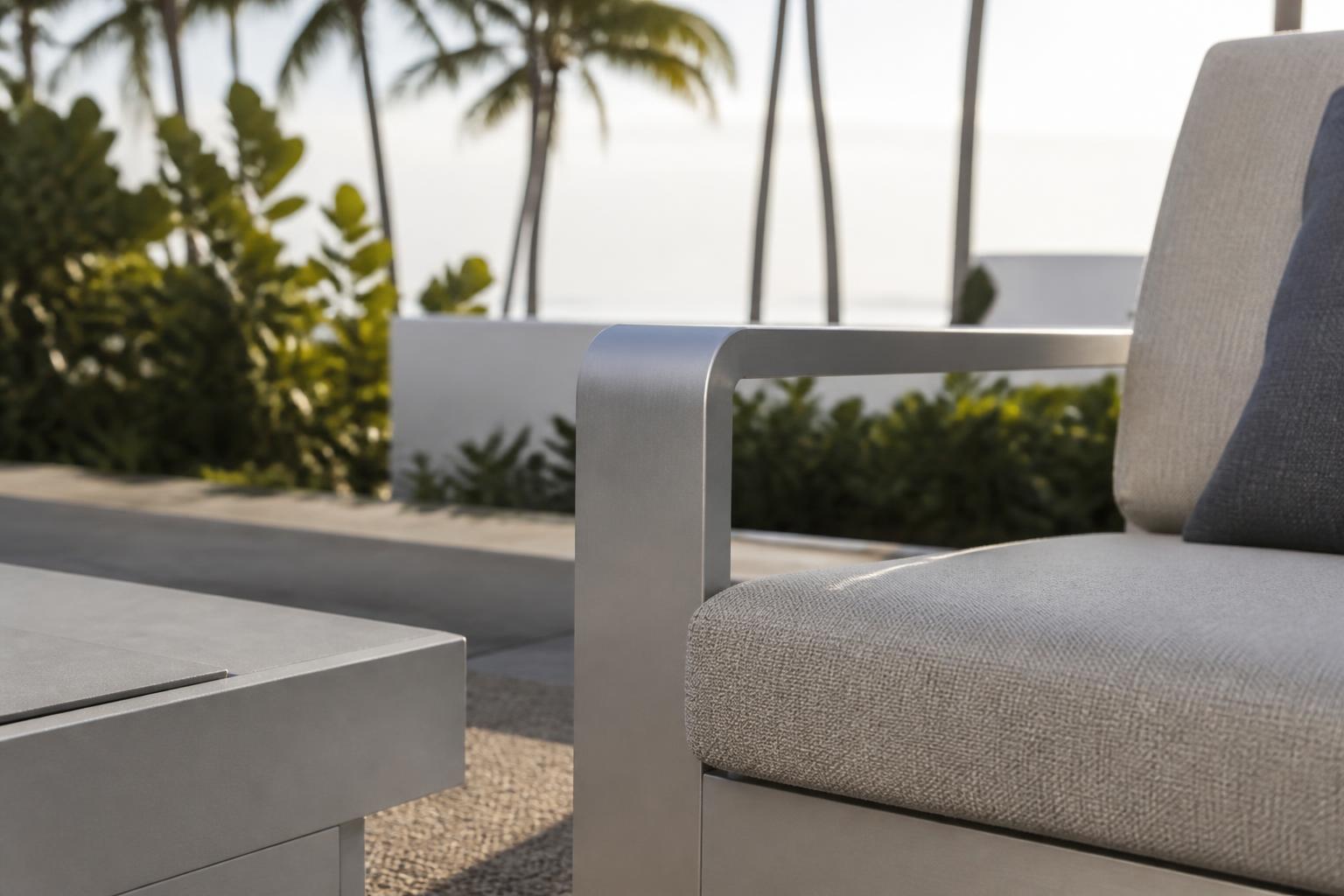
Remember that cushions change the seat height. A thick, soft cushion on a low frame can leave you sinking into the seat, and a firmer cushion tends to hold its shape and keep the height more consistent. If you are shopping in the showroom, sit in the chair with the cushion in place rather than judging the frame on its own.
Arms That Help You Rise
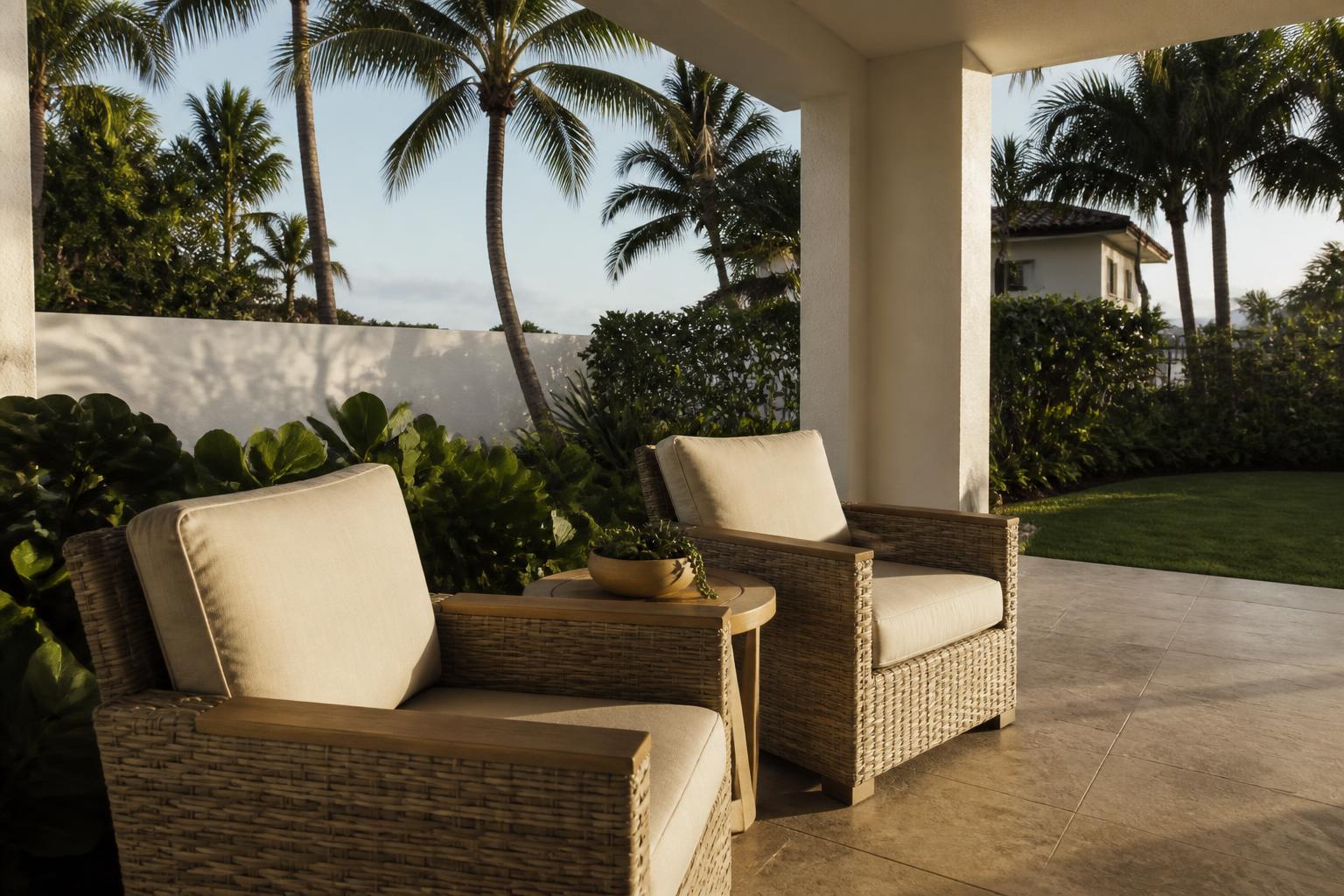
Sturdy armrests are one of the most helpful features for anyone who wants extra support standing up. Look for arms that are wide enough to push against and that sit at a comfortable height, roughly level with your elbow when your shoulders are relaxed. Flat, solid arms work better for pushing off than narrow or sharply curved ones.
Check that the arms are firmly attached and do not flex when you lean on them. Our dining chairs and seating chairs vary a great deal in arm style, so it is worth trying several. Club-style chairs tend to offer broad arms and a supportive seat, and our article on outdoor conversation sets explains how chairs are grouped to make conversation easier.
Firm Cushions and Supportive Backs
Softer is not always better. A very plush cushion feels wonderful for a minute, but it can make it harder to get out of the chair, because you sink in and have to lift yourself out. A firmer cushion with quick-drying fill offers support, holds its shape, and dries out faster after rain. A supportive back that reaches at least to mid-back keeps posture comfortable during a long meal or afternoon.
The National Library of Medicine’s MedlinePlus offers general information on falls and staying steady as we age, which is a helpful reminder that stable, well-fitting furniture is one small part of a safe outdoor space. Our article on quick-dry outdoor cushions explains how fill affects comfort after a rainstorm.
Stability and Frame Weight
A chair should feel solid when someone sits down or pushes up from the arms. A frame that slides across pavers, tips, or wobbles is more than an annoyance for anyone who relies on the chair for support. Heavier frames, such as cast aluminum or solid poly lumber, tend to feel planted, while lightweight chairs can shift when someone leans on the arm. Chairs with four legs and a wide base are generally steadier than those with a narrow, swiveling base.
Non-slip feet or glides help on smooth surfaces. Also think about the surface underneath: pavers with wide joints, uneven decking, and loose gravel can all make chairs less stable. Our guide to patio dining sets on pavers covers what to look for.
Layout for Easy Movement
Even the best chair is difficult to use if the layout is cramped. Leave clear space around each seat and along walkways, and avoid putting a coffee table so close that it becomes an obstacle. Placing a small side table within easy reach means fewer awkward stretches for a drink or a book. Our article on outdoor end tables explains how to choose one that suits your seating.
Materials and Finishes That Help
Material choice affects comfort more than people expect. Metal frames can get hot in direct sun, so shaded placement or a cushion that covers the areas you touch is worthwhile. Poly lumber is easy to clean, though darker finishes can warm up in direct sun, while wicker offers a softer look and a slightly forgiving feel. Whatever the material, smooth, rounded edges are more comfortable to lean on and less likely to snag clothing than sharp corners.
Consider the weight of the chair as well. A chair that is very heavy can be hard to pull in and out at the table, while one that is very light may slide when someone puts weight on it. The best balance is a frame that feels solid but glides smoothly, and it is worth testing that in the showroom by moving the chair yourself.
Matching Chairs to Real Habits
Ask a few simple questions before you choose. Who will use the chair most often? Will they sit for short periods or for entire afternoons? Do they need help standing, or is the priority simply lasting comfort? A chair for morning coffee with a newspaper has different needs than a dining chair used for two-hour meals with the family.
Households with more than one generation often benefit from a mix of seating. A few sturdier armchairs with firmer seats for anyone who wants extra support, alongside more relaxed lounge seating for those who prefer to recline, means everyone has a place that suits them. Our guide to pool deck furniture layouts for multi-generational households explores that idea further.
We are happy to talk through these choices with you and your family. Bringing the person who will use the chair most often into the showroom is the best way to find one that truly suits them.
Before You Decide
Remember that comfort is personal. What feels supportive to one person can feel stiff to another, so treat these guidelines as a starting point and let the people who will actually sit in the chairs have the final say before you buy.
Finally, consider how the chairs will look and feel over time. Firm cushions that dry quickly, finishes that do not get slick when wet, and frames that stay stable season after season all matter more for daily comfort than any single feature on a spec sheet, so it is worth choosing pieces that will still feel right in several years.
Frequently Asked Questions
What seat height is best for older adults?
Many people find a seat height in the upper teens of inches, with a firm cushion, easier to get in and out of than a low lounge seat. Trying the chair in person is the best test.
Are swivel chairs a good idea?
They can be convenient, but a swiveling chair can move when you push against it, so make sure it has a stable base and consider fixed chairs for anyone needing extra support.
Do arms really matter that much?
For many people, yes. Sturdy, flat arms give you something to push against when you stand.
Can I add support to a chair I already own?
A firmer cushion or a set of non-slip feet can help, but a chair with an unstable frame or low seat is usually better replaced.
If comfort and ease of use are a priority, call us at (561) 972-4661 or stop by our showroom at 105 Center Street in Jupiter so you can sit in the chairs and see which feels right.

About the Author
Chas Crofoot
Chas Crofoot is the owner of Beach House Patio Furniture, a family-owned outdoor furniture showroom in Jupiter, Florida. He specializes in wicker, cast aluminum, aluminum, poly lumber, and PVC pipe styles built to withstand the Florida climate, and helps coastal homeowners choose materials for durability and comfort.