
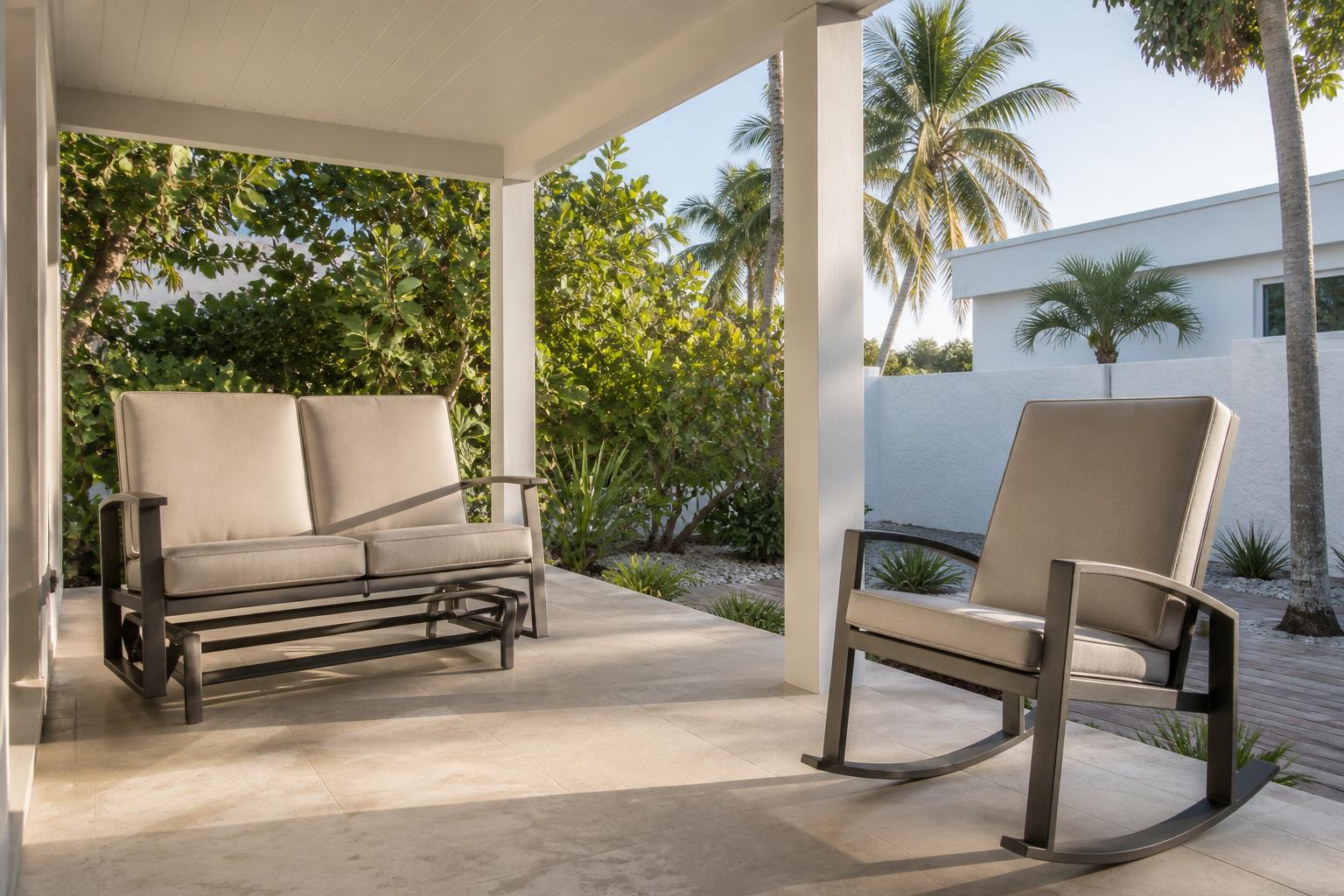
Gliders and rockers get lumped together often enough in casual conversation that a lot of shoppers walk in assuming they’re the same product with two names. They’re not, and the difference isn’t just vocabulary — it’s the frame construction, the floor space each one needs, and how the motion actually feels once you sit down.
How a Rocker Moves
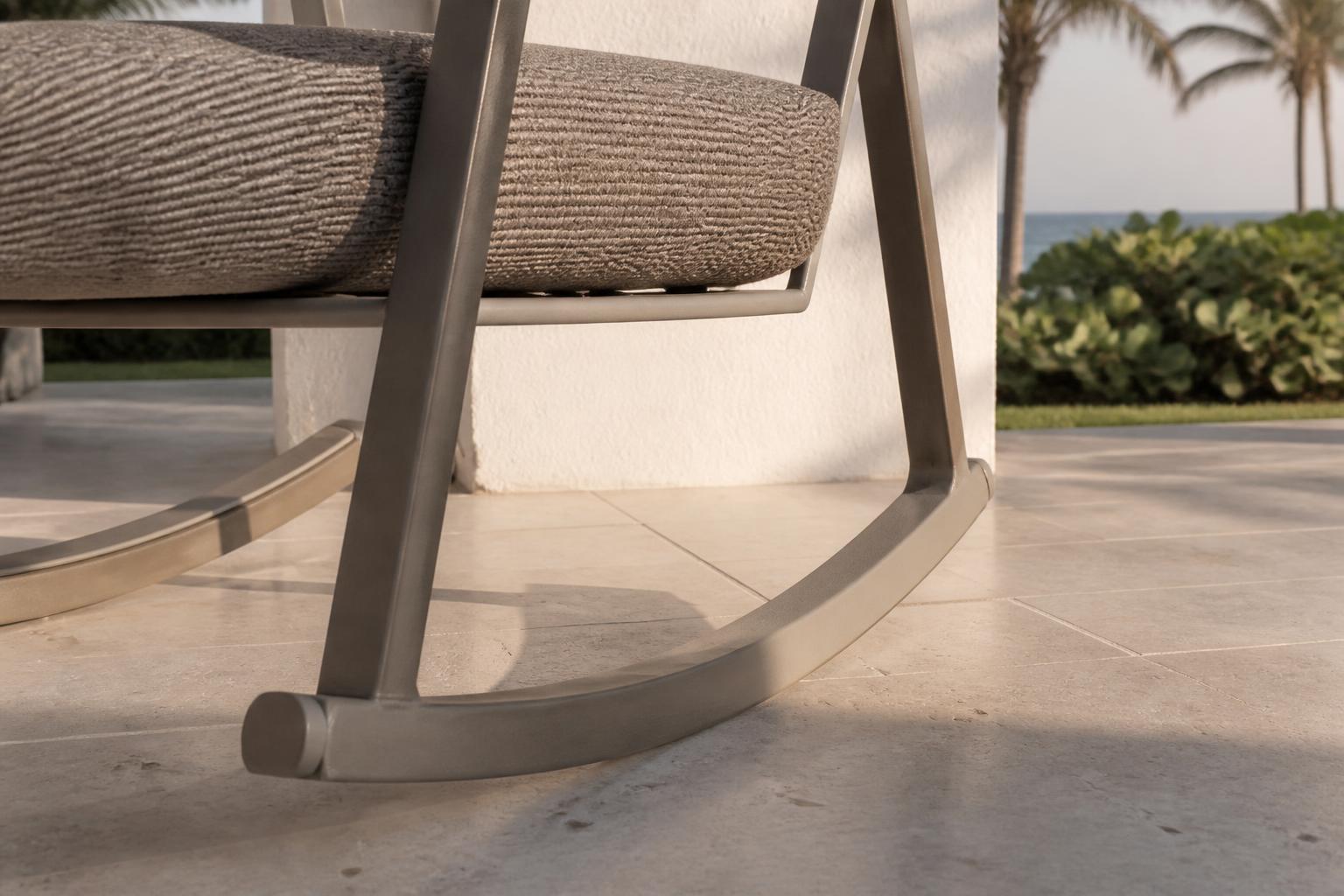
A traditional outdoor rocker sits on curved runners (or a rocking base built into the frame) that let the whole chair tip forward and back around a single pivot point. The motion is self-contained — the chair itself rocks, and its footprint stays roughly the same whether it’s moving or still. That makes rockers a straightforward drop-in for a covered porch, an entryway, or a spot next to a front door where floor space is fixed and predictable.
How a Glider Moves
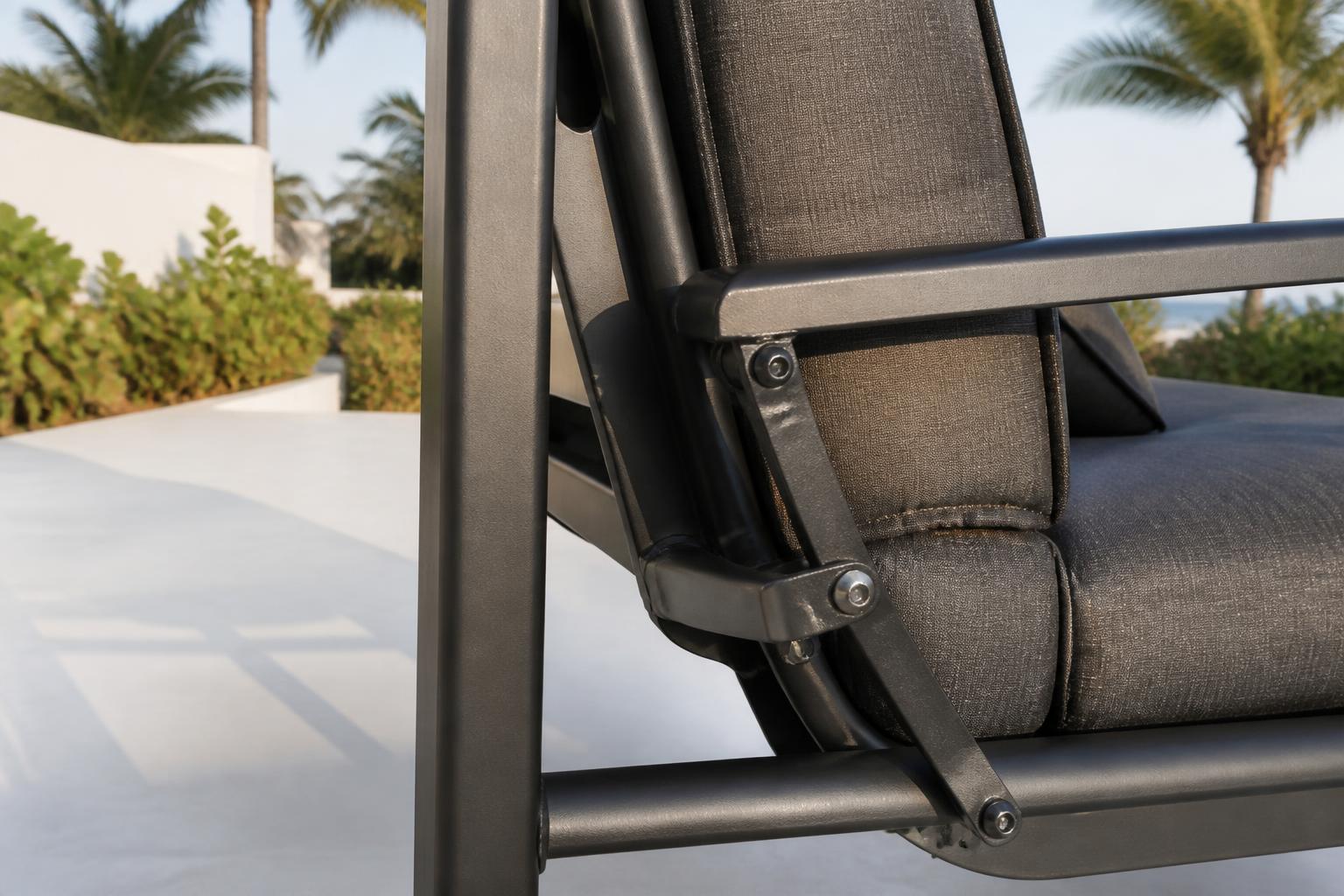
A glider doesn’t rock on its own base — it hangs or sits on a separate stationary frame and swings forward and back on that frame’s arms or a suspended mechanism, closer to the way a porch swing moves than the way a rocker tips. Because the seat itself moves relative to a fixed outer frame, a glider typically needs a bit of clearance in front of and behind the seat for that swing arc, even though the base of the frame doesn’t shift. Gliders are also more commonly built as two-seaters, which changes both the footprint and the way the motion feels — a slower, more suspended glide rather than a rocker’s tip-and-return.
Footprint and Placement
If floor space is tight — a narrow porch, a condo balcony, or a spot squeezed between a railing and a doorway — a single rocker is often the easier measurement, since its rocking motion doesn’t extend far past the chair’s own base. A glider, especially a two-person glider, needs the extra clearance for the swing arc accounted for on both sides, so it’s worth measuring the full swing distance, not just the frame’s resting footprint, before committing to a spot.
Two-Seat Options
Because gliders are more often built to seat two, they end up as the default choice when the goal is a shared piece — a spot for a couple to sit together in the evening, or a second seat for a guest without adding a separate chair. A glider bench with a center console or a fixed armrest divider can also work as two individual seats rather than one shared bench, which is worth asking about if you want the glide motion without necessarily sharing the full cushion. Rockers, by contrast, are almost always single-seat pieces, so a matched pair of two rockers is the more common way to seat two people who each want independent control over their own motion.
Frame Materials and Florida Weather
Rockers and gliders made from powder-coated aluminum or all-weather wicker over an aluminum frame hold up well to Florida humidity and salt air without the maintenance a natural-wood rocker would need. Sunbrella’s own description of its performance fabric notes that the color pigment is UV-stabilized through the fiber rather than surface-applied, which is relevant here because cushioned gliders and rockers alike spend long hours in direct porch sun — a fabric that only resists fading on the surface will show wear faster than one built to hold color all the way through.
Maintenance Considerations
The moving joints are the part worth paying attention to on either style — corrosion-resistant hardware holds up better than exposed steel over a season of coastal exposure. A rocker’s runner base has fewer moving parts overall, which generally means less to inspect. A glider’s suspended arm mechanism has more contact points, so it’s worth an occasional check that the hardware is still snug and the motion is still smooth rather than catching. On either style, cushions should be able to come off easily for cleaning or storage ahead of a storm — a removable cushion cover is worth checking for on any model you’re considering, since it makes seasonal cleaning far less involved than a fixed, sewn-on cushion.
Choosing Based on Who Uses the Porch Most
It’s worth thinking about who actually sits on the porch day to day, not just what looks right in a room photo. A porch used mostly for solo morning coffee or reading tends to favor a rocker — the motion is self-directed and doesn’t require coordinating with anyone else. A porch that regularly seats a couple or is a gathering spot for conversation in the evening often gets more use out of a glider bench, since two people can sit together and share the same gentle motion rather than each needing a separate chair. Some households split the difference with one glider bench and a single rocker off to the side, giving both a shared option and an independent one in the same space.
Seasonal Storage and Storm Prep
Ahead of a named storm, a single rocker is usually easy enough for one person to move indoors or into a garage on short notice, given its lighter, more compact frame. A two-seat glider bench is a heavier, bulkier item to relocate quickly, so if you live somewhere storm prep sometimes has to happen fast, it’s worth planning in advance where a glider would go and whether it takes two people to move safely, rather than figuring that out during an active storm watch.
To see how motion seating fits a full layout, read our guides to poly lumber rockers and poly lumber benches for front-porch seating, and browse our poly lumber chairs for current options.
Frequently Asked Questions
Is a glider harder to move around a patio than a rocker?
Usually yes, since gliders are often larger two-seat pieces and some models are heavier due to the separate frame-and-seat construction. A single rocker is typically the more portable option if you rearrange furniture seasonally.
Can a rocker fit two people?
Most outdoor rockers are single-seat pieces. If you want two people rocking or gliding together, a glider or a glider bench is the more common fit.
Which one is quieter?
Well-built examples of either style should move smoothly and quietly. Squeaking is more often a sign of a hardware or bushing issue than an inherent trait of one style over the other.
Do gliders need more porch clearance than rockers?
Generally yes, since the swing arc extends past the frame’s resting footprint on a glider, while a rocker’s motion stays within its own base.
Do I need to bolt a rocker or glider to the porch floor?
No — both styles are freestanding by design and rely on their own base weight and frame construction for stability during normal use. Anchoring is not typically needed for normal use, but follow the manufacturer’s instructions and bring lighter pieces in ahead of storms.
Can I add a glider or rocker to an existing porch seating group?
Yes — either style works well as an addition to existing porch furniture rather than requiring a full matched set, as long as the frame finish is a reasonably close match or intentionally contrasts as a distinct piece.
Do gliders and rockers come in the same color and finish options?
If you mix a rocker and a glider, keep the finish and color consistent so the two read as a set.
Call us at (561) 972-4661 or stop by our Jupiter showroom at 105 Center Street and ask what rocking and gliding seating we currently have on the floor. The motion difference is easier to feel than to describe, and we can talk through footprint against your actual porch or lanai dimensions while you’re here.

About the Author
Chas Crofoot
Chas Crofoot is the owner of Beach House Patio Furniture, a family-owned outdoor furniture showroom in Jupiter, Florida. He specializes in wicker, cast aluminum, aluminum, poly lumber, and PVC pipe styles built to withstand the Florida climate, and helps coastal homeowners choose materials for durability and comfort.