
Outdoor cushions take a beating in South Florida: sunscreen, pollen, salt air, and sudden afternoon downpours all leave their mark over a season, and how you clean and store them has a bigger effect on how long they last than almost any other single factor. We walk customers through proper cushion care constantly, usually right after they’ve invested in a new set and want to protect it, so here’s the process we actually recommend, step by step.
Step One: Brush Off Loose Debris Before Wetting the Fabric
Before any water touches the cushion, use a dry, soft-bristle brush to knock off loose dirt, sand, and pollen. Wetting a cushion that’s still covered in loose debris just turns dry dirt into a paste that grinds further into the fabric weave, making the actual cleaning step harder than it needs to be. This step takes a couple of minutes per cushion and makes a real difference in how easily stains lift out later.
Step Two: Wash With Mild Soap and a Soft Brush
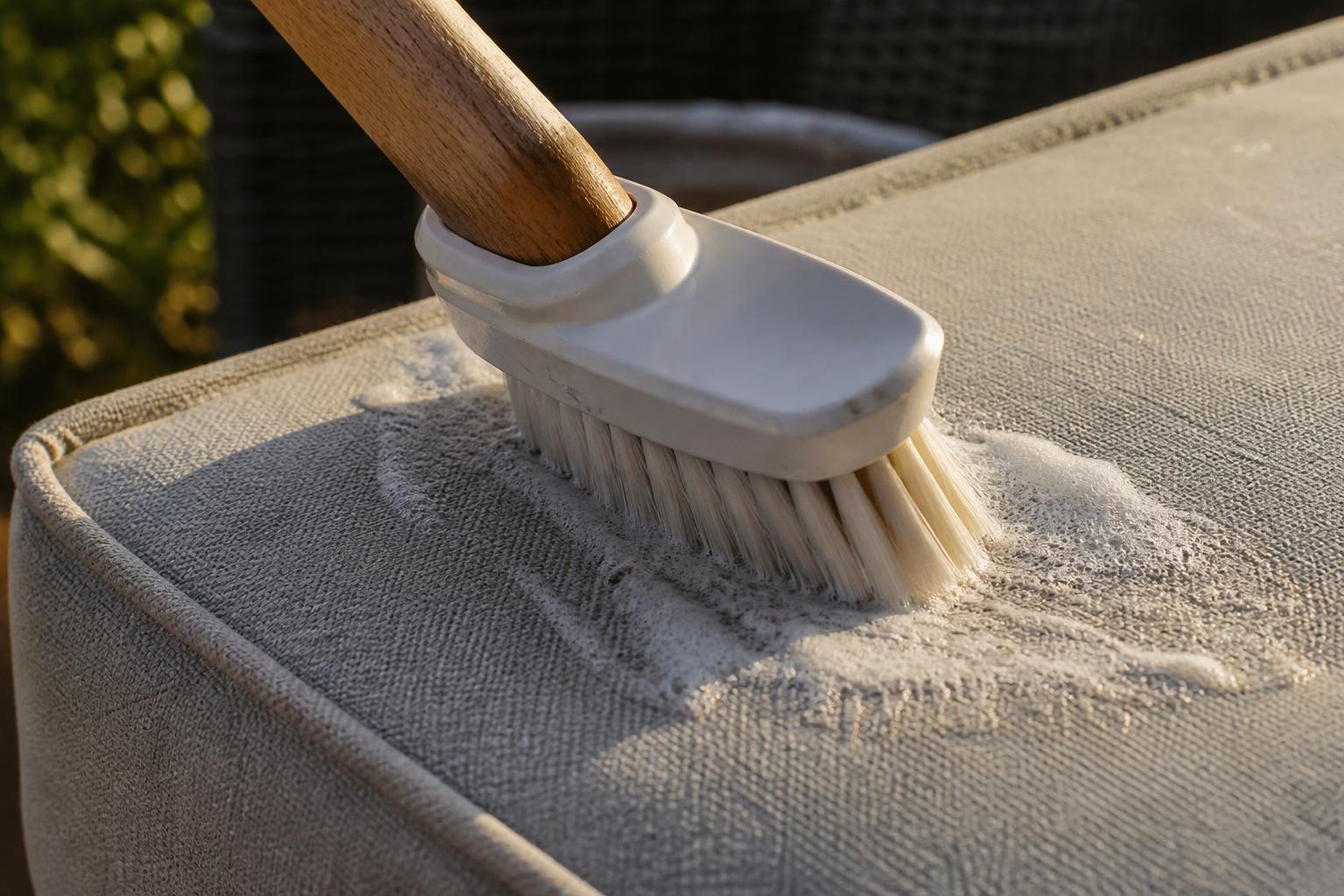
Mix a mild soap, not a harsh degreaser or bleach-based cleaner, with water and work it into the fabric with a soft-bristle brush in a circular motion. Let the soap sit on tougher stains for several minutes before rinsing, rather than scrubbing harder, since aggressive scrubbing can wear down a fabric’s water-repellent finish faster than the stain itself would have damaged it. Rinse thoroughly with a garden hose, making sure no soap residue remains, since leftover soap can attract dirt faster once the cushion dries.
For fabric with a factory-applied water-repellent or fade-resistant treatment, avoid harsh degreasers and bleach-based cleaners unless the manufacturer’s care label confirms they’re safe for that fabric, since the wrong cleaner can strip the treatment and shorten the life of an otherwise durable fabric. Sunbrella publishes its own cleaning instructions for its fabrics, which are worth following if your cushions use that brand, and our guide to Sunbrella fabric grades explains how the different grades compare.
Treating the Stains We See Most in Florida
Most cushion stains in our area fall into a few familiar groups, and each responds best to a slightly different approach. Sunscreen and body oils are the most common. They leave a yellowish or gray shadow where arms, legs, and heads rest, and they respond to mild soap and patience rather than force: work the soap in, let it sit for ten to fifteen minutes, then rinse and repeat if needed. Pollen and tree debris should always be brushed off dry first, because rubbing wet pollen pushes the color into the weave. Bird droppings and fallen berries are best left to dry completely, lifted off with a dull edge, and then washed, since wiping them while fresh spreads the stain over a larger area.
Whatever the stain, test any cleaner stronger than mild soap on a hidden spot first, such as the underside or the back of a zipper flap. Fabrics react differently, and a quick test takes a minute compared with the cost of replacing a cushion that was discolored by the wrong product.
Step Three: Dry Cushions Standing on Edge, Not Flat
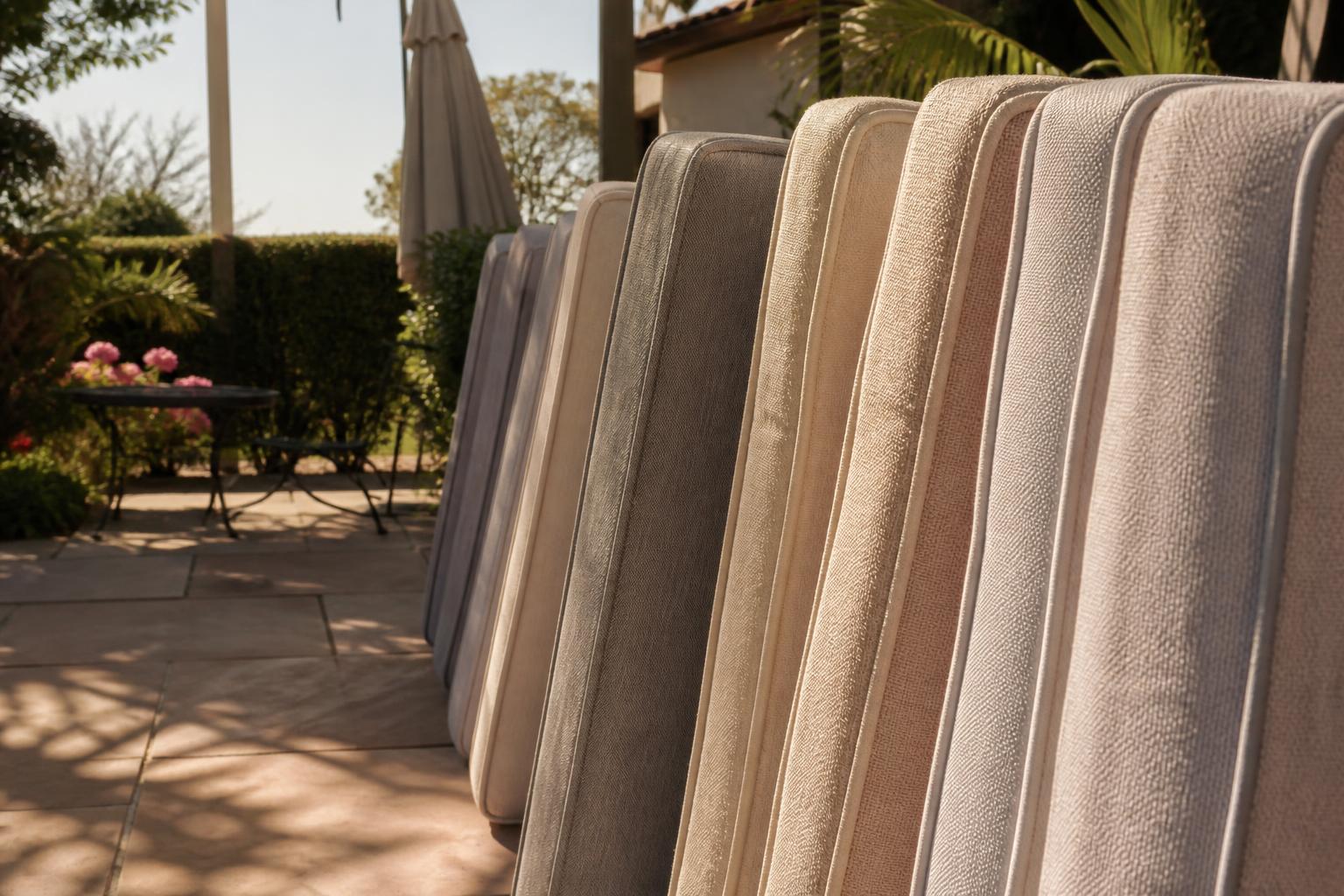
After rinsing, stand cushions upright on one edge in direct sun rather than laying them flat. Standing them up lets water drain out of the foam core instead of pooling against the fabric backing, which is one of the most common causes of mildew and musty odors in outdoor cushions. A cushion left flat to dry can look dry on the surface while still holding moisture deep in the foam for days, and that trapped moisture is exactly what mildew needs to take hold.
Full sun and a breezy spot speed up drying considerably. In our experience, most standard-density foam cushions take a full day to dry completely, and larger deep-seating cushions can take longer, so plan cleaning days when you won’t need the furniture back in service immediately.
Step Four: Confirm Cushions Are Completely Dry Before Storing
This is the step people rush the most, and it’s the one that causes the most storage problems. A cushion that feels dry on the surface can still be damp inside the foam, and sealing even slightly damp cushions into a storage bag or deck box creates a closed, humid environment that mildew thrives in. Press firmly on the thickest part of each cushion; if you feel any coolness or dampness at all, give it another day in the sun before storing.
Step Five: Store in a Ventilated, Shaded Container
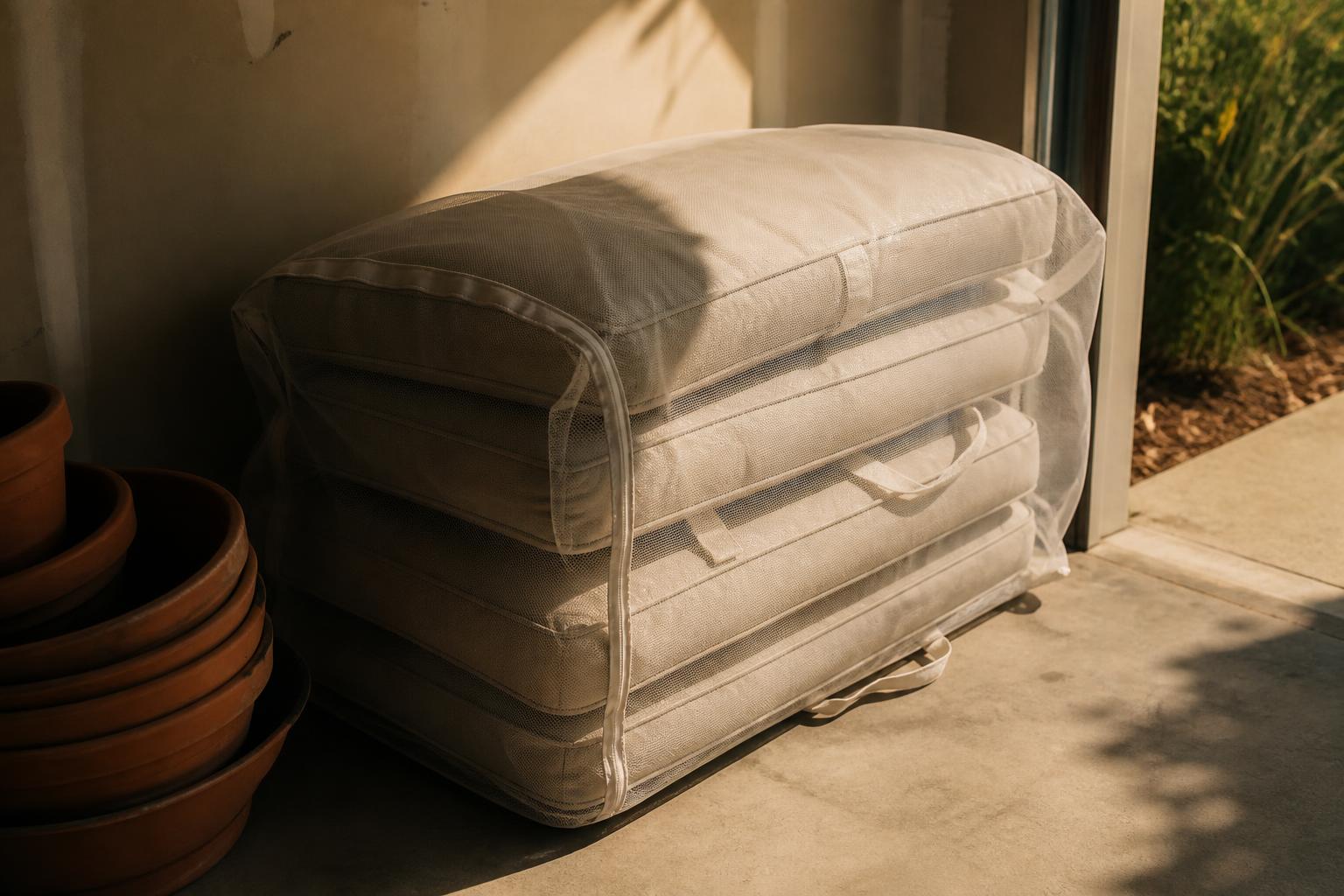
Once cushions are fully dry, store them in a breathable storage bag or a vented deck box rather than a completely airtight container. A little airflow prevents any residual humidity from the surrounding environment from building up during off-season storage. Keep the storage container out of direct sun if possible, since UV exposure continues to degrade fabric even while cushions aren’t in use, and choose a spot elevated off a pool deck or patio floor to avoid standing water reaching the container during a storm.
What “Off-Season” Means in South Florida
In most of the country, the off-season is winter. Here it is closer to the opposite. Many of our customers are seasonal residents who close up a home or condo for the summer, which means cushions may sit unused through the hottest, wettest, and stormiest months of the year. That changes the storage plan. Summer humidity in Palm Beach County is high enough that a cushion stored in a closed outdoor box can pick up moisture from the air alone, even if it went in perfectly dry.
If you will be away for several months, indoor storage is the safer choice: a garage, a utility room, or a closet inside the air-conditioned part of the home. Stand cushions on edge or stack them loosely rather than packing them tight, and avoid wrapping them in plastic sheeting, which traps humidity against the fabric. If someone checks on the property while you are away, ask them to open the storage area for a few minutes on each visit so the air can turn over.
Foam Cores and Why They Matter for Storage
The foam inside a cushion behaves differently in storage depending on its type. Quick-dry, open-cell foam, common in better-quality outdoor cushions, sheds water and dries faster than closed-cell or standard upholstery foam, which makes it more forgiving if a cushion goes into storage slightly underdried. Standard density foam can hold moisture deep in its core far longer than the fabric cover suggests, so if you’re not sure what foam type your cushions use, err on the side of extra drying time before sealing anything away for the off-season.
Cushions that have been compressed under heavy furniture for long stretches can also lose some loft over time, so fluffing and reshaping them by hand before storage, rather than stacking them under a heavy object, helps them keep their original shape when you bring them back out next season.
A quick label check before you buy replacement cushions down the road can save time later, since knowing the foam type up front tells you exactly how much drying time to plan for after every future cleaning.
Frequently Asked Questions
How often should outdoor cushions be deep cleaned?
A thorough cleaning two to three times during the outdoor season, plus one final cleaning before off-season storage, keeps most cushions looking and smelling fresh in a typical Florida household.
Can I machine wash removable cushion covers?
Some removable covers are machine washable on a gentle cycle, but always check the specific care tag first, since not every outdoor fabric is rated for machine washing even if the cover unzips.
What should I do if mildew has already developed on a cushion?
A diluted mild soap solution with a soft brush can lift light surface mildew, but stubborn or deeply set mildew may require a specialized outdoor fabric cleaner, and in some cases the foam core itself may need replacing if moisture has been trapped for an extended period.
Is it safe to store cushions in a garage during hurricane season?
Yes, and we generally recommend it. A garage or fully enclosed space protects cushions far better than any outdoor storage box during an active storm, so bring them inside ahead of a hurricane watch rather than relying on a deck box alone.
If your current cushions are past the point cleaning can fix, bring a sample or photo into our Jupiter showroom and we can help you choose from our Sunbrella fabrics for a replacement that fits your existing frame.

About the Author
Chas Crofoot
Chas Crofoot is the owner of Beach House Patio Furniture, a family-owned outdoor furniture company in Jupiter, Florida. Since 1979, Chas and his team have manufactured and sold high-quality patio furniture — specializing in wicker, cast aluminum, aluminum, poly lumber, and PVC pipe styles built to withstand the Florida climate. With over four decades of hands-on experience in outdoor furniture design and manufacturing, Chas brings deep expertise in material selection, durability, and comfort for coastal living.