
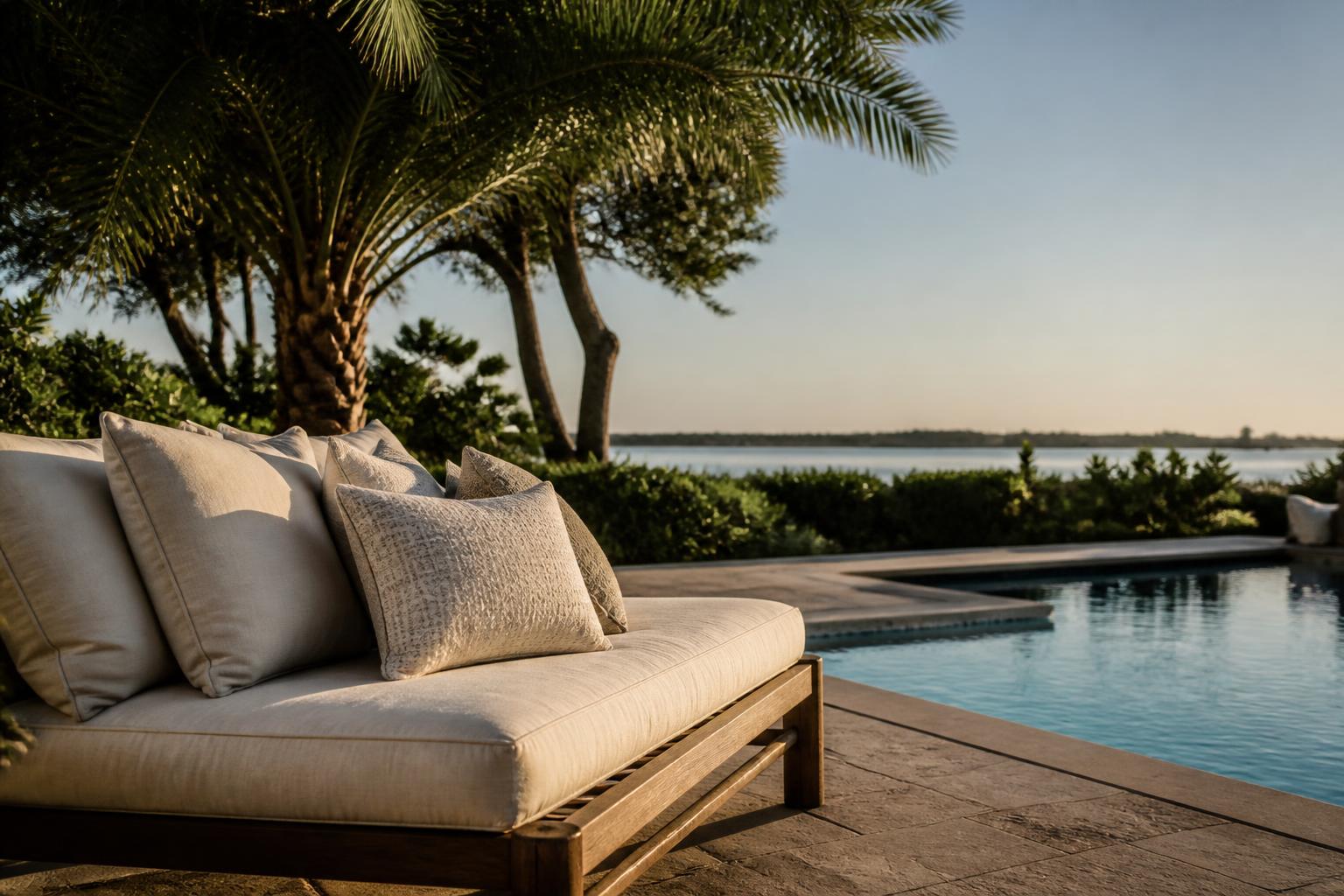
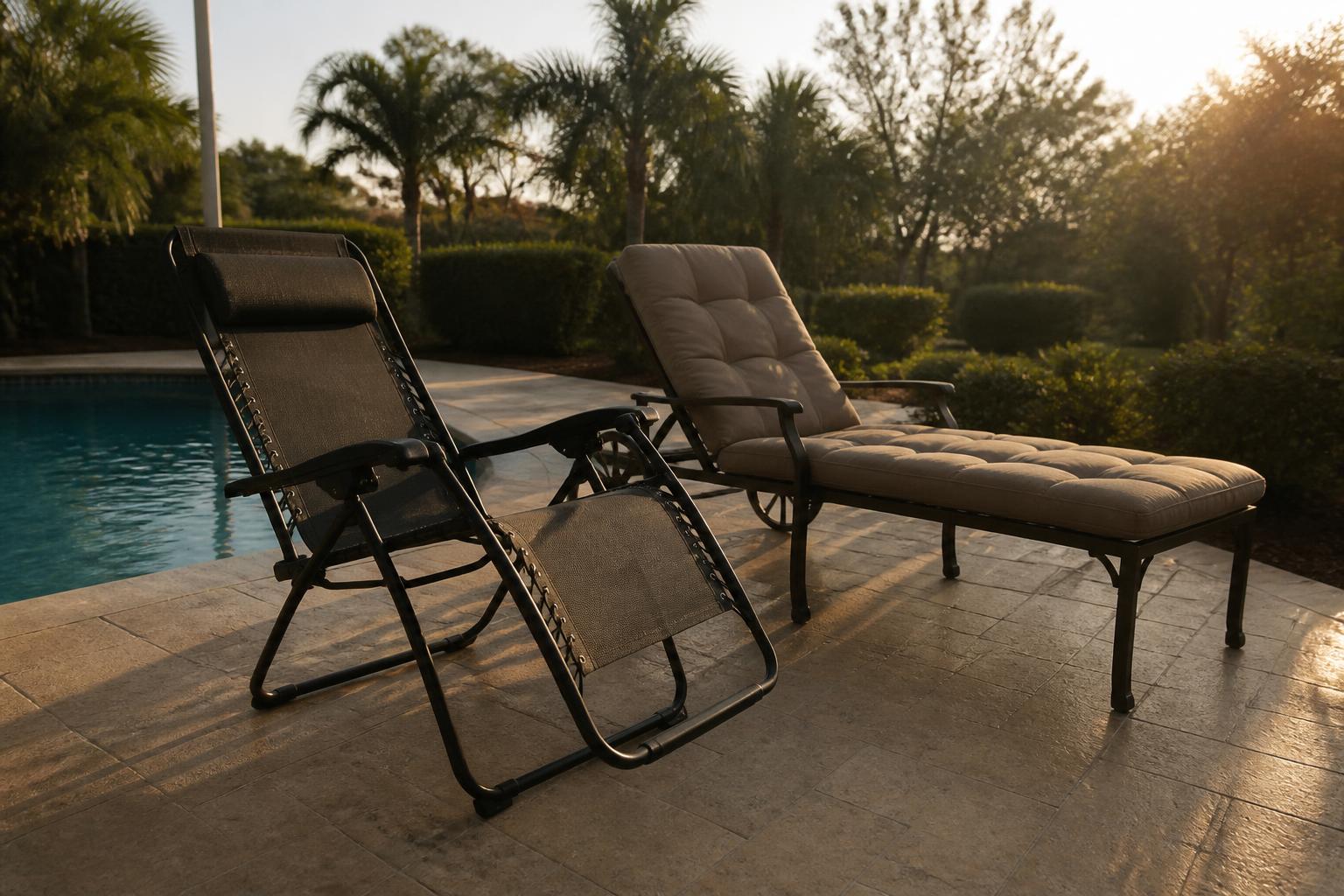
Outdoor daybeds and cabana beds are some of the largest single pieces we help customers plan for in our Jupiter showroom, which means getting the sizing and placement right matters more here than with almost any other furniture category. A daybed that looks perfectly proportioned in a showroom display can dominate a real pool deck if the dimensions aren’t checked carefully first.
Daybed vs. Cabana Bed: What’s the Difference
An outdoor daybed is typically a single wide lounging surface, roughly the width of two lounge chairs combined, often with a low frame and a thick cushion designed for lying flat or propped up on pillows. A cabana bed goes a step further, usually adding a canopy frame — either a fixed roof structure or a retractable fabric canopy — that provides shade over the lounging surface itself, functioning almost like a private shaded room at the edge of the pool deck.
Daybeds work well when your pool area already has shade from an overhang, pergola, or mature landscaping, since you’re mainly adding the lounging surface itself. Cabana beds make more sense on an open, fully exposed pool deck where there’s no existing shade structure, since the canopy does that work on its own.
Sizing a Daybed or Cabana Bed to Your Pool Deck
Most daybeds run somewhere between 5 and 7 feet wide and 6.5 to 7.5 feet long, which is a significant footprint — plan for at least 3 feet of clearance on all sides for walking room, more if the daybed sits along a primary walking path around the pool. Cabana beds need additional overhead clearance for the canopy frame, plus enough clear space around the base that the canopy structure doesn’t cast the entire lounging surface in permanent shadow if you actually want some sun exposure during parts of the day.
Before ordering, measure your actual pool deck dimensions and mark out the daybed or cabana bed footprint with tape or a length of rope so you can see how much usable deck space remains for walking, other seating, or pool equipment access.
Orientation and Access Around the Pool
Beyond raw footprint, think through how people will actually approach and use the piece once it’s installed. A daybed placed with its long side facing the pool gives the most people a direct water view at once, while a daybed tucked into a corner perpendicular to the water tends to work better for households that want a slightly more private, tucked-away lounging spot rather than a piece positioned as the pool deck’s visual centerpiece.
Access matters too — a daybed or cabana bed should have a clear, level approach from at least one side, ideally not requiring guests to step around pool equipment, a skimmer basket, or landscaping to reach it. If your deck has a slight slope or drainage grade, confirm the frame’s leveling feet can accommodate it so the daybed doesn’t rock or sit unevenly once fully loaded with cushions and people.
Single Daybeds vs. Sectional-Style Configurations
Some manufacturers offer sectional-style daybed systems — modular pieces that can be arranged as one large daybed or split into two smaller chaise-style loungers depending on the day’s needs. This flexibility is worth considering if your household’s use varies, for example hosting larger groups occasionally but usually wanting individual loungers for everyday use. A fixed single-frame daybed is simpler and typically more budget-friendly, but it commits you to one configuration, so think through how consistently you expect to use the space one way versus the other before choosing between a fixed daybed and a modular system.
Materials for Direct Pool and Sun Exposure
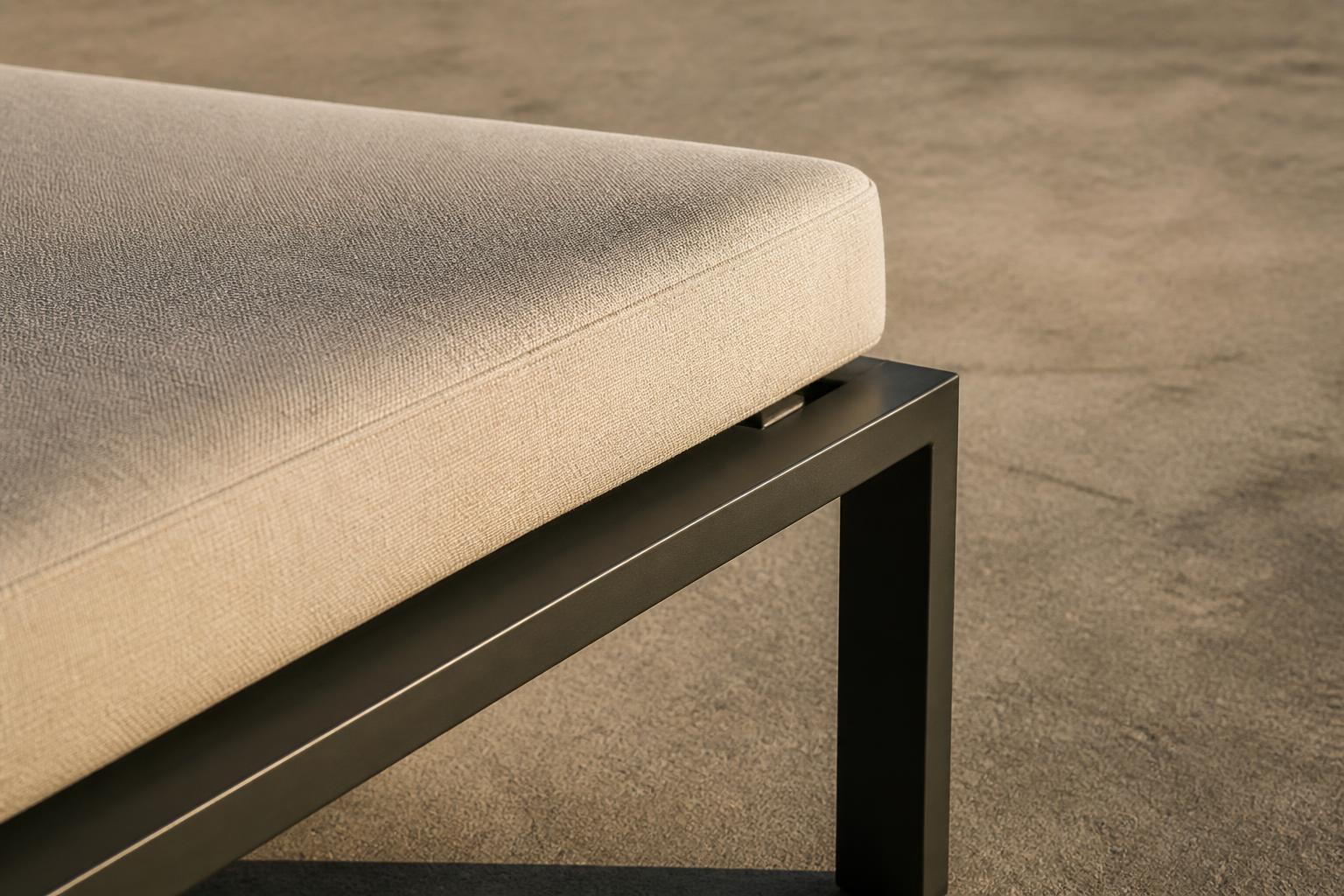
Because daybeds and cabana beds sit directly at the pool’s edge, they take on more direct water contact and sun exposure than almost any other furniture piece on the property. Look for a powder-coated aluminum or teak frame — both resist the combination of pool chemicals, humidity, and direct sun better than untreated wood or standard painted metal. Quick-dry foam cushions wrapped in a performance fabric like Sunbrella are worth the investment here specifically because daybed cushions are large, expensive to replace, and see more direct splash exposure than a standard lounge chair cushion set back from the water’s edge.
If you’re adding a cabana bed’s fabric canopy, confirm it’s rated for continuous sun and rain exposure rather than a decorative-only fabric, since that canopy will see more continuous weather exposure than almost any other soft good on your property.
Cushion Storage and Off-Season Care
Because daybed and cabana bed cushions are larger and typically more expensive than a standard lounge chair cushion, it’s worth planning for their storage from the start rather than after the first heavy rain catches you off guard. A storage bench, deck box, or covered area near the pool gives you somewhere to move cushions during extended rain, ahead of a named storm, or during the parts of the year when the daybed sees less regular use. Even quick-dry foam benefits from being kept out of standing water and direct rain when it’s not actively in use, since repeated soaking over time is what eventually breaks down cushion foam faster than sun exposure alone.
Frame Assembly and Delivery Considerations
Because daybeds and cabana beds are among the largest pieces we deliver, it’s worth planning for their assembly and placement before the delivery date arrives. Most frames arrive in sections that are assembled on site rather than shipped fully built, and a cabana bed’s canopy structure adds an additional assembly step beyond the base frame itself. Confirm your intended spot on the pool deck is clear and accessible before delivery, including enough overhead clearance for a cabana bed’s canopy frame to be raised into place without interference from an existing pool cage, overhang, or landscaping.
Weight Capacity for Shared Use
Because daybeds are often used by more than one person at a time — a couple, or a parent with young children — confirm the frame’s total weight capacity rather than assuming a single-person lounge chair rating applies. Reputable manufacturers publish a combined weight rating for daybeds specifically, and it’s worth checking that number against how your household actually plans to use the piece before ordering, especially for a wider daybed intended to comfortably seat two adults side by side.
Pairing a Side Table and Shade Accessory
A daybed rarely functions well as a completely standalone piece — most households find they want somewhere close by to set a drink, a book, or sunscreen without reaching across the cushion. A low side table sized to sit flush with the daybed frame’s height works better here than a taller accent table, since it stays within easy reach without requiring anyone to sit up fully. If the daybed doesn’t already include a canopy, a separately mounted umbrella positioned to shade at least the head end of the bed extends how long it’s comfortable to use through the middle of a Florida afternoon.
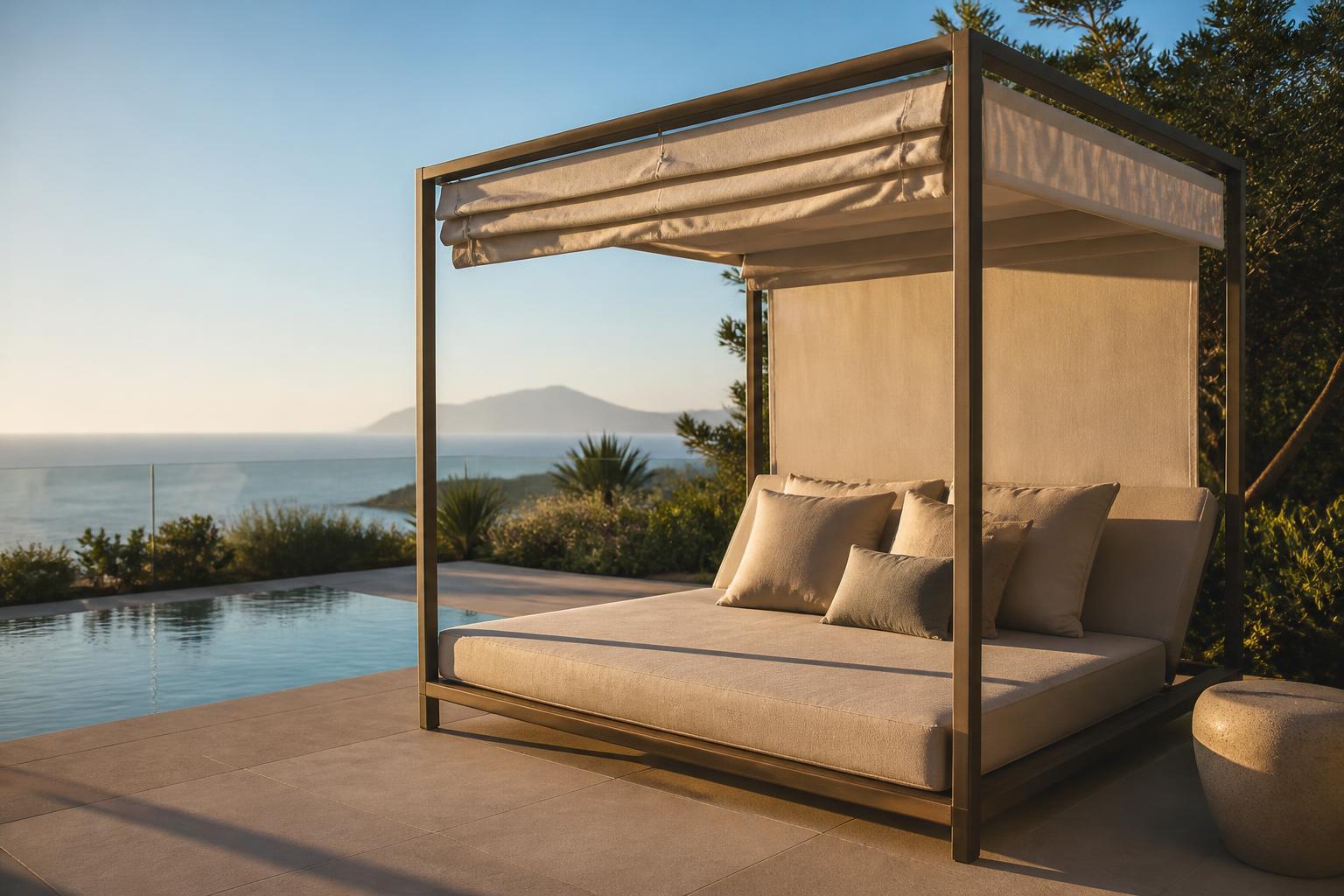
Include canopy storage in your pool-area weather plan. Review National Weather Service wind-safety guidance and follow the canopy manufacturer’s directions before winds arrive.
Frequently Asked Questions
Can a daybed sit directly at the pool’s edge without a protective deck?
Yes, as long as the frame material is rated for direct pool chemical and splash exposure — aluminum and teak both hold up well in that placement.
Does a cabana bed’s canopy need to be taken down for storms?
Yes — retractable canopy fabric should be closed or removed ahead of high wind, the same way you’d treat a patio umbrella.
How much clearance should I leave around a cabana bed?
Plan for at least 3 feet of walking clearance on all sides, and confirm the canopy frame’s overhead height clears any existing pool cage or lanai structure before ordering.
If you’re planning a daybed or cabana bed for your pool deck, bring your measurements to our Jupiter showroom and we’ll help you confirm the right size and frame material for your exact space. Call (561) 972-4661 to discuss your measurements and current options.

About the Author
Chas Crofoot
Chas Crofoot is the owner of Beach House Patio Furniture, a family-owned outdoor furniture company in Jupiter, Florida. Since 1979, Chas and his team have manufactured and sold high-quality patio furniture — specializing in wicker, cast aluminum, aluminum, poly lumber, and PVC pipe styles built to withstand the Florida climate. With over four decades of hands-on experience in outdoor furniture design and manufacturing, Chas brings deep expertise in material selection, durability, and comfort for coastal living.