
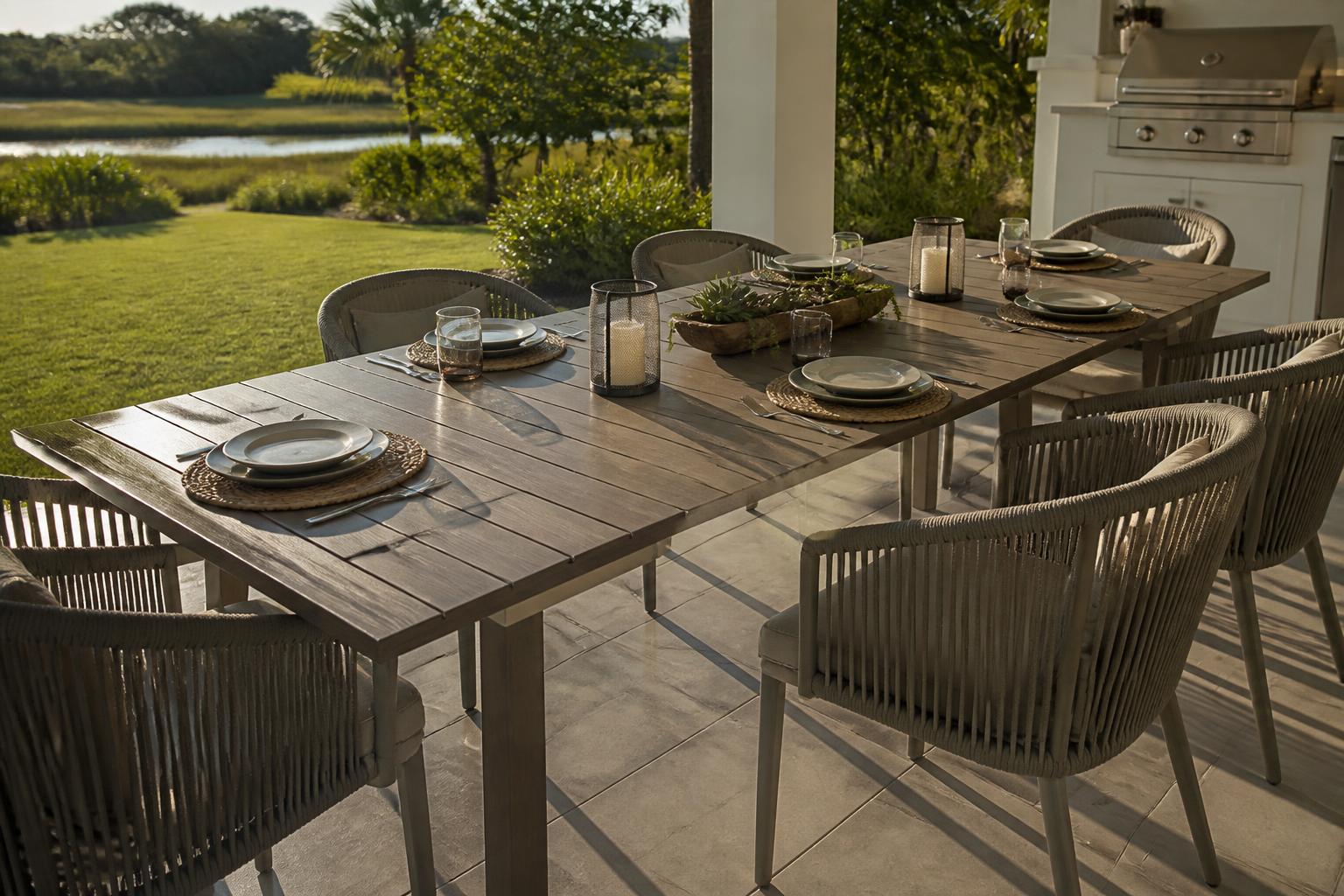
One of the most common questions we get from customers walking through our Jupiter showroom is whether they should size their outdoor dining table for the four or six people who eat there most weeknights, or for the ten or twelve who show up for a holiday cookout twice a year. It’s a real tension, because a table sized for the big gathering can feel oversized and awkward on an ordinary Tuesday, while a table sized for daily use leaves guests standing at Thanksgiving. Extendable tables exist specifically to solve that problem, but they aren’t automatically the right answer for every patio, and we walk a lot of customers through the tradeoffs before they decide.
How Extendable Outdoor Tables Actually Work
Most extendable outdoor dining tables use one of two mechanisms: a butterfly leaf that folds up and stores underneath the tabletop, or a separate leaf you insert into a gap created when you pull the two halves apart. Butterfly-leaf tables tend to be more convenient day to day because the extra leaf never leaves the table, so there’s nothing to store, misplace, or carry from the garage. Insert-leaf tables often extend further in total, since the leaf isn’t limited by the size of the underside storage cavity, but you do need a dry, protected place to keep that leaf when it’s not in use, which matters more in a Florida climate where humidity can warp an improperly stored wood leaf over time.
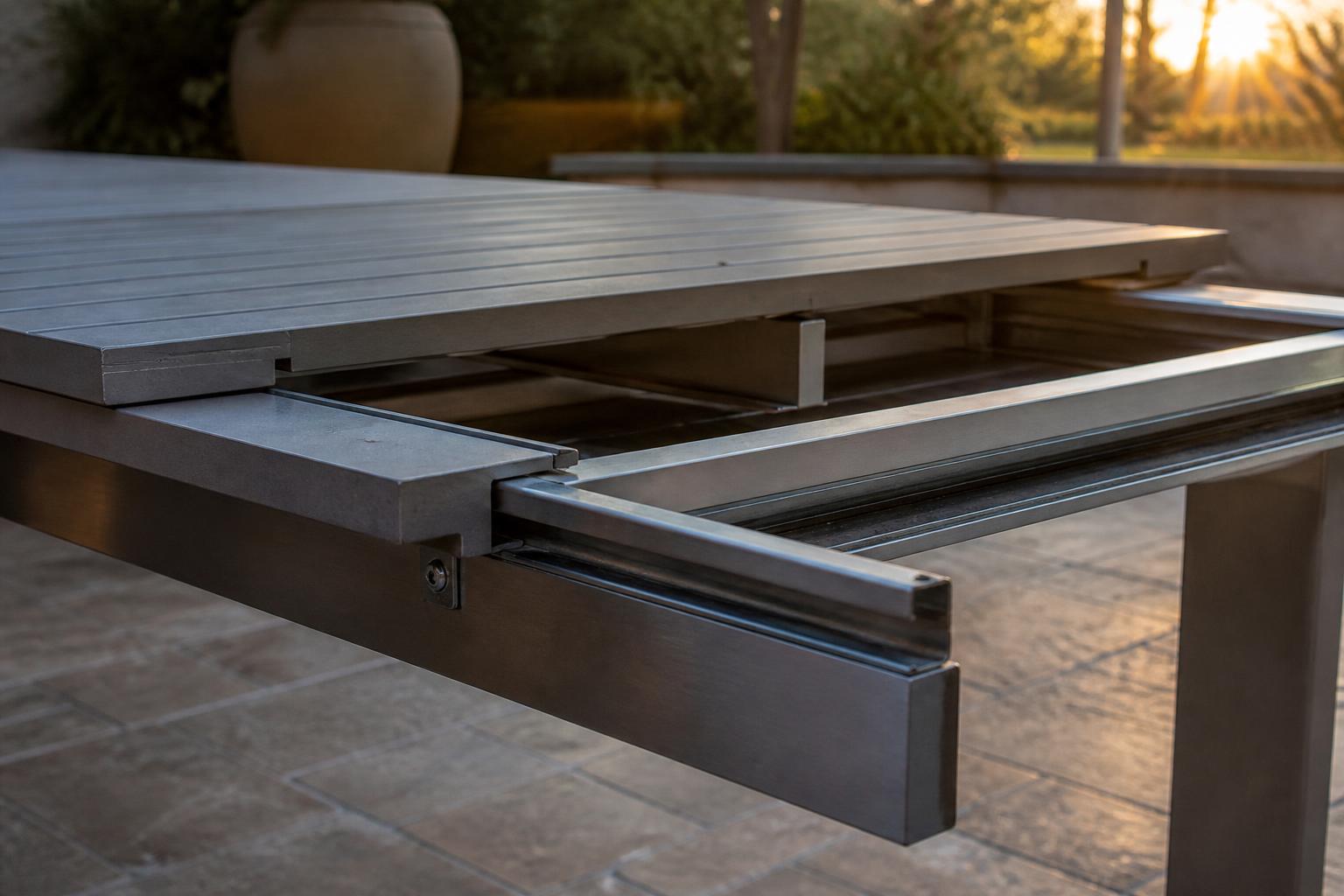
Aluminum and powder-coated steel extension mechanisms hold up well outdoors because they don’t swell or stick the way some wood slides can in high humidity. If you’re looking at a table with a wood or wood-look top, ask specifically about the material of the slide rails and hardware underneath, since that’s the part that actually takes the wear every time the table is opened and closed.
When a Fixed-Length Table Is the Better Choice
Fixed-length tables have real advantages that get overlooked in the rush to buy something flexible. They’re structurally simpler, which generally means fewer moving parts to maintain and a lower price point for the same overall build quality. A fixed table also tends to sit more stably on uneven pavers or a slightly sloped patio, since there’s no sliding mechanism that can bind or rack out of square over time.
If your patio genuinely never needs to seat more than the people who live in the home, or if you already have a separate space for overflow entertaining, like a great room that opens onto the lanai, a fixed table sized correctly for daily use is usually the simpler and more durable choice. We see this a lot in smaller Jupiter and Tequesta condos and townhomes, where floor space is at a premium and a table that only ever needs to do one job is easier to live with than one that needs storage room for a leaf it rarely uses.
Measuring Your Space Before You Decide
Before choosing between extendable and fixed, measure the actual footprint available on your patio or lanai, including clearance for chairs to slide back and for people to walk around the table while it’s in use. A good rule of thumb is at least 24 to 30 inches of clearance behind every seated chair. If your fully extended table wouldn’t leave that clearance, an extendable option may look great folded down but become unusable at its largest size, which defeats the purpose of buying it in the first place.
It’s also worth measuring the doorway or gate your furniture will pass through during delivery, particularly for insert-leaf tables that ship in multiple pieces or extendable tables with a wider closed-position footprint than a similarly-seated fixed table. We factor this into every table recommendation we make in the showroom, since a table that doesn’t fit through the space it needs to reach isn’t the right table no matter how well it seats your guest list on paper.
Matching the Table to How You Actually Entertain
We ask every customer how often they actually host larger groups, because the honest answer usually points to the right table faster than any spec sheet. If you host six or more people only a handful of times a year, an extendable table that lives most of the year in its compact size, then opens up for the holidays or a birthday gathering, tends to get the best long-term satisfaction. If you regularly seat eight or more, sizing a fixed table for that larger number from the start avoids the hassle of extending and storing a leaf every time, even if it means a bigger table taking up patio space year-round.
Chair style matters here too. Stackable or lightweight chairs make it much easier to bring in extra seating on the occasions your extendable table is fully open, without committing patio storage space to chairs that only get used a few times a year.
A Quick Layout Check Before You Order
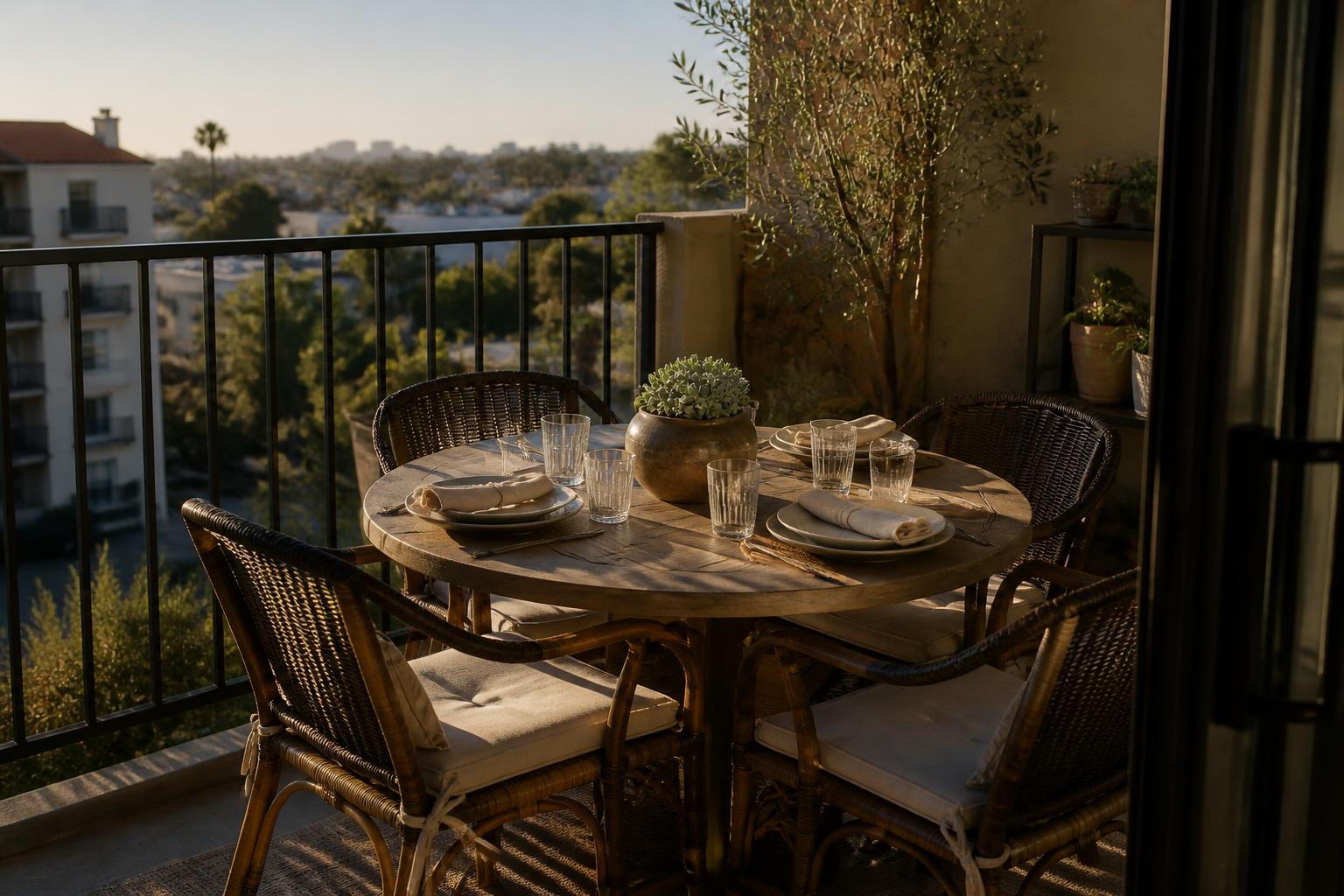
Make the decision with the table at both sizes in mind. Mark the closed and extended footprints on the patio with painter’s tape, then place chairs where they would sit for a normal meal and for the largest gathering. Walk the route from the kitchen or grill, open any nearby door, and make sure a guest can leave a chair without everyone else standing up. If someone in the household or a regular guest uses a mobility aid, use the U.S. Access Board’s clear-floor-space guidance as a useful starting point for planning unobstructed circulation; a private patio does not automatically have the same legal requirements, but the comfort test is still valuable.
Once you have the footprint, compare it with the proportions of the outdoor dining furniture you are considering. The best table is one that leaves room for daily movement when closed and still works safely when extended, rather than one that only fits in a showroom-style diagram.
Include the everyday details in that test: a person carrying plates from the house, someone opening a grill lid, and chairs that may be pulled back at the same time. A rectangular table can be efficient along a wall, while a round table may make circulation easier in a compact corner. Those observations help determine whether flexibility is actually useful or whether a fixed size will make the patio easier to use every day.
Frequently Asked Questions
How much do extendable outdoor tables typically weigh compared to fixed tables?
It depends on the frame material more than the extension mechanism, but butterfly-leaf and insert-leaf tables generally add some weight and hardware compared to an equivalently sized fixed table, since they need internal slides or leaf supports.
Can I leave the extra leaf outside if I don’t have indoor storage?
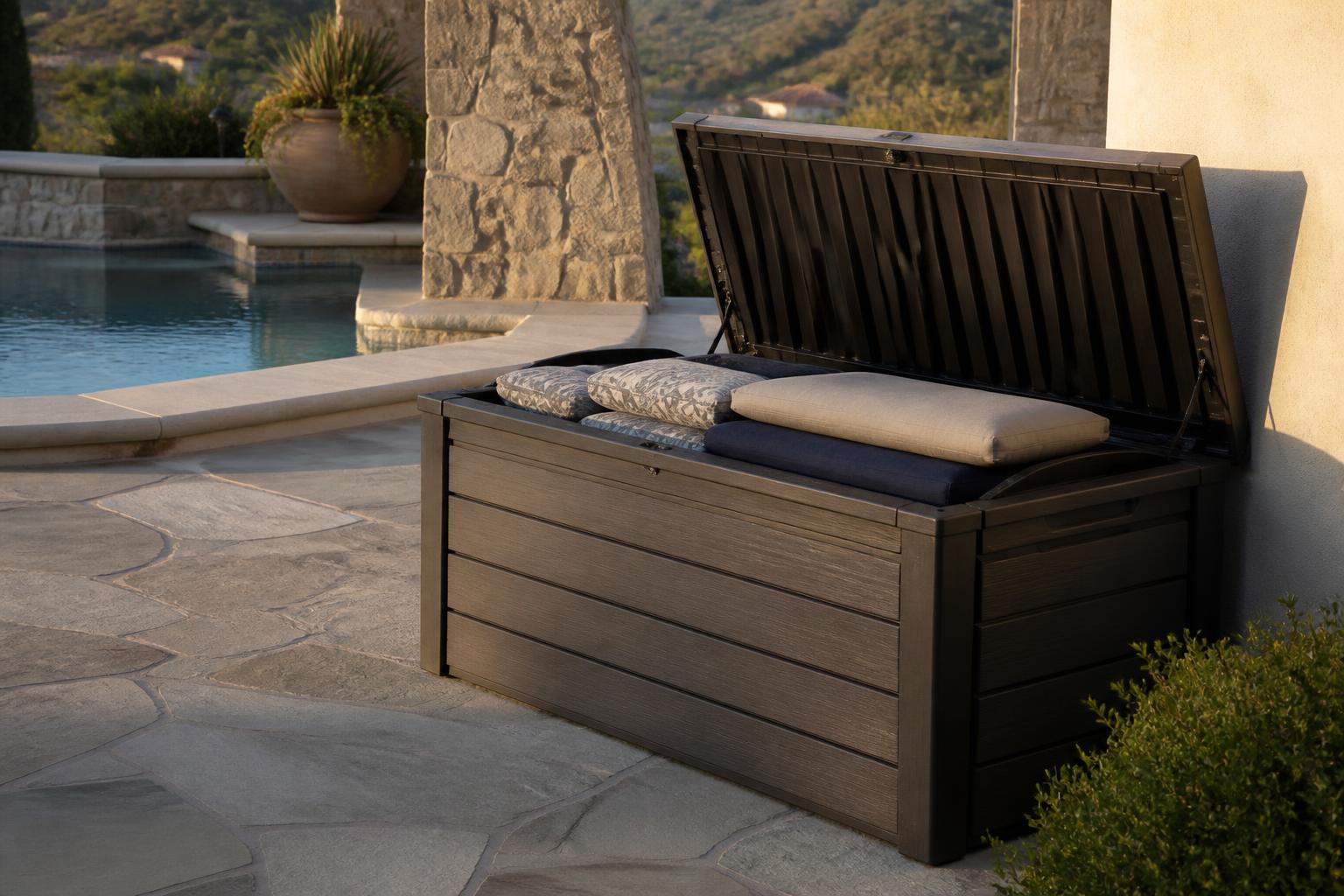
We recommend against it in South Florida humidity unless the leaf is the same weather-resistant material as the tabletop. A leaf stored outdoors in a garage or covered storage box holds up far better than one left exposed to sun and moisture cycles.
Do extendable tables cost more than fixed tables of the same seating capacity?
Generally yes, since you’re paying for the extension hardware and often for a slightly heavier-duty frame to support it. Whether that’s worth it comes down to how often you’ll actually use the extended length.
What’s the easiest extension mechanism to operate solo?
Butterfly-leaf tables are usually easiest for one person to open, since the leaf is attached and simply folds up as you pull the table apart, rather than requiring you to lift and align a separate leaf into place.
If you’re not sure which style fits your entertaining habits and your patio’s footprint, bring your measurements into our Jupiter showroom and we’ll walk through both options side by side before you buy.

About the Author
Chas Crofoot
Chas Crofoot is the owner of Beach House Patio Furniture, a family-owned outdoor furniture company in Jupiter, Florida. Since 1979, Chas and his team have manufactured and sold high-quality patio furniture — specializing in wicker, cast aluminum, aluminum, poly lumber, and PVC pipe styles built to withstand the Florida climate. With over four decades of hands-on experience in outdoor furniture design and manufacturing, Chas brings deep expertise in material selection, durability, and comfort for coastal living.