
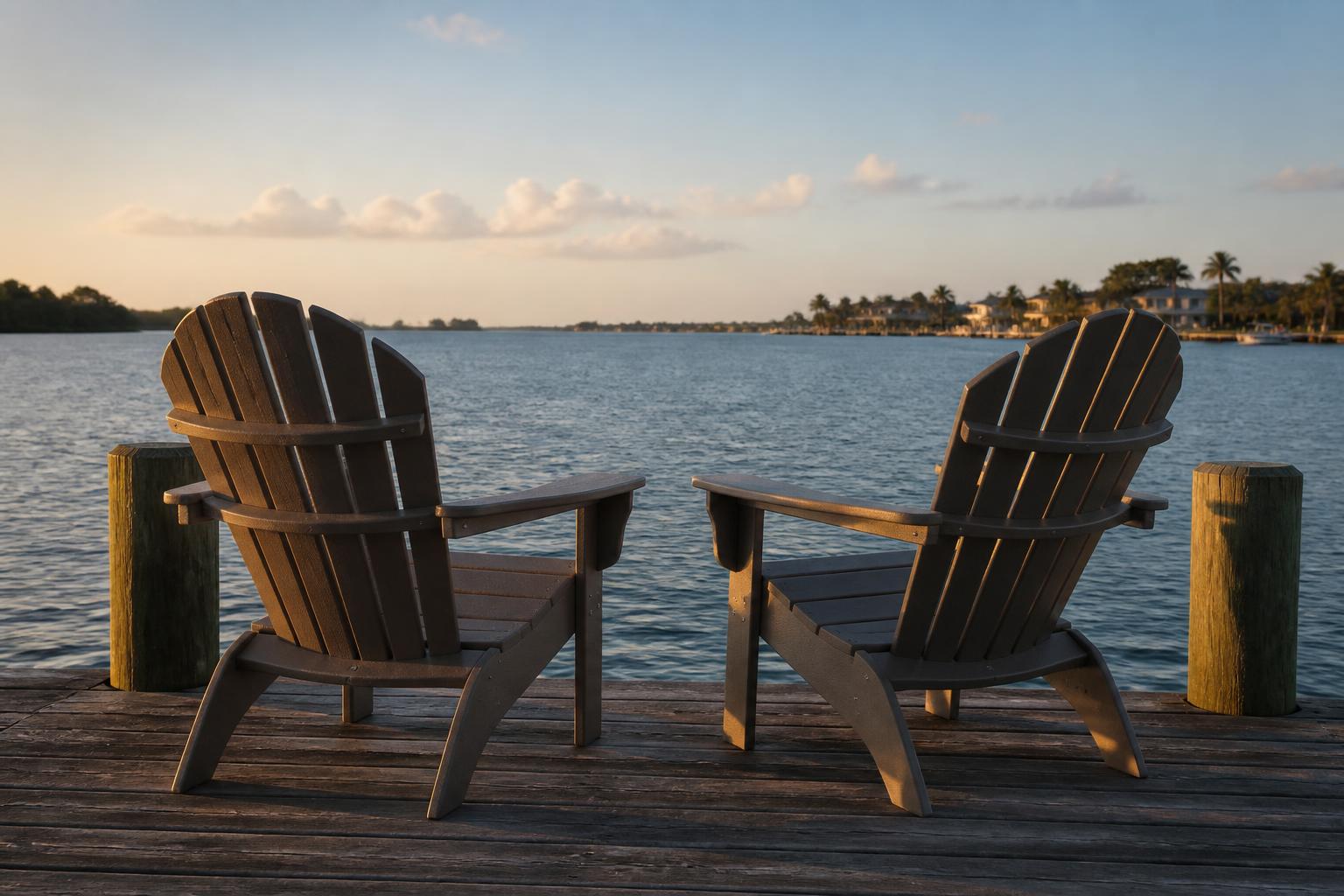
Waterfront homeowners in Jupiter, Tequesta, and along the Intracoastal in Stuart come into our showroom with a very specific seating request more often than almost any other customer type: an Adirondack chair for a dock, seawall, or open lawn that faces the water. It’s a classic silhouette for a reason, but not every Adirondack chair on the market is actually built for exposed waterfront conditions, and we’ve had enough conversations about that difference to put together a proper guide.
Why Adirondack Chairs Work So Well on the Water
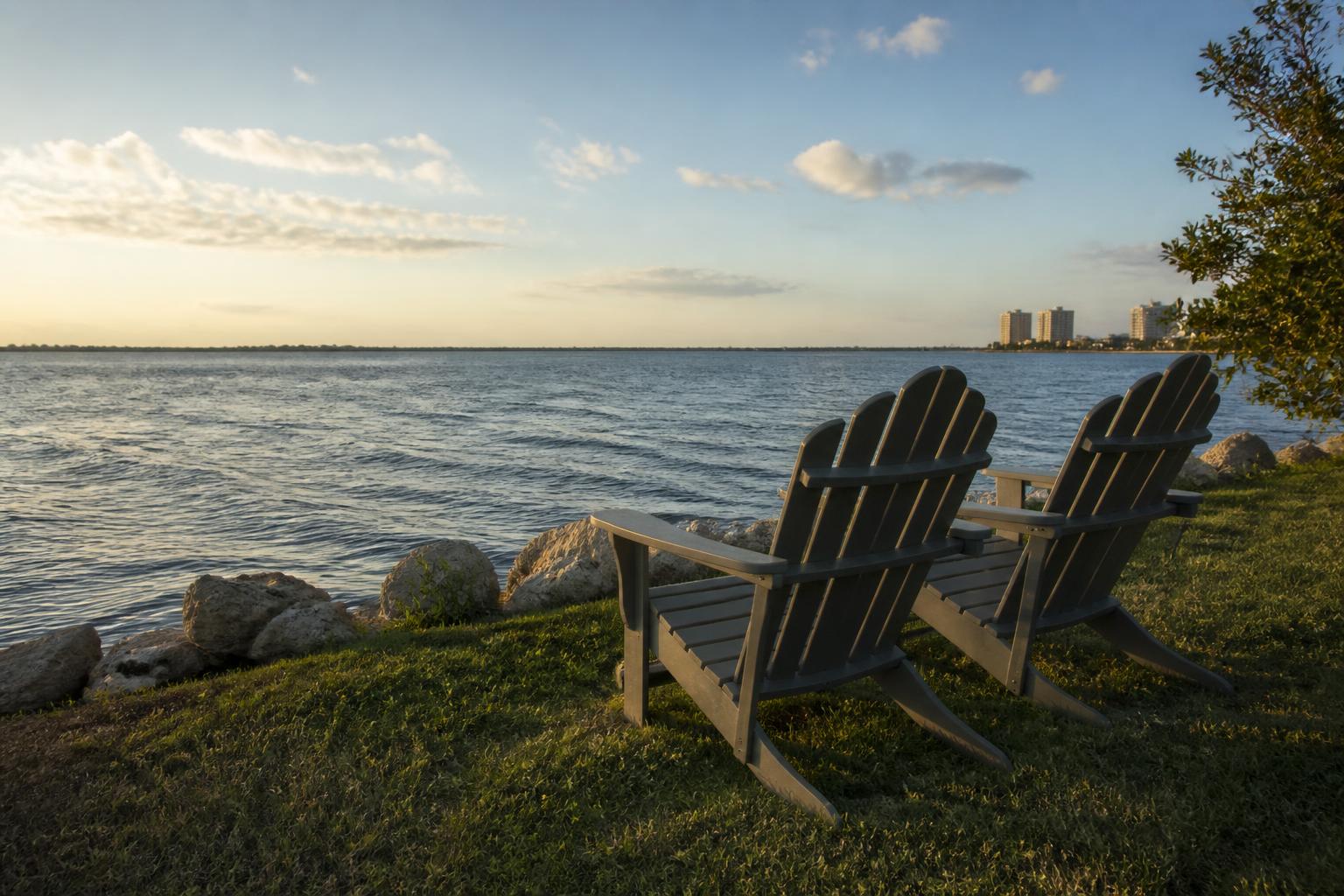
The wide, slightly reclined seat and low center of gravity that define the Adirondack silhouette were originally designed for exactly this kind of setting — an unobstructed view, a stable low seat, and wide armrests that double as a place to set a drink or a book. On a dock or open waterfront lawn where there’s often more wind than on a sheltered patio, that low, wide stance also means the chair is far less likely to tip or slide compared to a taller lounge chair.
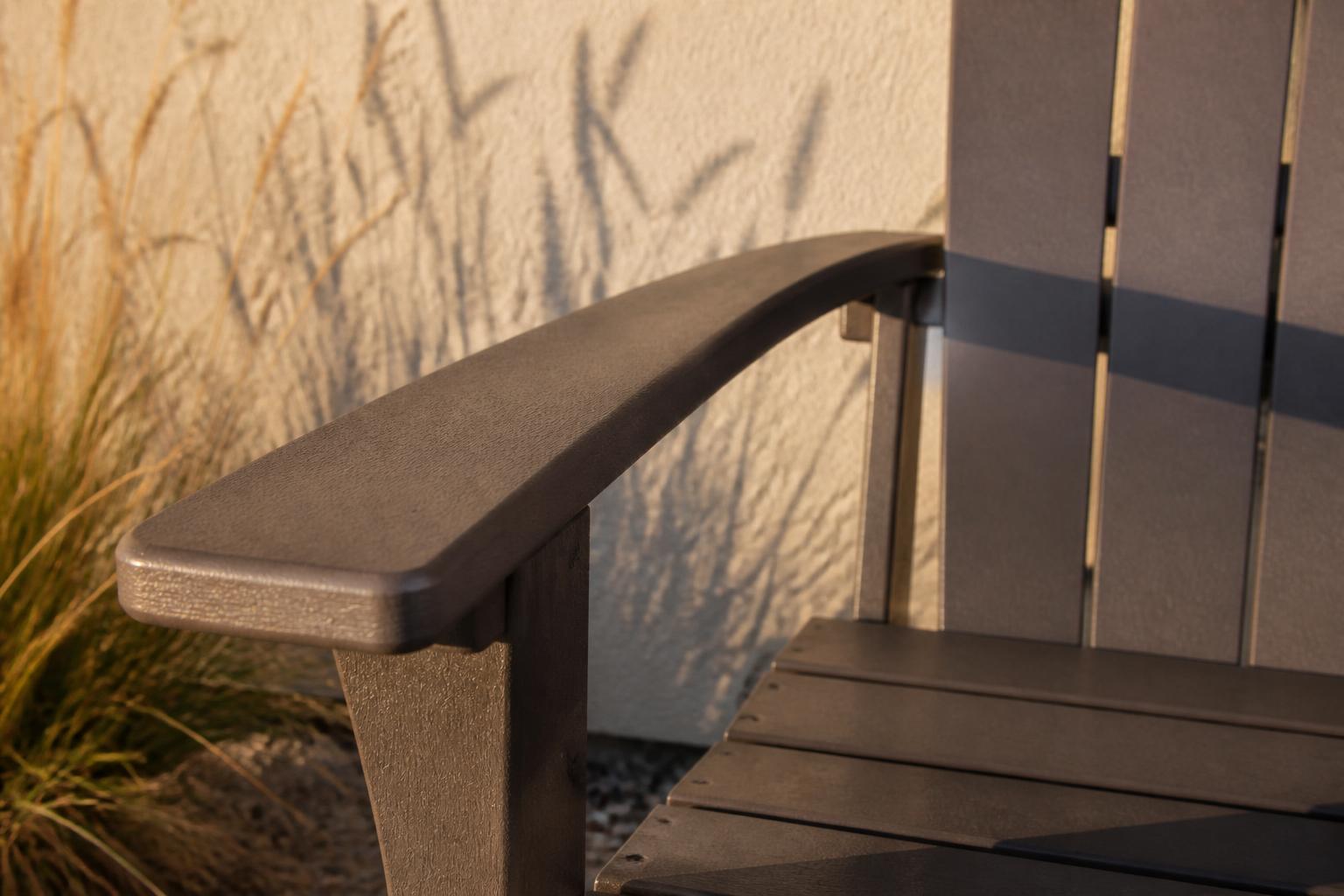
The tradeoff is that waterfront exposure is some of the harshest an outdoor chair will face — direct sun with no overhead cover, salt-laden air, and in a lot of cases regular contact with dock spray or storm-driven rain. That’s where material choice matters more here than almost anywhere else on the property.
Choosing the Right Material for Direct Water Exposure
Poly lumber (recycled HDPE) Adirondack chairs have become the standard for true waterfront placement, and for good reason: they don’t absorb water, don’t require refinishing, and resist the salt exposure that would eventually pit or corrode painted metal. Because poly lumber is solid through and through rather than painted or coated, small scuffs from years of dock use don’t expose bare material the way they would on a painted wood or metal chair.
If you prefer the traditional look of a wood-style Adirondack chair but want it to actually hold up dockside, ask about poly lumber options finished to resemble painted wood — you get the classic profile without the annual refinishing that real wood requires in a saltwater environment. We generally steer customers away from natural untreated wood Adirondack chairs for direct waterfront placement in our area, since the combination of humidity, rain, and sun cycles here is tougher on untreated wood than most inland patios.
Stability and Layout for Docks and Seawalls
Dock and seawall placement comes with a practical consideration beyond material: wind exposure is usually higher than on a sheltered lanai, and a lightweight chair can shift or tip in a stiff afternoon breeze off the water. Poly lumber Adirondack chairs are naturally heavier than resin or aluminum-frame alternatives, which helps here, but it’s still worth thinking about placement — angling chairs slightly away from the most exposed wind direction, and leaving enough deck or lawn clearance around each chair so a strong gust doesn’t send one sliding into a neighbor.
If your dock or seawall space is narrow, a pair of Adirondack chairs with a small side table between them is usually a better fit than trying to squeeze in a full conversation grouping — it keeps the footprint tight while still giving you a place to rest a drink.
Cushions, Color, and Sun Exposure at the Water’s Edge
A lot of Adirondack chairs come with an optional seat and back cushion, and for waterfront placement that decision deserves more thought than it does on a covered lanai. A cushion adds comfort for longer sitting, but it also adds a soft good that has to handle direct sun and occasional dock spray with no overhead protection. If you add cushions, choose a performance fabric rated for constant outdoor exposure rather than a general-purpose outdoor fabric, and plan on bringing cushions inside or under cover during extended stretches of rain or when you’re away for more than a few days, since even a quick-dry cushion left soaked for days can develop mildew faster in a humid waterfront setting than the same cushion on a breezier, more sheltered patio.
Color is worth a second thought too. Darker poly lumber colors absorb more heat in direct waterfront sun, which can make a chair uncomfortably warm to sit in in the middle of a Florida afternoon. Lighter and mid-tone colors stay cooler to the touch and tend to show less of the chalky fading that can eventually appear on very dark finishes after years of intense, unfiltered sun exposure right at the water’s edge.
If your dock or waterfront lawn doesn’t have any natural shade, it’s also worth considering a companion umbrella or shade sail positioned near the seating area — it extends comfortable sitting time well into the afternoon and reduces how much direct heat and UV exposure the chairs themselves take on day after day.
How Many Chairs and How to Arrange Them
Most waterfront seating areas work best with an even number of chairs — two or four — arranged either in a straight line facing the water or in a shallow arc if the dock or lawn width allows it. A shallow arc lets everyone see both the water and each other without anyone having to turn a full ninety degrees to talk, which tends to get more actual use than a strict, formal row. Leave at least 18 to 24 inches between chairs so people can get up and down without bumping the next seat over, and if the space is narrow, a single row against the water-facing edge with a small table at the end is usually more practical than trying to fit chairs in two rows.
Anchoring Chairs on a Dock Surface
Dock surfaces present a slightly different challenge than a solid patio slab, since wood or composite decking can have small gaps or uneven boards that a chair’s feet need to sit securely across. Look for Adirondack chairs with a wider foot base or a slightly flared leg design, both of which distribute weight more evenly across a dock’s surface and reduce the chance of a leg catching in a gap between boards. If your dock sees regular foot traffic in addition to seating, positioning chairs slightly toward the outer edge, away from the main walking path down the center, keeps both concerns — seating and safe passage — working together rather than competing for the same space.
For exposed waterfront seating, include storm preparation in your storage plan. Review National Weather Service wind-safety guidance and follow local instructions when severe weather approaches.
Frequently Asked Questions
Will poly lumber Adirondack chairs fade in direct waterfront sun?
Poly lumber color runs through the entire material rather than sitting on the surface as a coating, so it resists the kind of fading and chalking you’d see on a painted wood or plastic chair over the same years of direct sun exposure.
Can these chairs stay outside through a storm?
Poly lumber Adirondack chairs handle rain and humidity well since they don’t absorb moisture, but for named storms we still recommend securing or storing outdoor furniture rather than leaving any chair exposed to storm-force wind.
Do you carry Adirondack chairs in our showroom to try before buying?
Yes — we keep working Adirondack samples on our Jupiter showroom floor so you can sit in the actual chair and judge the seat depth and recline angle before deciding.
If you’re outfitting a dock, seawall, or open waterfront lawn, stop by our Jupiter showroom to sit in our Adirondack chair lineup and talk through which material and finish will hold up best for your exact spot on the water. Call (561) 972-4661 to discuss your measurements and current options.

About the Author
Chas Crofoot
Chas Crofoot is the owner of Beach House Patio Furniture, a family-owned outdoor furniture company in Jupiter, Florida. Since 1979, Chas and his team have manufactured and sold high-quality patio furniture — specializing in wicker, cast aluminum, aluminum, poly lumber, and PVC pipe styles built to withstand the Florida climate. With over four decades of hands-on experience in outdoor furniture design and manufacturing, Chas brings deep expertise in material selection, durability, and comfort for coastal living.