
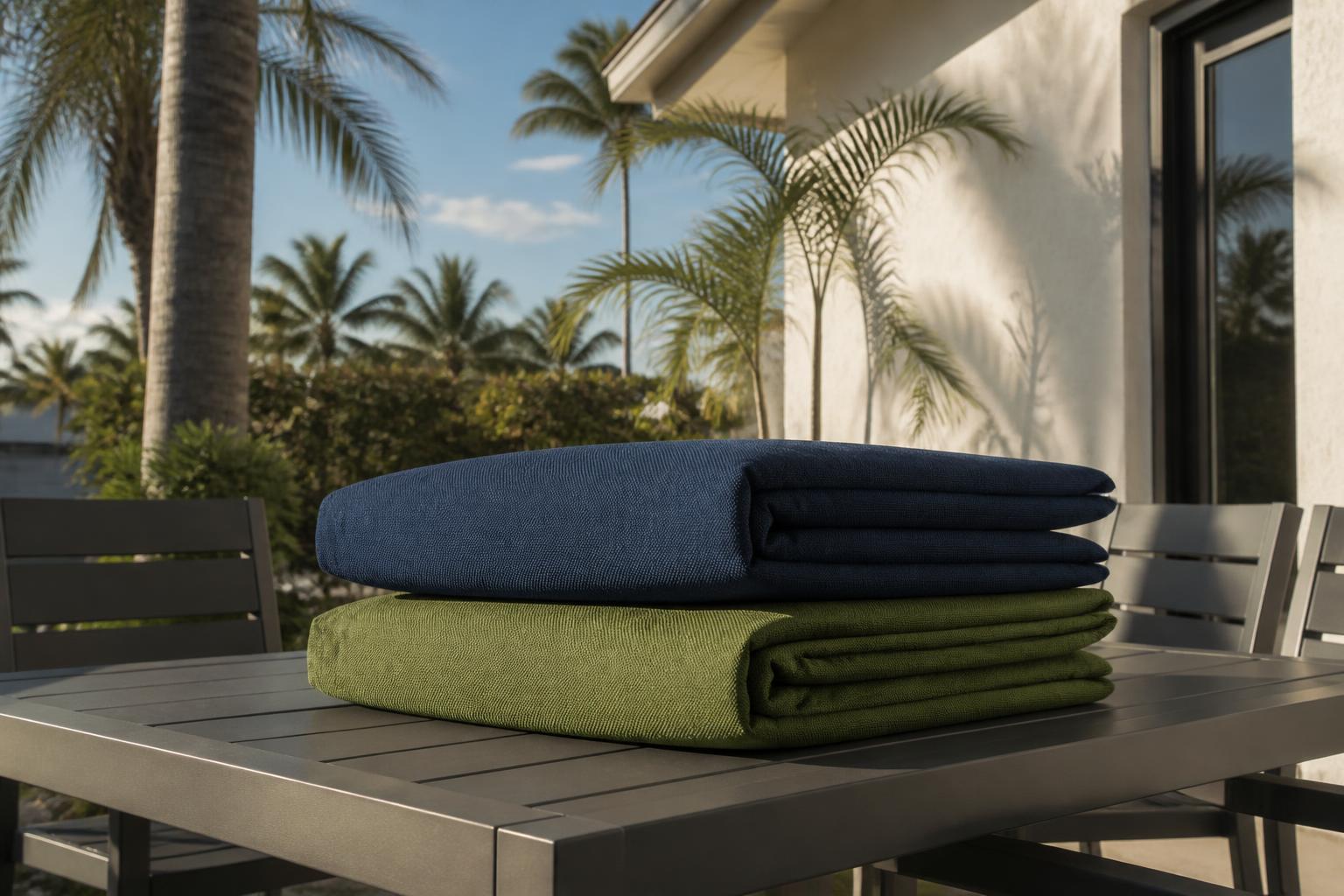
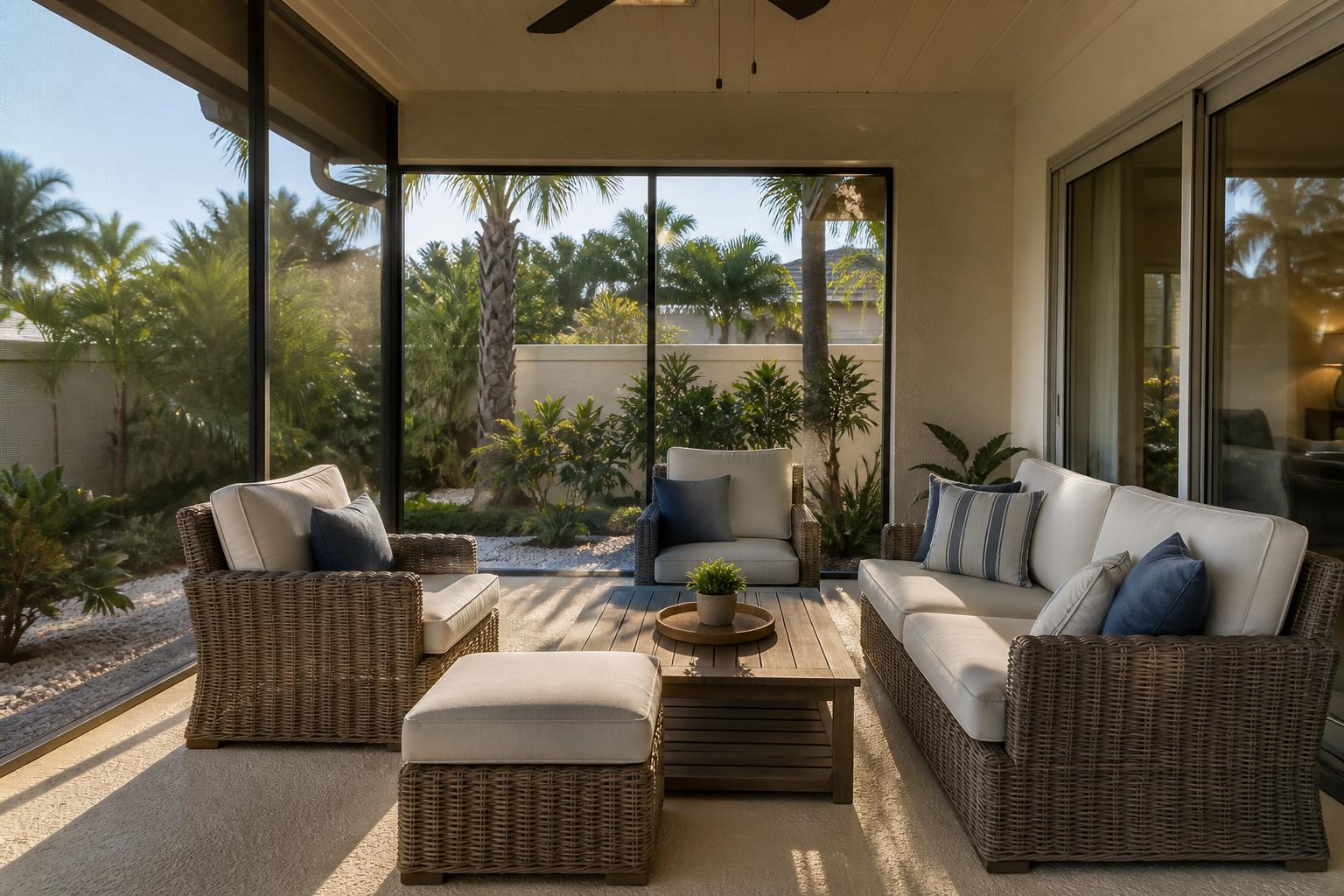
Walk through any outdoor furniture showroom and the cushion swatches can look almost identical from a few feet away. A rich navy, a sandy beige, and a coastal blue may all look great in the store, yet two fabrics in the same color can behave very differently after a summer on a South Florida patio. The biggest reason usually comes down to how the color gets into the fabric, and that is the difference between solution-dyed acrylic and polyester. Understanding it helps you decide where to spend and where a simpler fabric is perfectly fine.
How the Color Gets Into the Fiber
Solution-dyed acrylic gets its color before the fiber even exists. Pigment is mixed into the liquid acrylic solution, and the fiber is then formed from that colored material. The result is a yarn that is colored all the way through, more like a carrot than a radish. Sunbrella describes this in its own overview of what makes its fabric different, and the basic idea is the same across solution-dyed performance fabrics.
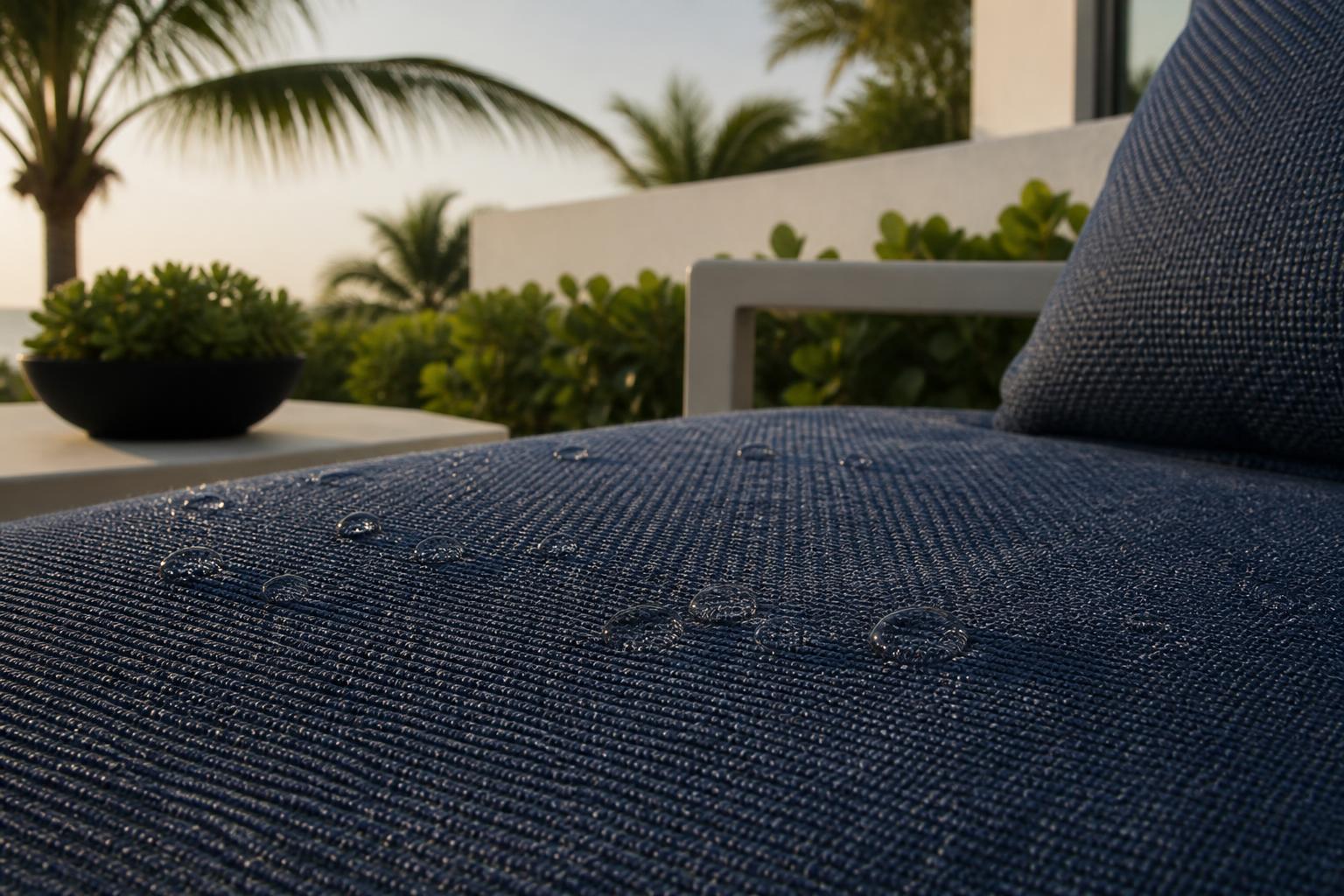
Standard polyester is more commonly dyed after the yarn or fabric is made, or colored with a printed pattern on the surface, although solution-dyed polyester also exists. That approach can produce attractive, colorful results, and polyester itself has good strength and dries fairly quickly. But color that lives closer to the surface is more exposed to sunlight, chlorine from pool splash, and repeated cleaning, which is why it tends to fade sooner in a bright climate.
None of this makes polyester a bad fabric. It simply means the fabric and the setting need to match. A cushion that lives under a roof will treat polyester far more gently than a cushion sitting all summer in direct sun beside a pool.
What Fade Resistance Looks Like in Real Use
Fading is rarely dramatic in a single season. It shows up as a slightly washed-out top surface on the seat, a lighter stripe where a cushion sat in the sun while a neighboring cushion stayed shaded, or a color that looks a shade or two different from the same fabric on the back of the cushion. Because South Florida sunshine is strong and long-lasting, those differences appear faster here than they would in a cooler climate.
Solution-dyed acrylic is built to hold color through that kind of exposure, which is why it is a common choice for uncovered patios, pool decks, and boat docks. Polyester works well when it is protected from constant sun, or when the cushions are brought inside during the offseason. If a space gets sun for most of the day and the cushions stay outdoors, the more fade-resistant option is usually worth having.
Our guide to Sunbrella fabric grades walks through how a premium fabric family is organized, which is helpful once you have decided that a solution-dyed fabric fits your space.
Feel, Look, and Comfort
Fade resistance is only part of the story, because you sit on these cushions every day. Solution-dyed acrylic has come a long way in softness and can look and feel surprisingly close to indoor fabric, including textured weaves and heathered colors. Polyester can range from smooth and slightly slick to soft and brushed, depending on how it is made and finished.
Patterns are another consideration. Printed polyester can offer bold patterns and larger color palettes at friendlier price points, which suits accent pillows and lightly used pieces. Woven patterns in acrylic offer depth and texture that holds up as the cushion ages. If you love a specific design, it is worth asking how the color is applied before deciding. Browse our outdoor fabric selection and you will see the difference between woven and printed options in person.
Care and Cleaning for Each Fabric
Whichever fabric you choose, gentle cleaning keeps it looking newer for longer. Brush off loose dirt first, use mild soap and lukewarm water, rinse thoroughly, and let the cushion air dry completely before it goes back on the furniture or into storage. Sunbrella’s own guidance on how to clean its fabrics is a good reference for the basic method, and the same restraint applies to most outdoor fabrics: avoid harsh scrubbing, and check the care label before trying a stronger cleaner.
Chlorine and salt are worth extra attention near a pool. A quick rinse of splashed cushions helps limit residue that can dull color or stiffen the fabric over time. If you are choosing cushions for a pool deck, that habit matters as much as the fabric itself, and it fits neatly into the routine we describe in our article on outdoor cushion storage in the rainy season.
Which One Should You Choose?
For an uncovered patio, pool deck, or any spot with long hours of direct sun, solution-dyed acrylic is the safer long-term choice, particularly if cushions stay out year-round. For a covered lanai, a guest patio used occasionally, or accent pillows you plan to swap out, polyester can be a sensible, budget-aware option. Many customers mix the two: performance fabric on the main seating cushions and more colorful polyester on accent pillows that are easy and inexpensive to replace.
Thinking About Cost Over Time
The sticker price of a cushion set rarely tells the whole story. A lower-cost polyester cushion that fades or stiffens after a couple of seasons can end up costing more than a fade-resistant cushion that lasts much longer, especially if you have to replace fill and covers together. On the other hand, paying for premium fabric on a cushion that will live under a roof and get used a handful of times a year may not return its value.
A practical approach is to divide your furniture into zones. Put the best fabric where sun and rain are constant, such as pool-deck lounges and uncovered dining chairs, and save on pieces that stay protected. If you are refreshing an existing set rather than buying new, our article on replacement patio cushions explains what to measure and what to ask before you order.
Fill matters as well. Even the best fabric will not rescue a cushion whose foam stays wet for days. Quick-drying fill and a cover that lets water pass through help the whole cushion dry out, which protects both the fabric and the foam inside.
Frequently Asked Questions
Will polyester outdoor fabric fade quickly in Florida?
It depends on exposure. In steady direct sun it will generally fade sooner than a solution-dyed fabric, while under a roof it can look good for a long time.
Is solution-dyed acrylic waterproof?
It is designed to resist water and mildew, but it is not a rubber sheet. Water can pass through the cushion fill, so drying and airflow still matter.
Can I mix fabrics on the same set?
Yes. Many people use a durable fabric for seat cushions and a more decorative fabric for pillows, which limits replacement cost without sacrificing style.
How do I tell what a cushion is made of?
Check the tag or ask the retailer how the color is applied. If no one can tell you, treat the fabric as a standard polyester and plan for more shade and care.
If you would like to compare fabrics side by side, call us at (561) 972-4661 or stop by our showroom at 105 Center Street in Jupiter, where you can see and touch the swatches in real light.

About the Author
Chas Crofoot
Chas Crofoot is the owner of Beach House Patio Furniture, a family-owned outdoor furniture showroom in Jupiter, Florida. He comes from a family that has been manufacturing outdoor furniture since 1979, specializing in wicker, cast aluminum, aluminum, poly lumber, and PVC pipe styles built to withstand the Florida climate. With decades of hands-on experience in outdoor furniture, Chas helps coastal homeowners choose materials for durability and comfort.