
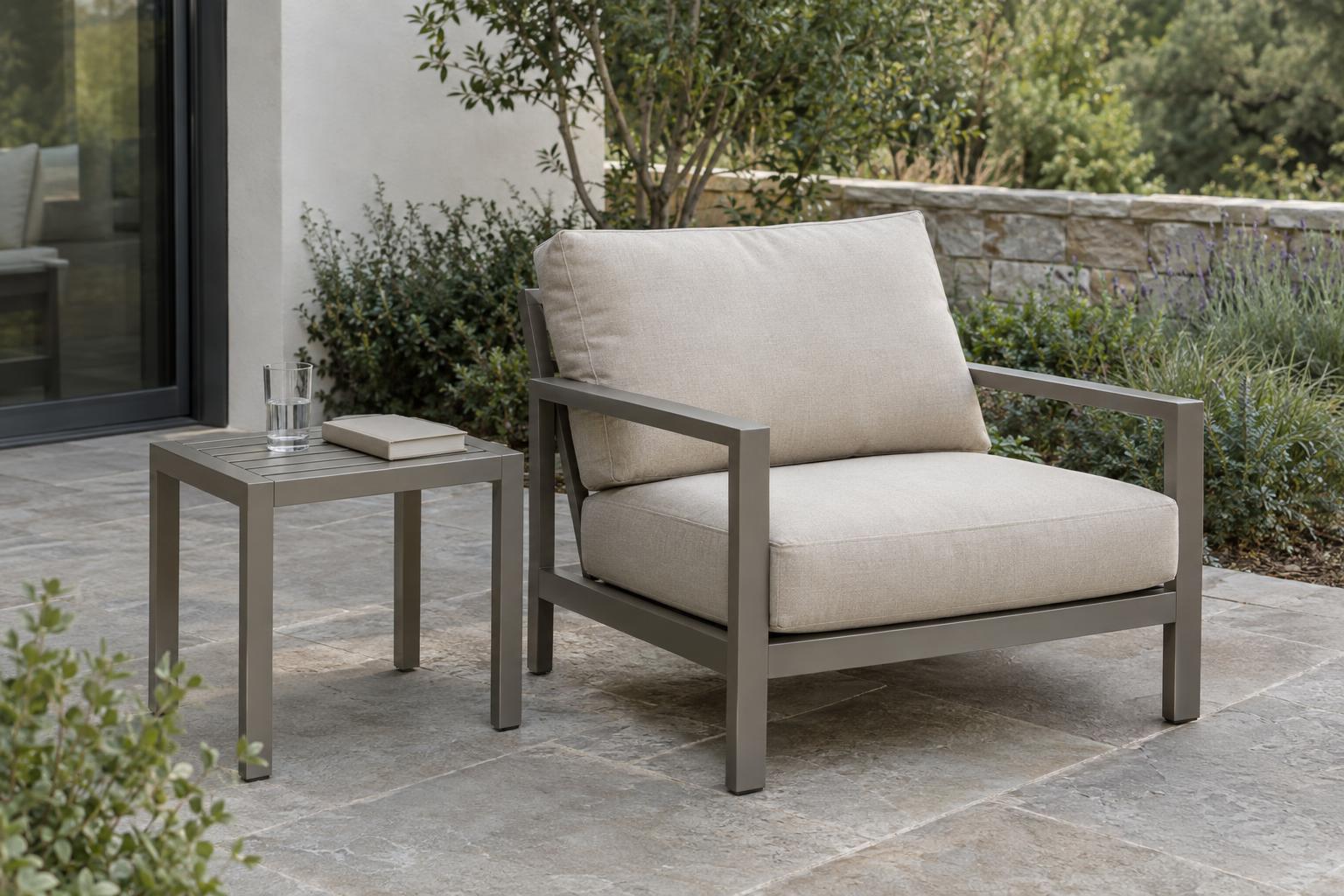
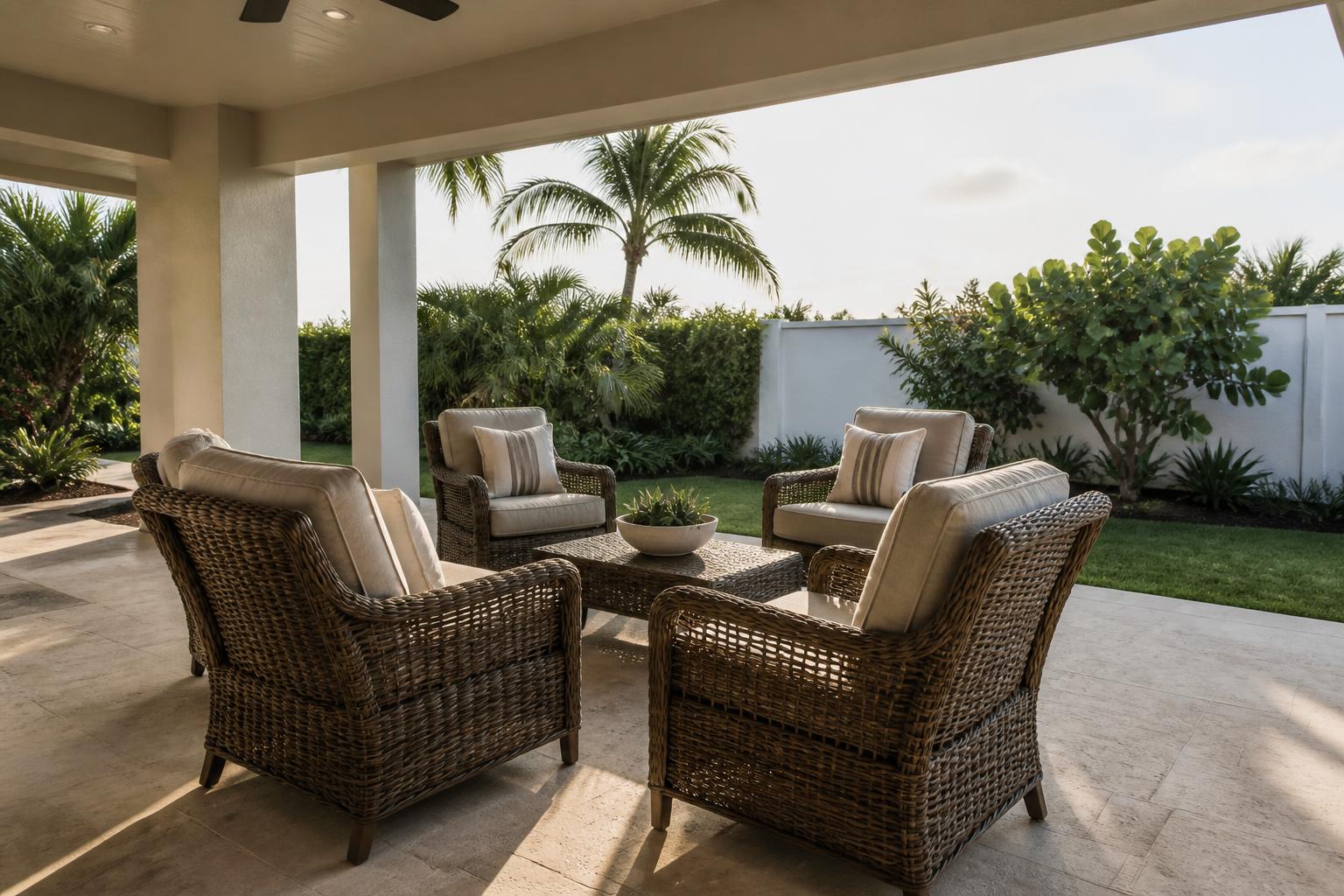
An outdoor side table should make a drink, book or pair of glasses easy to reach from the seat you actually use. That sounds simple until a low chaise, a deep cushioned chair and an upright armchair share the same patio. A table that works beside one can be awkward beside another, even when their finishes match.
Start with the seated person and the furniture’s working position. Table height is one part of the decision; distance, armrest shape, cushion compression and the table’s base all affect whether the pairing feels comfortable. Use a real reach test instead of choosing from a height category alone.
1. Record the chair in its normal position
Place the chair where it will normally sit and use its intended cushions. Measure the seat surface and the top of the armrest from the floor, noting that a soft cushion changes height when occupied. These measurements describe the furniture, but they do not by themselves establish an ideal tabletop height for everyone.
Look at the chair from the side. A wide, curved arm may keep a table farther away than a narrow arm does. A deep seat can place your body behind the table’s most convenient landing area. Note where you naturally rest your forearm and where you would place a glass without shifting forward. Take a side photograph that shows the chair, the floor and the intended table position together.
2. Test the reach before comparing styles
Sit as you normally would, with your back supported. Use an existing stable table as a trial surface if its size allows a realistic comparison. Place an empty, unbreakable cup near its center and try picking it up and setting it down. Avoid balancing a glass on an improvised stack of objects to simulate a different height.
Notice whether you lift your shoulder, lean sideways, twist your torso or reach around the armrest. Try the task on the side you intend to use; a comfortable right-side arrangement may feel different on the left. The useful result is an observation about your own pairing, not a universal rule that every table must sit exactly level with an armrest. If the trial feels awkward, change the distance as well as considering a different height.
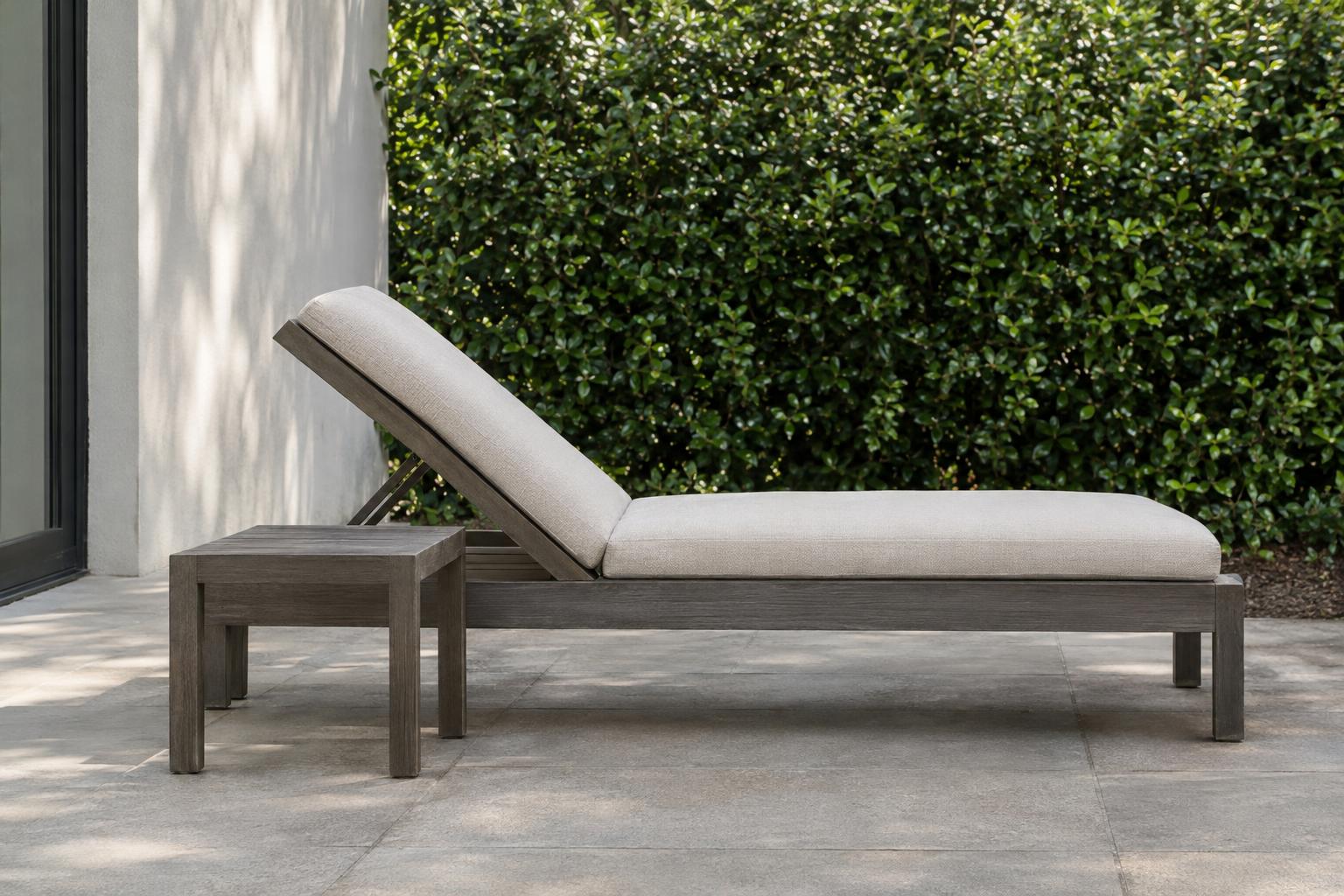
3. Check every chaise or recliner position
A chaise changes the relationship between your shoulders and the table as its backrest moves. A table beside your elbow in an upright position may end up too far forward once you recline. Test the positions you regularly use, following the furniture’s instructions and keeping fingers clear of adjustment mechanisms.
Also check where you enter and leave the chaise. A convenient table should not occupy the only practical approach to the seat. For an armless design, it may be tempting to move the tabletop very close to the cushion, but its legs or base can still obstruct your feet. If one position cannot serve every backrest setting, decide which use matters most or whether a different table placement gives a better compromise.
4. Compare the tabletop and the base separately
Two side tables with the same stated height can behave differently beside a chair. One may have a wide top and a compact central base; another may have legs that extend almost to its outer corners. Compare the complete footprint, including feet, rather than assuming the tabletop outline describes everything that touches the floor.
Check whether an apron, lower shelf or projecting leg interferes with the chair base or your approach. A round top can remove a sharp corner from a tight arrangement, but its base may still occupy substantial space. A rectangular top can provide a useful landing area alongside an arm, yet its longer edge may intrude into the walking route. Choose the combination that works in the actual layout rather than assigning one shape a blanket advantage.
5. Give shared tables a two-seat test
When one table serves two chairs, test it from both seats with the chairs positioned for conversation. The person in the deeper or more reclined chair may have a substantially longer reach. A table that looks perfectly centered from across the patio is not necessarily equally convenient for the two people using it.
Imagine, for example, an upright armchair next to a low chaise. Matching the table to the armchair alone could leave the chaise user reaching upward and forward. Moving the table toward the chaise may then make it awkward from the chair. Treat that as useful information: separate compact tables or a different arrangement may work better than forcing a single shared piece into a mismatched pairing. Confirm the floor space before adding another item.
6. Plan the surface around everyday objects
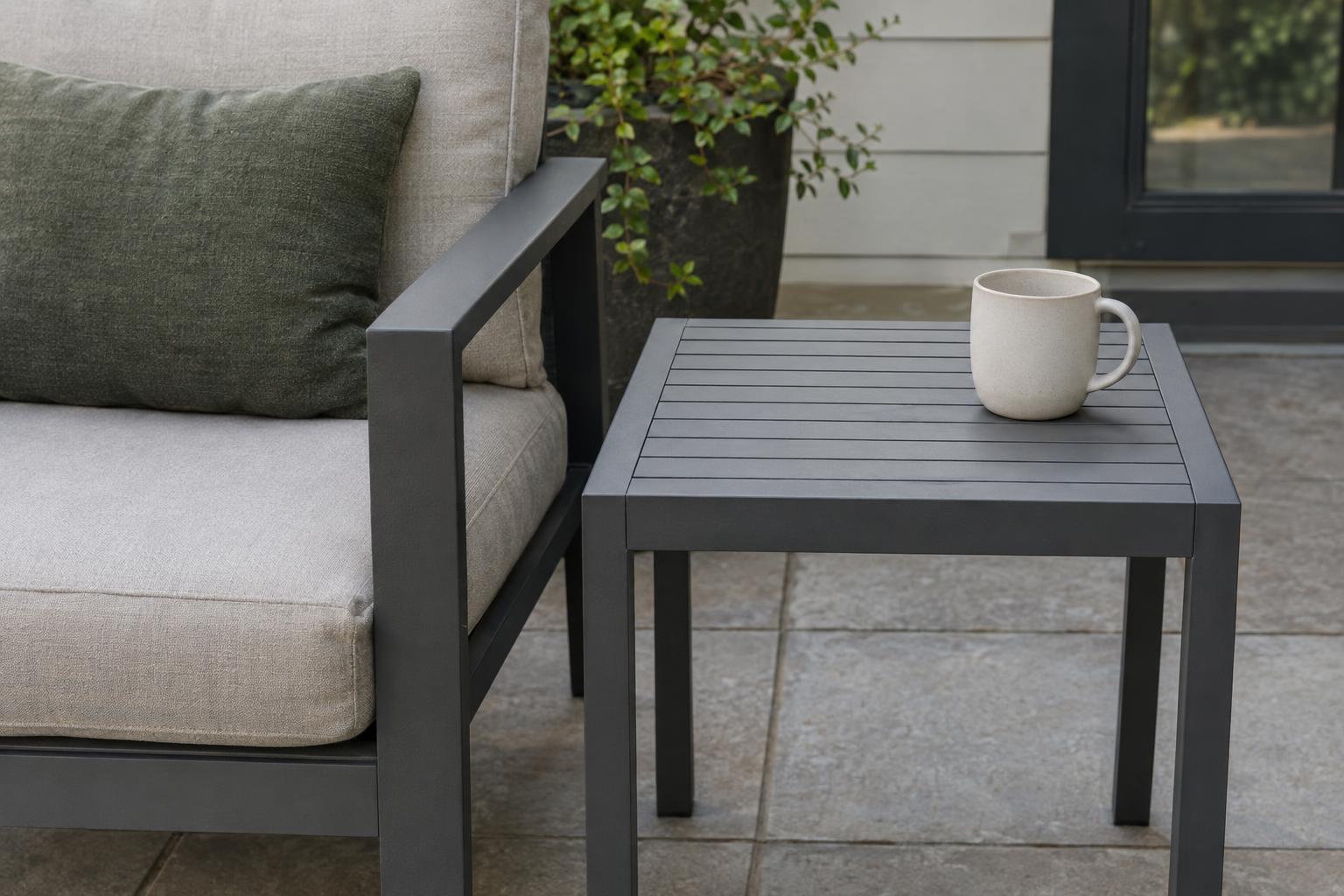
Bring the objects you routinely use into the comparison: a cup, a book, a small tray or a phone. Check that the tabletop has a useful landing area after those items are placed, and that you can see where you are setting something down. An ornate edge or a narrow rim can make the usable area smaller than the table’s overall dimensions suggest.
Examine the surface and the furniture’s intended use. Grooves, open slats and uneven textures affect how particular cups or small objects rest on it. Check the table on an appropriate, level surface as its manufacturer directs. Do not judge stability from appearance or use a side table as a seat unless it is expressly designed for that purpose. A visually substantial table is not proof of a seating load rating.
7. Keep movement and care in the comparison
If you plan to reposition the table regularly, ask how it should be lifted and moved. Check its dimensions and weight in the product information rather than guessing from the material alone. Consider where it will go when the chair reclines, when the patio is cleaned and when furniture needs to be stored.
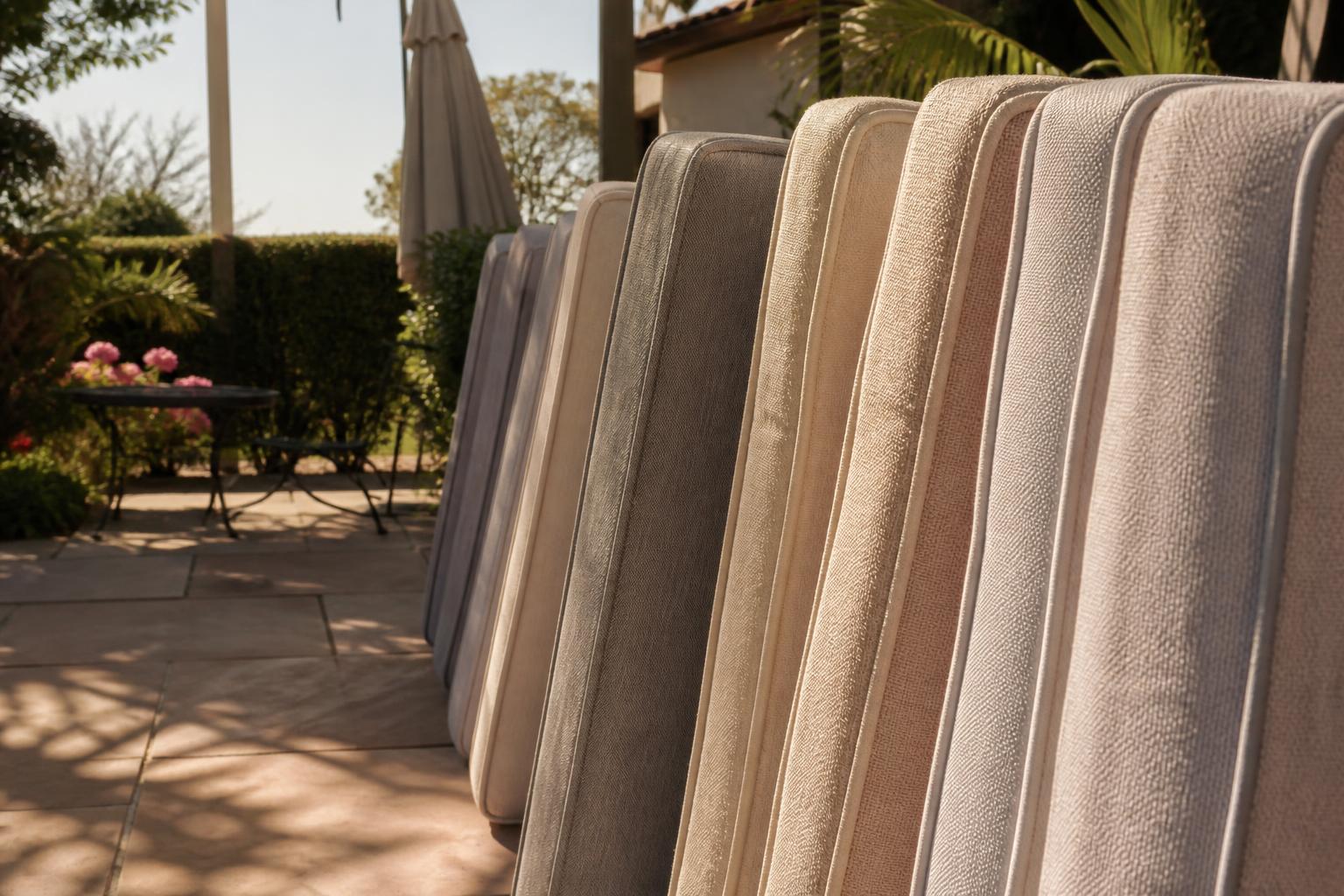
Cushion care affects the seating setup too. If the chair uses Sunbrella upholstery, consult the manufacturer’s fabric cleaning guidance alongside the chair maker’s instructions. Keep the table’s own finish-care requirements separate; a cleaner suitable for fabric is not automatically appropriate for its tabletop. Choosing pieces with a practical care routine helps preserve the arrangement you tested, including the cushions that determine your seated height.
8. Bring the complete pairing to the showroom
Before shopping, record the chair model if known, seat and arm heights, available floor space, the side you use and the positions you tested. Bring photographs taken from the side and from the normal walking route. Include the chaise’s reclined footprint if that is part of the arrangement.
At the Beach House Patio Furniture showroom in Jupiter, ask about current side-table options and compare their actual dimensions with those notes. If a suitable seating sample is available, repeat the reach test with it while recognizing that a different cushion or frame can change the result. Contact the showroom before visiting to ask what information will help with your particular pairing. Keep your final choice tied to everyday use as well as appearance.
Questions about outdoor side table height
Must a side table match the chair’s armrest height?
No single relationship works for every chair and person. Armrest height is a useful comparison measurement, but the table’s distance, the chair’s depth and your seated reach also matter. Test the actual task of setting something down.
What should I measure for an armless chaise?
Record the seat surface, the chaise’s footprint and its backrest positions. Then check the table beside the area you can reach comfortably while reclined, keeping the entry route available.
Can a coffee table serve the same purpose?
It may suit some layouts, but a center table asks you to reach forward rather than sideways. Compare that movement with your normal sitting position instead of assuming that a matching finish makes the two interchangeable.
Is a taller table better for a small patio?
Height alone does not solve a space problem. Check the base, tabletop width and walking route. A narrow-looking table can still have projecting feet, while a lower table may be easy to overlook in a crowded passage.

About the Author
Chas Crofoot
Chas Crofoot is the owner of Beach House Patio Furniture, a family-owned outdoor furniture company in Jupiter, Florida. Since 1979, Chas and his team have manufactured and sold high-quality patio furniture — specializing in wicker, cast aluminum, aluminum, poly lumber, and PVC pipe styles built to withstand the Florida climate. With over four decades of hands-on experience in outdoor furniture design and manufacturing, Chas brings deep expertise in material selection, durability, and comfort for coastal living.