
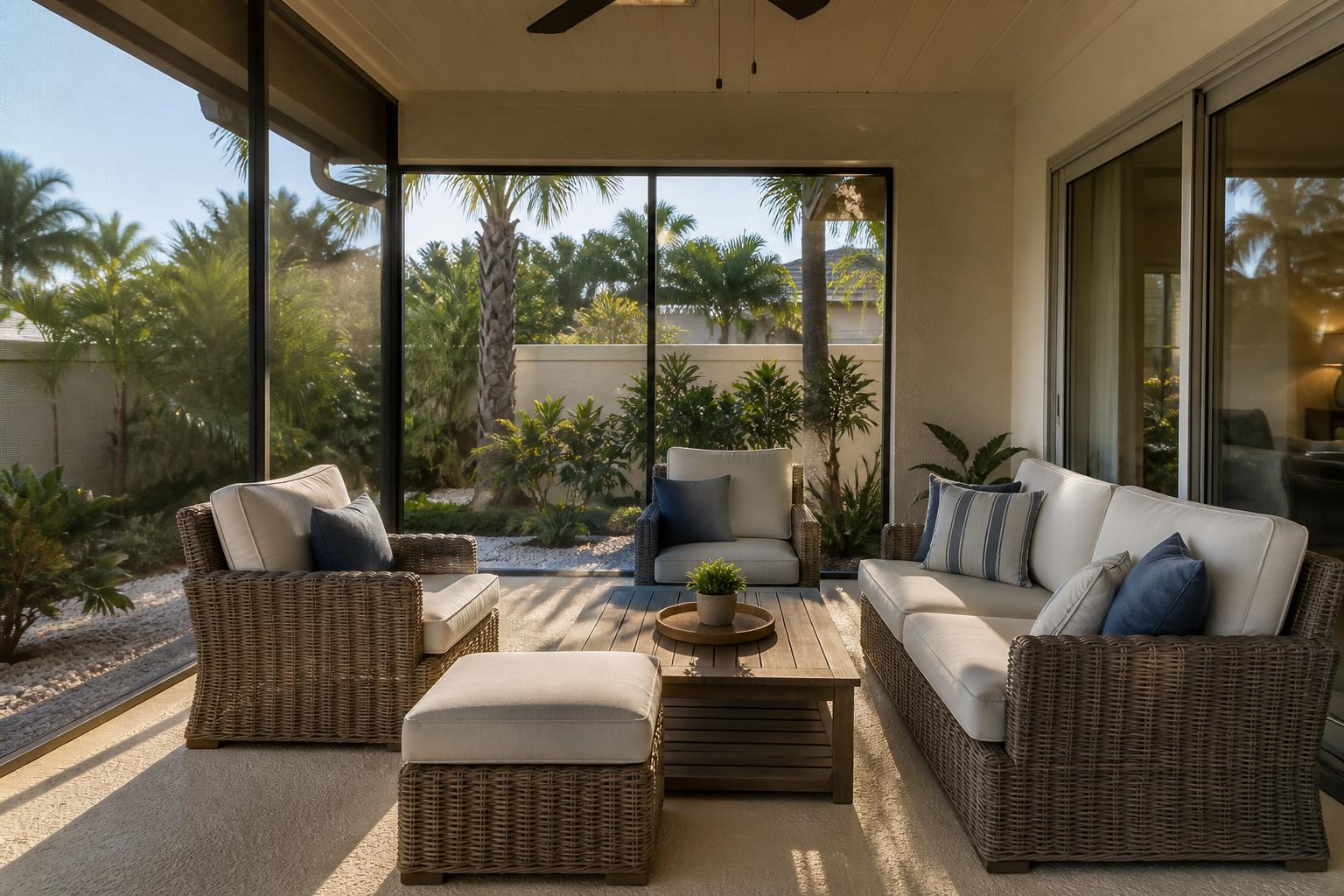
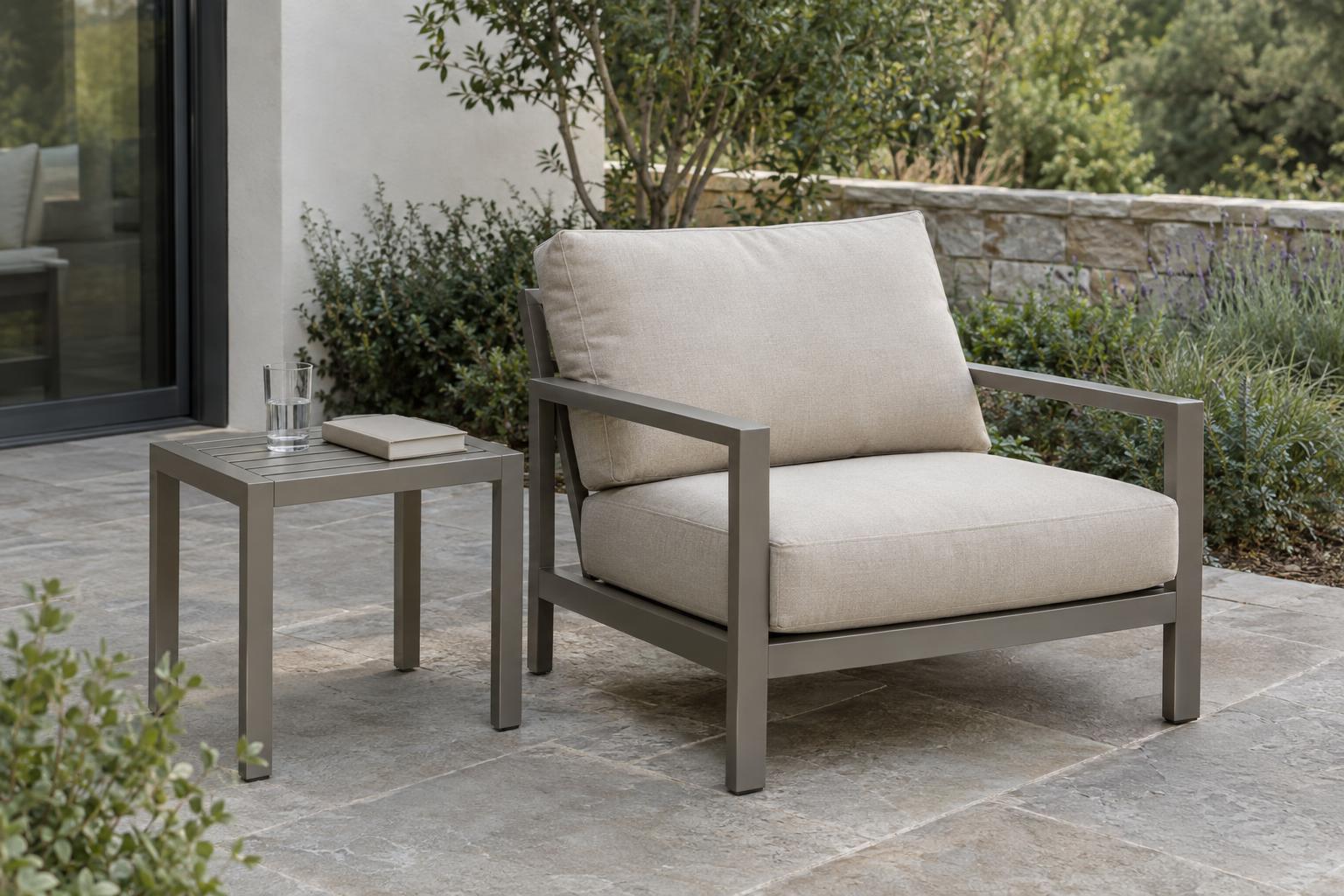
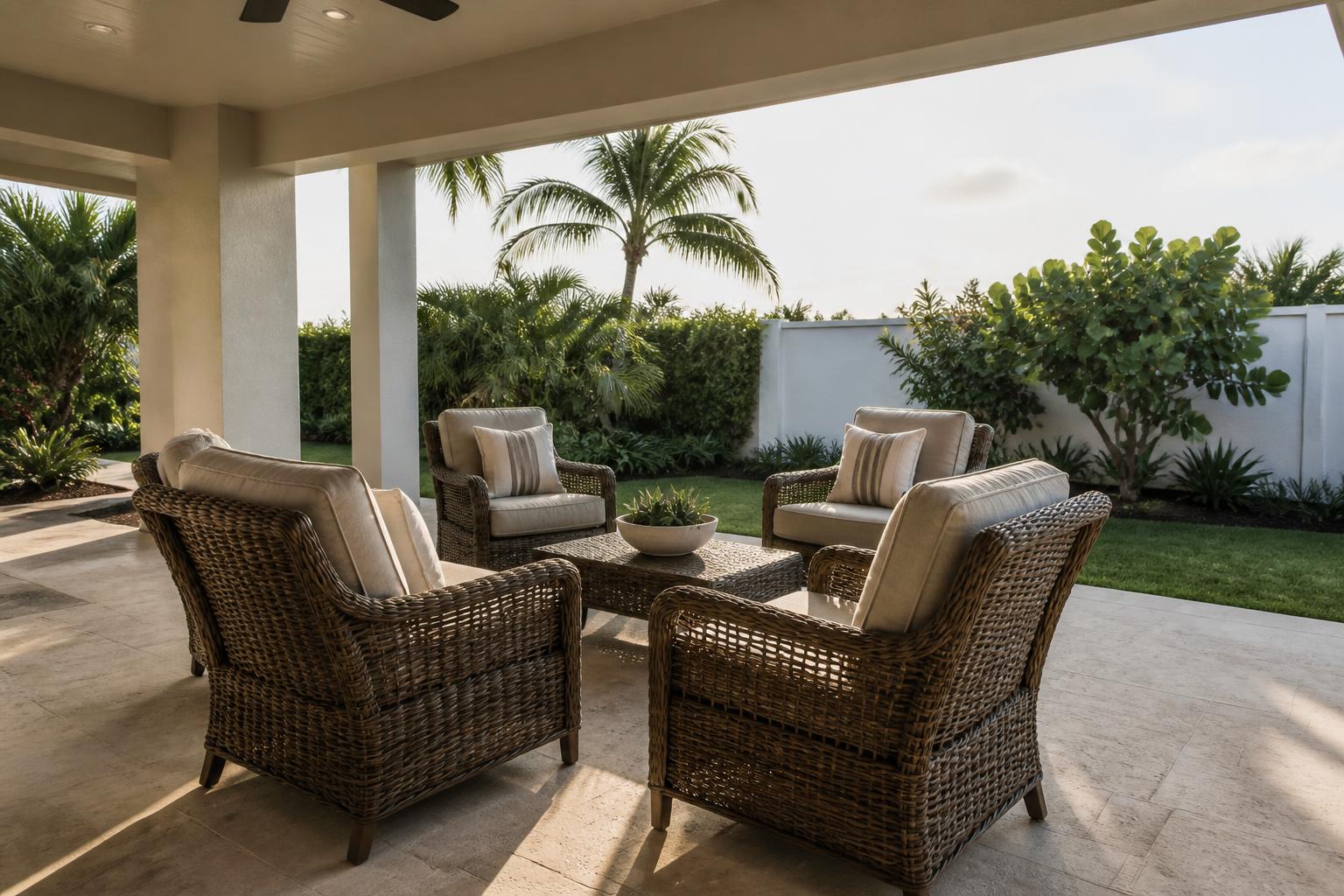
Two homes on the same street in Jupiter can need completely different outdoor furniture, and the reason is rarely style. It is exposure. A roofed, screened lanai and an open paver patio behave like two different climates: one is shaded and mostly dry, the other takes full sun, wind, and every afternoon downpour directly. When customers walk into our showroom and describe their space as “the back patio,” the first thing we ask is whether anything is overhead, because the answer changes which frames, fabrics, and weights make the most sense.
What a Covered Lanai Changes
A roof and screen filter direct sun, keep most rain off the furniture, and cut the wind that pushes lighter pieces around. That protection widens your choices. Cushioned seating on a wicker frame tends to be a natural fit here, because the weave and the cushions spend far less of their life soaking wet or baking in the sun. Deep-seating sofas and sectionals with thicker cushions also make more sense, since the cushions dry out on their own schedule instead of needing to be rescued every time clouds build in the west.
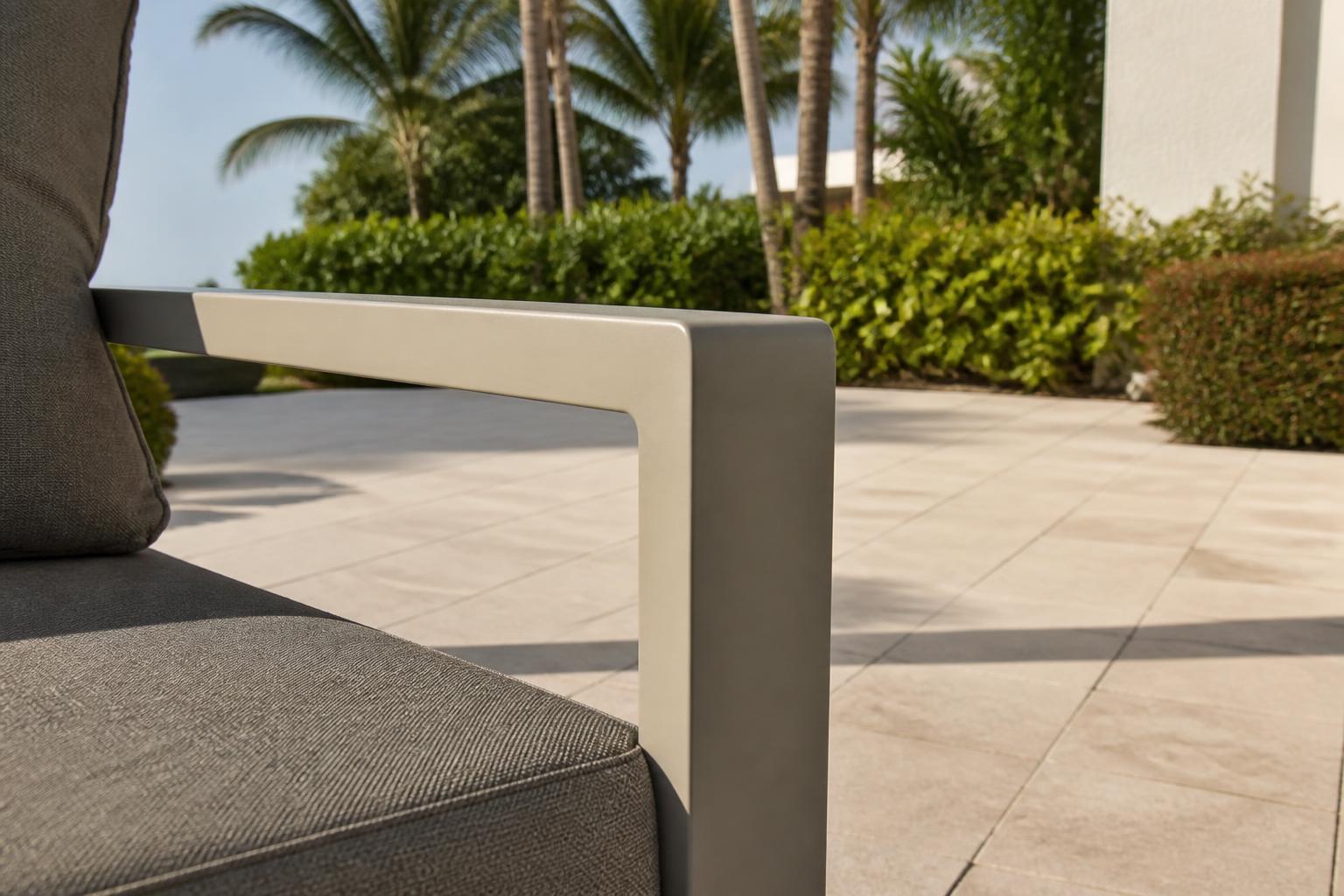
Covered does not mean climate controlled, though. Florida humidity moves through a screen just as easily as air does, so a lanai still deserves materials that tolerate moisture and fabrics that resist mildew. Air circulation matters too: a lanai with a closed-in corner or a low ceiling can hold moisture longer than an open patio does, so it is worth checking how quickly cushions and the underside of seating dry out after a rainy stretch. Our guide to dining sets for screened enclosures covers how a screen changes sizing and layout. The practical takeaway is that a lanai lets you prioritize comfort and appearance a little more heavily, while still choosing frames that will not corrode when the air stays damp for days.
What an Open Patio Demands
An open patio gets everything: direct ultraviolet light, wind gusts, salt-tinged air near the coast, and rain that lands right on the seat. The U.S. Environmental Protection Agency publishes a plain-language explanation of the UV Index, and South Florida regularly sits in the higher categories through much of the year. That same intensity is what fades fabric and dries out finishes on furniture that stays uncovered.
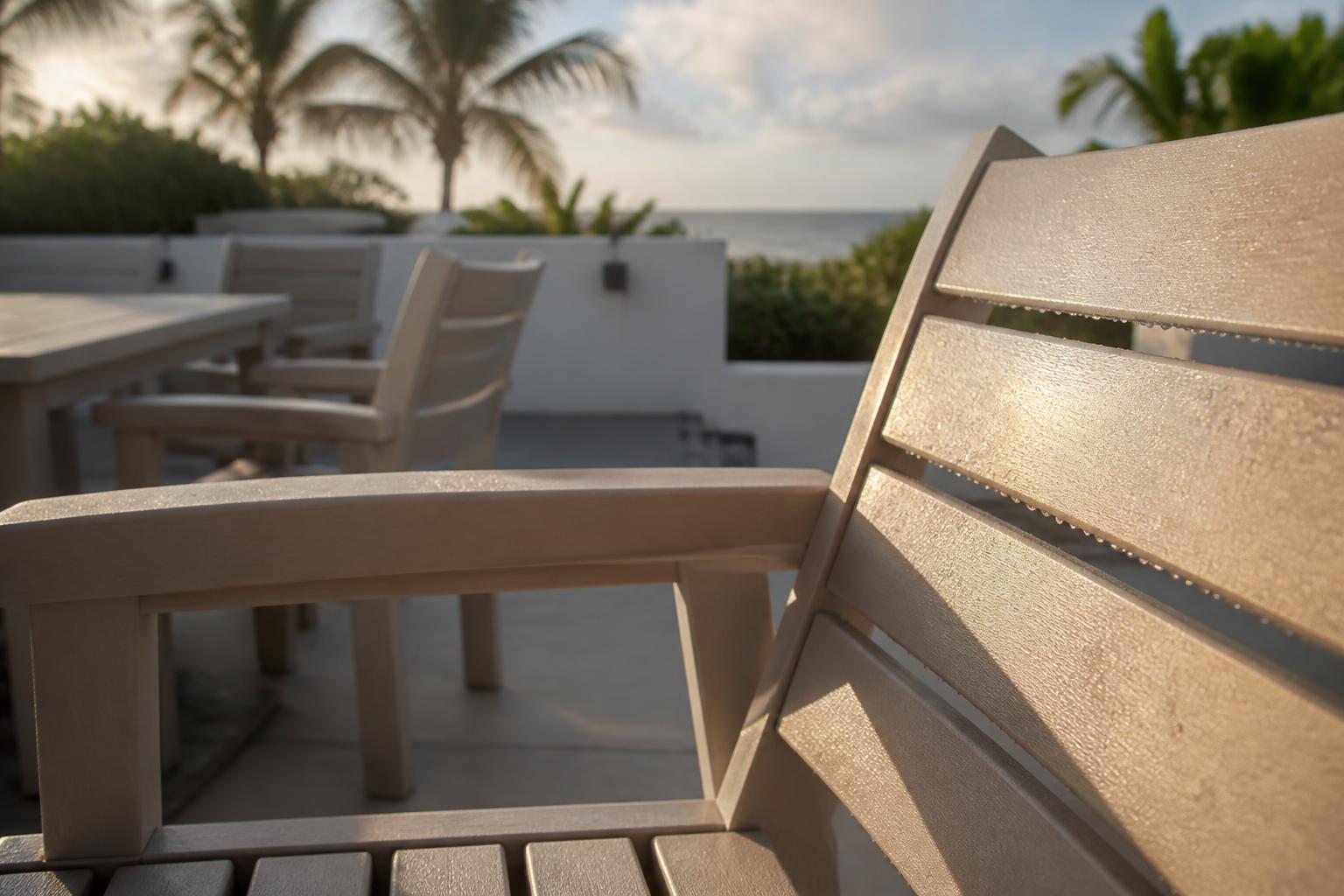
For an uncovered space, frames that shed water and do not rust are the priority. Aluminum and poly lumber both fit this brief, since neither absorbs water and neither depends on paint that can flake away from bare metal. Pieces with slatted or sling seating dry faster than deep foam cushions, which is worth weighing if you rarely bring cushions inside. Our article on protecting aluminum furniture from salt air and humidity explains what to look for in the finish.
Weight, Wind, and Where the Furniture Lives
Exposure also changes how much weight you want. On a screened lanai, a lightweight chair that slides easily across the floor is a convenience. On an open patio near open water or on a breezy corner lot, that same lightness can turn into a chair skidding across the pavers during an afternoon squall. Heavier cast aluminum and solid poly lumber pieces stay put more reliably, while lighter extruded aluminum is easier to move when you need to rearrange or clear the patio ahead of a storm.
There is a middle path many customers choose: keep the heavy, weather-tolerant pieces such as the dining table and the main seating outside year-round, and use lighter accent chairs or side tables that can be carried under the roof when a storm is forecast. That approach keeps the daily setup simple without asking a single piece of furniture to do everything.
Choosing Fabrics for Each Setting
Fabric is where exposure shows up first. On a lanai, you can prioritize softness, pattern, and color, because the material is shielded from most direct sun and rain. On an open patio, fade resistance and quick drying matter much more. Solution-dyed performance fabrics such as Sunbrella are built to handle that kind of exposure, and our breakdown of Sunbrella fabric grades explains what the different grades mean when you compare options.
If your space is somewhere in between, such as a roofed patio with open sides, plan for the more demanding case. It is easier to enjoy a fabric that is tougher than you strictly need than to replace cushions after a season of sun and rain that the fabric was never meant to handle. Cushion thickness matters as well, since thicker foam holds water longer, which is another reason exposed spaces often do better with thinner or quick-drying seat cushions.
A Simple Way to Decide
If you are standing in your space trying to decide, run through three quick questions. First, how many hours of direct sun does the furniture see between about ten in the morning and four in the afternoon? Second, does rain reach the seating area at an angle, or only when a storm is truly severe? Third, will you realistically carry cushions inside, or do you want a setup that can sit outside most of the year? Honest answers to those three questions usually point clearly toward one material family and one fabric approach.
Spaces that get sun for most of the day and see rain directly lean toward aluminum or poly lumber with quick-drying seating. Spaces that stay mostly shaded and dry are where deep cushions and woven frames shine. Anything in between deserves a closer conversation about which side of the line your patio really sits on, and that is exactly the kind of judgment call that is easier to make with the actual layout in front of you. Our article on narrow lanai furniture layouts shows how tight footprints change the picture even further.
Whichever way your space leans, a few minutes of thought about exposure before you shop saves money and frustration later.
Frequently Asked Questions
Can I use the same furniture on a lanai and an open patio?
Often yes, provided you choose for the more exposed of the two spaces. Aluminum and poly lumber frames handle both settings, and the difference mostly comes down to cushion and fabric choices.
Does a screen enclosure protect furniture from fading?
A roof and screen reduce direct sun, which slows fading, but they do not eliminate it. Furniture near the edge of a lanai can still take strong light for part of the day.
Is wicker a bad choice for an open patio?
Not necessarily, but it works best when it has some cover overhead. Wicker in full weather needs more attention to storage and cushion care than it does on a lanai.
Do I still need to protect cushions on a covered lanai?
Less often, but storms with strong wind can push rain through a screen. Keeping a plan for cushions ahead of severe weather is still sensible even under a roof.
What if my patio is covered on one side only?
Plan for the most exposed section. A piece that sits under the roof edge can end up in direct sun and rain depending on the time of day and season.
If you are weighing your options, call us at (561) 972-4661 or stop by our showroom at 105 Center Street in Jupiter, and bring a photo or rough measurements of your space so we can talk through the choices with you in person.

About the Author
Chas Crofoot
Chas Crofoot is the owner of Beach House Patio Furniture, a family-owned outdoor furniture showroom in Jupiter, Florida. He comes from a family that has been manufacturing outdoor furniture since 1979, specializing in wicker, cast aluminum, aluminum, poly lumber, and PVC pipe styles built to withstand the Florida climate. With decades of hands-on experience in outdoor furniture, Chas helps coastal homeowners choose materials for durability and comfort.