
A pool deck is the hardest place in the yard for furniture. Chaise lounges sit inches from the water, cushions take splashes from swimmers, and towels and sunscreen leave residue nobody sees until the fabric starts to look tired. Whether your pool uses traditional chlorine or a saltwater system, the water splashing onto the deck contains dissolved chemicals that are present in small amounts but can slowly affect finishes and fabrics if they dry in place day after day. The good news is that a few habits keep furniture looking good for years.
What Pool Splash Actually Does
When pool water lands on furniture and dries, it leaves behind whatever was dissolved in it. With chlorinated pools, that includes chlorine compounds and minerals. With salt systems, it includes salt. Neither is instantly harmful, but repeated cycles of wetting and drying let residue build up on frames and in fabric fibers. On metal, salt and chemical residue can dull finishes and, over time, work into small chips or scratches. On fabric, residue can stiffen fibers and dull colors, particularly in lower-quality or printed fabrics.
The effect is cumulative. One splash means nothing. A summer of daily swimming with no rinsing can leave a visible film and a slightly rough feel on the frame nearest the water.
Frames: What Holds Up Best Near Water
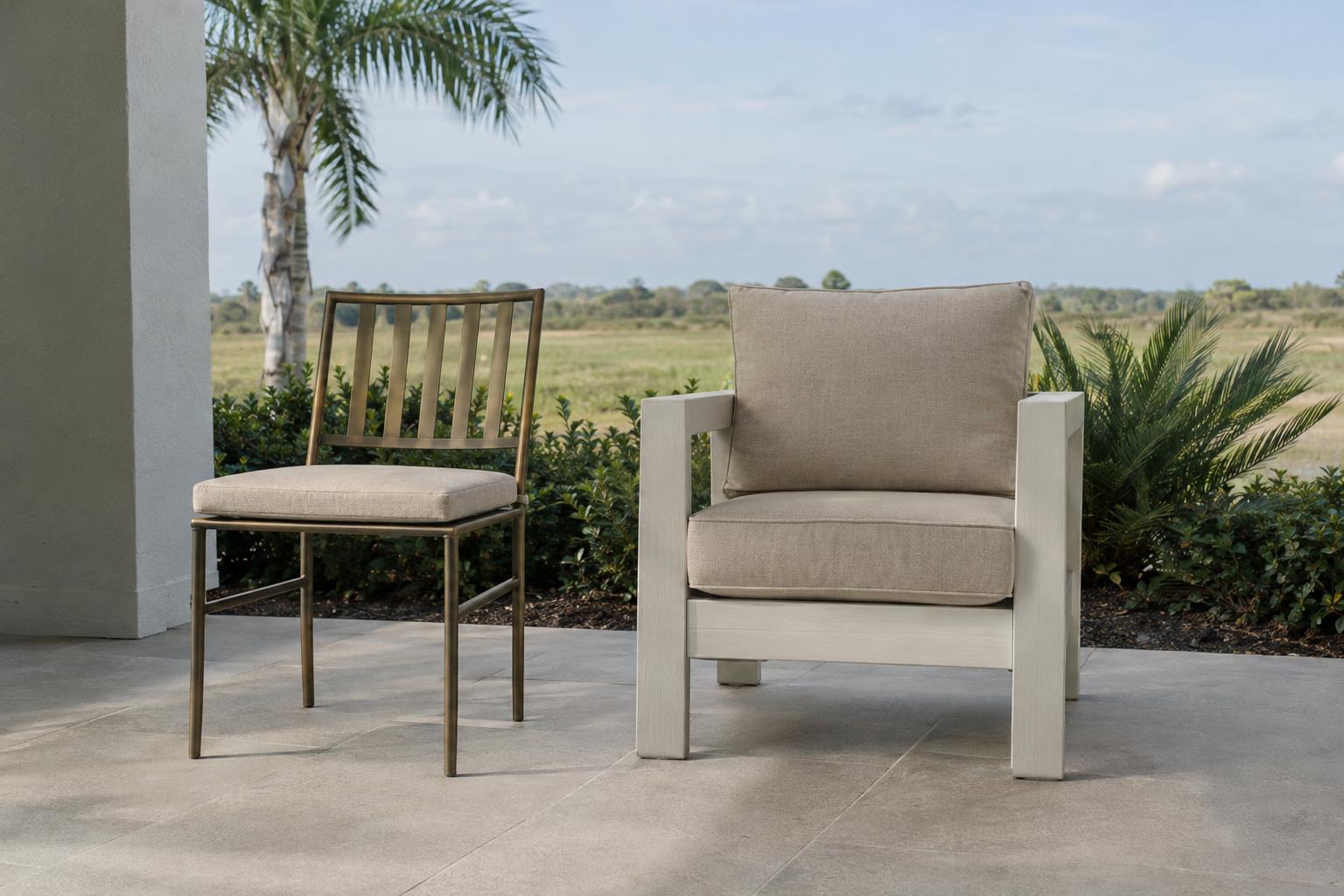
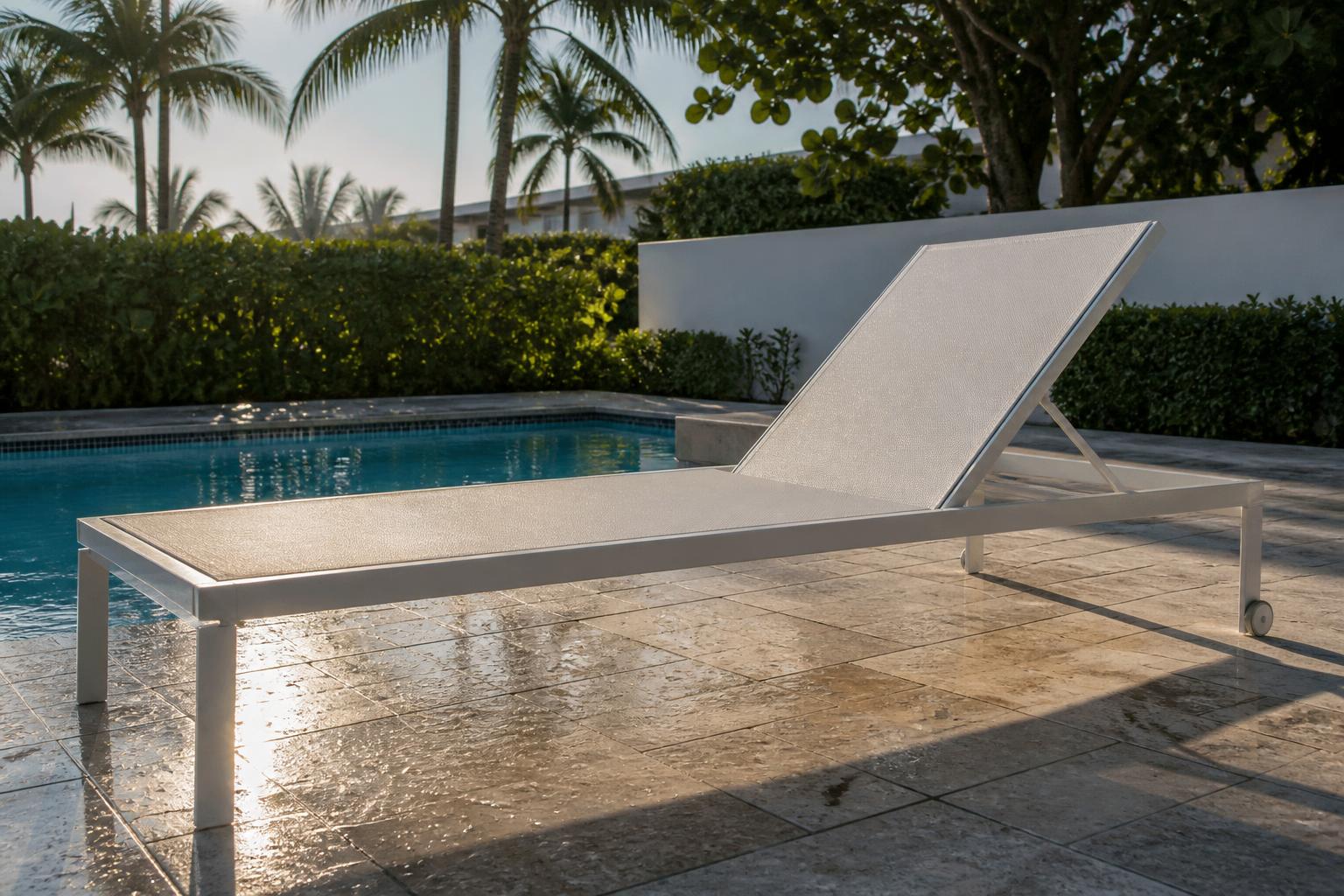
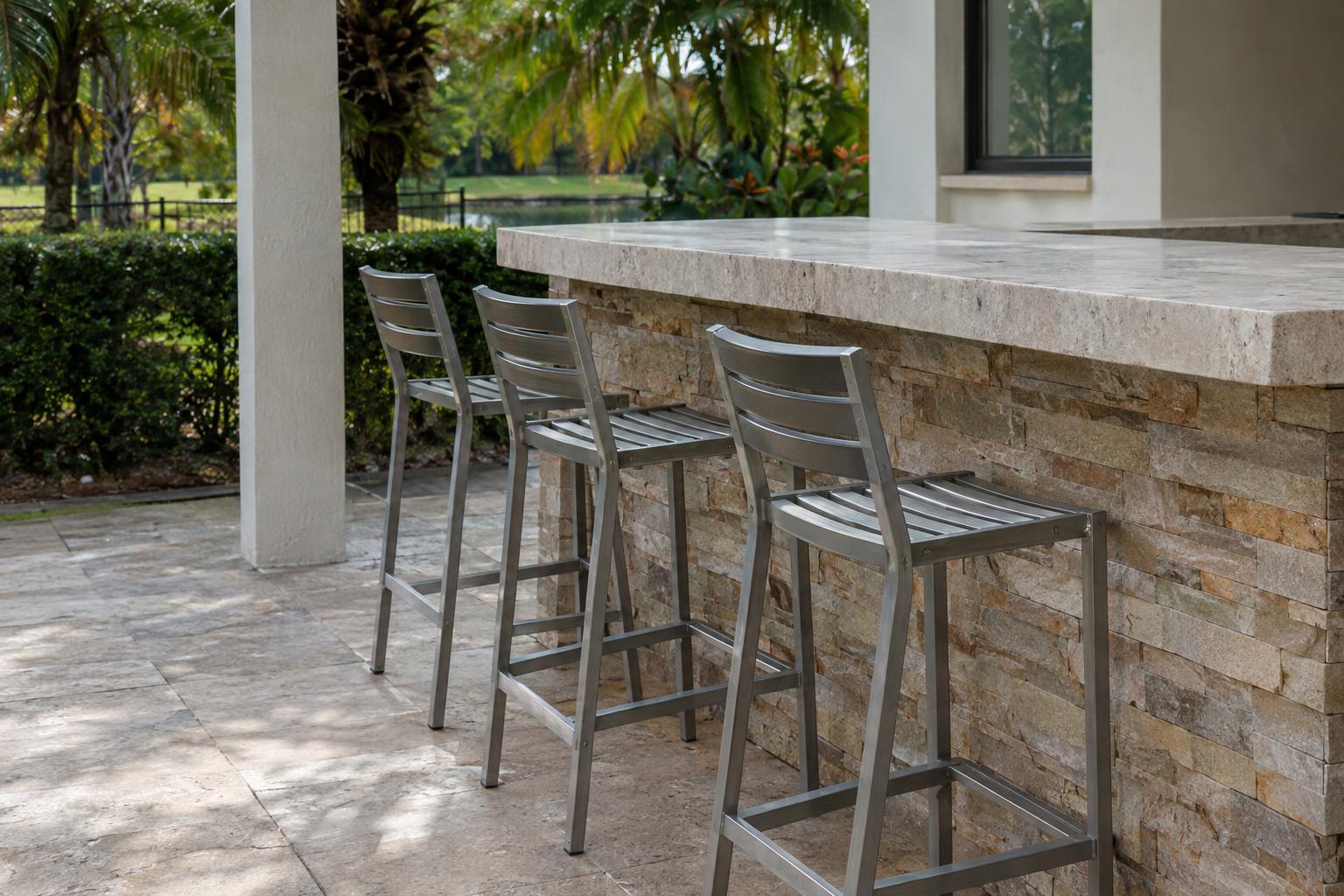
For poolside use, frame material matters. Powder-coated aluminum and poly lumber do not rust, and both shrug off routine splash well. Our aluminum furniture and poly lumber collections are well suited to pool decks for exactly that reason. The finish still benefits from care, though, since a chip in the coating gives moisture a place to start working.
Inspect frames a few times a year, particularly near joints and feet, where water tends to sit. If you find a chip or scratch, touch it up promptly. Our guide on how to touch up scratches on aluminum patio furniture walks through the process. Our article on powder-coated aluminum care covers routine cleaning.
Cushions and Fabric Near the Pool
Cushions take the brunt of the splash. Fabrics designed for outdoor use hold up better than general-purpose fabrics, but even the best fabric benefits from a quick freshwater rinse when it gets a lot of pool water. Sunbrella’s guidance on how to clean its fabrics recommends gentle cleaning with mild soap and water and thorough rinsing, and the same approach is a good habit for pool-deck cushions generally.
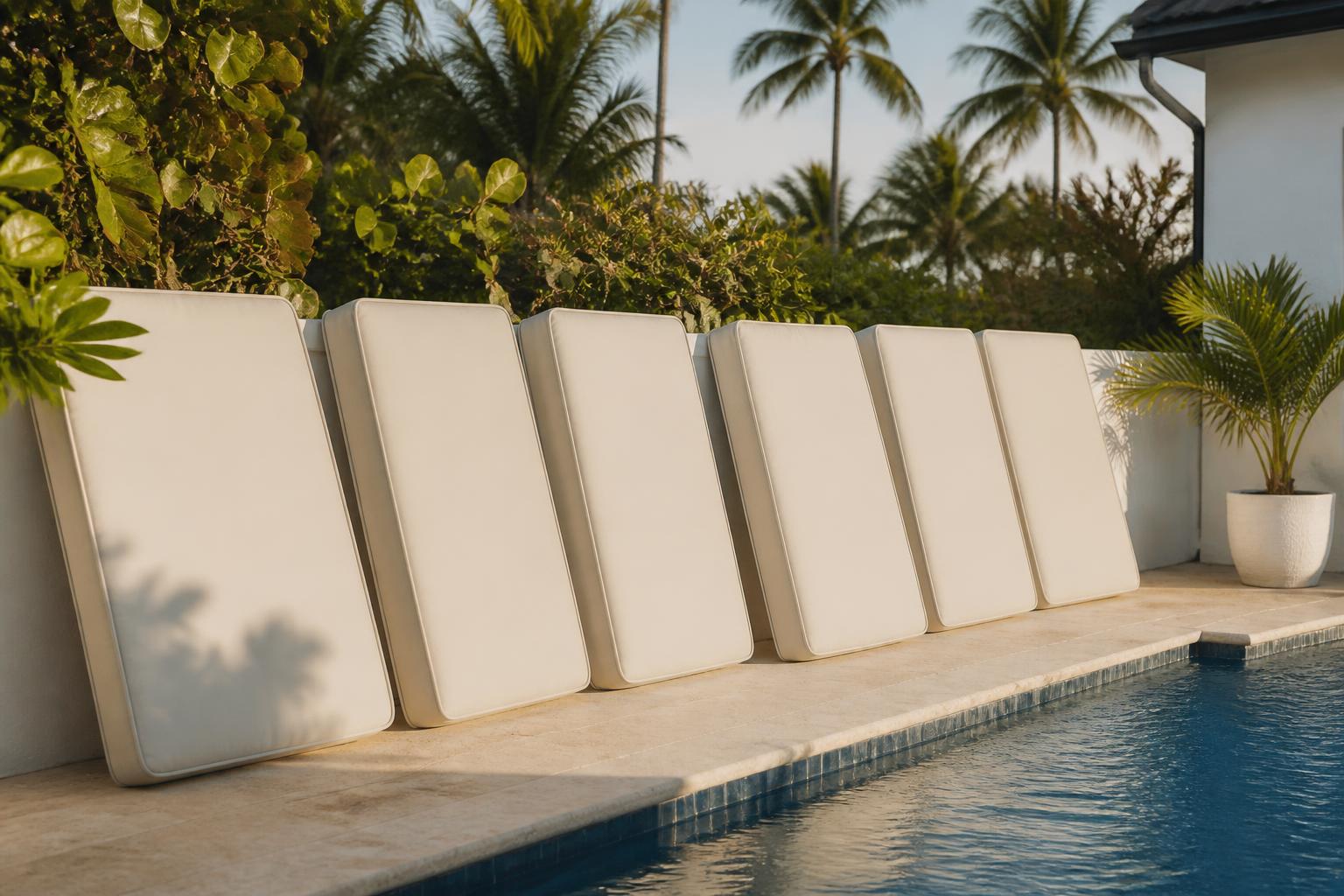
Let cushions dry completely and stand them on edge afterward, so water does not pool in the seat. Wet towels and swimsuits left on cushions trap moisture against the fabric, so a simple habit of hanging towels on a rack instead of the seat helps a lot. Our guide to quick-dry outdoor cushions explains what drying-friendly cushions look like.
A Simple Rinse Routine
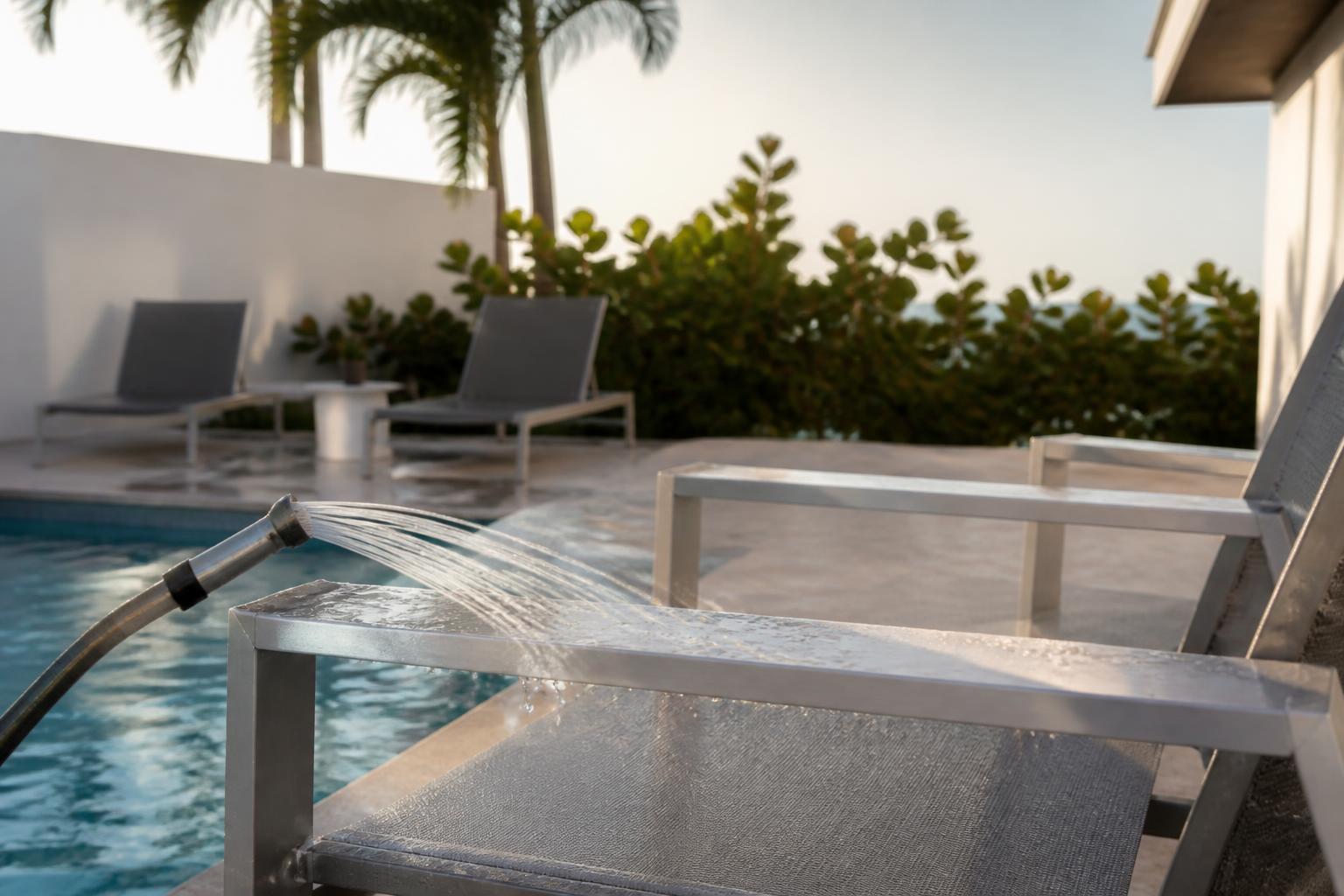
The single most effective habit is a quick rinse of the furniture nearest the pool with a hose. It takes a couple of minutes, removes dried residue before it builds up, and works for chlorine and salt water alike. Rinse frames and cushions gently rather than using a pressure washer, and let the furniture air dry.
Once every month or two, follow the rinse with a wash using mild soap and water on the frames, then rinse again. Avoid harsh cleaners and abrasive pads, which can scratch a finish and open the door to corrosion. If you are unsure whether a cleaner is safe for a particular finish, check the care label or ask us before trying it.
Layout Tips That Reduce Splash
A few inches of distance make a real difference. If you can, set lounge furniture back from the very edge of the water, where most splash and dripping swimmers land. Place a towel rack and a small side table within reach so wet items have somewhere to go besides the cushion. If you have a deck box nearby, keep spare towels and pool toys there so nothing is left lying on seats. Our guide to pool deck furniture layouts has ideas for arranging seating around the water.
Umbrella Bases, Tables, and Hardware Near Water
Small hardware is often the first thing to show wear at the pool. Screws, hinges, umbrella hardware, and adjustable mechanisms sit in the splash zone and collect residue in crevices that are difficult to rinse. Give those parts extra attention during your regular rinse, and check them for stiffness or dulling at the start of each swimming season. A light wipe with a soft cloth after rinsing helps remove water sitting in joints.
Tables and side tables near the water deserve the same care. Glass tops are easy to keep clean, but the frame under them collects the same residue as everything else. Wipe the underside and the legs, and check the feet for any wear that might expose the metal underneath. Our article on patio umbrella bases is helpful if your poolside umbrella needs a stable footing.
Seasonal Habits for Pool-Deck Furniture
Swimming season in South Florida is long, which means pool-deck furniture rarely gets a real break. Build a simple rhythm into the year. Before the busy months start, give everything a full wash, inspect finishes, and touch up chips. During the season, rinse after heavy use and move cushions to dry storage when rain is forecast. When the pool sees less use in the cooler months, take the opportunity for a deeper clean and a careful look at anything that has begun to wear.
Lastly, think about what you bring near the water. Sunscreen and tanning oils leave stains on fabric that look like fading but are really residue, so a quick wash with mild soap and water removes them before they set. Encouraging swimmers to sit on a towel keeps oils off the cushion in the first place and costs nothing.
None of this needs to feel like a chore. Once rinsing is part of your routine, it takes only a few minutes, and it protects an investment that is meant to look good beside the pool for many seasons.
If your pool deck has both sun and shade, pay extra attention to the side of each cushion that faces the water. It usually collects the most residue and takes the most direct light, so turning cushions every few weeks spreads the wear more evenly across the whole surface and helps the set age at the same pace.
Frequently Asked Questions
Is saltwater worse for outdoor furniture than chlorine?
Both leave residue. Salt can be more corrosive to unprotected metal, so a freshwater rinse is worth doing either way.
How often should I rinse pool-deck furniture?
A quick rinse after heavy use, or at least weekly in swimming season, keeps residue from building up.
Can I use bleach on cushions near the pool?
Check the fabric care label first. Harsh chemicals can damage fabric and finishes, so mild soap and water is the safer starting point.
Should I leave cushions out overnight?
If rain is forecast or the cushions are wet, stand them on edge or store them. Damp cushions left overnight are a common cause of mildew.
If you want help choosing pool-deck furniture that will hold up, call us at (561) 972-4661 or stop by our showroom at 105 Center Street in Jupiter.

About the Author
Chas Crofoot
Chas Crofoot is the owner of Beach House Patio Furniture, a family-owned outdoor furniture showroom in Jupiter, Florida. He specializes in wicker, cast aluminum, aluminum, poly lumber, and PVC pipe styles built to withstand the Florida climate, and helps coastal homeowners choose materials for durability and comfort.