
Few patios are furnished in a single afternoon. A dining set arrives first, a lounge chair gets added a year later, and a side table appears when a space needs one. Before long, mixing outdoor furniture materials stops being a choice and becomes a fact: aluminum here, poly lumber there, maybe a PVC pipe piece in the corner. The question is whether the result looks planned or piecemeal.
It can look planned, with a few simple rules. This guide explains how to choose a lead material, tie finishes together with color, balance visual weight, and group pieces by zone. It also covers the practical side, such as wind, cleaning habits, and how each material feels to live with.
Mixing Outdoor Furniture Materials: Start With One Dominant Material
The easiest way to keep a mixed patio cohesive is to let one material lead. If roughly two thirds of the pieces share a material, the rest read as supporting accents rather than competing statements. A slim aluminum dining set with a single poly lumber lounge chair looks intentional. A little of everything looks accidental.
Choose the dominant material by the largest, most visible pieces, usually the dining set or the main seating group. Then add one supporting material for contrast. Two materials are easy to balance. Three need more care, and four usually become clutter.
It also helps to think about what you already own. If an older set is still in good shape, treat it as the anchor and choose new pieces to complement it, rather than starting over. A new accent chair in a related tone often does more for a patio than replacing everything.
Repeat a Color Across Materials
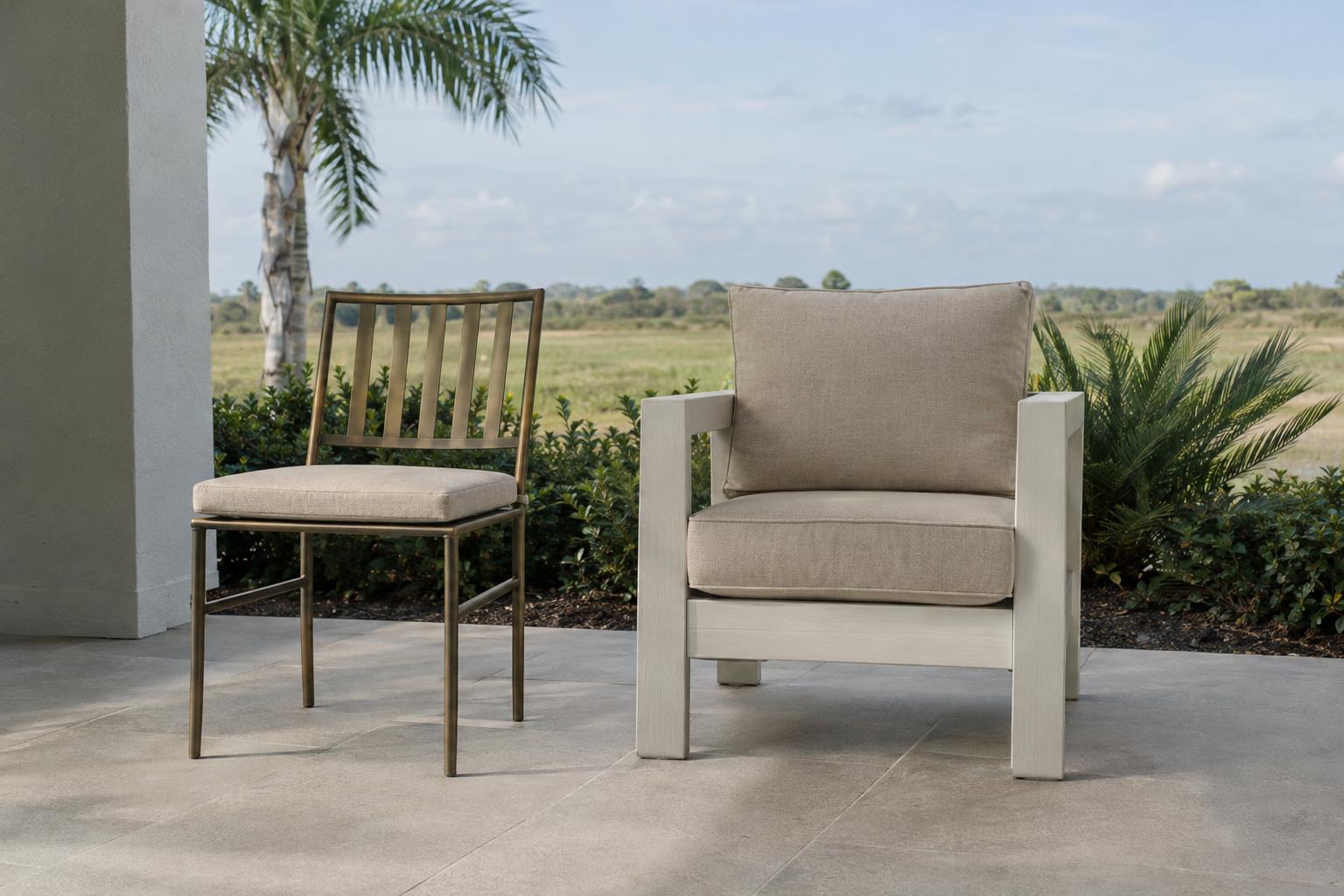
Color is the strongest tie between different materials. If your aluminum frame is a warm bronze, choose cushions or a poly lumber piece with a related tone, or pick cushions in a color that appears somewhere in each group. Repeating one shade in two or three places makes different surfaces feel like they belong together.
Photograph the patio on your phone and look at the picture, because it shows the balance of color and bulk more honestly than standing in the space. Keep the palette small. A good test is to count the distinct colors you can see from your favorite seat. If there are more than three or four, simplify. Neutrals such as white, sand, gray, and charcoal blend with almost any finish, which is why they work so well as the connecting thread.
Match Visual Weight, Not Just Style
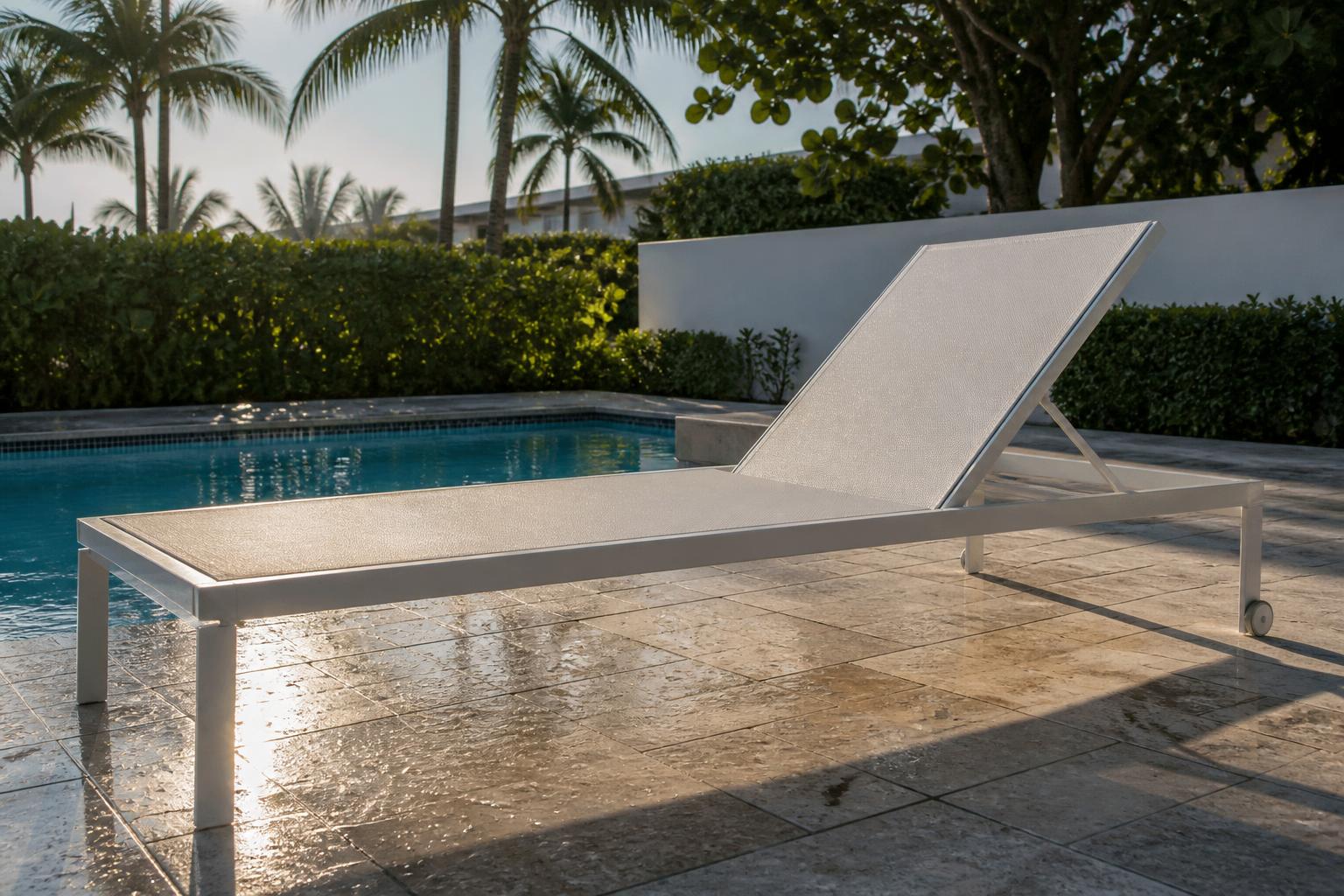
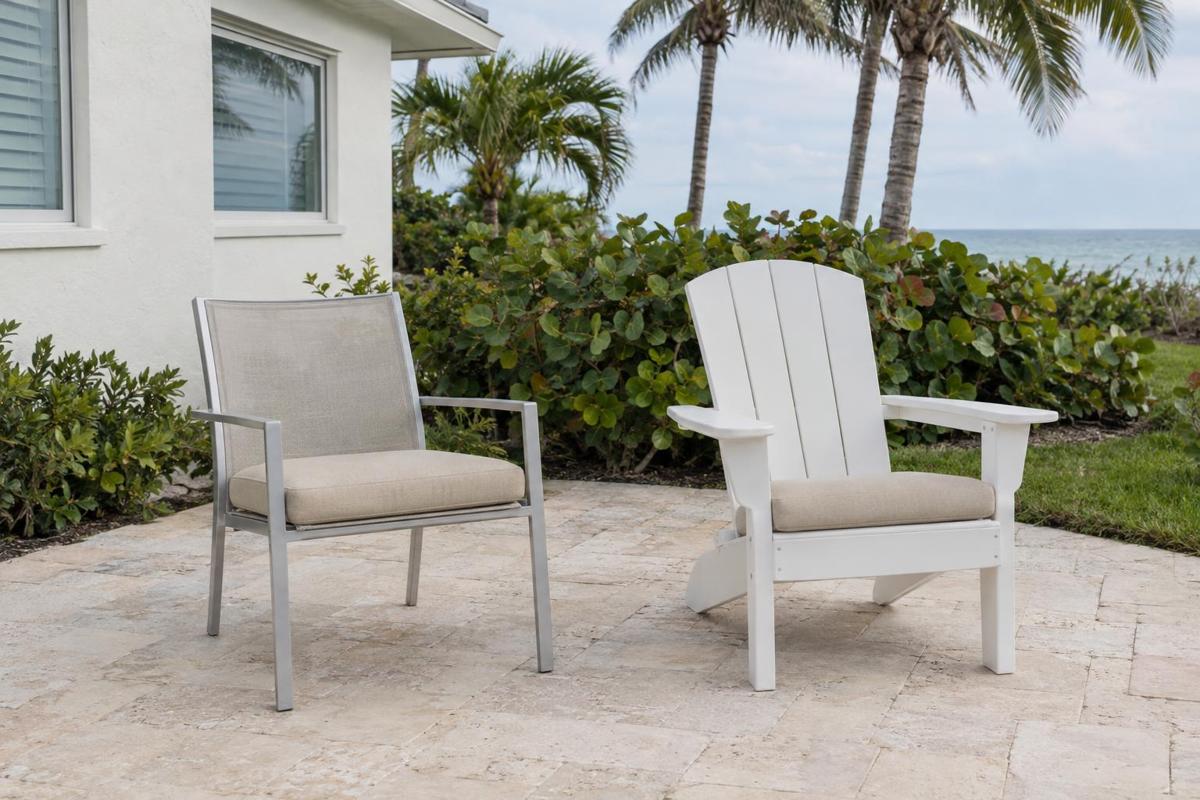
Materials carry different visual weights. Aluminum is often slim and open, with thin legs and rails. Poly lumber is typically chunky, with thick boards and a solid look. PVC pipe furniture sits somewhere in between, with a clean, lightweight frame. Putting a very slim chair next to a very bulky one can feel unbalanced, even when the colors match.
Balance the weight across the patio rather than within each group. If one side has a heavy poly lumber sofa, give the other side something of similar presence, such as a substantial dining table. Our comparison of poly lumber and HDPE explains what makes that material look and feel the way it does.
Contrast Textures on Purpose
Different materials bring different textures, and contrast can be a strength. Smooth aluminum beside the grain of poly lumber, or a woven look beside a clean metal frame, adds depth. The key is to make the contrast deliberate: two textures that clearly differ look intentional, while two that are almost the same look like a mismatch.
If you are weighing woven styles against pipe-frame styles, our article on wicker versus PVC patio furniture covers how those surfaces differ in look and care.
Keep Metal Tones Consistent
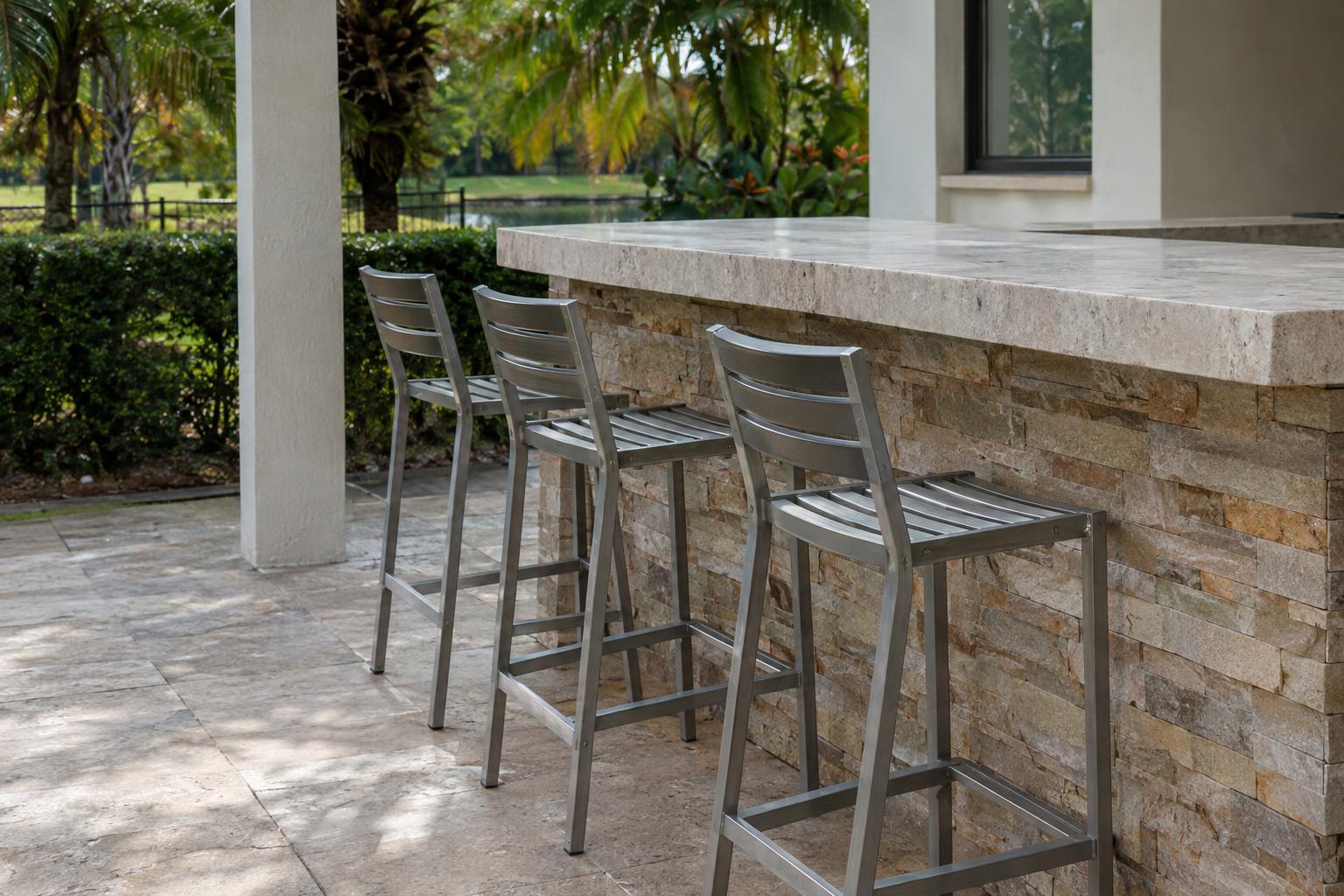
If you use more than one piece with visible metal, keep the tones aligned. Bronze next to black can work, but a bright silver frame beside a warm bronze one often looks mismatched. Check hardware, umbrella poles, table bases, and lamps, since small metal details are easy to forget.
The finish type matters for care as well as looks. Our guide to powder-coated versus anodized aluminum explains how those two finishes differ, which helps when you are matching new pieces to an older set.
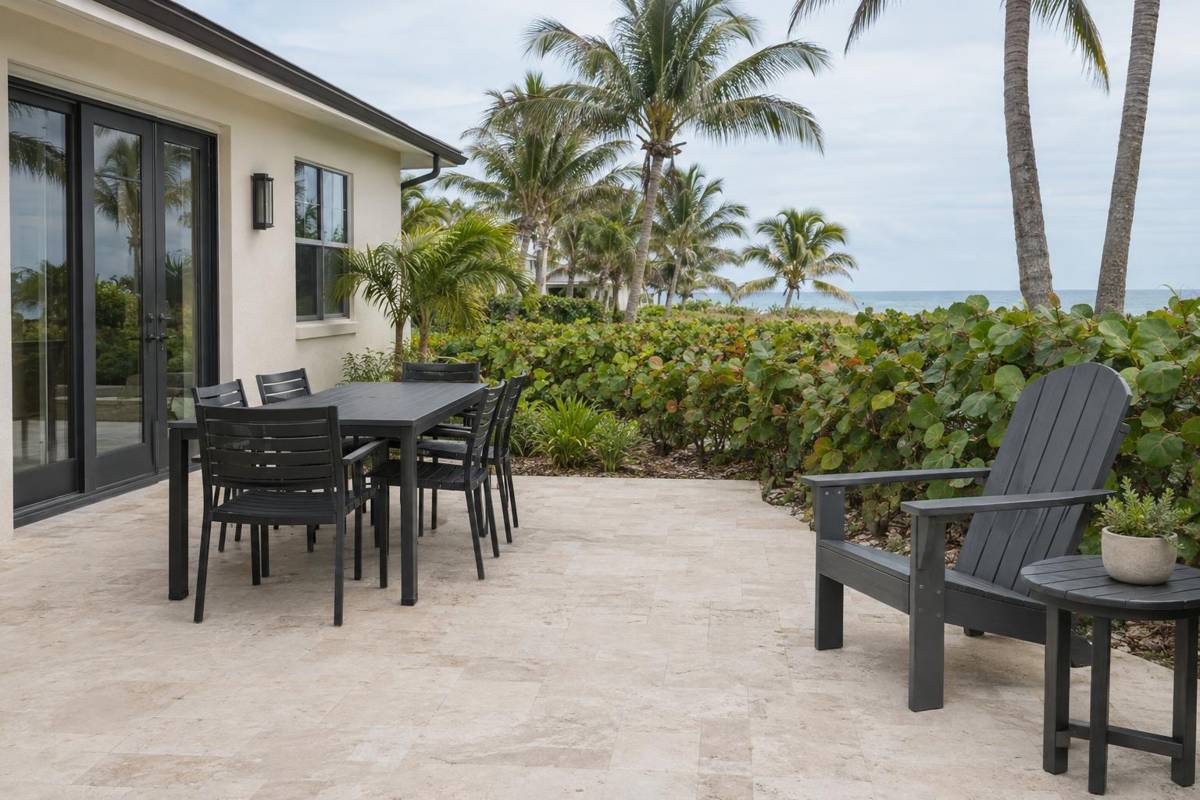
Zone the Patio by Material
Zoning is the cleanest way to mix. Use one material for the dining area and another for the lounge area, so each group reads as a complete set. A visitor sees two thoughtful zones rather than a jumble of unrelated chairs.
A rug, a planter, or a change in paving can mark the boundary between zones, and leaving a clear walking path between them keeps the patio easy to use. Within each zone, keep the finish and cushion fabric consistent. If your patio is small, a single zone with one dominant material and one accent piece is usually enough. A fire table is a good example of a piece that anchors its own zone, since it brings its own base material and surrounding seating.
Weight, Wind, and Everyday Handling
Materials differ in weight, and that matters when the wind picks up. Lighter pieces move more easily, which is useful when you rearrange often and less welcome during a gusty afternoon. Heavier pieces stay put but are harder to shift for cleaning or hosting. The National Weather Service office in Miami publishes South Florida forecasts that are handy for planning around sun, rain, and wind.
If your patio is exposed, place lighter chairs where they are sheltered, or plan to bring them in before a storm. Keep cushions and umbrellas secure, and remember that weight is only one factor in how a piece performs in the wind. Measure your patio and leave generous space around heavier pieces, so you can still move them for cleaning without scraping the surface beneath.
It also pays to think about shade. Pieces in full afternoon sun feel different to the touch than those under a roof, so put the seating you use most in the spot that suits how you actually spend time outside.
Cleaning Habits and Cushion Consistency
Every material has its own cleaning routine, so check the care guidance for each piece you own. In general, a rinse with fresh water and a wipe with mild soap keeps most outdoor frames looking good, but do not assume that what works on one surface suits another. When in doubt, test a small hidden spot first.
Cushion fabric is the great unifier. If every seat uses the same fabric family or color, mixed frames fade into the background. If you are weighing plastic frames, our comparison of PVC and resin furniture explains how those materials differ.
Also consider how often you want to handle cushions. If they come inside after every use, a mixed patio is easy to keep tidy. If they stay out, pick fabrics and colors that you are happy to see in every zone, since the cushions are what guests notice first.
Frequently Asked Questions
Can I put aluminum and poly lumber on the same patio?
Yes. Choose one as the main material, repeat a color across both, and keep the pieces in separate zones if possible.
How many different materials are too many?
Two is easy to balance and three is workable with care. Beyond that, most patios begin to look cluttered.
Do the cushions need to match?
They do not need to be identical, but using one color family or fabric across all seating helps mixed frames look cohesive.
What is the easiest way to start?
Find the largest piece you already own, treat it as your dominant material, and build around it with one supporting material and a single repeated color.
To see how different materials look side by side, call (561) 972-4661 or visit the Beach House showroom at 105 Center Street in Jupiter.

About the Author
Chas Crofoot
Chas Crofoot is the owner of Beach House Patio Furniture, a family-owned outdoor furniture showroom in Jupiter, Florida. He specializes in wicker, cast aluminum, aluminum, poly lumber, and PVC pipe styles built to withstand the Florida climate, and helps coastal homeowners choose materials for durability and comfort.