
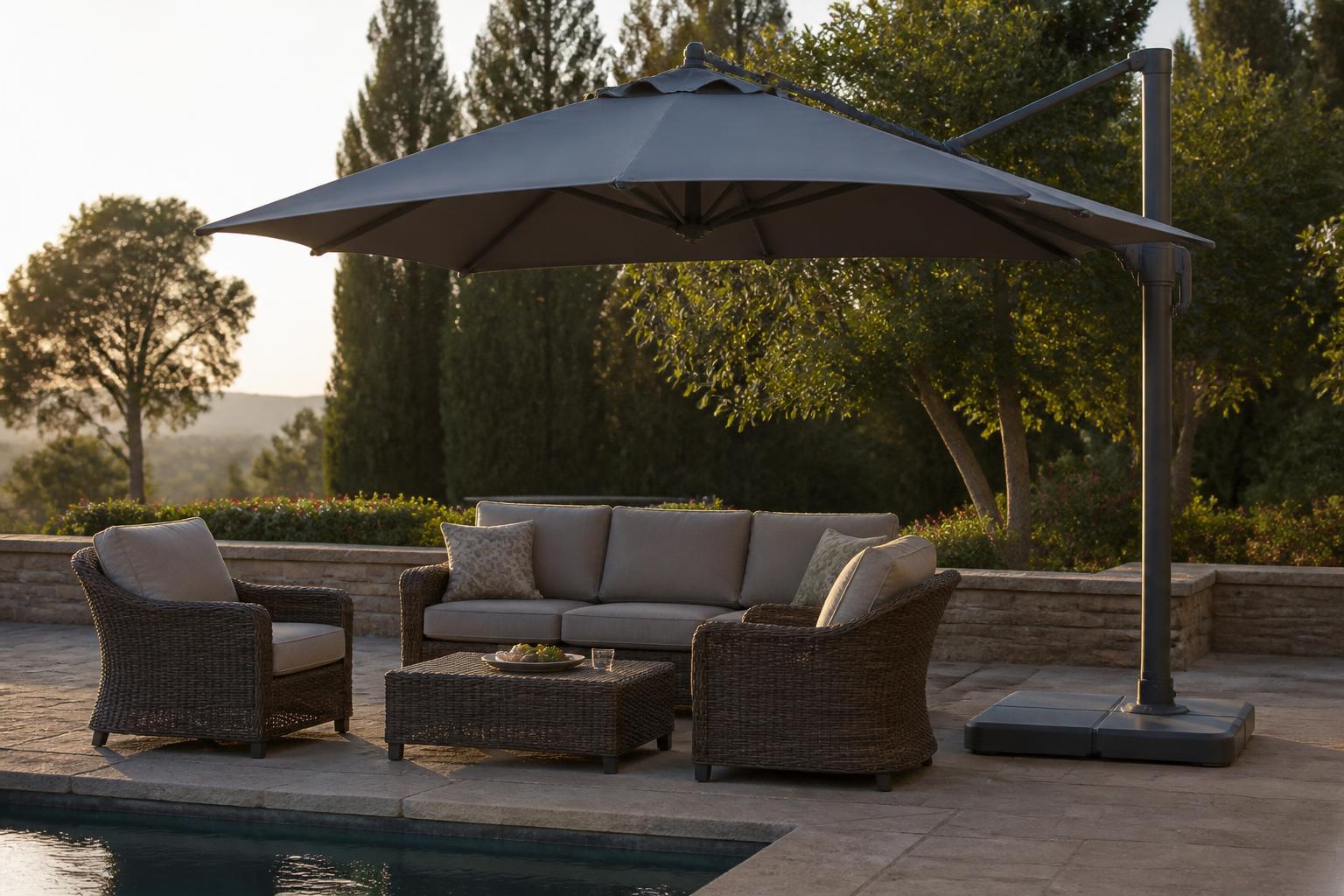

The right umbrella fabric for a Palm Beach County home is about more than matching a cushion color. The canopy has to create comfortable shade while facing strong sun, humid air, sudden rain, and regular outdoor use. Fabric type, color, weave, and care requirements all influence how an umbrella looks and performs over time.
The best choice depends on where the umbrella will sit and how the patio is used. A poolside umbrella may need different care than one under a covered lanai, while a dining table calls for a canopy that balances shade with comfortable headroom. Before comparing swatches, note how many hours of sun the area receives, whether it is exposed to wind-driven rain, and how often you want to clean or store the canopy.
Choosing Umbrella Fabric for Your Palm Beach County Home

Outdoor canopy fabric should be evaluated as a system rather than by appearance alone. The fiber provides the base performance, the dye method affects how color is carried, the weave influences airflow and water behavior, and the finish may add water or soil resistance. The frame and vent design matter too, because even a durable fabric will struggle on an umbrella that moves excessively in normal wind.
Start by asking how the color is applied. In solution-dyed fabric, pigment is introduced while the fiber is made. In piece-dyed or printed fabric, color is added later. Solution-dyed options are often chosen for exposed outdoor settings because the color runs through the fiber, but that does not make every fabric identical. Compare the manufacturer’s specifications, warranty, cleaning instructions, and intended use for the exact swatch you are considering.
Common outdoor categories include acrylic, polyester, and olefin fabrics. Each category contains different grades, weights, and finishes, so the fiber name alone cannot tell you how a canopy will perform. A well-made polyester designed for seasonal residential use may be a sensible fit for a protected patio, while a more exposure-resistant fabric may offer better value in a full-sun setting. Ask what the manufacturer says about ultraviolet exposure, water resistance, mildew care, and replacement availability.
Water resistance is also different from waterproofing. Most patio umbrella canopies are designed to shed a passing shower, not serve as a permanent roof. Seams, vents, and prolonged exposure can allow water through. An umbrella should be closed during severe weather, and the fabric should be allowed to dry before it is stored for an extended period.
How Sun, Rain, and Salt Air Affect the Choice
South Florida sun can fade color and weaken lower-grade materials over time. A patio that receives direct afternoon sun will place more demand on a canopy than a shaded courtyard. When comparing samples, ask for the fabric’s published fade or UV information and consider how long the umbrella will remain open on a typical day.
Humidity makes drying and routine care just as important as colorfastness. Leaves, pollen, sunscreen, and airborne dirt can settle on the canopy, while damp folds can hold moisture when an umbrella is closed. Regular brushing and prompt spot cleaning help prevent ordinary debris from becoming a stubborn stain. Always follow the care label, since cleaners that are safe for one fiber or finish may damage another.
Coastal air can also affect the umbrella as a whole. Salt and moisture may collect on the frame, fasteners, and operating mechanism even when the canopy still looks clean. Rinsing exposed components with fresh water and allowing them to dry can support routine care. If the umbrella will sit near a pool, mention chlorine exposure when asking about fabric and frame maintenance.
Storm planning should be part of the decision before delivery. Patio umbrellas are shade products, not storm shelters. Close the canopy when it is unattended or when wind increases, and move or secure the umbrella according to the manufacturer’s instructions. Review National Weather Service hurricane safety guidance as part of a broader household plan instead of relying on umbrella weight alone.
Color, Shade, and Comfort Around the Patio

Color changes the mood of an outdoor room and the way the canopy looks from inside the home. Light neutrals can keep a patio feeling open, while deeper colors create a stronger visual anchor. Pattern can connect the umbrella to cushions, rugs, planters, or nearby landscaping without requiring every fabric to match exactly.
View swatches outdoors if possible. Showroom lighting and phone screens can shift undertones, and a color may look different in direct sun than it does under a covered patio. Bring photos of the furniture, pavers, exterior paint, and pool finish. A sample that works with all four is more useful than one chosen in isolation.
Canopy color alone does not determine how much ultraviolet exposure reaches the people below. Coverage, fabric construction, condition, and the angle of the sun all matter. An umbrella is one part of a sun-safety plan that can also include protective clothing and sunscreen. The EPA’s sun-safety guidance offers practical reminders for time spent outdoors.
Size and placement affect comfort as much as fabric. Make sure the canopy covers the seating area during the hours it will be used, not only when the sun is directly overhead. Check that the pole, base, and opening mechanism do not interfere with chairs or normal traffic. For a dining setup, open the umbrella with every chair pulled out before deciding the scale is right.
Care Questions to Ask Before You Buy
A clear care routine makes it easier to keep an umbrella looking presentable. Ask whether the canopy can be removed, which soap or cleaner is approved, whether the fabric should air-dry on the frame, and how the umbrella should be stored. Keep those instructions with the purchase information so they are available when a spill happens.
Also ask whether replacement canopies are available for the model and how colors may change between production runs. A replaceable canopy can extend the useful life of a sound frame, but fit is specific. Record the model, size, finish, and fabric selection rather than assuming another canopy with the same diameter will work.
Use a simple comparison list when reviewing swatches:
- Exposure: Note full sun, partial shade, covered placement, and nearby pool or salt-air conditions.
- Published performance: Compare the manufacturer’s fade, water-resistance, warranty, and care information.
- Color: View the swatch beside existing furniture and exterior finishes in natural light.
- Maintenance: Choose a cleaning and storage routine that fits how you actually use the patio.
- Replacement path: Confirm whether the canopy can be replaced and what model information you should retain.
Seeing fabric and furniture together can prevent a mismatch in scale or color. Visit the Beach House Patio Furniture showroom with patio measurements and photos, or review the site’s Palm Beach Gardens patio furniture information before comparing options in person.
Frequently Asked Questions
Is solution-dyed fabric always the right choice?
Not automatically. Solution-dyed options are commonly considered for strong colorfastness, but the best fit still depends on exposure, budget, care expectations, and the specifications of the exact fabric. Compare published details rather than choosing by fiber name alone.
Should an outdoor umbrella stay open in the rain?
A canopy may shed a brief shower, but a patio umbrella is not designed to replace a roof. Close it when wind increases or severe weather approaches, follow the manufacturer’s instructions, and let damp fabric dry before long-term storage.
Are darker or lighter umbrella colors better?
Both can work. The decision is usually about the look of the patio, how the shade feels, and how the fabric coordinates with nearby finishes. View swatches outdoors because natural light can change how a color appears.
What should I bring when comparing umbrella fabrics?
Bring the umbrella or table dimensions, photos of the patio, furniture finish information, and notes about sun and weather exposure. Those details help narrow the choices without relying on color alone.
To compare umbrella fabric choices for Palm Beach County homes, visit Beach House Patio Furniture at 105 Center Street in Jupiter. Call (561) 972-4661 or use the contact page to discuss canopy colors, sizing, care requirements, and available options for your patio.

About the Author
Chas Crofoot
Chas Crofoot is the owner of Beach House Patio Furniture, a family-owned outdoor furniture company in Jupiter, Florida. Since 1979, Chas and his team have manufactured and sold high-quality patio furniture — specializing in wicker, cast aluminum, aluminum, poly lumber, and PVC pipe styles built to withstand the Florida climate. With over four decades of hands-on experience in outdoor furniture design and manufacturing, Chas brings deep expertise in material selection, durability, and comfort for coastal living.