
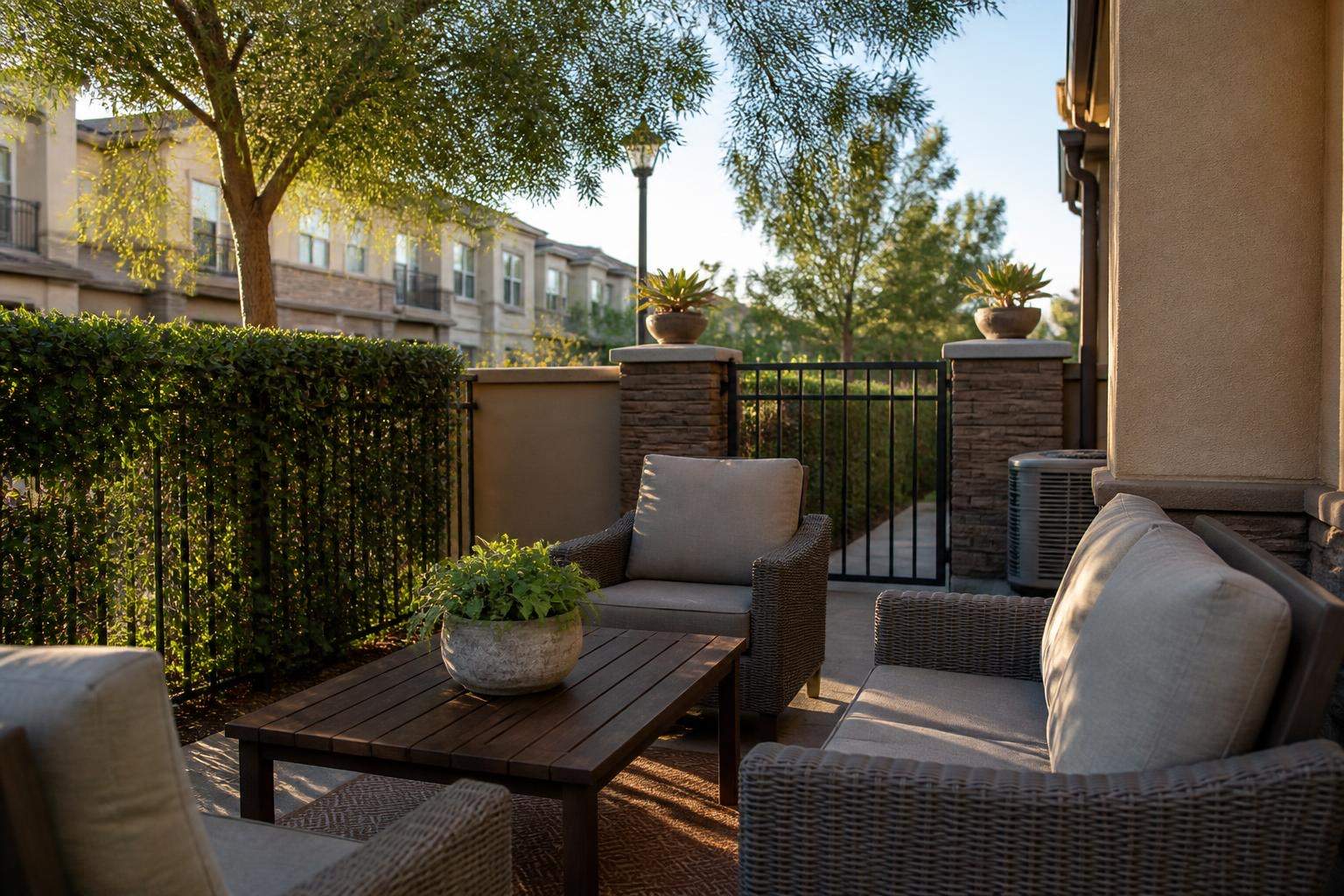


Many gated and planned communities across Palm Beach County have design guidelines that extend beyond paint colors and landscaping to include visible patio furniture, especially on balconies, front-facing courtyards, or shared common areas. If you’ve ever had an HOA committee ask you to change a furniture color or finish after the fact, you know it’s worth checking the guidelines before you order, not after. Here’s how we help clients navigate furniture color choices in communities with strict aesthetic rules.
Why HOAs Regulate Furniture Color
Most communities that regulate furniture color are trying to maintain a consistent look across the property, particularly for furniture that’s visible from the street, a shared courtyard, or a community pool area. Associations often restrict very bright or bold colors in these visible spaces while allowing more flexibility on fully private, fenced backyard patios that aren’t visible to neighbors or common areas. Reading your specific community’s guidelines carefully matters here, since rules can vary significantly even between communities in the same general area, and some restrictions apply only to certain sections of a property, like street-facing balconies, rather than the entire community.
Common Approved Color Categories
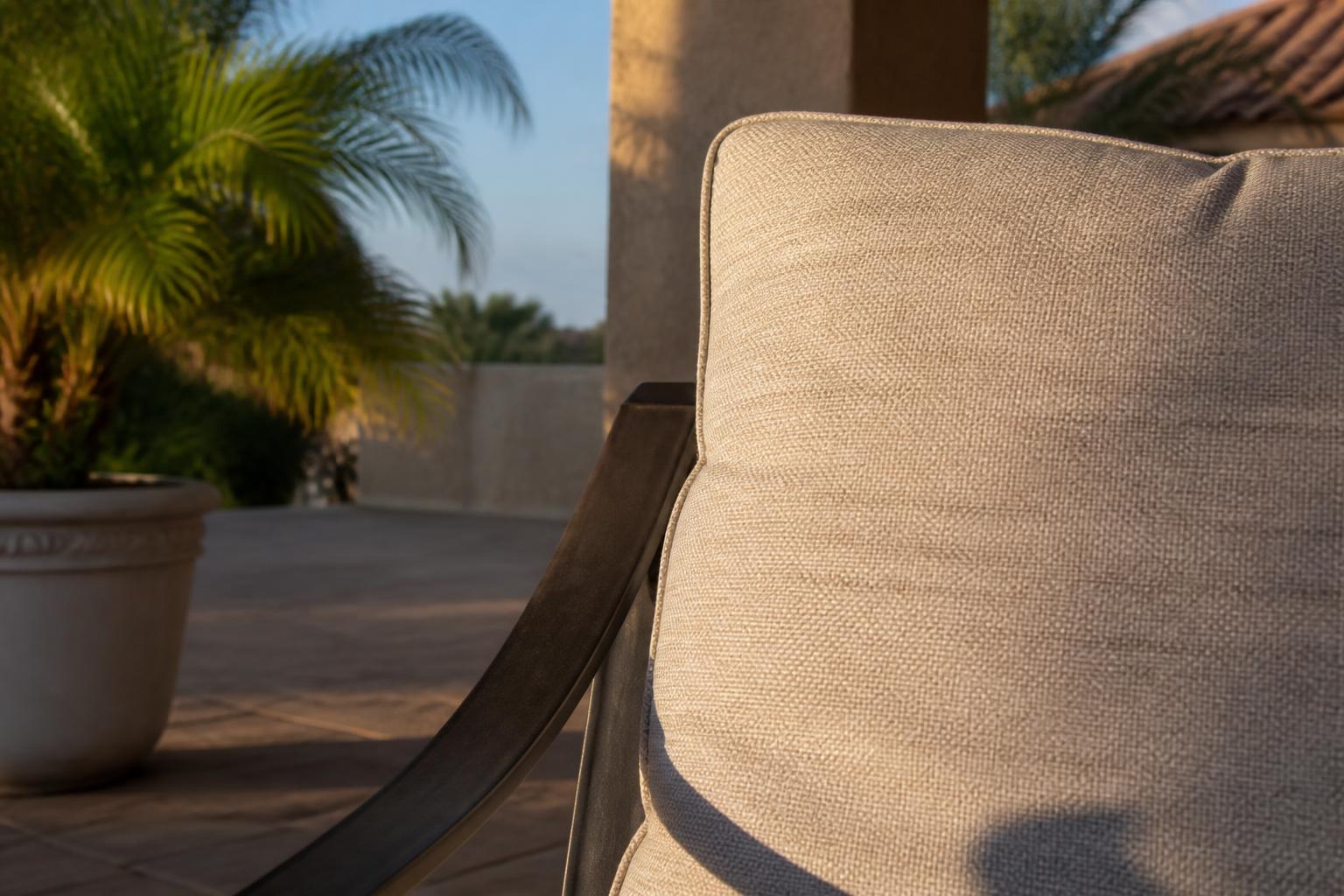
While every community’s guidelines differ, we see a consistent pattern across Palm Beach County associations: neutral tones like white, tan, gray, black, and bronze are approved far more often than bright or saturated colors. These neutral finishes also tend to be the most widely available options across aluminum frames, wicker weaves, and cushion fabrics, which makes it easier to find HOA-compliant furniture without sacrificing style or comfort. If your association’s guidelines specifically list approved colors or reference a color palette used elsewhere in the community, like roof tiles or shutter colors, matching that palette is usually the safest way to avoid a committee request to change your furniture after installation.
Cushion fabric is sometimes treated separately from frame color in HOA guidelines, since fabric can be swapped more easily than a frame finish. If your community restricts frame color more strictly than fabric, that gives you some room to add personality through cushion choice while keeping the structural pieces neutral and compliant.
Checking Guidelines Before You Order
Before finalizing a furniture order for a visible patio or balcony in a regulated community, we recommend requesting a copy of your association’s current architectural or furniture guidelines directly from your HOA, since these documents are updated periodically and older printed copies may not reflect current rules. If you can share those guidelines with us, we can point you toward finishes and colors already in our inventory that are likely to meet them, which saves you from ordering furniture that has to be returned or replaced after a committee review.
What Happens if a Committee Requests a Change
If you’ve already purchased furniture and later receive a request from your association to change its color or finish, it’s worth reviewing the guidelines cited in that request carefully before assuming a full replacement is necessary. In some cases, a fabric or cushion swap can bring a piece into compliance without replacing the entire frame, especially if the frame color itself wasn’t the specific issue raised. Keeping your original purchase details and any finish documentation on hand makes this kind of follow-up conversation, whether with your association or with us, much faster to resolve.
We’ve helped a number of Palm Beach County clients work through exactly this situation, and in most cases a targeted adjustment resolves the request without needing to replace an entire furniture set. If you’re ever unsure whether a piece you already own meets updated community guidelines, we’re happy to take a look and advise on the most practical path forward.
Planning Ahead for Future Guideline Updates
Association architectural guidelines aren’t static, and it’s not unusual for a community to update its approved color list or furniture rules every few years as the property’s overall look evolves. Choosing genuinely neutral tones now, rather than a color that’s merely approved under the current guidelines but sits at the edge of what’s allowed, tends to hold up better against future guideline changes than a more distinctive choice. If you’re furnishing multiple areas of your home, staying with one consistent neutral palette across balcony, patio, and any shared common area furniture also simplifies compliance if guidelines shift down the road, since you won’t be tracking multiple different colors against updated rules.
Working With Your Association’s Architectural Committee
If your community requires formal approval before installing visible patio or balcony furniture, submitting a simple product sheet or photo along with your application, rather than just a general description, tends to move the review process along faster. Many architectural committees appreciate seeing the specific finish, fabric, and dimensions upfront rather than having to request additional information after an initial submission. We’re happy to provide product specification sheets for any furniture you’re considering, which you can include directly with an HOA approval request if your community requires one.
If your community has a formal appeals process for furniture that doesn’t initially receive approval, we can also help identify a close alternative in a compliant color or finish, so the review process doesn’t stall your outdoor furnishing plans for weeks while an appeal is decided.
Balancing Compliance With Personal Style
Staying within HOA color guidelines doesn’t mean every gated community home has to look identical. Within an approved neutral palette, there’s still real room for personal style through fabric pattern, table shape, and how pieces are arranged and accessorized with items like planters or outdoor rugs that typically fall outside strict furniture color rules. Many of our clients in regulated communities find that a well-chosen neutral furniture set actually gives them more flexibility to express personality through smaller, easily changed accessories, rather than locking them into a single look tied to a more distinctive furniture color choice.
Our showroom team regularly helps clients in regulated communities find that balance, since we see a wide range of Palm Beach County association guidelines and generally have a good sense of what tends to sail through review versus what invites a follow-up question from a committee.
Frequently Asked Questions
Do HOA furniture color rules usually apply to backyard patios too?
It depends on the community. Many associations focus their color restrictions on furniture visible from the street, a shared common area, or a community pool, while allowing more flexibility on fully enclosed, private backyard patios.
What’s the safest furniture color choice for a gated community?
Neutral tones like tan, gray, bronze, and white are approved most consistently across Palm Beach County associations, though it’s still worth confirming against your specific community’s written guidelines.
Can Beach House Patio Furniture help me match my community’s approved colors?
Yes, if you share your association’s guidelines with us, we can suggest finishes and fabrics from our current inventory that are likely to meet them.
What should I do if my HOA asks me to change furniture I already own?
Review the specific guideline cited in the request first, since a fabric or cushion swap sometimes resolves the issue without replacing the entire piece. We’re happy to look at your situation and suggest the most practical fix.
If you’re furnishing a patio or balcony in a color-regulated community, reach out through our contact page with your HOA’s guidelines, or stop by our showroom, and we’ll help you choose furniture that fits both your style and your community’s rules.

About the Author
Chas Crofoot
Chas Crofoot is the owner of Beach House Patio Furniture, a family-owned outdoor furniture company in Jupiter, Florida. Since 1979, Chas and his team have manufactured and sold high-quality patio furniture — specializing in wicker, cast aluminum, aluminum, poly lumber, and PVC pipe styles built to withstand the Florida climate. With over four decades of hands-on experience in outdoor furniture design and manufacturing, Chas brings deep expertise in material selection, durability, and comfort for coastal living.