
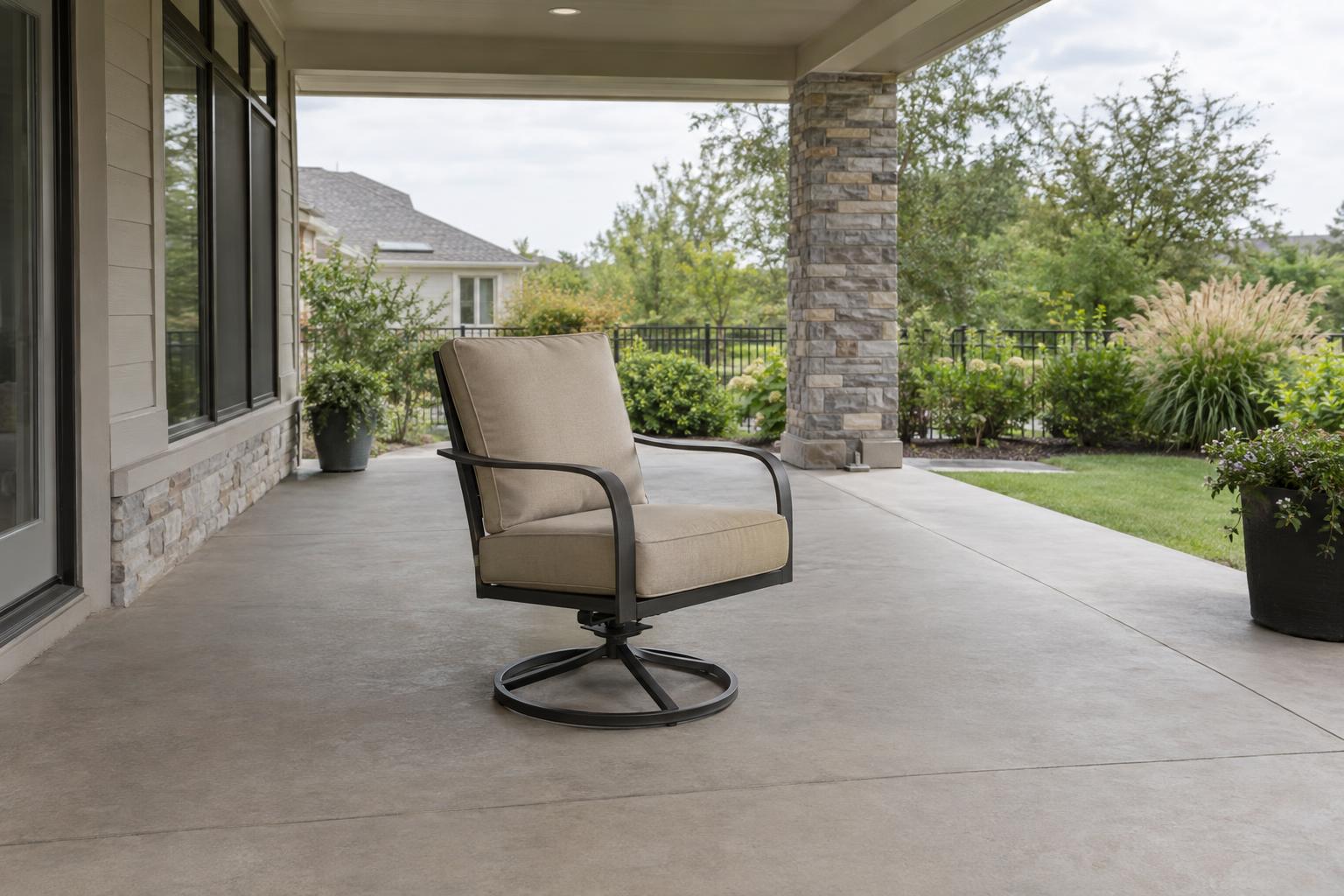
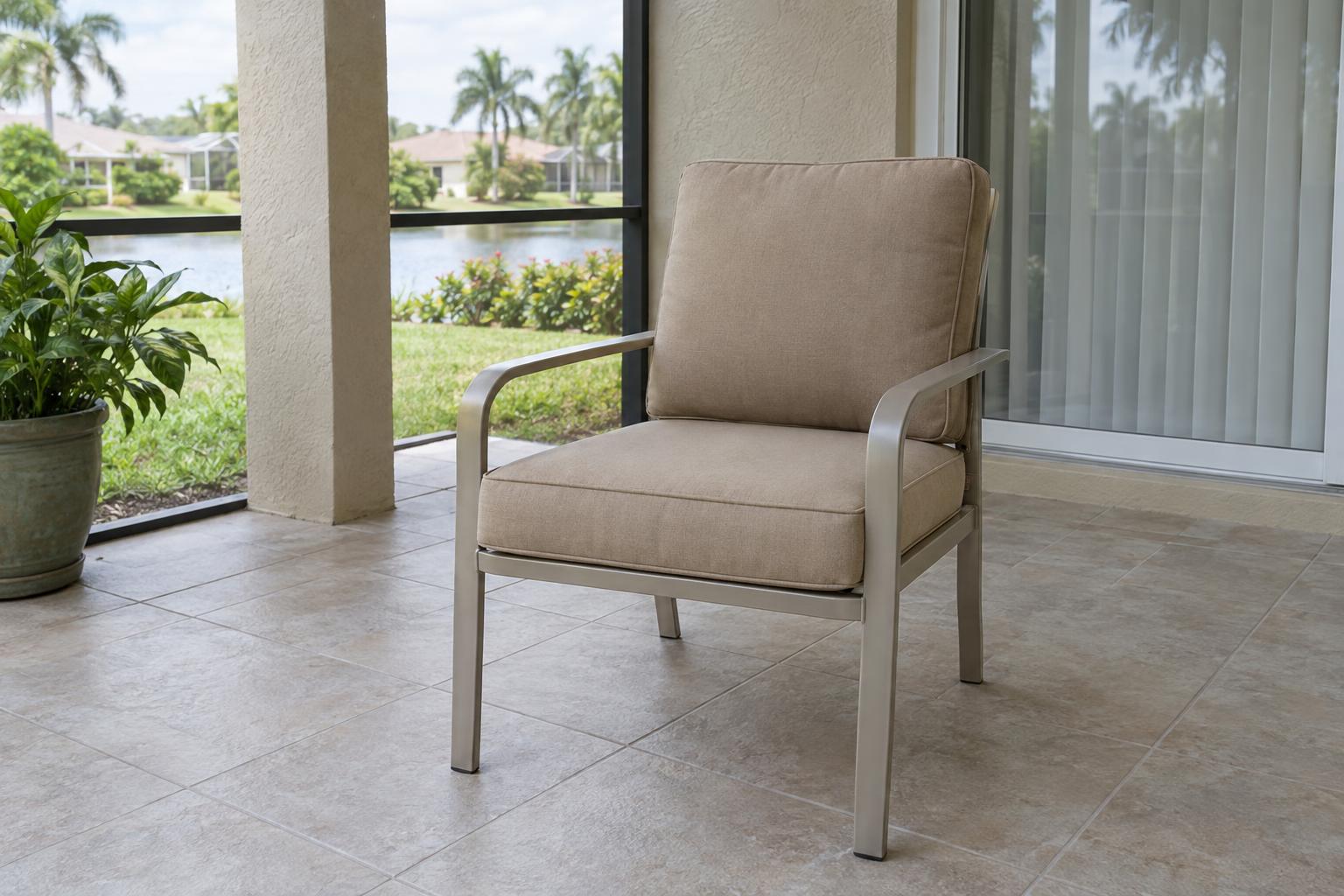
Replacement outdoor chair cushions fit best when you bring more than one width-and-depth measurement to the store. The seat frame, the cushion’s shape, the back cushion and the attachment points all affect the result. A cushion can match the advertised size and still crowd the arms, leave a gap at the rear or move your sitting position too far forward.
Before shopping, make a separate record for each chair style. Keep the measurements of the existing cushion and the furniture frame distinct. Together, they explain both what used to fit and what the chair can accommodate now.
1. Identify the cushion construction first
Start with the furniture’s model name or label, if available, and photograph the complete chair. Note whether the seat and back cushions are separate, joined by a fabric hinge or formed as one continuous pad. A hinged pad cannot be described accurately by the dimensions of just its seat section. Likewise, a shaped cushion made for a particular frame may have corners or attachment points that a standard rectangle cannot reproduce.
Check whether the removable cover encloses a separate insert and whether the chair has straps, a mesh support or a solid seat beneath it. These details do not establish that a replacement is available, but they give a seller useful questions to answer. Avoid taking apart a sewn cushion simply to measure it.
2. Measure the old cushion without stretching it
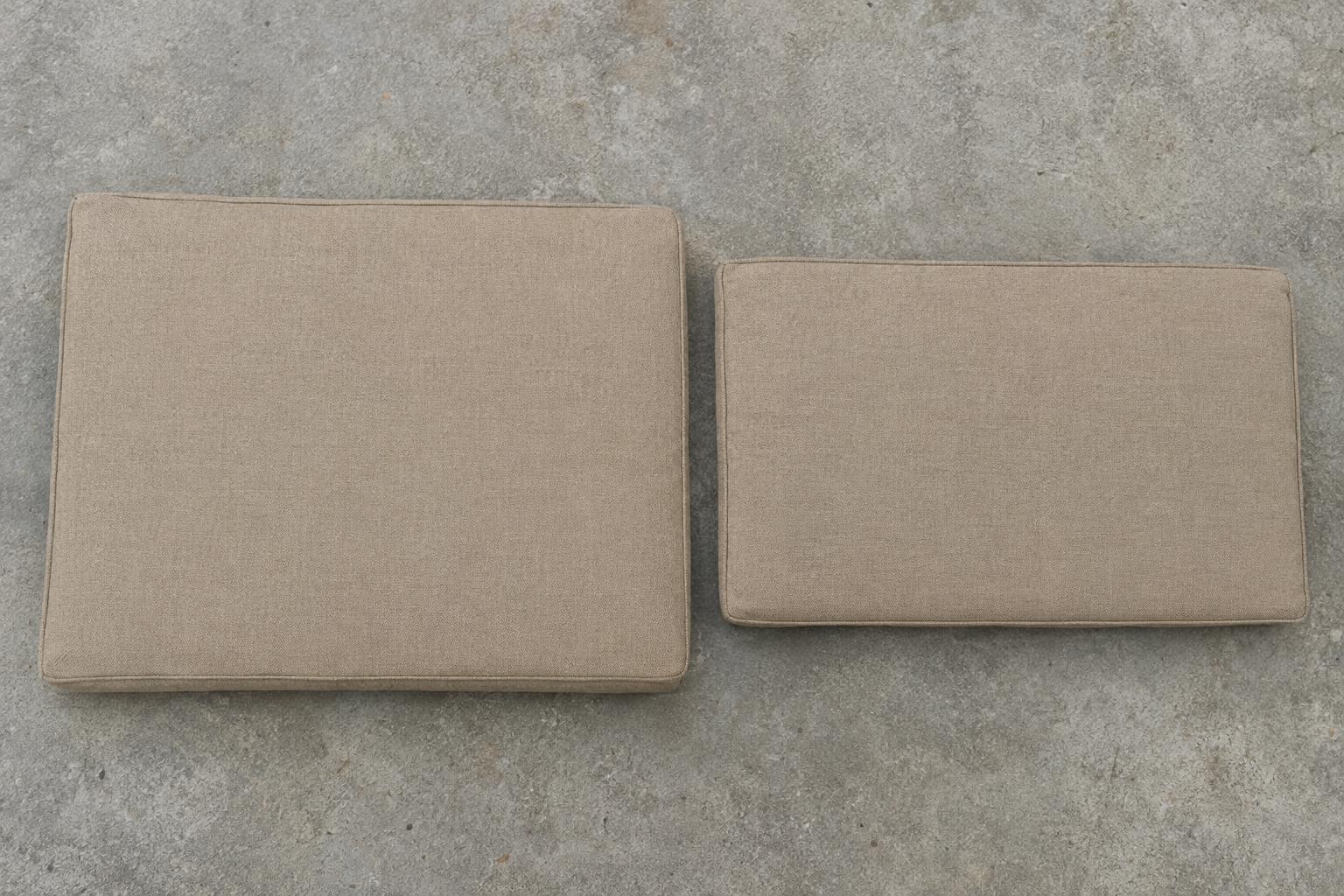
Place the cushion on a flat, clean surface, with its cover arranged naturally. Do not pull the fabric taut to make the numbers larger. Record the overall width and depth using consistent edge points, and note whether your measurements include piping. If the cushion bulges or has a rounded edge, take a photograph showing where the measurement begins and ends.
Measure the front width and rear width separately rather than assuming they match. On a tapered seat, also note the direction of the taper. Record the fullest thickness and any visibly compressed areas as separate observations. An old, flattened cushion is useful evidence of shape, but its current thickness may not represent the original specification. Ask how the proposed replacement is measured before comparing its listing with your notes.
3. Record the frame’s usable seating space
With the cushion removed, measure the support area from front to back and side to side. Include front and rear widths where the frame narrows. Then measure the space between the arms at the height where the cushion will actually sit. A frame can have a wide front rail while its curved arms reduce the usable width farther back.
Describe these numbers as frame measurements, rather than immediately subtracting an assumed allowance. The appropriate fit depends on the cushion construction and the furniture design. There is no single amount to deduct from every outdoor chair. Look for raised rails, corner posts or sloping supports that could interfere with the cushion. Photograph those obstructions instead of trying to summarize a complicated shape with one number.
4. Check how the seat and back meet
Put the existing cushions back in their normal positions and look at the junction between them. Does the back cushion stand behind the seat cushion, rest on top of it or overlap its rear edge? A replacement back cushion that is thicker than the original can reduce the space available for your legs, even when the seat cushion itself has not changed.
Measure the back cushion’s width at the bottom and top if its outline varies. Record its height and thickness, then photograph the arrangement from the side. For a hinged pad, record each section and the hinge location as well as the overall length. Do not substitute the total back-frame height for the cushion height without explaining the difference; the frame may intentionally remain visible above the cushion.
5. Map corners, seams and attachment points
Round corners, notches and curved rear edges deserve their own close-up photographs. If a seller requests a template, ask how it should be made and which edges it needs to represent. A traced outline of a stretched cover can differ from the cushion’s working shape. Keep the original cushion available until the replacement’s fit has been confirmed.
Count the ties or straps and identify their locations relative to the corners and seams. Note where each attaches to the furniture and whether access is blocked by a wide rail. A tie in the wrong place can pull the cushion sideways rather than secure it. Ask about the proposed attachment method before purchase; avoid assuming that extra-long ties will solve every mismatch.
6. Test thickness as part of the whole chair
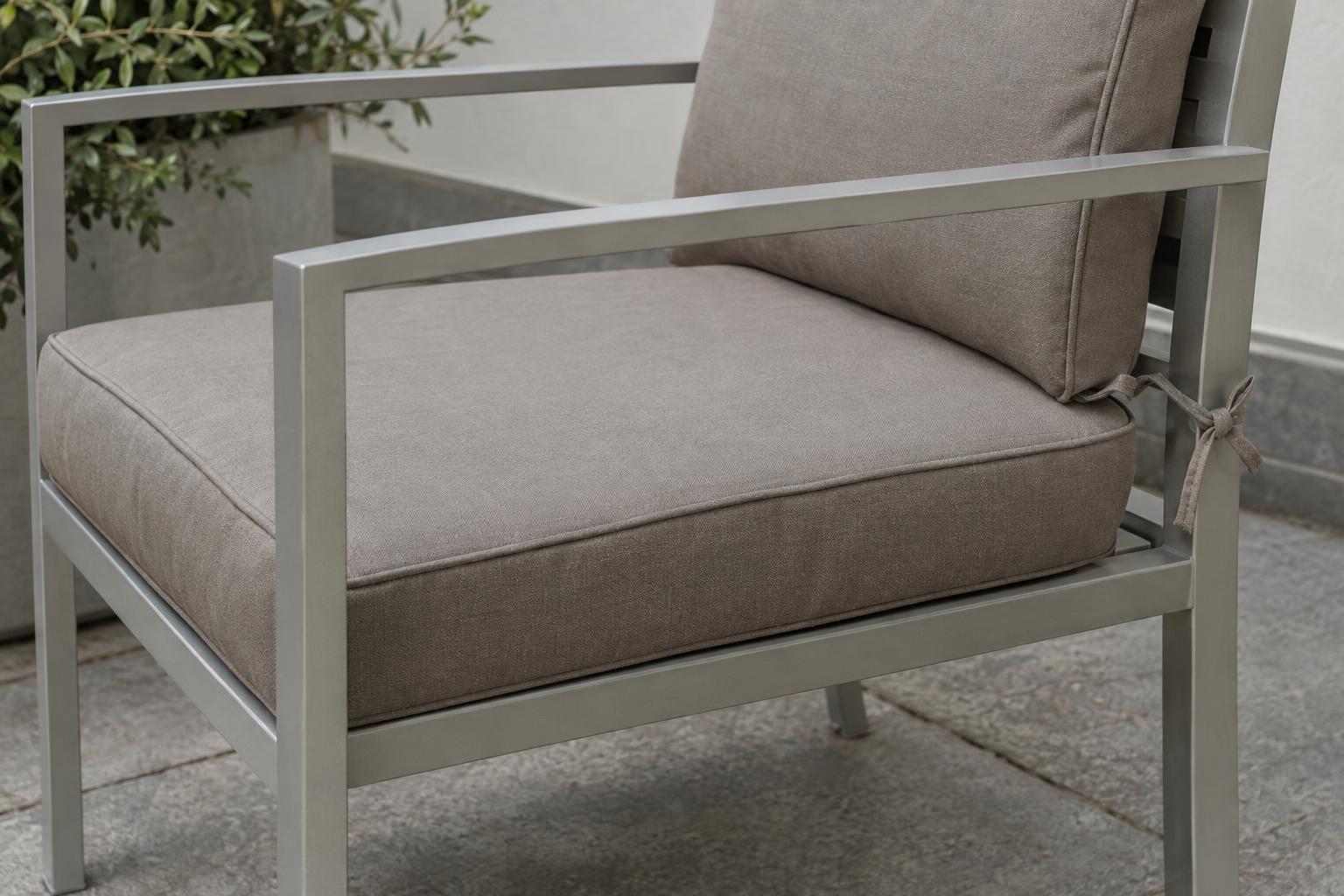
Thickness affects more than softness. Raising the seated position changes the relationship between your feet, the front edge, the armrests and the back support. A thicker insert can feel comfortable when pressed by hand yet place your elbows awkwardly once you sit down. Compare the complete seated arrangement whenever a suitable sample is available.
For example, imagine a chair whose original seat cushion has become compressed while the back cushion still holds its shape. Simply ordering a much thicker seat cushion could raise you relative to the arms and leave less useful back support. The better shopping question is whether the proposed seat-and-back combination suits that frame. Record the old thickness as observed, explain the wear, and ask whether an original specification or manufacturer-approved replacement can be identified.
7. Make a record another person can understand
Label each chair style and keep its notes together. Your record should include the furniture identification, separate cushion and frame dimensions, front and rear widths, seat-and-back arrangement, corner shape, thickness observations and attachment locations. Add photographs of the whole chair, the empty support area, the cushions laid flat and the junction between seat and back.
If several chairs appear identical, check more than one before ordering a complete set. Older pieces may have different inserts or cushions that were replaced at different times. Keep any labels or receipts that help identify them. Ask the seller to confirm which dimensions describe the finished cushion, what variation is expected and which fit or return terms apply to that particular order. Get answers before committing to a size.
8. Separate fit decisions from fabric decisions
Once the shape and construction are understood, compare the cover material and the care it needs. Fabric names alone do not explain the cushion’s insert, seams, drainage or attachment design. Ask about the complete replacement rather than assuming that a familiar cover fabric makes every cushion equivalent.
For a cushion using Sunbrella fabric, the manufacturer’s fabric cleaning guidance is a useful starting point; the cushion maker’s instructions also matter for the insert and finished assembly. Clean an old cushion only as its instructions allow before bringing it indoors or transporting it. Beach House Patio Furniture has a Jupiter outdoor furniture showroom. Contact the showroom to ask about current replacement options and which measurements or samples to bring.
Questions about replacement cushion measurements
Should I measure the old cushion or the chair?
Measure both and label the results separately. The old cushion shows shape and previous fit; the frame shows the available support area and obstructions. A seller needs that distinction to compare a proposed replacement accurately.
Can I use the dimensions printed on an old receipt?
Keep them as identification evidence, but confirm what they describe. They may refer to the finished cushion, an insert or a particular furniture model. Compare them with current observations rather than assuming all listings use the same method.
What if the seat is wider at the front?
Record front width, rear width and depth, and photograph the outline. Ask whether a suitable tapered shape is available. A rectangular cushion with a similar maximum width is not automatically the same fit.
Should every chair in a matching set use identical cushions?
Check the actual pieces. Armchairs, armless chairs and different production versions can have different support areas. Group them by verified construction and measurements before deciding how many of each replacement to order.

About the Author
Chas Crofoot
Chas Crofoot is the owner of Beach House Patio Furniture, a family-owned outdoor furniture company in Jupiter, Florida. Since 1979, Chas and his team have manufactured and sold high-quality patio furniture — specializing in wicker, cast aluminum, aluminum, poly lumber, and PVC pipe styles built to withstand the Florida climate. With over four decades of hands-on experience in outdoor furniture design and manufacturing, Chas brings deep expertise in material selection, durability, and comfort for coastal living.