
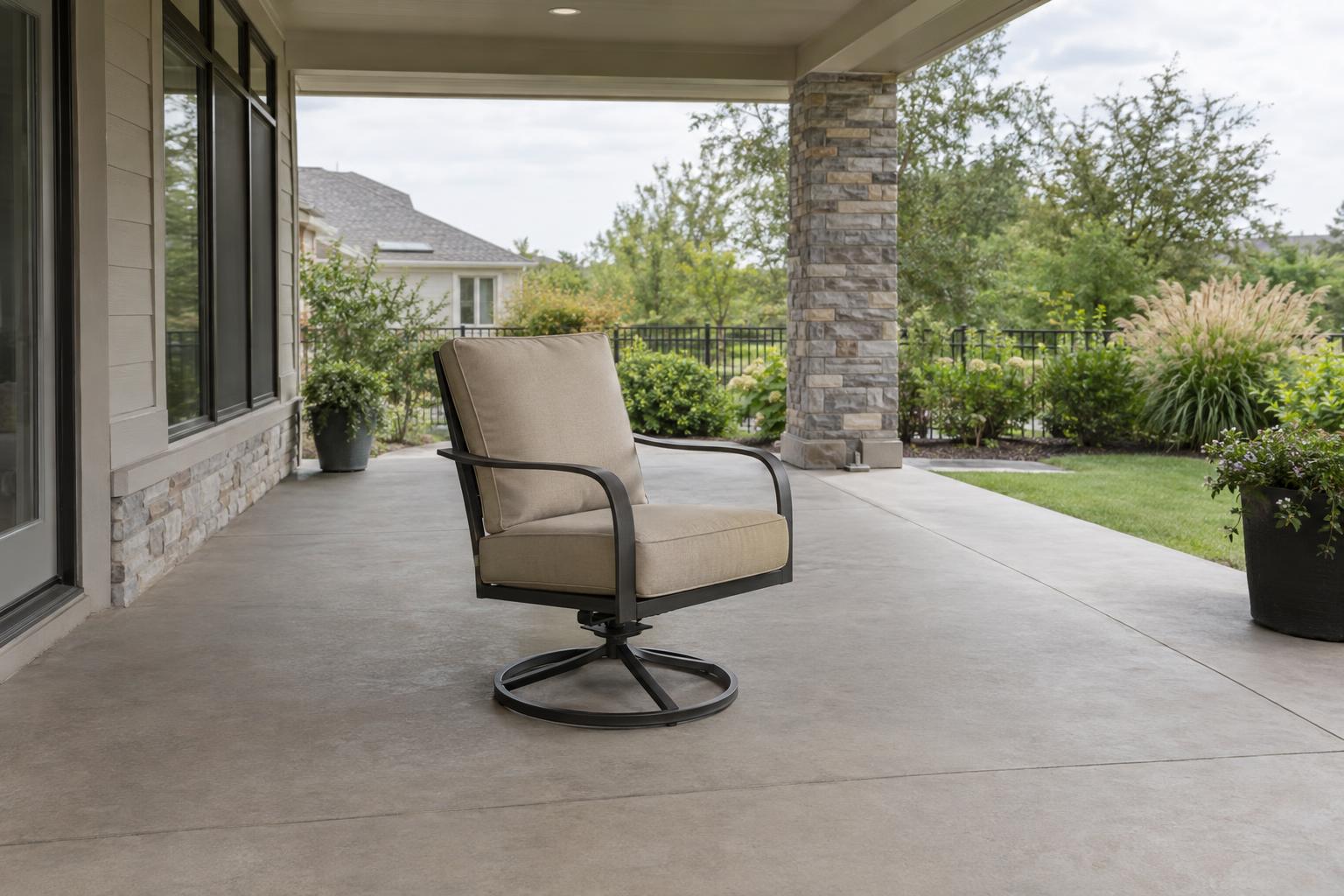
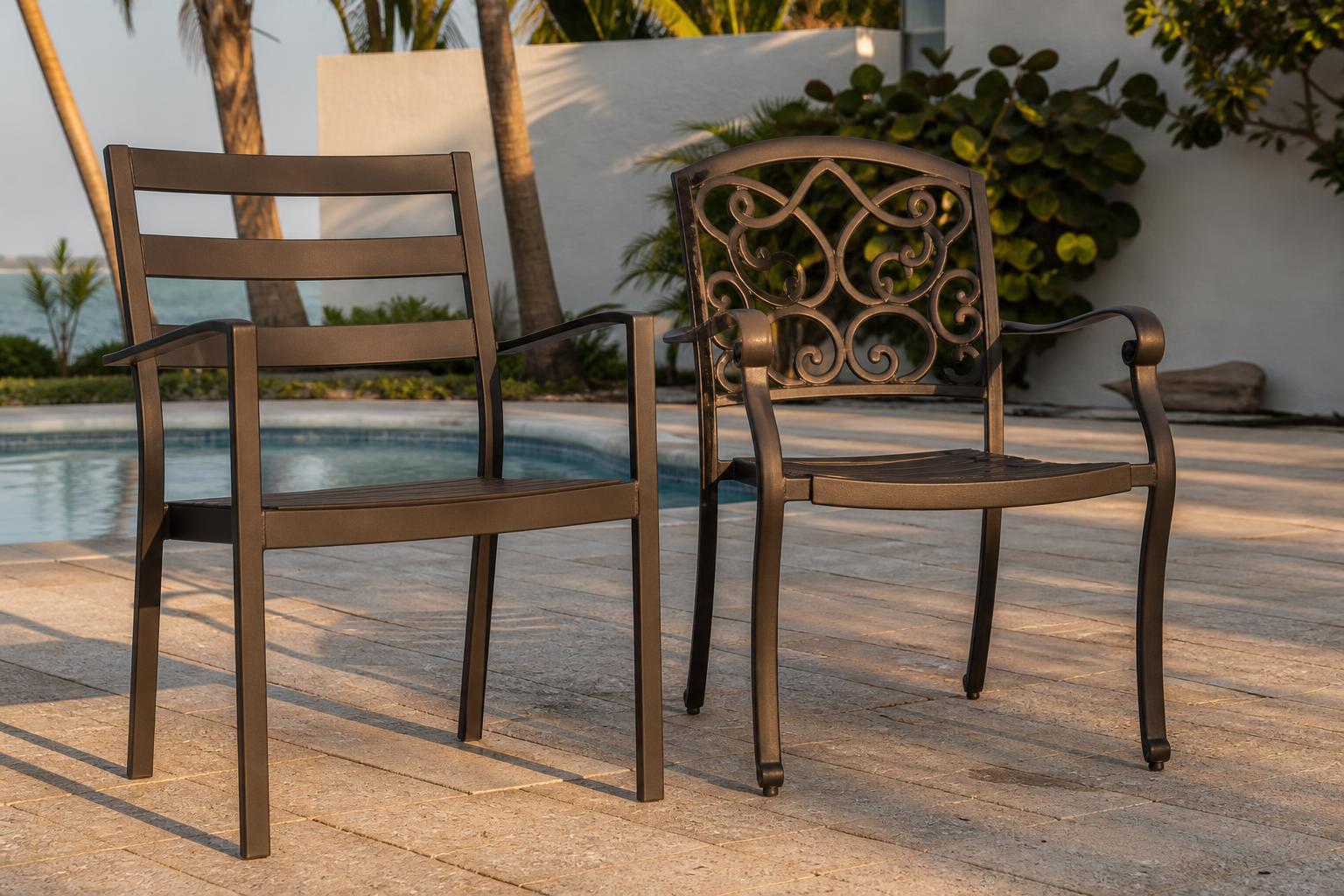
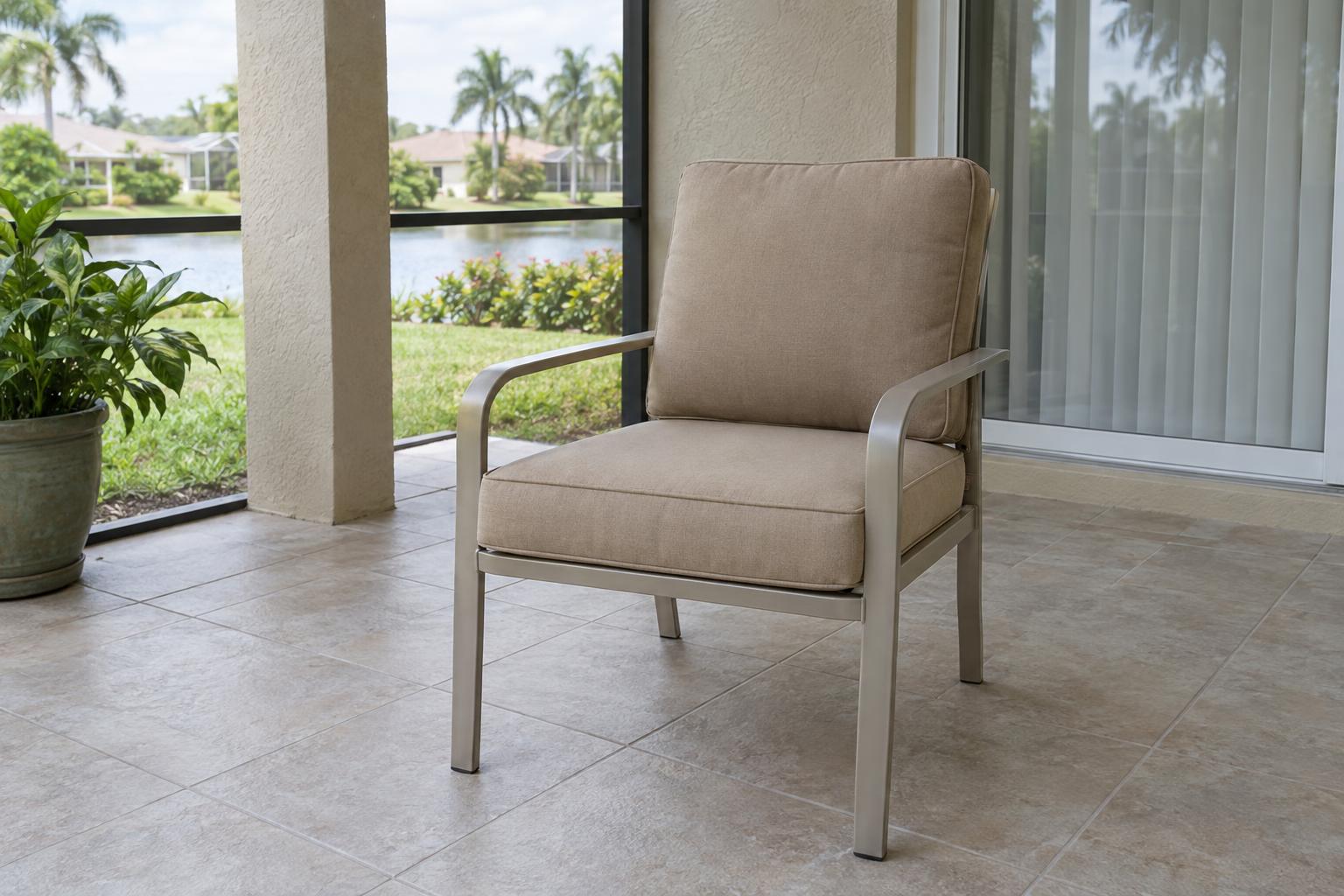
Aluminum is one of the most common frame materials in outdoor furniture, and you will find plenty of aluminum outdoor furniture in our showroom, because it resists rust in a way steel and iron simply can’t, which matters enormously near the coast. What a lot of customers don’t realize is that “aluminum furniture” actually covers two very different manufacturing methods, extruded and cast, and the difference between them affects everything from weight and style to long-term durability and price.
How Extruded Aluminum Furniture Is Made
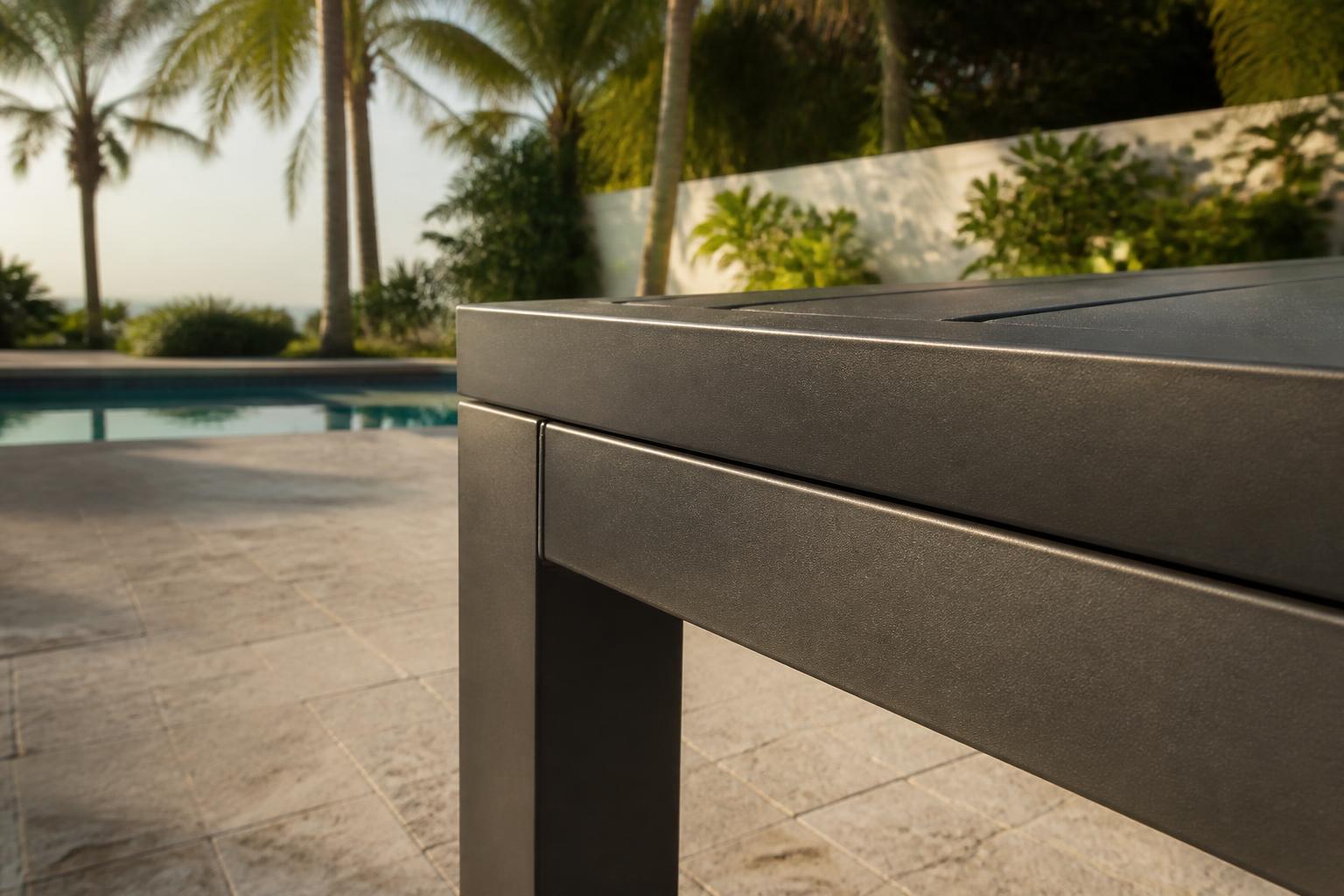
Extruded aluminum starts as a solid billet that’s forced through a shaped die under extreme pressure, producing long tubes or profiles with a consistent cross-section, which are then cut and welded into a frame. The Aluminum Extruders Council publishes a plain-language walkthrough of the aluminum extrusion process if you want to see how the billet, die, and press work together. This process is efficient and produces a lighter, more slender-looking frame, which is why extruded aluminum furniture often has a cleaner, more contemporary look with straight lines and rounded tube joints.
Because the tubing is hollow, extruded aluminum furniture is generally lighter to move around a patio or store for a season, which matters if you’re rearranging furniture ahead of a storm or moving pieces in and out of a garage between uses. The weld points at the joints are the areas most worth inspecting for quality, since that’s where a lower-quality extruded frame is most likely to develop stress cracks over years of use.
How Cast Aluminum Furniture Is Made
Cast aluminum is produced by pouring molten aluminum into a mold, which allows for far more intricate, ornate detailing, like scrollwork, curved arms, and decorative patterns that extrusion simply can’t replicate. This is why traditional or classically styled outdoor furniture, the kind with detailed lattice backs or sculpted arms, is almost always cast rather than extruded. You can see the difference immediately in our cast aluminum collections, where the chair backs and table bases carry detail that a tube frame simply cannot.
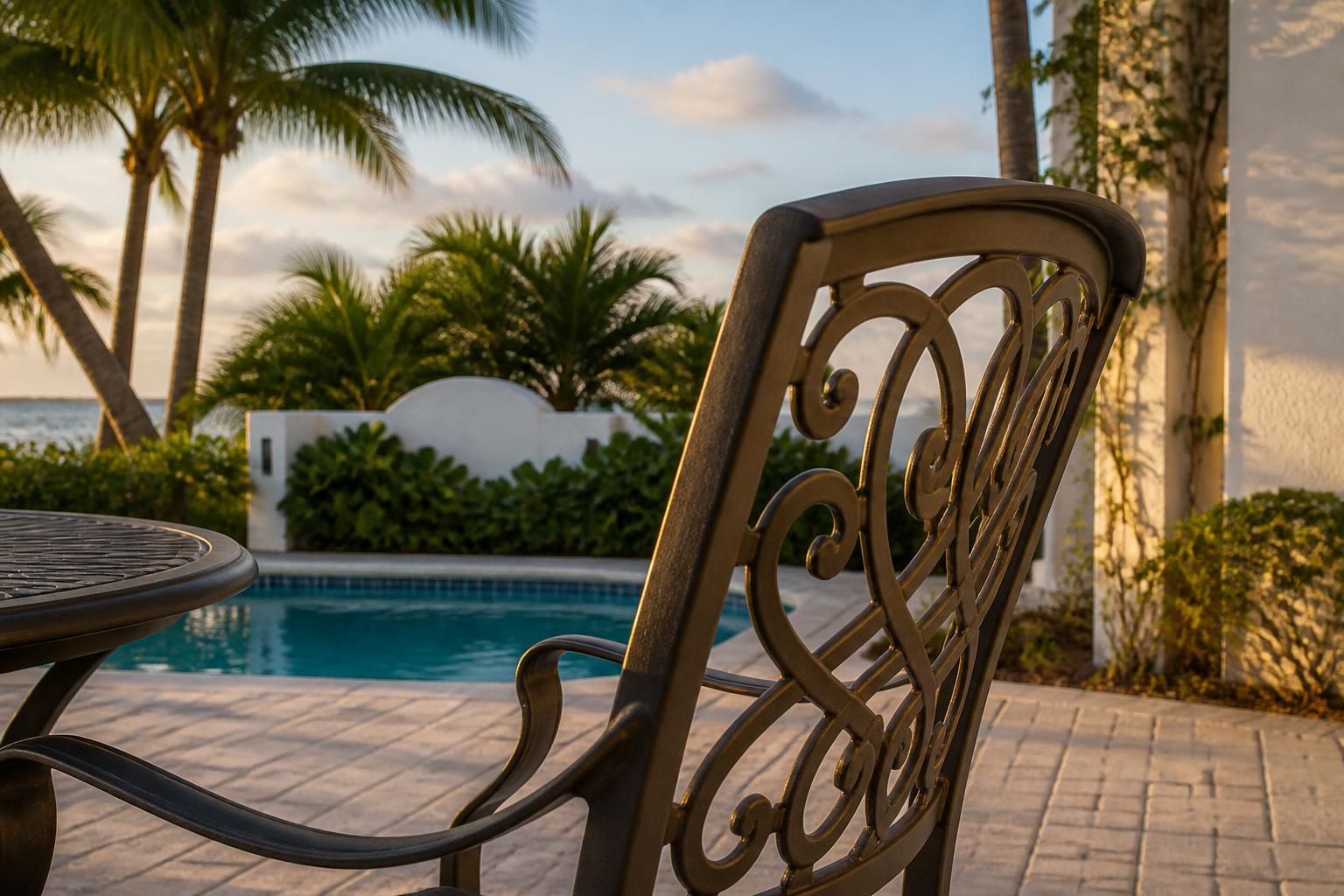
Cast aluminum pieces are solid rather than hollow, which makes them noticeably heavier than an equivalent extruded piece. That extra weight is actually an advantage in one specific way: cast aluminum furniture is generally more wind-resistant and less likely to tip or blow around during a Florida storm, which matters if your patio or pool deck is exposed rather than screened or walled in.
Comparing Long-Term Durability
Both extruded and cast aluminum resist rust far better than steel or wrought iron, since aluminum forms a stable oxide layer rather than corroding the way iron-based metals do. Where they differ is in how they handle stress and impact over time. Cast aluminum’s solid construction tends to hold up well against dents and impacts but can be more prone to cracking if struck hard at a thin, detailed section, like a delicate scroll or a thin decorative curve. Extruded aluminum’s hollow tubing can dent more easily under a sharp impact but generally flexes rather than cracks, which some customers prefer for furniture that sees rougher daily use around kids or pets.
Powder coating quality matters more than the base construction method for long-term appearance, since a poorly applied or thin powder coat will chip and expose bare aluminum on either style of frame, allowing surface oxidation to show through as a dull white or gray discoloration over time, even though the aluminum underneath won’t rust through the way steel would.
How Salt Air Changes the Comparison
For a Jupiter-area patio, salt air matters for both constructions, and we cover the full care routine in our guide to protecting aluminum furniture from salt air and humidity. The construction difference is simply where the salt collects. Extruded frames have smooth, open surfaces that rinse clean quickly, while cast frames have crevices and scroll joints that deserve a more deliberate rinse.
Hollow extruded tubing has one coastal quirk of its own: water can find its way inside a frame through an open tube end or a missing foot cap. Most quality frames include drain holes for exactly this reason. It is worth checking once or twice a year that the end caps and glides are still in place and that the drain holes are not blocked with debris, since standing water inside a tube is the one way an aluminum frame can stay wet long after the rest of the patio has dried.
Hardware, Glides, and the Parts People Forget
The frame is only part of the durability story. Bolts, swivel mechanisms, and table hardware are often made from a different metal than the frame itself, and in coastal air those small parts are usually the first to show corrosion. When you compare two pieces, look at the fasteners as closely as the frame. Stainless hardware holds up far better near salt water than plated steel, and it is one of the quieter signs that a manufacturer built the piece for a coastal climate rather than a dry inland one.
Foot glides matter as well. Cast aluminum’s extra weight puts more pressure on each foot, so worn glides can scratch pavers or a pool deck faster than a lighter extruded chair would. Replacing glides is inexpensive, and it protects both the patio surface and the bottom of the leg, where a worn-through finish is otherwise easy to miss.
Which Style Fits Your Patio
If you want a lighter, more contemporary look and furniture that’s easier to move or store, extruded aluminum is usually the better fit, and it tends to be the more budget-friendly of the two constructions for a comparable piece. If you’re drawn to a more traditional or ornate style, or your patio is exposed to consistent coastal wind, cast aluminum’s weight and detailing make it the stronger choice, even at a typically higher price point for the added material and casting labor involved.
Repair and Refinishing Down the Road
Both construction methods can generally be refinished if the powder coat eventually chips or fades, though the process looks a little different for each. Extruded frames with simple tube profiles are usually easier and less expensive to strip and recoat, since a refinisher can access every surface without navigating intricate detail work. Cast aluminum’s ornate scrollwork takes more time and labor to properly strip, sand, and recoat, since paint and primer can hide in tight decorative crevices that need to be cleared for a clean, even finish. If a joint or weld on an extruded frame fails, a qualified welder can often repair it, whereas a crack in a cast piece typically can’t be welded as reliably and may call for replacing that section or the whole piece.
Either way, we recommend addressing chipped powder coat as soon as you notice it rather than waiting, since exposed aluminum that’s left uncoated for an extended period can develop a chalky white oxidation that’s harder to fully remove before refinishing.
We repair and refurbish the furniture we build, so if you bring one of our pieces in, mentioning whether the frame is extruded or cast helps us point you to the right process from the start.
Frequently Asked Questions
Is cast aluminum furniture more expensive than extruded aluminum?
Generally yes, since the casting process and the finishing work on detailed pieces take more labor and material than extrusion.
Can extruded aluminum furniture handle direct coastal wind exposure?
It can, especially with a properly weighted or anchored design, but its lighter weight means it’s more prone to shifting in strong gusts compared to heavier cast pieces, so anchoring or added weight may be worth considering for very exposed locations.
How can I tell if a piece is extruded or cast just by looking at it?
Extruded aluminum has a hollow, tube-like feel and consistent, simpler profiles, while cast aluminum is solid, heavier for its size, and typically shows more ornate or sculpted detail.
Does the powder coat finish differ between the two construction methods?
The coating process itself is similar, but cast aluminum’s more complex shapes can be harder to coat evenly in every crevice, so it’s worth asking about the specific finishing process for detailed cast pieces.
If you’re comparing frame construction for a specific piece, bring us the details or visit our Jupiter showroom and we’ll show you both types side by side.

About the Author
Chas Crofoot
Chas Crofoot is the owner of Beach House Patio Furniture, a family-owned outdoor furniture company in Jupiter, Florida. Since 1979, Chas and his team have manufactured and sold high-quality patio furniture — specializing in wicker, cast aluminum, aluminum, poly lumber, and PVC pipe styles built to withstand the Florida climate. With over four decades of hands-on experience in outdoor furniture design and manufacturing, Chas brings deep expertise in material selection, durability, and comfort for coastal living.