
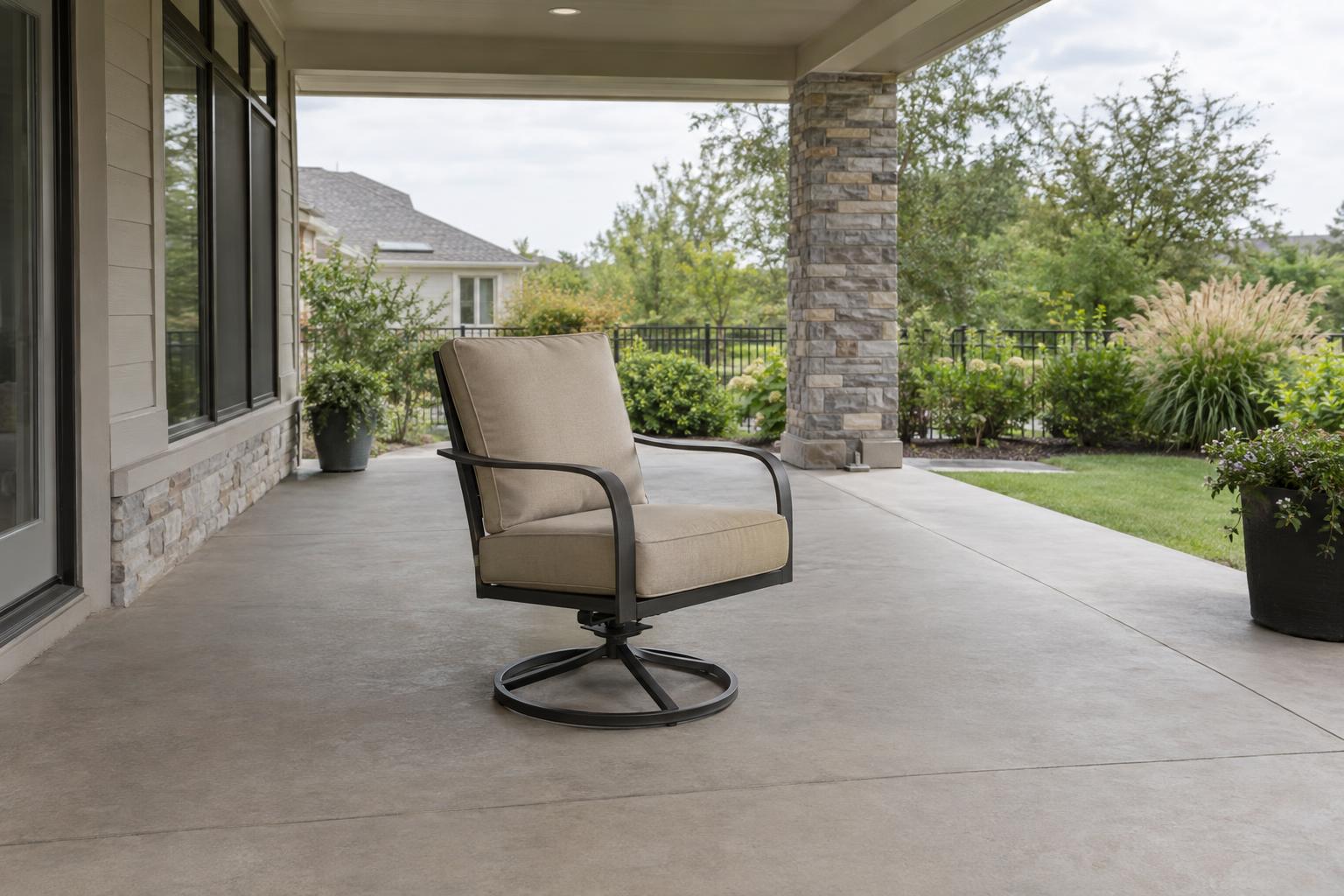
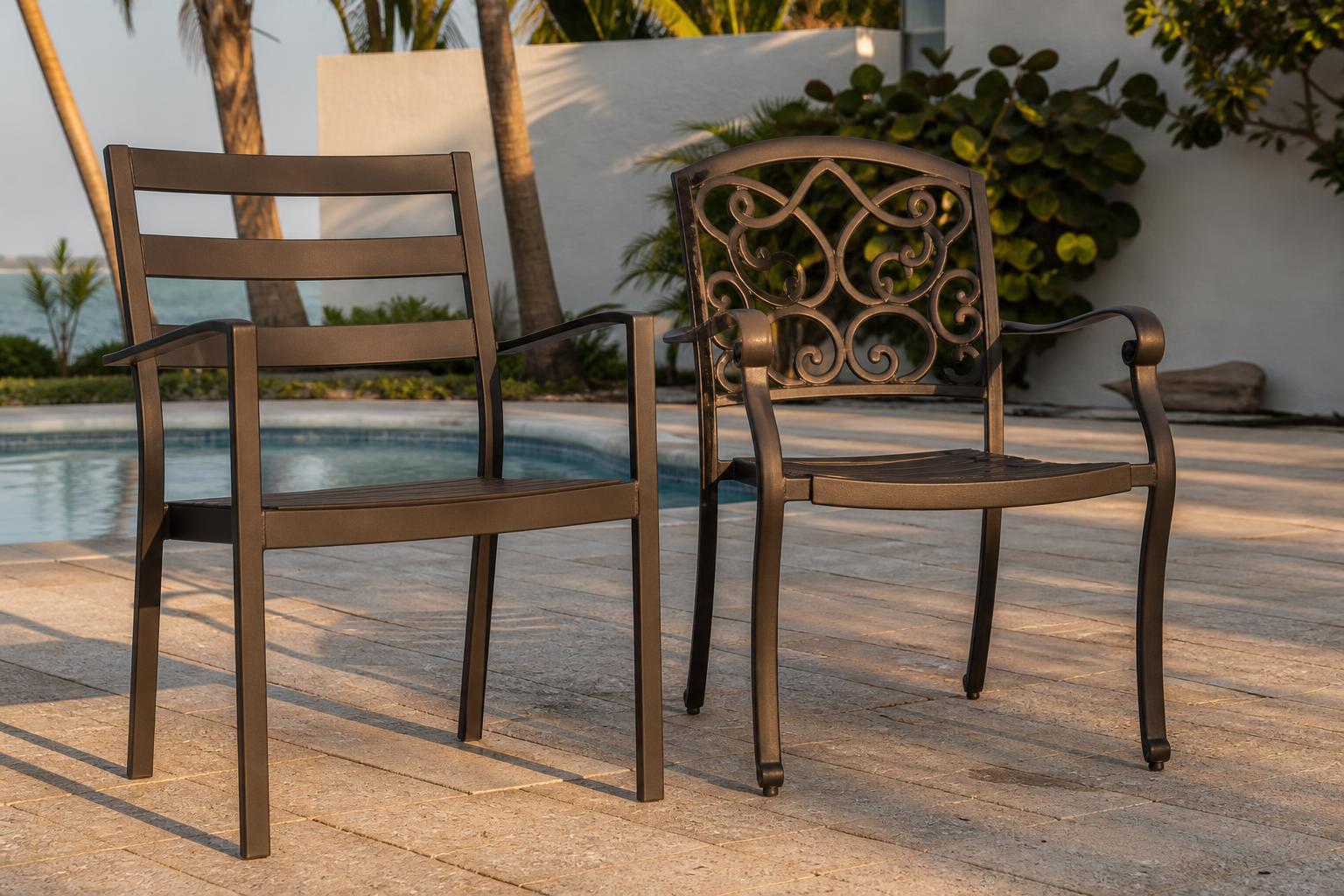
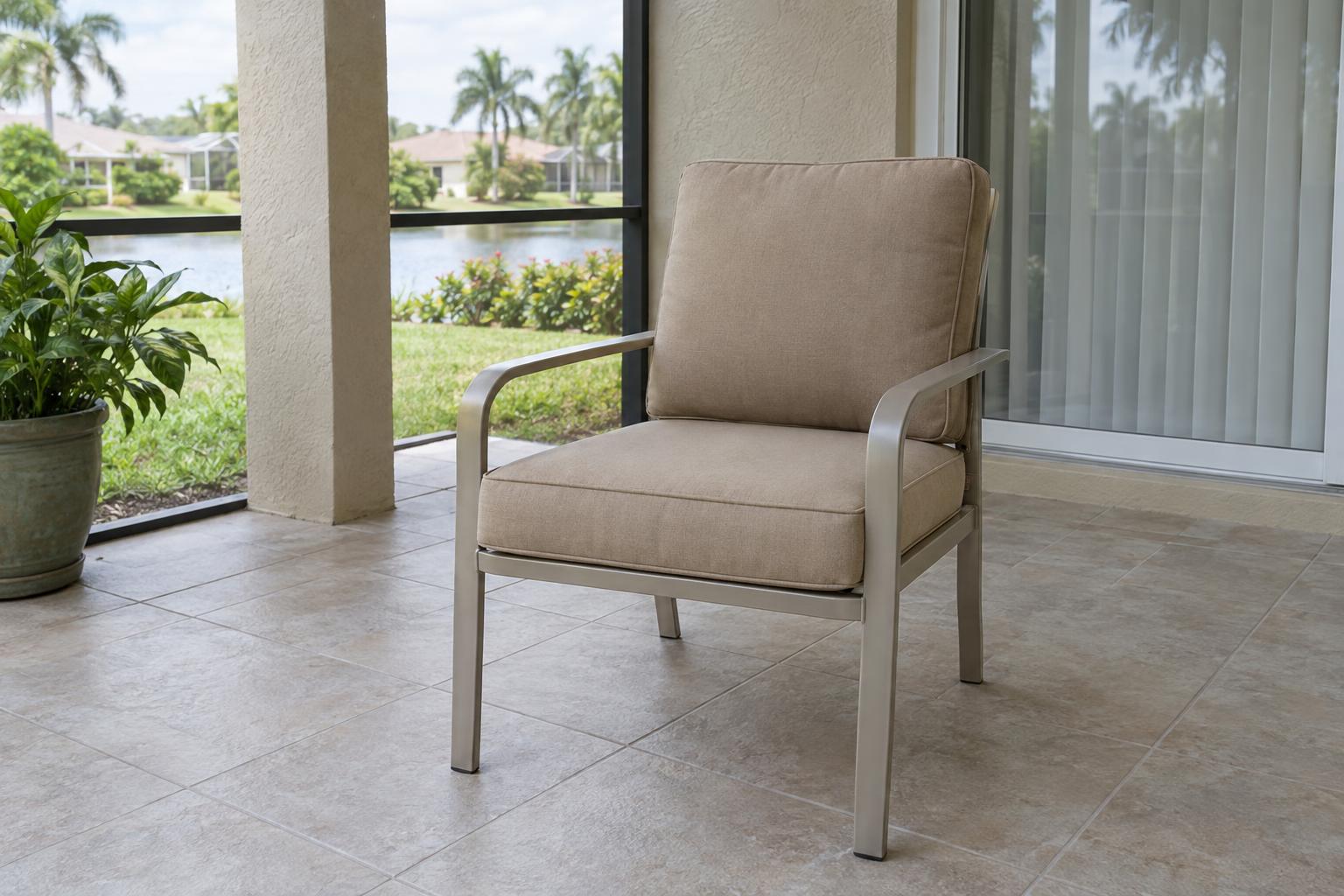
Outdoor swivel rocker chairs combine two movements in one seat. Turning helps you face another person or a different part of the patio; rocking adds a separate forward-and-back motion. When you compare chairs, look beyond the circular base and the space the furniture occupies while empty. The back, arms and seat can travel outside that stationary outline.
A useful buying comparison asks whether the complete moving chair works with your body, nearby furniture and the intended floor. Start with the manufacturer’s setup and use instructions, then test the model and the layout together. A generic clearance number cannot describe every mechanism or patio.
1. Confirm which movements the model provides
Ask whether the chair swivels, rocks, glides or reclines, and whether those functions operate independently. Similar-looking chairs can move differently. A swivel chair is not automatically a rocker, and a curved backrest does not tell you how the seat moves. Read the model information rather than inferring the mechanism from a photograph.
Check how the maker describes assembly, adjustment and the intended supporting surface. Ask for the model’s dimensions, weight limits and use restrictions before testing it. If a sample needs assembly or adjustment, have the seller handle that according to the instructions. Do not loosen hardware or modify a mechanism to make the movement feel different during a showroom comparison.
2. Compare the fixed footprint with the moving envelope
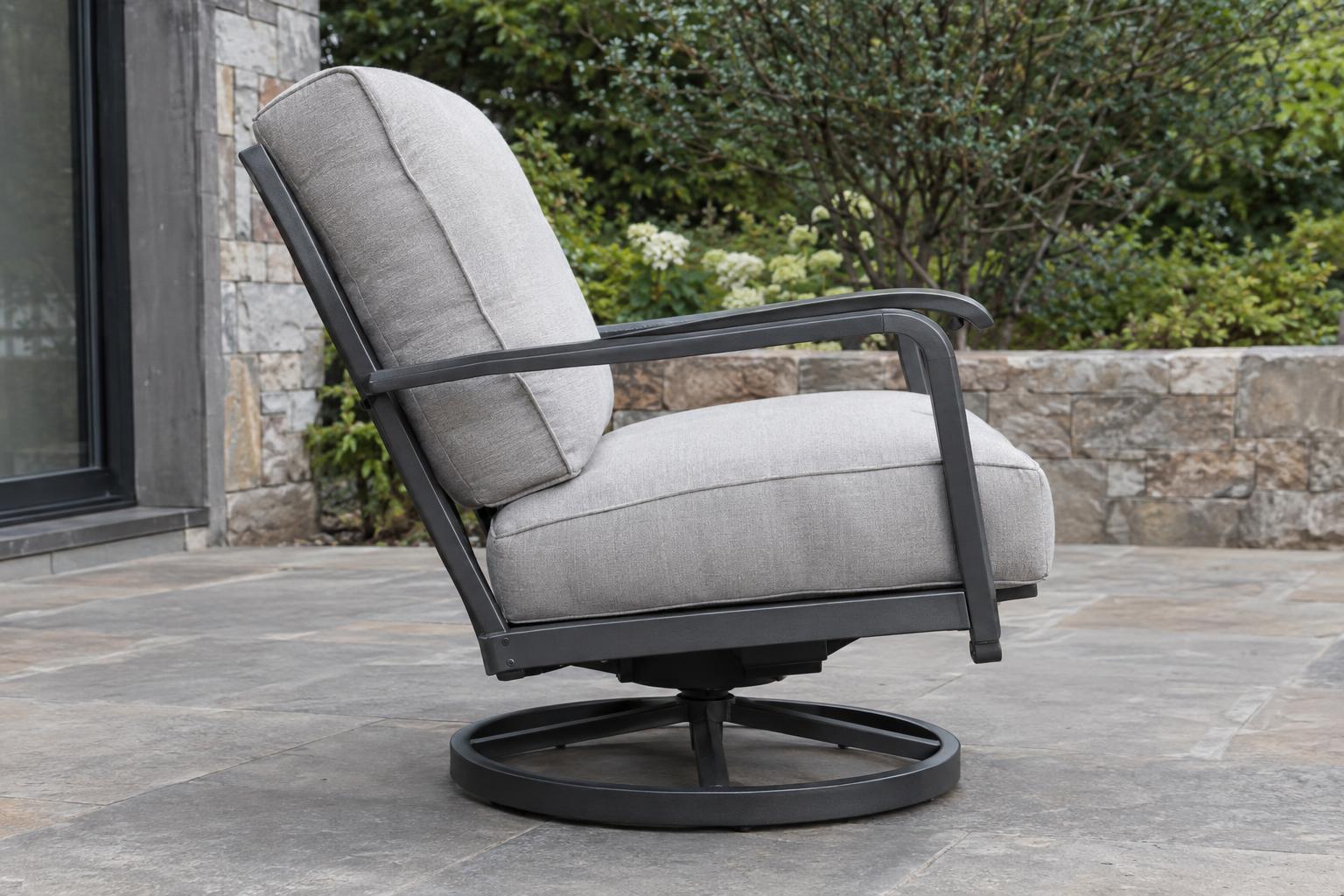
The base footprint describes what rests on the floor. The moving envelope is the space the chair’s other parts occupy as it turns and rocks through their intended range. Both matter, but they answer different questions. A compact base may sit neatly between two tables while the chair back or arms still move into them.
Look at the chair from the side and from above when practical. Identify the widest parts of the arms and back, and ask how the published dimensions relate to the chair’s moving positions. A listing may describe the upright overall depth without showing every position. If motion dimensions are not provided, ask the seller how to verify the complete model’s space requirements using the manufacturer’s guidance.
3. Test turning and rocking as separate tasks
Use the chair only as its instructions permit, on a suitable showroom surface, and begin by sitting in a normal supported position. Notice how you turn toward a conversation and then how you use the rocking motion. Ask whether any stops, locks or adjustments are part of that particular model; do not assume another chair’s controls apply.
Compare the effort, range and feel without forcing the mechanism. Pay attention to where your feet rest and whether the front edge supports your legs comfortably. A chair that looks inviting can still feel too deep, too upright or too difficult for a particular person to enter and leave. If several household members will use it, let each person evaluate the sample rather than treating one person’s response as a universal fit test.
4. Include getting in and out of the seat
A motion test should include the ordinary approach to the chair and the process of sitting down and standing up. Check the armrest shape, the seat height with its intended cushion and the room available beside the base. Follow any instructions for positioning or stabilizing the chair during entry and exit.
Think about the route from the house, dining area or pool deck to the seat. A table placed conveniently beside an arm can interfere with that approach, especially when the chair has been turned. Avoid planning a layout that works only if everyone returns each chair to one exact orientation. The people using the furniture should be able to recognize the available route during normal use, with the furniture in its usual positions.
5. Test neighboring tables in the intended arrangement
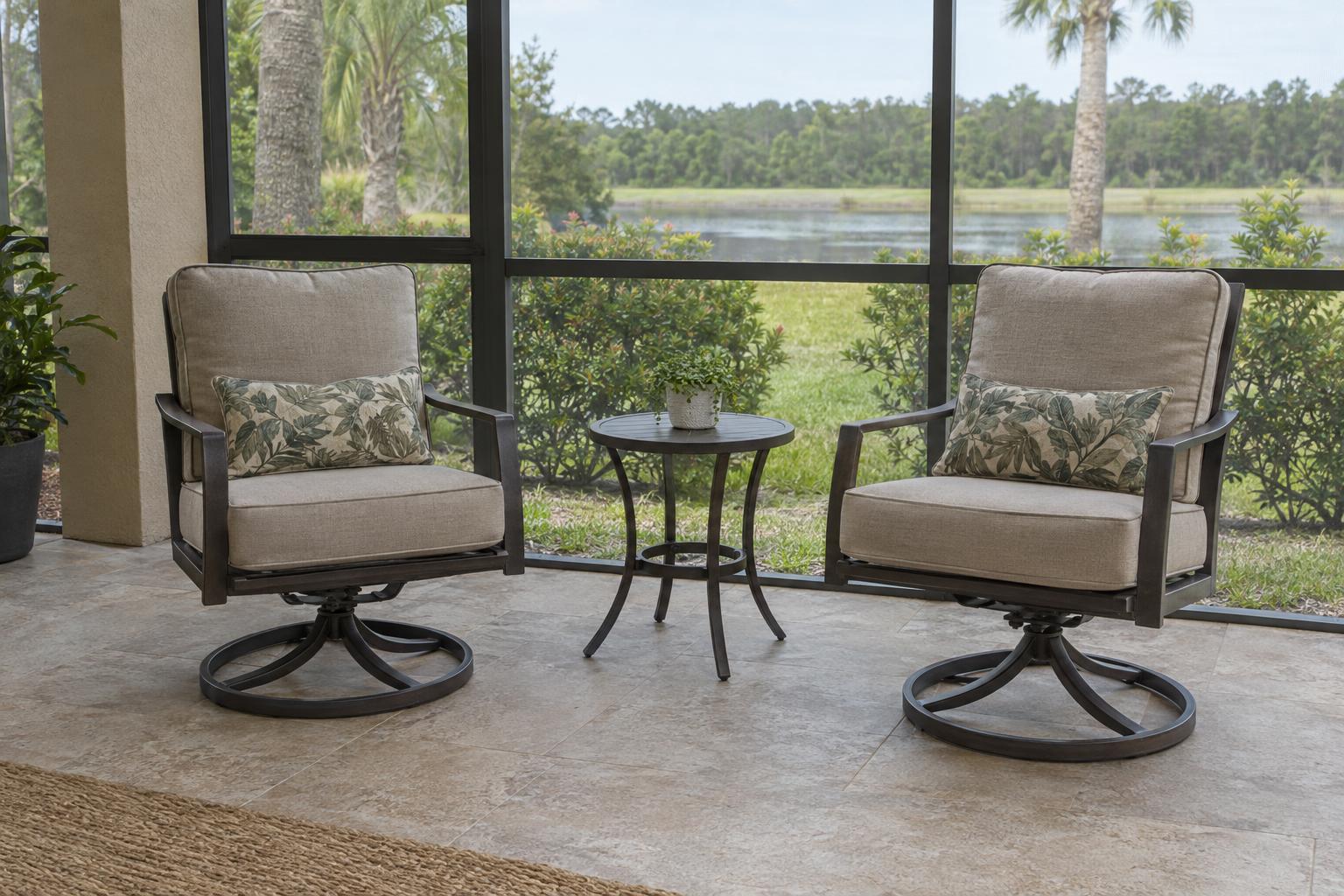
Showroom chairs are sometimes displayed with more open space than a home patio provides. Bring a photograph and the available dimensions so the comparison includes the actual wall, screen enclosure, railing and nearby table. Include projecting tabletop edges, table feet and the widest parts of the chair, rather than checking only the bases.
For example, imagine two swivel rockers sharing one small table. Both circular bases may fit, yet the inward-facing arms could approach the tabletop when the chairs turn toward each other. Moving the table may improve that relationship while making drinks harder to reach. Compare the full arrangement and the intended movement before choosing the pieces. Manufacturer requirements come first; a visual mock-up is a planning aid, not a substitute for them.
6. Check the floor and the furniture’s intended setting
Record the surface where the chair will sit: tile, pavers, decking or another material. Note slopes, joints and uneven areas in the intended position. Ask whether the model is suitable for that surface and how its base should contact the floor. Do not assume a successful trial on a level showroom floor proves that the same chair will behave identically on an uneven patio.
Check the manufacturer’s outdoor-use and storage instructions as well. A chair marketed for outdoor use can still have specific requirements for its cushions, finish or moving components. Ask how it should be moved when rearranging the patio, and whether there are instructions for protecting the base or flooring. Avoid improvised wedges or unauthorized modifications to compensate for an unsuitable location.
7. Review care and product support before purchase
Ask for the care instructions that apply to the complete chair, including the moving mechanism, frame finish and cushions. Follow the maker’s guidance rather than applying a general lubricant or tightening procedure to unfamiliar hardware. If movement changes, an unusual noise appears or a part is damaged, use the manufacturer’s support route instead of continuing a trial-and-error adjustment.
Fabric care is a separate part of that routine. For Sunbrella upholstery, the manufacturer’s cleaning guidance helps explain fabric treatment, while the furniture maker’s instructions govern the finished cushion and chair. Before ordering, ask which replacement components are available for the specific model and what the written warranty and return terms say. Availability and terms should be confirmed for the actual item, not assumed from the chair category.
8. Bring a motion-focused shopping record
Your notes should identify the available floor area, supporting surface, nearby obstacles, walking routes and the people who will normally use the chair. Add photographs showing the proposed arrangement from more than one direction. Include any existing table’s full dimensions and the space taken by its feet.
Visit the Beach House Patio Furniture showroom in Jupiter to ask about current seating options. If an appropriate sample is available, compare it with your notes and repeat the everyday movements that matter to you. Contact the showroom beforehand to ask about models you would like to see. The best result is a chair and layout that work together, supported by the instructions for that specific furniture.
Questions about outdoor swivel rocker clearance
Is the diameter of the base enough to plan the space?
No. It describes the floor contact area, while the arms, back and seat can occupy a different area as they move. Check the complete chair and the manufacturer’s required clearances.
Does every outdoor swivel chair also rock?
No. Swivel, rocking, gliding and reclining describe different functions. Confirm the model’s listed movements and test only the operations it is designed to provide.
Can I place a shared table close between two rockers?
Compare the full arrangement through the intended movements, following each product’s instructions. Check tabletop edges, arms, chair backs, feet and the route into each seat rather than judging the empty layout alone.
Should I choose the chair with the most movement?
Movement range is one feature, not a measure of fit. Compare support, comfort, entry and exit, the intended surface and your patio layout. A different motion or a fixed chair may suit a particular person or position better.

About the Author
Chas Crofoot
Chas Crofoot is the owner of Beach House Patio Furniture, a family-owned outdoor furniture company in Jupiter, Florida. Since 1979, Chas and his team have manufactured and sold high-quality patio furniture — specializing in wicker, cast aluminum, aluminum, poly lumber, and PVC pipe styles built to withstand the Florida climate. With over four decades of hands-on experience in outdoor furniture design and manufacturing, Chas brings deep expertise in material selection, durability, and comfort for coastal living.