
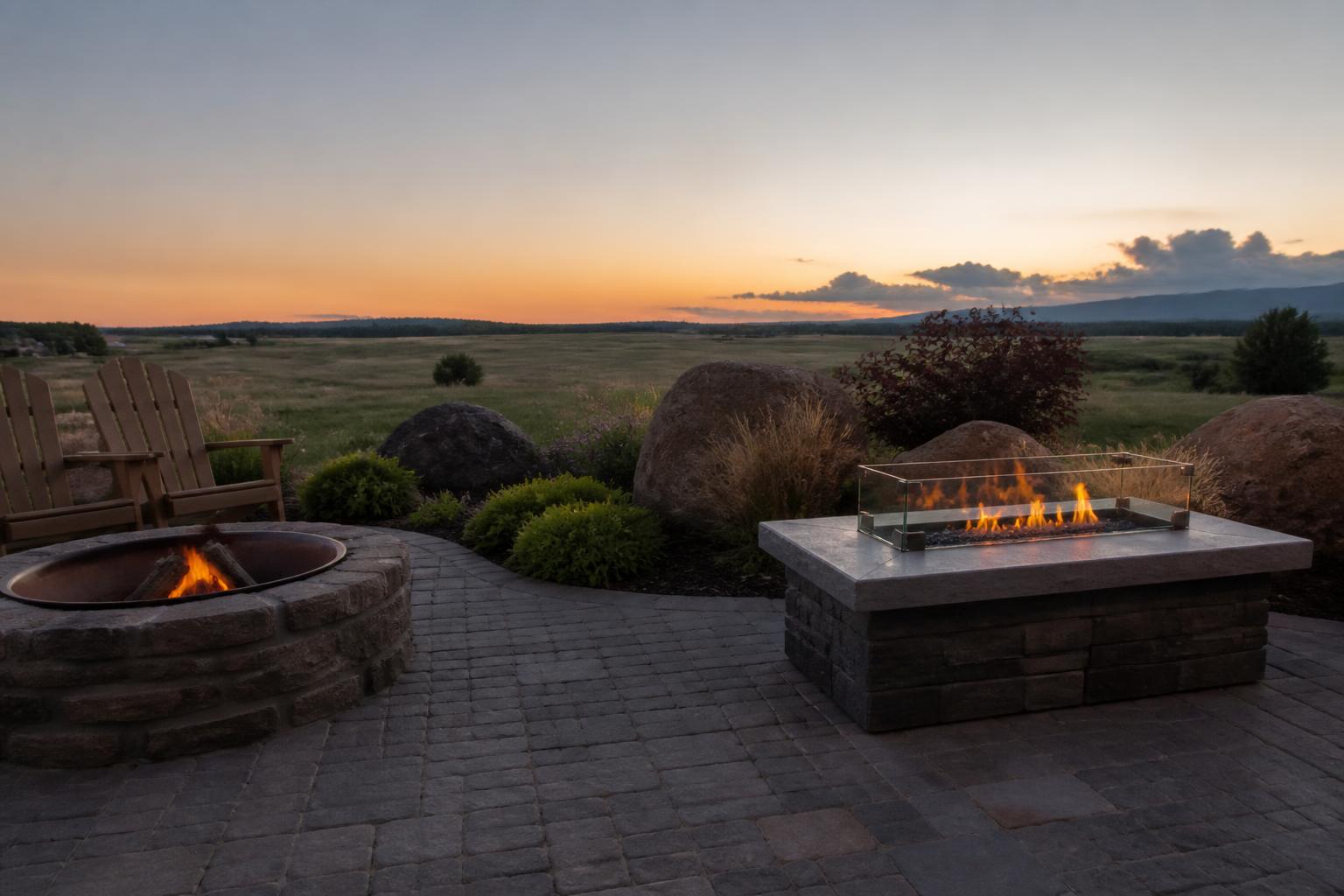
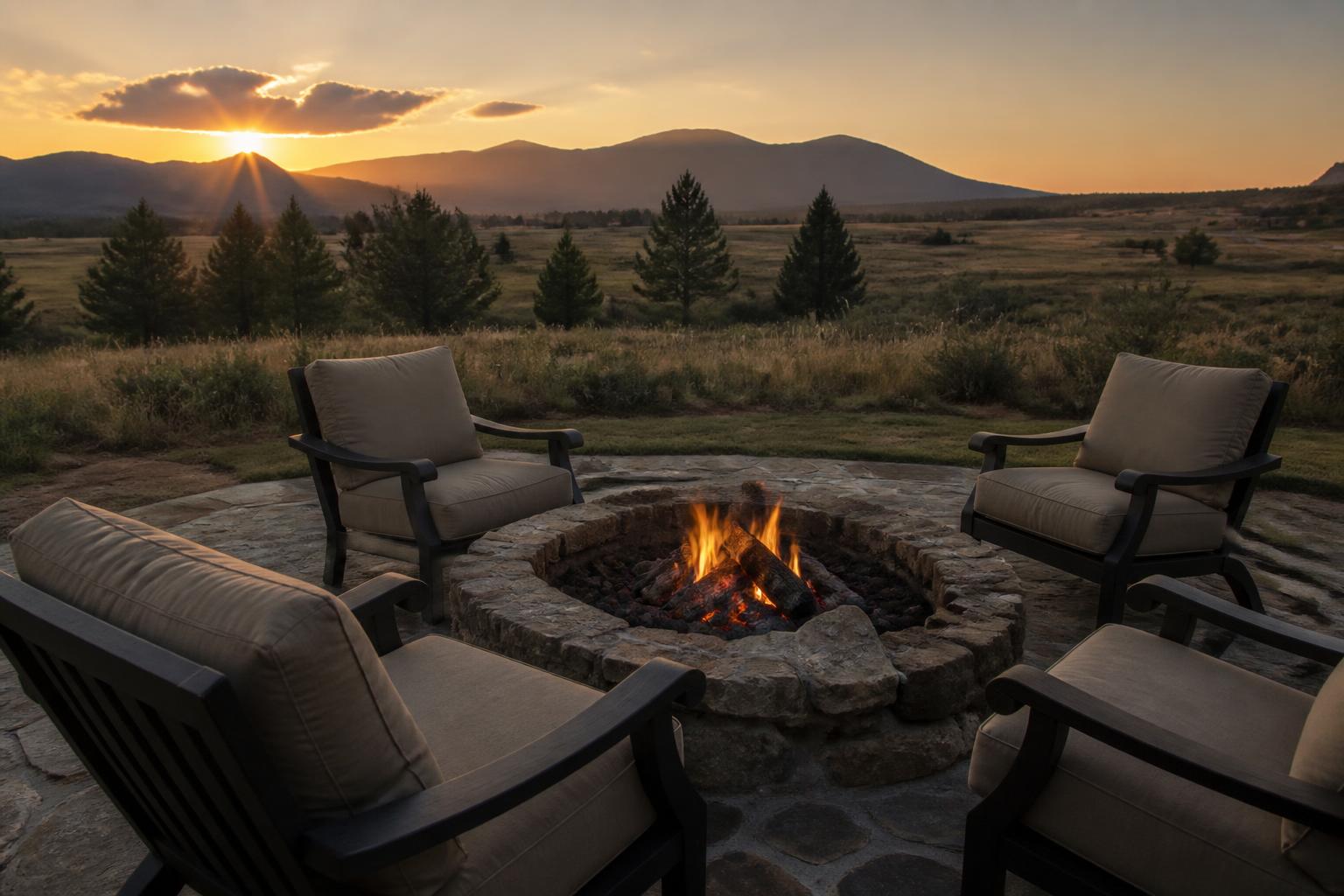
Fire features are one of the most requested additions to an outdoor living space, and the first real decision most customers face is whether to go with a genuine wood-burning fire pit or a propane fire pit table. Both create the same gathering-spot effect, but they behave very differently day to day, and the right choice often comes down to how much maintenance you’re willing to take on in exchange for the specific kind of fire experience you want.
The Real Difference in the Experience
A wood-burning fire pit gives you the crackle, the wood smell, and the taller, more dynamic flame that a lot of people associate with a genuine campfire. It’s also more work: you need a source of dry firewood, you need to manage the fire while it burns, and you’re left with ash and partially burned wood to clean out afterward. A propane fire pit table lights with the turn of a knob, burns at a consistent controllable height, and produces no ash or smoke smell that clings to clothing and outdoor cushions nearby.
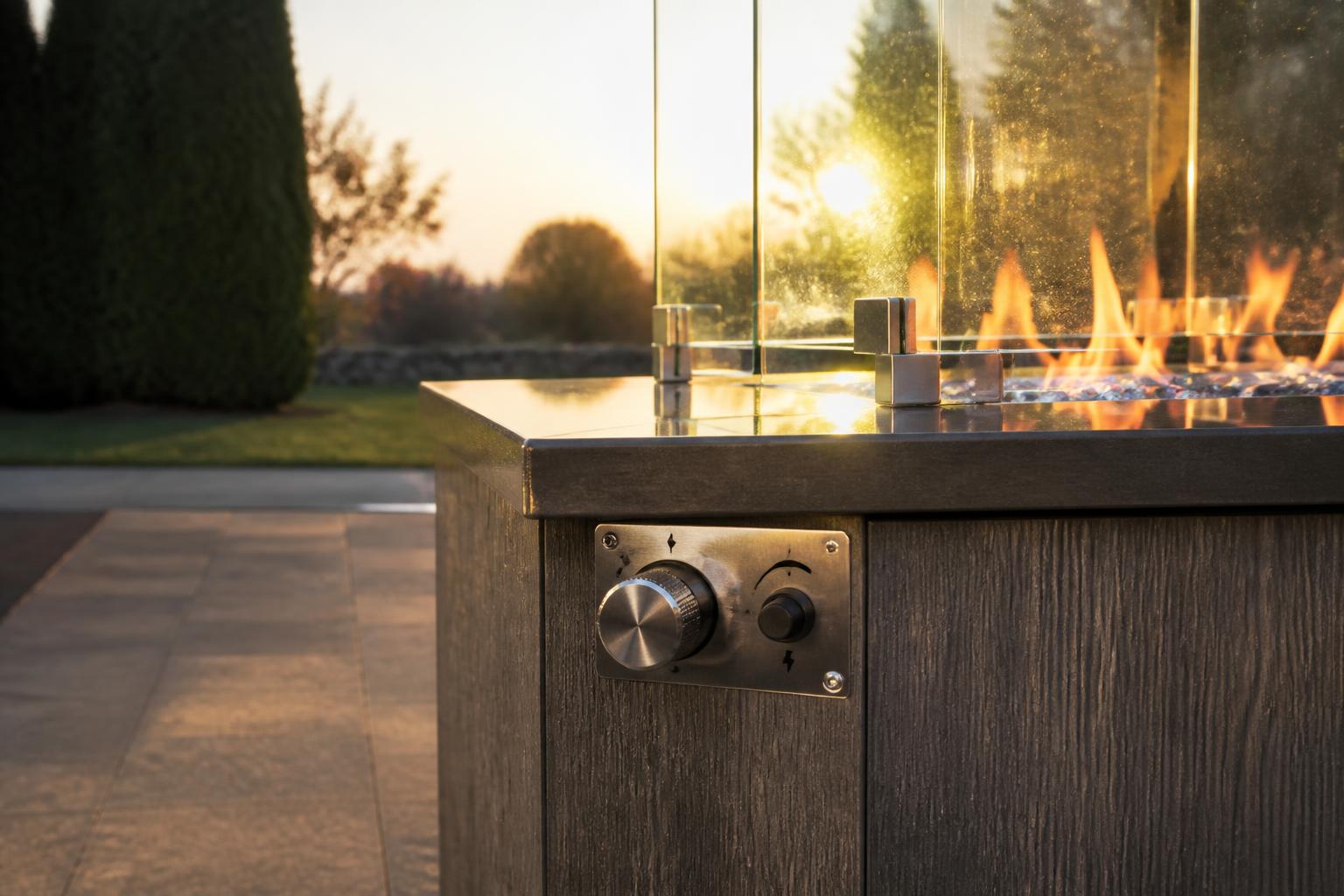
For a lot of our customers who want the fire feature to double as a piece of furniture, like a coffee table with a flame in the middle, a propane table also has the practical advantage of a flat surrounding surface for drinks or shared appetizers, something a raised wood-burning pit typically can’t offer.
Space and Placement Requirements
Wood-burning fire pits generally need more clearance from structures, furniture, and overhangs because of the taller open flame and the risk of floating embers, especially on a breezy evening near the coast. Many homeowners associations and municipalities in Palm Beach County restrict or outright prohibit open wood-burning fires on smaller lots, so it’s worth checking your community’s specific rules before you commit to a wood-burning pit, since a propane model is far more likely to be permitted under a typical HOA fire ordinance.
Propane fire pit tables run cooler at the base and produce a shorter, more contained flame, which generally makes them easier to place closer to seating and under a covered lanai, provided the space has adequate ventilation per the manufacturer’s clearance requirements. Always check the specific clearance guidance for any propane appliance before installing it under a roof or screen enclosure.
Ongoing Maintenance and Fuel Costs
Wood-burning pits require an ongoing supply of dry firewood, which means storage space that stays out of the rain, and regular ash removal to keep the pit functional and looking presentable. Firewood cost varies a lot depending on where you source it and how often you use the pit, but it’s a recurring cost that a propane setup avoids almost entirely.
Propane tables run off a standard 20-pound tank, similar to a gas grill, or can sometimes be plumbed to a natural gas line for continuous fuel without tank swaps. Maintenance is mostly limited to keeping the burner and ignition components clean and checking gas connections periodically for wear, which is a far lighter maintenance load than the routine cleanout a wood-burning pit needs after nearly every use.
Matching the Fire Feature to How You Entertain
If your outdoor living space is used for regular, spontaneous evenings where you want fire going in under a minute without planning ahead, a propane table almost always fits better. If fire itself is part of the experience you’re after, and you don’t mind the extra setup and cleanup, a wood-burning pit delivers something a propane flame genuinely can’t replicate. We see a lot of customers who initially want the classic wood-burning look ultimately choose propane once they think through how often they’d realistically deal with firewood storage and ash cleanup in a busy household, but that’s a personal tradeoff rather than a universally right answer.
Materials That Hold Up Around a Fire Feature
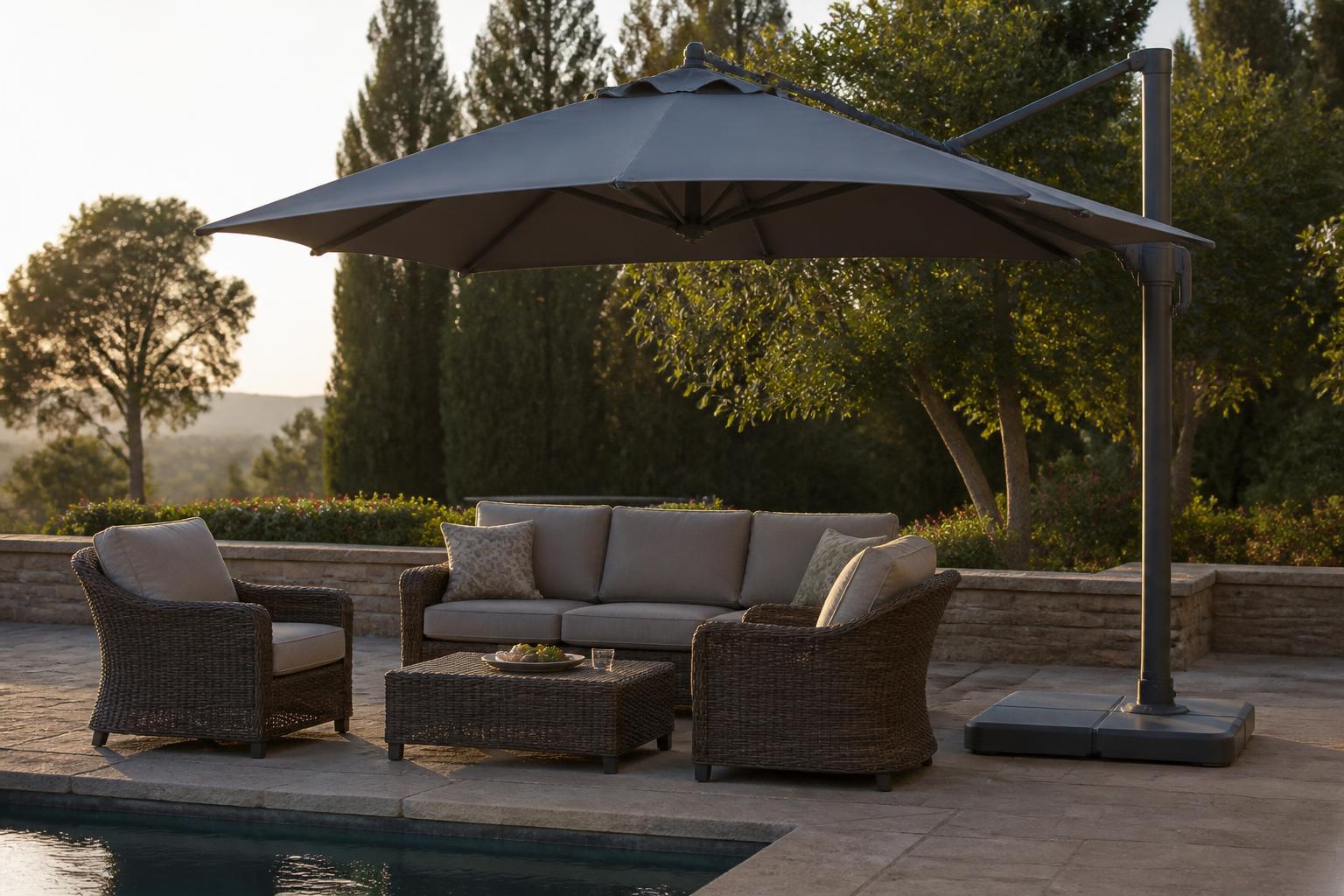
Whichever fuel type you choose, the surrounding furniture and table materials matter more than people expect. Aluminum and wicker-style resin furniture generally tolerate radiant heat from a moderate distance well, but any fabric or cushion placed too close to either a wood-burning pit or a propane table’s flame can scorch or discolor over time, even without direct contact. We recommend keeping upholstered pieces at least several feet back from either fire feature and using furniture with a stone, tile, or metal top for any side table that sits close enough to catch drifting heat or the occasional ember from a wood fire.
For propane tables built into a larger outdoor kitchen or seating wall, confirm the surrounding build materials are rated for the table’s specific heat output before installation, since not every stone or paver product is intended to sit immediately adjacent to a permanent gas flame.
Seating placement is worth planning at the same time as the fire feature itself, rather than as an afterthought. Arranging chairs in a wide arc rather than a tight circle around either a wood-burning pit or a propane table gives everyone a clear view of the flame while keeping enough distance that radiant heat stays comfortable even on a warm South Florida evening.
A Pre-Purchase Fire-Feature Checklist
Before choosing a fuel type, write down the exact location, surface material, distance to seating, and any roof, screen enclosure, or landscaping overhead. Check the manufacturer’s installation instructions for that model, then confirm local and HOA rules before buying. The National Fire Protection Association’s home fire-safety guidance is a helpful general reminder that outdoor flame equipment needs a clear, stable setup and active supervision; it does not replace the model-specific instructions or local requirements.
Also plan the ordinary-use details: where a propane cylinder will be stored and exchanged, where dry wood and ash would go, and how far chairs will sit from the flame. Comparing those needs alongside available outdoor fire tables makes the choice more concrete than comparing flame height or style alone.
Bring the dimensions of the intended seating arrangement when you shop. It is easier to judge a fire feature when you can picture where people will set drinks, move around the group, and reach the controls without stretching across the flame. A model that fits the available clearance and your normal entertaining routine will be more practical than a larger feature chosen only for its appearance.
Frequently Asked Questions
Are propane fire pit tables safe to use on a screened lanai?
Only if the specific model and installation meet the manufacturer’s ventilation and clearance requirements for enclosed or semi-enclosed spaces; always check those specifications before placing any fire feature under a screen or roof.
Do wood-burning fire pits require a permit in Palm Beach County?
Requirements vary by municipality and HOA, so check with your local building department and any community association rules before installing an open wood-burning fire pit.
How much clearance does a propane fire pit table need from outdoor furniture?
Follow the specific manufacturer’s clearance guidance for your model, since required clearance varies based on the table’s BTU output and construction.
Can I convert a propane fire pit table to natural gas?
Some models support a conversion kit for a natural gas line, but not all do, so check compatibility with the specific table before assuming a conversion is possible.
If you’re weighing a fire feature for your patio, stop by our Jupiter showroom to see both wood-burning and propane options in person before you decide.

About the Author
Chas Crofoot
Chas Crofoot is the owner of Beach House Patio Furniture, a family-owned outdoor furniture company in Jupiter, Florida. Since 1979, Chas and his team have manufactured and sold high-quality patio furniture — specializing in wicker, cast aluminum, aluminum, poly lumber, and PVC pipe styles built to withstand the Florida climate. With over four decades of hands-on experience in outdoor furniture design and manufacturing, Chas brings deep expertise in material selection, durability, and comfort for coastal living.