
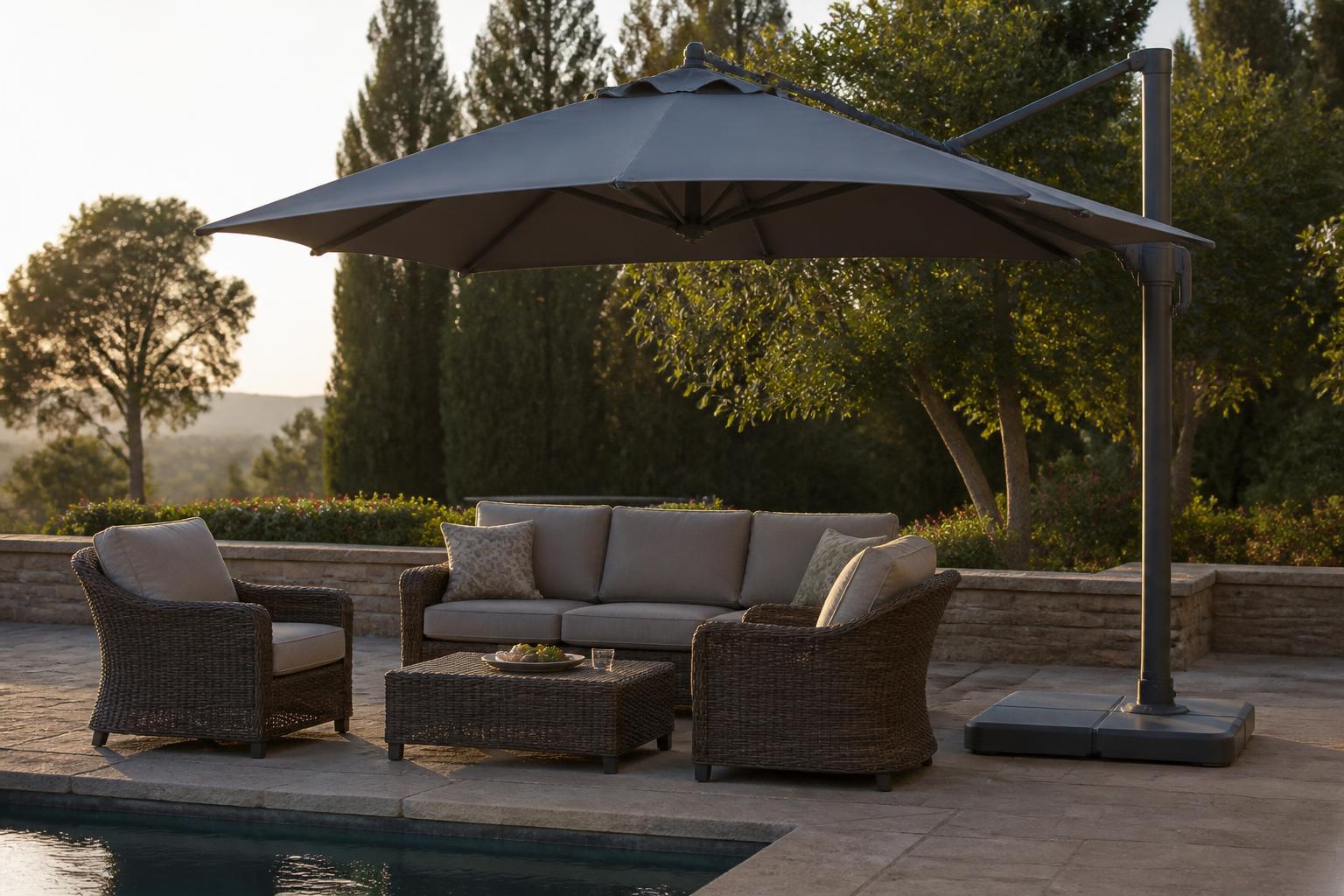
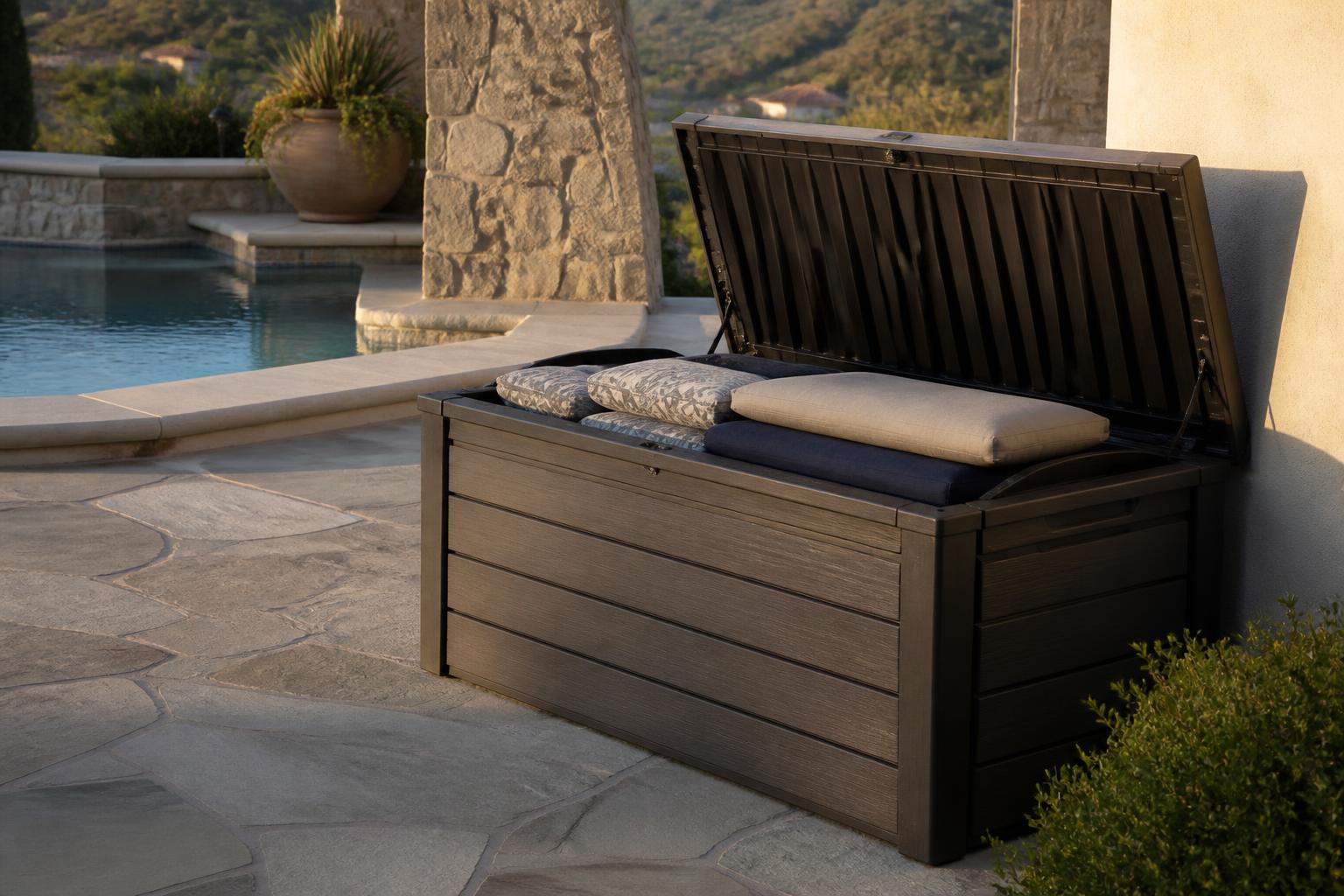
Cushions, pool floats, gardening tools, and the odd bag of charcoal all seem to accumulate on a patio faster than anyone expects, and a lot of our customers end up in our Jupiter showroom looking for a deck box or storage bin almost as an afterthought to their furniture purchase. It shouldn’t be an afterthought. The right storage piece keeps cushions dry between rainstorms, keeps pool toys from cluttering the deck, and genuinely extends the life of the soft goods you just invested in, so it deserves the same thought you put into the furniture itself.
Resin Deck Boxes vs. Wicker-Style Storage Trunks
Resin deck boxes are the most common choice for pool decks and uncovered patios because they shrug off direct sun and rain without fading or rotting the way an untreated wood chest can over a South Florida summer. Look for a resin box with a raised base or built-in drainage channels underneath, since standing water after a storm is the main way a supposedly weatherproof box lets moisture in around the seal.
Wicker-style or resin-wicker storage trunks give you a softer, more furniture-like look that pairs well with a wicker seating set, and many double as extra seating or a side table when closed. They tend to sit a bit higher off the ground than a basic deck box, which we like for anyone storing items they want to keep completely dry, but the woven exterior can trap more heat inside on a full-sun deck, so they’re a better match for a covered or partially shaded area.
Sizing a Box for What You Actually Need to Store
Before choosing a size, lay out what you actually intend to store and estimate the volume, rather than guessing based on the box’s outer dimensions alone. A set of four deep-seating cushions takes up more room than most people expect once they’re folded rather than compressed under the furniture, and pool floats in particular are deceptively bulky even when deflated. We generally recommend sizing up one tier from what feels sufficient on paper, since an undersized box gets used inconsistently and the overflow ends up back on the patio floor, which defeats the purpose entirely.
If you’re storing cushions specifically, look for a box with enough depth that cushions can lie flat rather than being crushed on edge for months at a time, since folding foam cushions into an odd shape for an entire off-season can leave a permanent crease.
Ventilation and Mildew Prevention Inside a Closed Box
A sealed plastic or resin box holding damp cushions is exactly the environment mildew needs to take hold, so ventilation matters as much as weatherproofing. Look for boxes with small vent holes or a gasket design that allows some airflow rather than an airtight seal, and always let cushions dry completely in the sun before storing them, even if that means leaving them out an extra afternoon after a pool day. A cushion that goes into storage even slightly damp can develop a musty smell or visible mildew spots within a couple of weeks in Florida’s heat and humidity, and that’s a much harder problem to fix than simply waiting for the fabric to dry first.
For customers storing electronics, cushions, and outdoor textiles in the same box, we suggest a smaller secondary bin inside the larger box to keep sensitive items separated from anything that might still hold residual moisture.
Placement That Protects the Box Itself
Where you place a deck box affects how long it lasts. A box in full, unbroken Florida sun for years will fade and can become brittle at the hinges faster than one tucked under an overhang or against a shaded wall. If full sun is unavoidable, a lighter color resin tends to hold up better against UV breakdown than a dark one, since dark plastics absorb more heat and degrade faster in direct exposure. Elevating the box slightly on a paver or a set of feet, rather than setting it directly on a pool deck that gets standing water, also helps prevent the base from staying wet long after a storm has passed.
Hardware Details Worth Checking Before You Buy
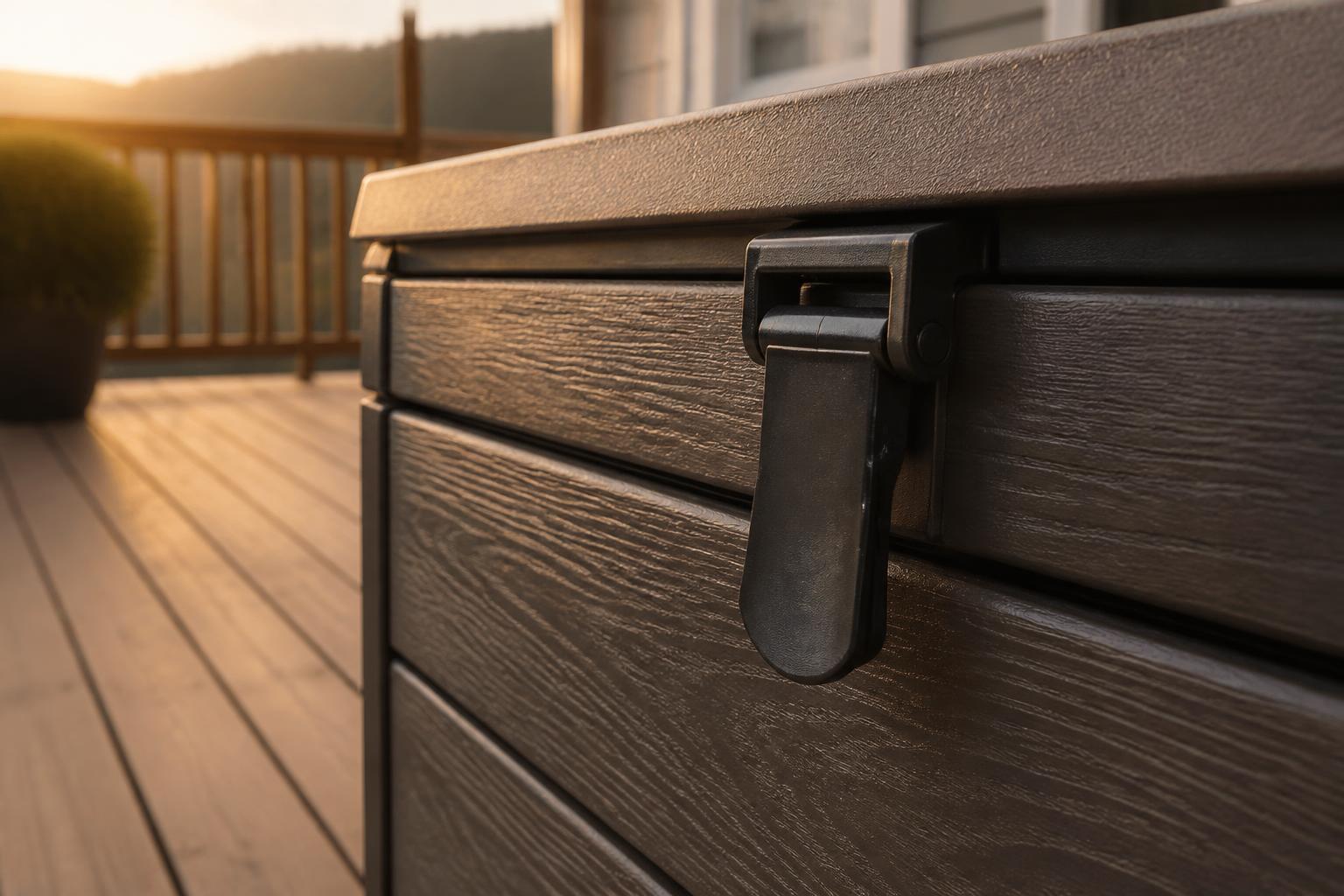
The lid hinge and latch are the parts of a deck box most likely to fail first, especially in a coastal environment where salt air accelerates corrosion on lower-grade metal hardware. Stainless steel or heavily coated hinges hold up far better near the water than plain zinc-plated hardware, which can start showing rust streaks down the lid within a season or two even if the box body itself is fully weatherproof resin. If security matters, because the box sits in a shared condo courtyard or an area visible from the street, look for a model with a built-in hasp that accepts a small padlock rather than relying on a simple latch alone.
For households with more gear than a single box can reasonably hold, we often recommend two mid-sized boxes over one oversized one. Splitting cushions into one box and pool toys or gardening tools into another keeps each box lighter to move and easier to access without unpacking everything just to find what’s on the bottom.
Set Up a Storage Routine, Not Just a Storage Box
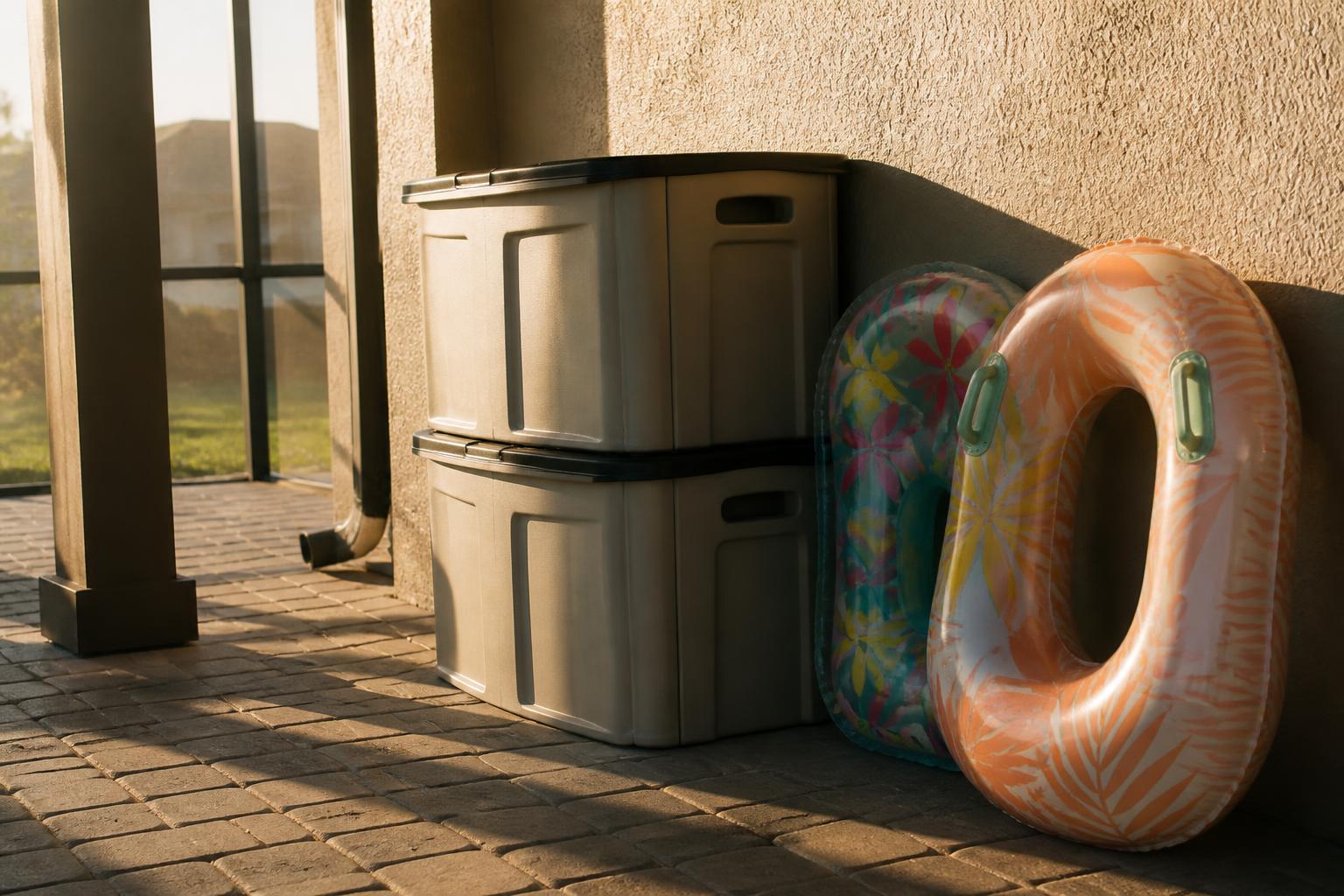
A deck box works best when it has a simple routine behind it. Keep a quick-dry towel or small rack nearby for wet pool gear, and reserve the box for cushions and items that are completely dry. Open the lid after a heavy rain or a busy pool day so trapped humidity can escape, then inspect the lid gasket, hinge area, and base for pooled water once a month. The EPA’s mold guidance reinforces the basic rule: dry wet materials promptly and address moisture at its source instead of sealing it into a container.
For a coordinated patio setup, compare the box with the scale and finish of your other outdoor accessories before choosing one. A storage piece that is easy to open, has room for the real cushion stack, and fits the walking path is much more likely to stay useful through every season.
Labeling a small bin for repair supplies, covers, or pool accessories can also prevent the main box from becoming a catch-all. At the end of a wet week, empty it long enough to sweep out grit and check that cushions still feel dry. This modest maintenance step catches a leaking lid or blocked drain before it turns into a larger cleanup job.
Frequently Asked Questions
Can a deck box double as extra seating?
Many resin and wicker-style boxes are rated for light seating weight, but check the specific weight rating before using it that way regularly, since not every model is built for repeated sitting.
How do I keep a deck box from blowing open or shifting in high wind?
Look for models with a hinge-lock or latch feature, and consider a box heavy enough or low enough profile that it isn’t easily caught by gusts, particularly if it sits in an exposed, unscreened area.
Will a deck box protect cushions during hurricane season storms?
A quality sealed box will keep cushions dry through ordinary rain, but during an active storm we recommend bringing cushions and boxes into a garage or enclosed space rather than relying on outdoor storage alone.
What’s the easiest way to clean a resin deck box?
A garden hose and mild soap handle most dirt and pollen buildup, and letting the box dry fully with the lid open afterward helps prevent any trapped moisture from becoming a mildew problem later.
If you’re trying to figure out what size or style fits your patio and what you actually need to store, stop by our Jupiter showroom and we’ll help you match a box to your space.

About the Author
Chas Crofoot
Chas Crofoot is the owner of Beach House Patio Furniture, a family-owned outdoor furniture company in Jupiter, Florida. Since 1979, Chas and his team have manufactured and sold high-quality patio furniture — specializing in wicker, cast aluminum, aluminum, poly lumber, and PVC pipe styles built to withstand the Florida climate. With over four decades of hands-on experience in outdoor furniture design and manufacturing, Chas brings deep expertise in material selection, durability, and comfort for coastal living.