
Choosing between a cantilever umbrella and a traditional center-pole umbrella comes up in almost every shade conversation we have in the showroom, and the honest answer is that the right structure depends far more on how you use the space underneath it than on which style looks nicer in a photo. Both do the same basic job of blocking sun, but they solve the problem in different ways, and understanding those differences up front saves a lot of after-the-fact frustration.
How a Cantilever Umbrella Is Built Differently
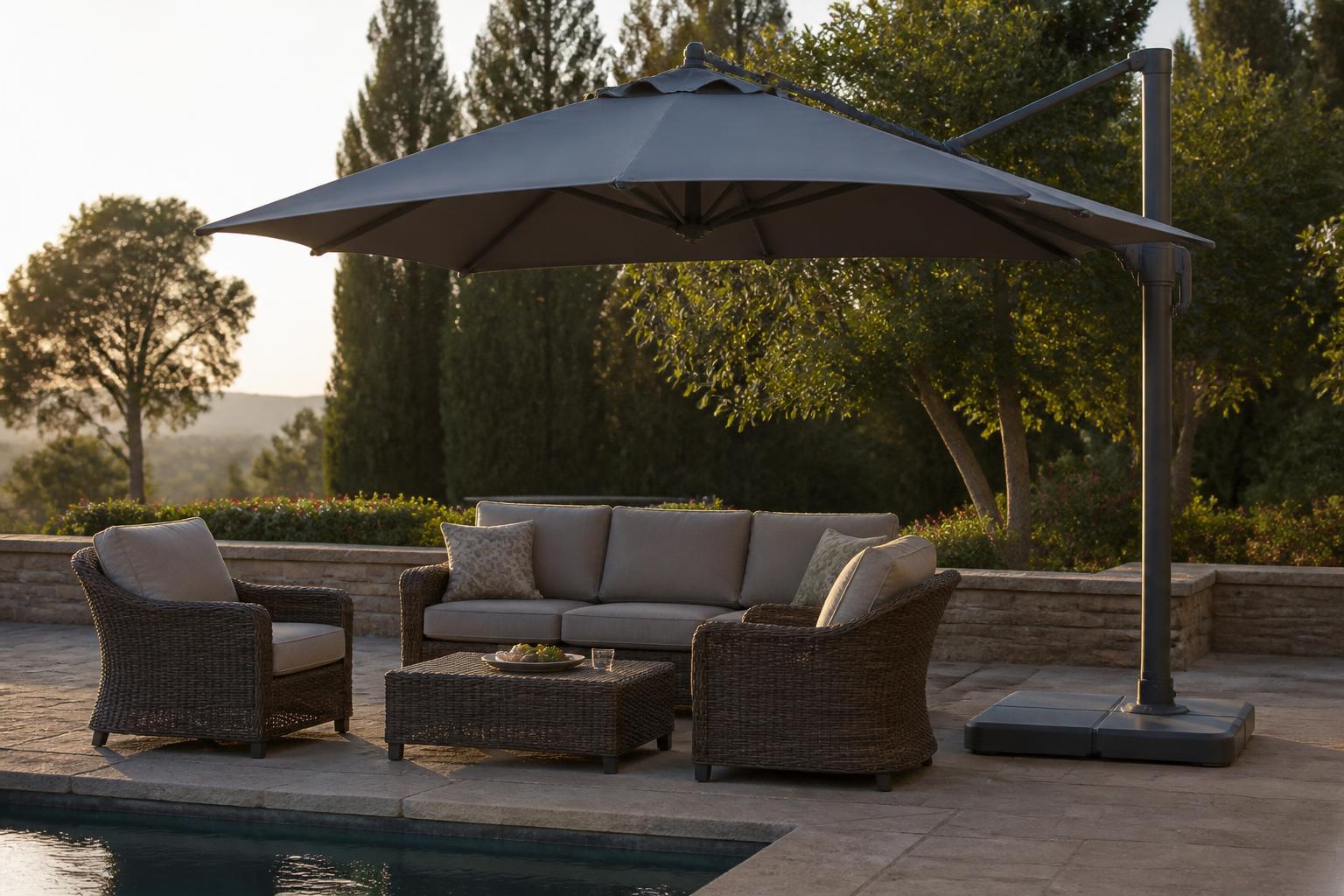
A cantilever, or offset, umbrella holds its canopy out to the side on an arm, with the support structure and weighted base sitting off the ground away from the table entirely. That design means nothing pokes up through the middle of your dining or lounge set, which is the single biggest reason customers choose one. Most cantilever models also rotate and tilt independently of the base, so you can chase the sun through the afternoon without moving furniture or the base itself.
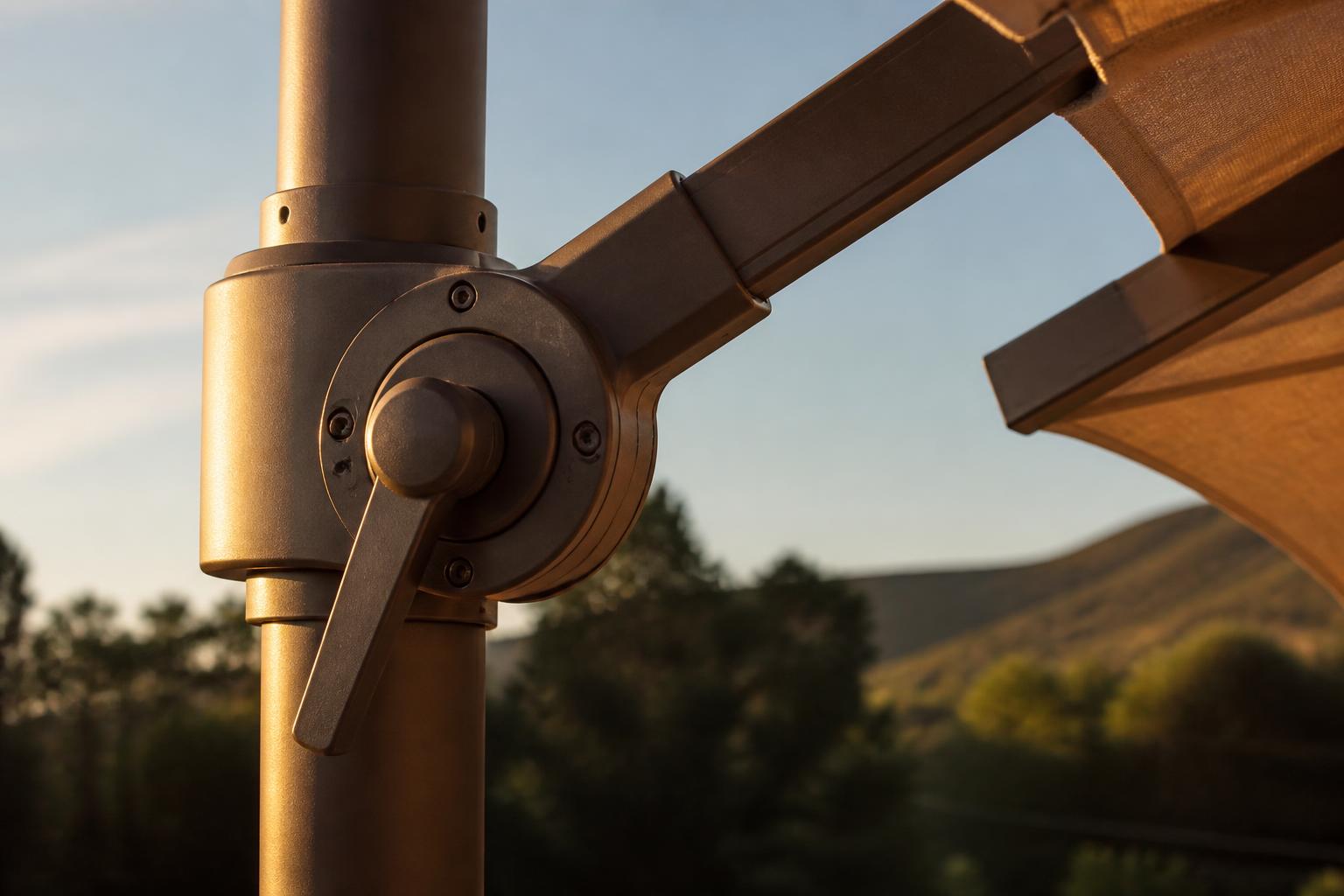
The tradeoff is that a cantilever umbrella needs a genuinely heavy base to counterbalance the weight held out on the arm, and that base takes up floor space of its own, usually behind or beside the seating area rather than underneath it. On a smaller patio, the base’s footprint can end up competing for space with the furniture it’s meant to shade.
Why Center-Pole Umbrellas Remain the Simpler Choice
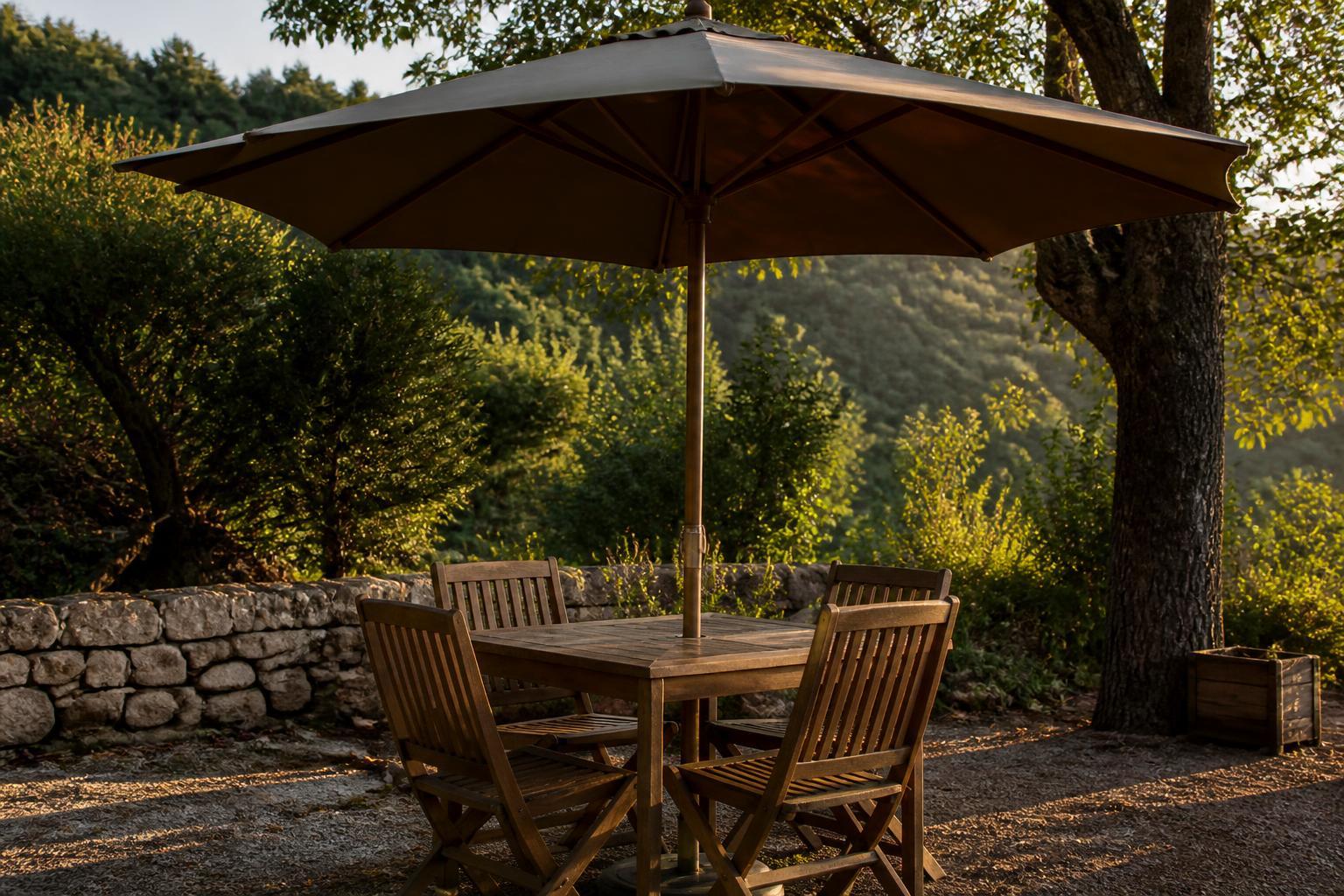
A traditional center-pole umbrella passes straight through a hole in the table or stands on its own small base directly where you want shade. Mechanically, there’s less to go wrong, since the pole isn’t cantilevering weight out to one side, and most center-pole models are lighter and easier for one person to open, tilt, and close without help. For a single dining table or a compact bistro set, this is usually the more practical and more affordable option, and it’s what we recommend most often for smaller lanais and condo balconies in the Jupiter and Tequesta area.
The obvious limitation is that the pole itself sits in the middle of the table or seating group, which can be a minor annoyance when passing dishes or arranging a larger spread for a gathering.
Coverage Area and How the Two Compare
Cantilever umbrellas generally offer a larger, more evenly distributed shade footprint because the canopy isn’t interrupted by a pole running through the seating area, and the ability to tilt and rotate means you can adjust coverage without repositioning furniture. Center-pole umbrellas can match that coverage size for size, but because the pole runs through the middle of the table, the usable shaded seating area effectively shrinks a bit compared to an equivalent-diameter cantilever canopy over an open lounge area.
For a pool deck with loungers arranged around an open space rather than a fixed table, a cantilever’s ability to shade an area without a pole in the middle of the layout is a real practical advantage, which is why we see cantilevers used more often over lounge groupings than over dining sets.
Wind Stability Considerations for Florida Patios
Both umbrella styles need to be taken down or secured ahead of high wind events, but the way they fail differs. A center-pole umbrella in a table base or ground sleeve can be knocked over more easily in a gust because its base footprint is generally smaller relative to canopy size. A cantilever umbrella’s heavy base makes it more wind-resistant in moderate gusts, but because the canopy is held out on an arm rather than centered over its own base, a strong gust can put more leverage on the structure than an equivalent center-pole design experiences. Neither style should be left open and unattended during a serious storm, and we always tell customers that any umbrella, cantilever or center-pole, should come down before a hurricane watch is issued for the area.
Canopy Fabric and Frame Finish Considerations
Regardless of structure, the canopy fabric matters as much as the frame it hangs from. A solution-dyed acrylic canopy resists fading far better than a printed polyester canopy over years of Florida sun, and it’s worth asking specifically which fabric a given umbrella uses rather than assuming all outdoor-rated canopies perform the same. The frame finish matters too: powder-coated aluminum and stainless steel hardware resist the salt-air corrosion common near the Intracoastal and coastal Jupiter properties far better than painted steel, which can start showing rust at the joints within a season or two of direct coastal exposure.
Vented canopy tops, a small flap or double-layer section near the peak that lets hot air escape, help both styles stay more stable in gusty conditions by reducing the sail effect a solid canopy creates. If your patio tends to catch a steady coastal breeze even on calm days, a vented canopy is worth prioritizing over one without it, regardless of whether you choose cantilever or center-pole.
Do a Shade Layout Check Before You Buy
Measure more than the table. Note the canopy diameter or width at full open, the base footprint, the swing path for a tilted canopy, and the route people use to enter the patio. For a cantilever, mark where the offset arm and counterweight will sit before deciding that the canopy can cover the seating area. For a center-pole model, confirm that the table hole, pole diameter, and base all work together without crowding knees or chair legs.
Wind procedure should be part of the decision, too. The National Weather Service’s wind-safety guidance is a useful reminder to secure loose outdoor items when conditions change; close and secure either umbrella according to its manufacturer instructions rather than relying on the base alone. Reviewing available patio umbrellas in person also makes it easier to compare crank height, tilt controls, and base placement before committing to a structure.
Try the open-and-close sequence during the visit, especially if one person will handle it most often. A canopy that is easy to operate is more likely to be closed promptly after use, and a base that stays outside should not block a gate, pool route, or patio door. These small placement choices matter as much as canopy style once furniture is in place.
Frequently Asked Questions
Do cantilever umbrellas cost more than center-pole umbrellas?
Generally yes, since the counterbalanced arm mechanism and heavier base add engineering and material cost compared to a simple pole-and-base design.
Can I use a cantilever umbrella over a dining table instead of a center-pole model?
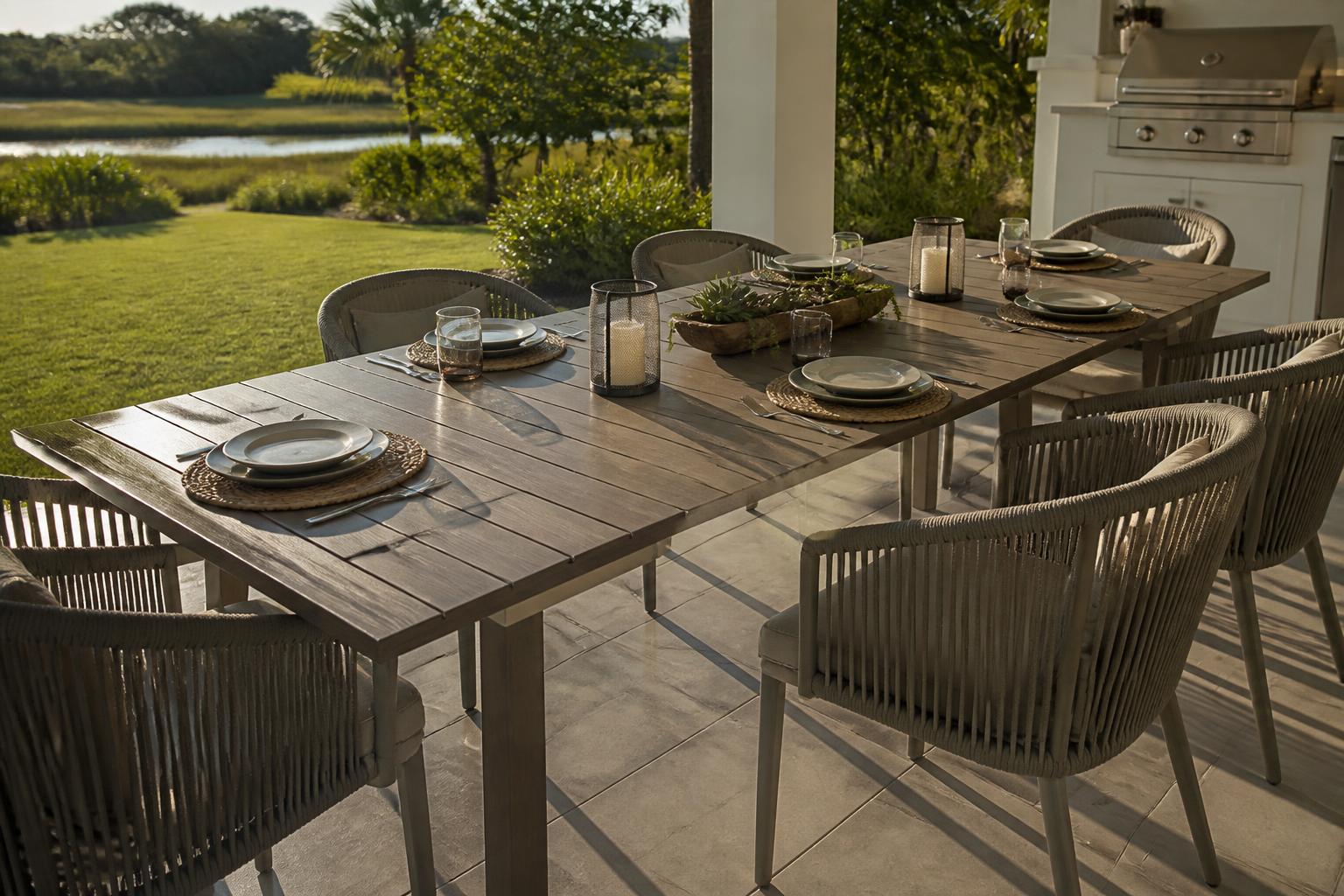
Yes, and it’s a good option if you want an unobstructed tabletop, though you’ll need enough surrounding space for the base and arm to sit without interfering with foot traffic.
How do I know if my table needs a center hole for a center-pole umbrella?
Check the manufacturer specifications for the umbrella pole diameter and compare it to your table’s umbrella hole, if it has one; not every outdoor table is designed to accommodate a pole.
Which style is easier to store for hurricane season?
Center-pole umbrellas are generally easier to fully remove and store since the base is smaller and often stays with the table. Cantilever bases are heavier and usually stay in place, with just the canopy and arm needing to be secured or brought inside.
If you’re deciding between the two for a specific table or lounge area, bring photos or measurements of your space into our Jupiter showroom and we can help you figure out which structure actually fits.

About the Author
Chas Crofoot
Chas Crofoot is the owner of Beach House Patio Furniture, a family-owned outdoor furniture company in Jupiter, Florida. Since 1979, Chas and his team have manufactured and sold high-quality patio furniture — specializing in wicker, cast aluminum, aluminum, poly lumber, and PVC pipe styles built to withstand the Florida climate. With over four decades of hands-on experience in outdoor furniture design and manufacturing, Chas brings deep expertise in material selection, durability, and comfort for coastal living.