
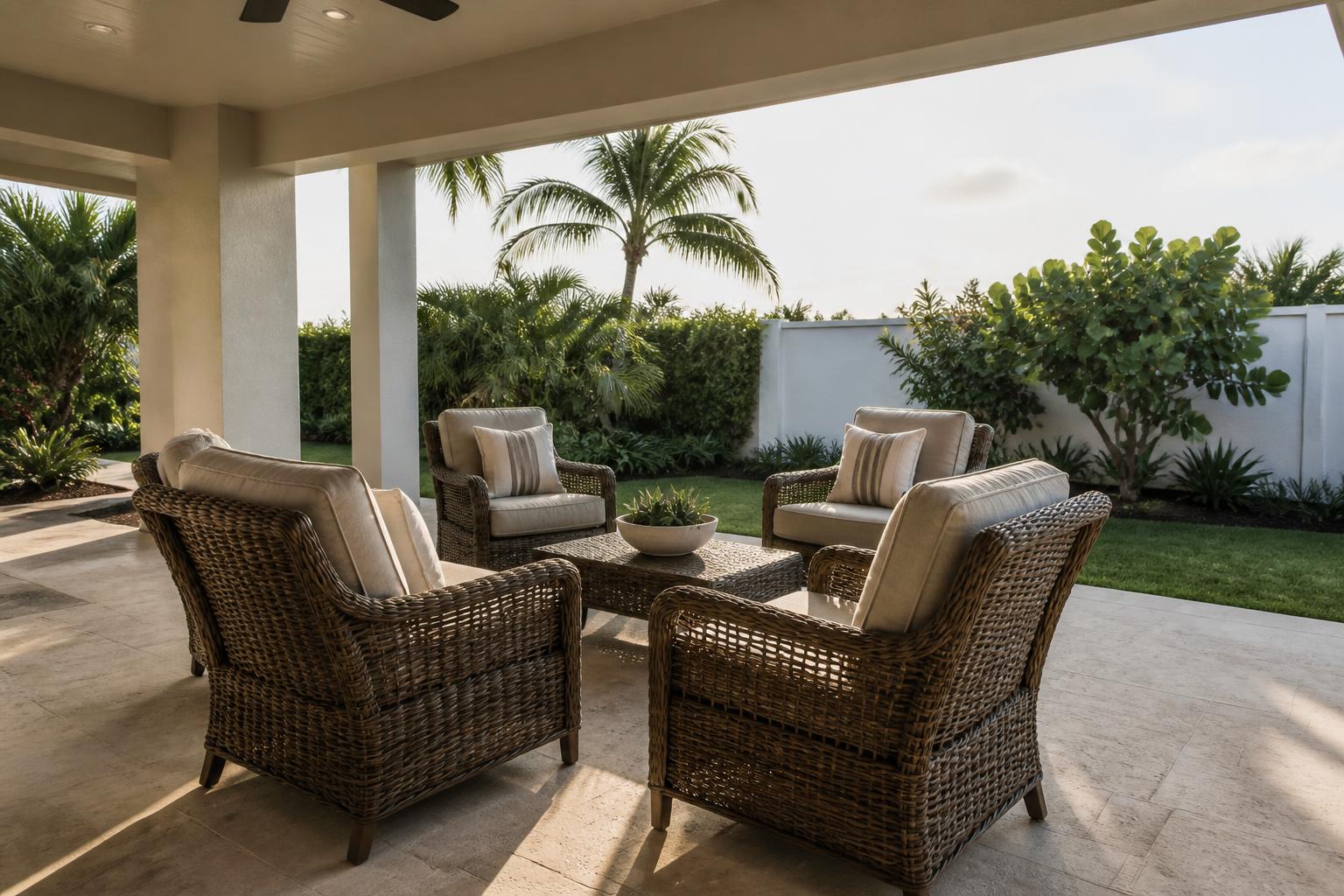
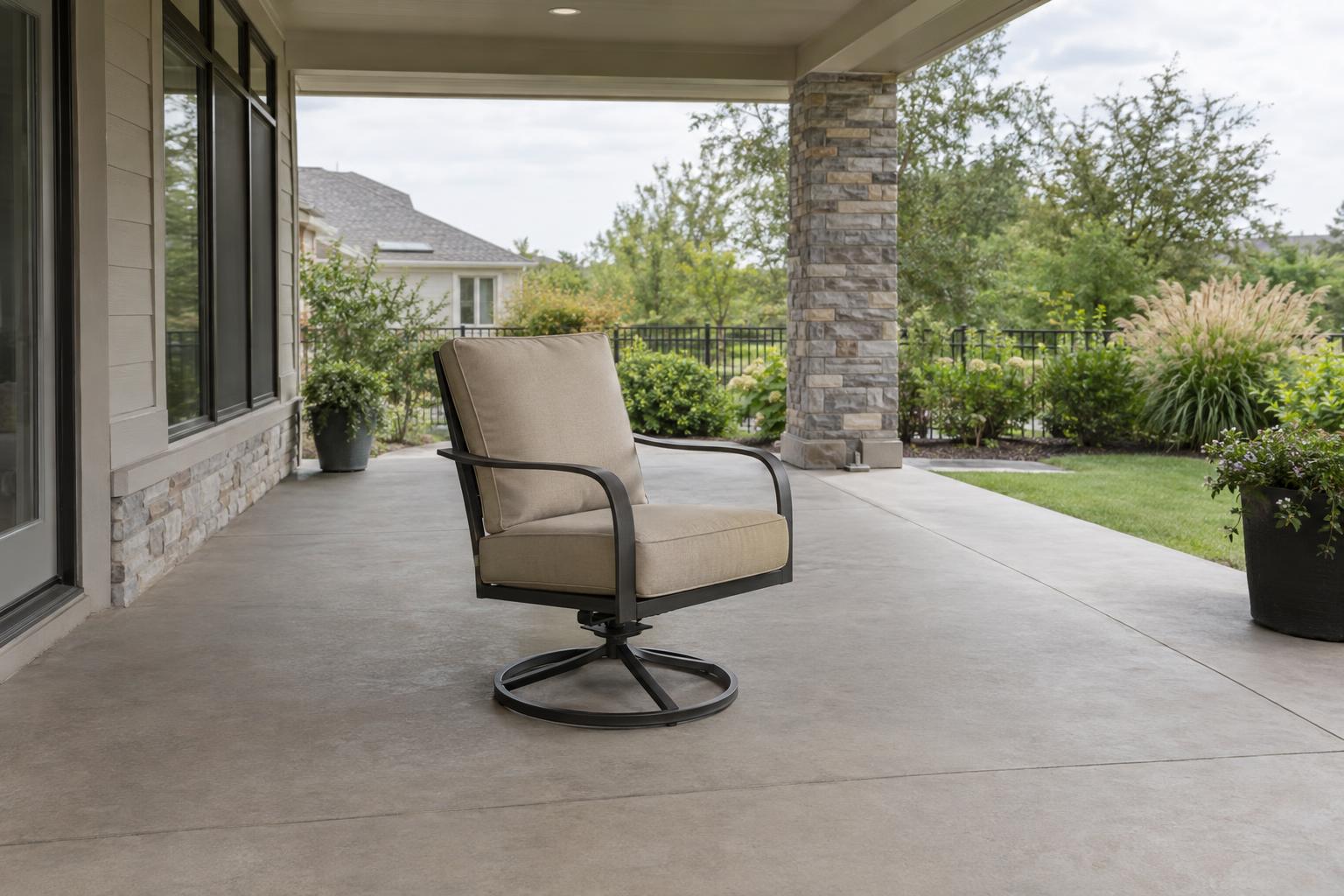
A question we hear a lot on the showroom floor in Jupiter is some version of, “What’s actually the difference between a club chair and a lounge chair?” Both are single-seat outdoor chairs, both show up in a lot of the same room-scene photos online, and the names get used loosely enough that it’s easy to assume they’re interchangeable. They’re not, and picking the wrong one for your space usually shows up fast — either as a chair that feels too upright for lounging by the pool, or one that eats up more floor space than a seating area can spare.
What Actually Makes a Chair a “Club Chair”
An outdoor club chair borrows its shape from the indoor club chair: a fairly upright back, a deep but bounded seat, and substantial arms, usually built on a compact aluminum or wicker-wrapped frame. The posture it puts you in is closer to sitting than reclining — good for conversation, reading, or a chair that needs to pull double duty as extra dining-adjacent seating. Because the frame footprint is smaller and the back doesn’t need room to tilt, club chairs work well in tighter conversation groupings, on a covered lanai, or paired around a fire table where you want people facing each other at a normal seated height.
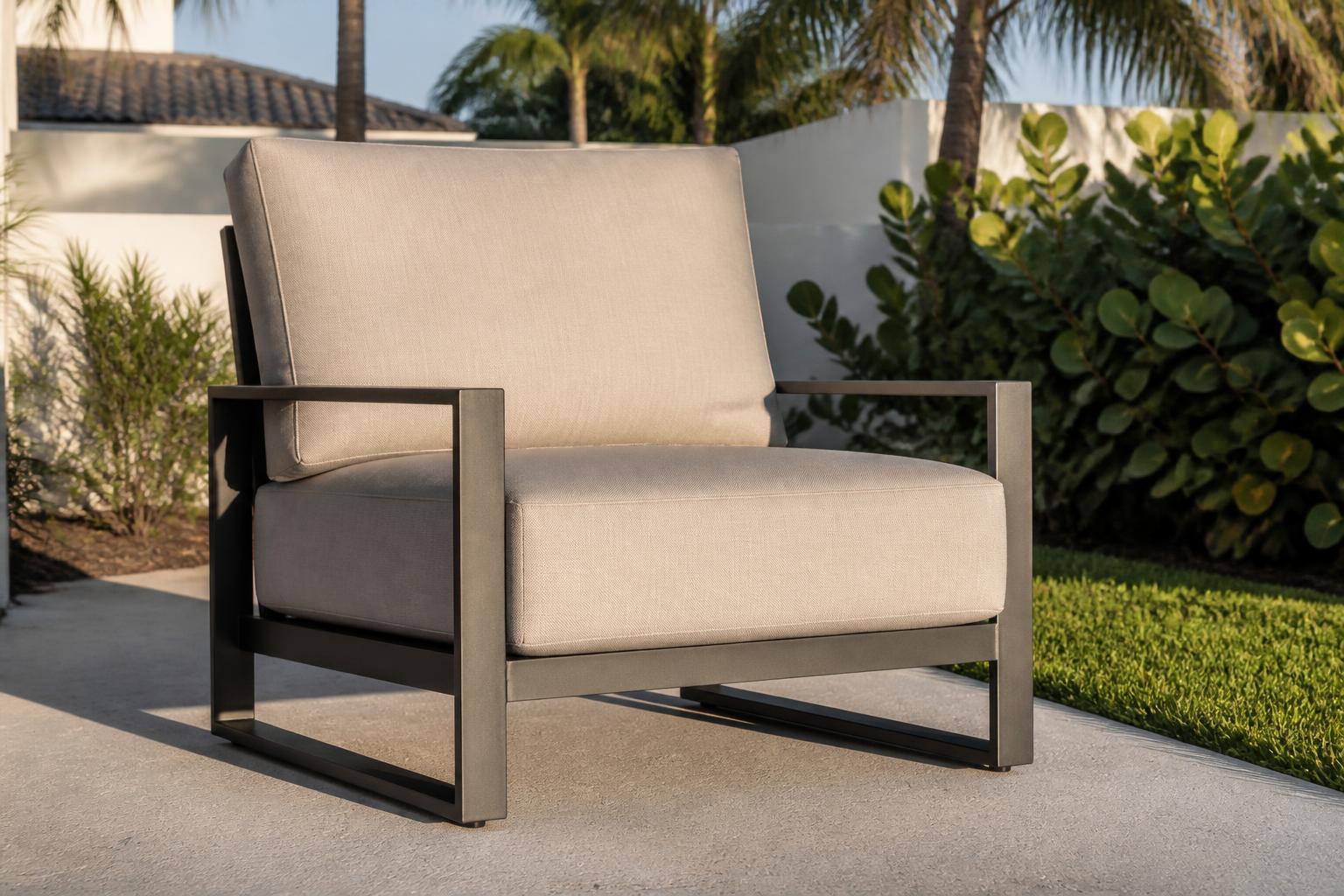
What Actually Makes a Chair a “Lounge Chair”
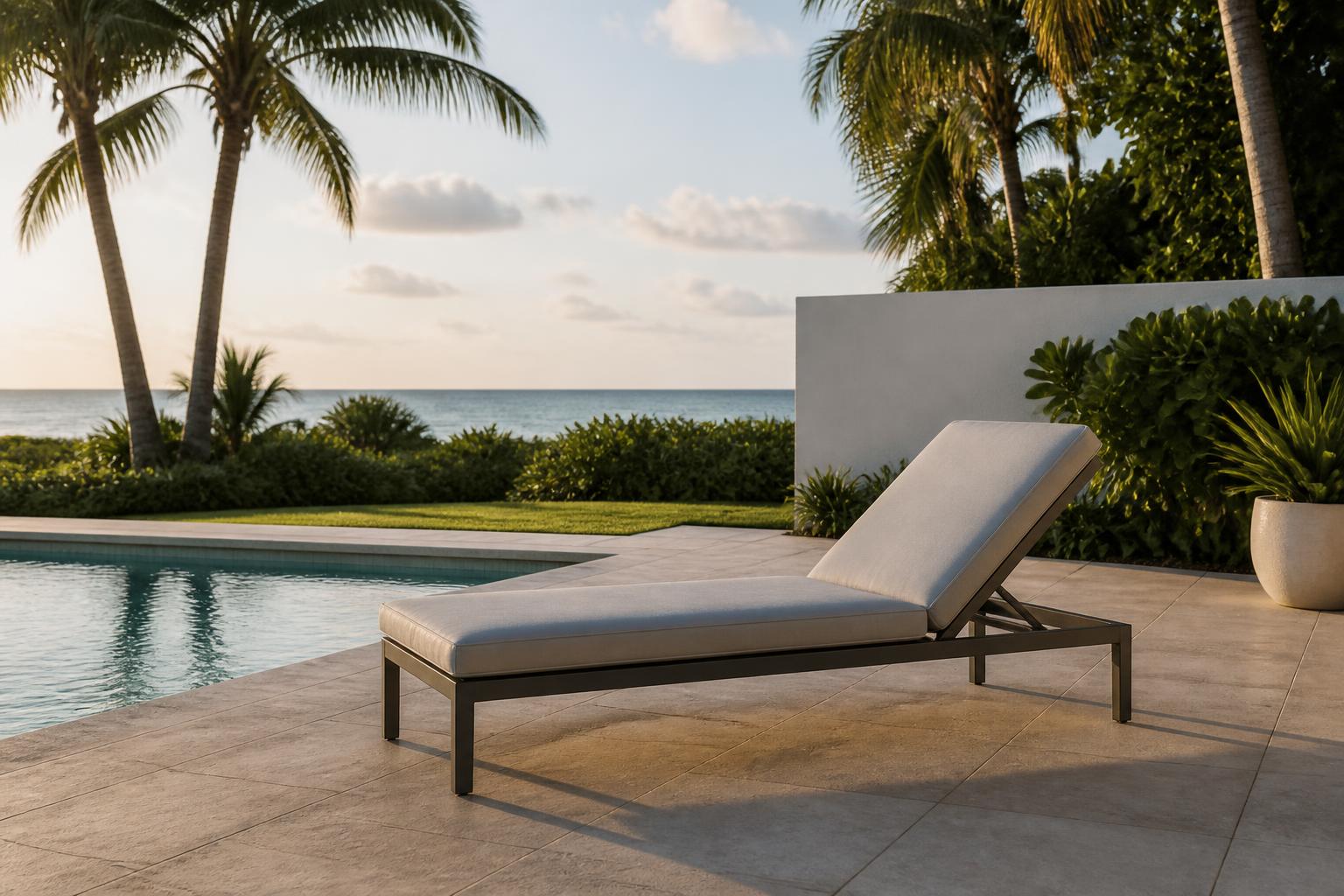
A true outdoor lounge chair is built for a lower, more reclined position — think a chaise-adjacent chair rather than a chaise itself, with a seat that sits lower to the ground and a back that either reclines in stages or is fixed at a relaxed angle. Lounge chairs generally have a longer overall footprint front-to-back because the design assumes you’re stretching out, not sitting upright to talk. They tend to show up around pools, on open pool decks, or anywhere the primary use is relaxing rather than conversing.
Matching the Chair to the Space
The fastest way to tell which one you need is to think about what people will actually be doing in that spot. A shaded lanai used for evening conversation, card games, or watching the water almost always calls for club chairs — the upright posture keeps people engaged with each other instead of leaning back and disengaging. An open pool deck or a spot meant for reading in full sun leans toward lounge chairs, where the reclined position is the whole point. If your patio does both jobs at different times of day, it’s common for customers to split the difference: a pair of club chairs near the fire table or dining area, and lounge chairs positioned closer to the pool itself.
Frame and Material Considerations
Both chair types are available in the same core outdoor materials — powder-coated aluminum, resin wicker over an aluminum frame, and cushioned versions with Sunbrella-grade fabric. Club chairs, because of their more compact frame, tend to feel sturdier in tighter groupings and are easier to pull in close around a table. Lounge chairs, with their longer frame, need a bit more floor clearance to move in and out of position, which is worth measuring for before you buy if your space is on the smaller side.
Cushion and Fabric Considerations
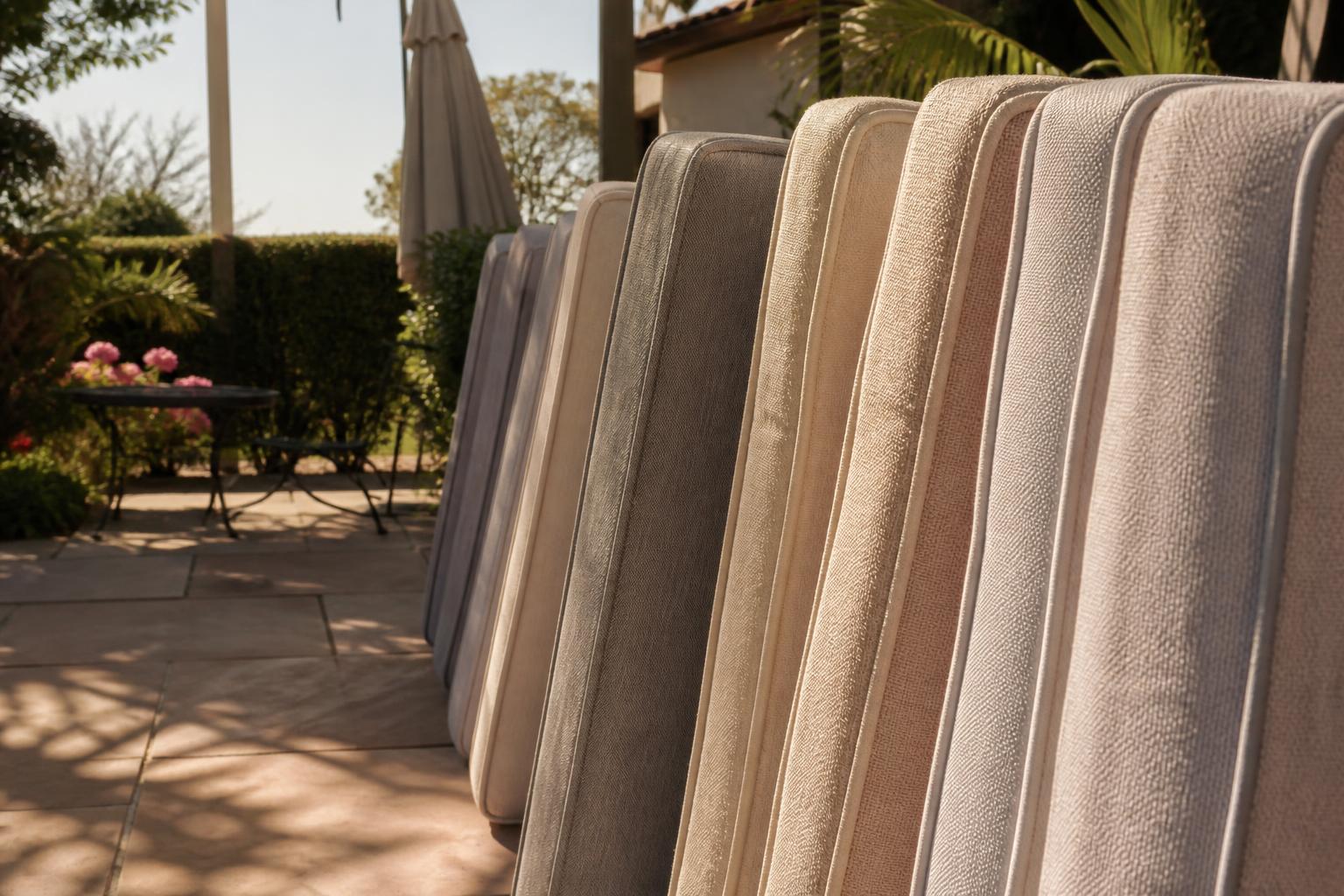
Because both chair types spend most of the year exposed to Florida sun and humidity, the cushion fabric matters as much as the frame. Sunbrella describes its performance fabric as solution-dyed with color and UV-stabilized pigment saturated through the fiber itself rather than applied as a surface coating — which is why a Sunbrella-grade cushion tends to hold its color longer under direct sun than a standard printed outdoor fabric. Club chair cushions are generally cut thicker and firmer to support the more upright seated posture, while lounge chair cushions run longer and sometimes slightly softer to match the reclined position.
Weight and Portability
If you rearrange your patio seasonally, or move chairs in ahead of a storm, weight is worth a look before you buy. Club chairs, with their more compact aluminum frames, are usually the lighter and easier piece for one person to carry. Lounge chairs — particularly wheeled models built for the pool deck — are heavier by design, though the wheels are meant to make repositioning easier without lifting the frame at all. If storage space is limited, ask about stackable club chair options, which let several chairs nest together in a fraction of the floor space they’d need set up. Lounge chairs with a fixed (non-wheeled) frame are also stackable in some product lines, though the longer profile means fewer chairs fit in the same stacked footprint compared to a club chair.
Arm Height and Ergonomics
Arm height is an easy detail to overlook until you’re actually sitting in the chair. Club chairs typically have higher, more substantial arms that sit close to standard table height, which makes them comfortable to rest an elbow on during a long conversation and easy to push up from when standing. Lounge chairs often have lower, slimmer arms — or no arms at all on some chaise-style models — since the reclined position doesn’t call for the same elbow support. If you or a family member has difficulty rising from a low seat, a club chair’s higher arms and more upright seat height generally make it the easier chair to get in and out of, which is worth factoring in alongside the style question.
Buying Both Over Time
Plenty of customers don’t buy their full seating group in one visit — they start with club chairs for the spot that gets used most often, then add lounge chairs later once the rest of the patio layout is settled. If you think you’ll expand in stages, it’s worth choosing a frame finish and color family that’s likely to still be available in a year, rather than a limited run that may be harder to match later.
If you are building a full seating area, our guide to outdoor conversation sets shows how chairs are grouped with tables and sofas, and you can browse current outdoor seating chairs to compare frame styles. For a smaller space, our article on loveseats and sectionals for small patios is a helpful companion.
Frequently Asked Questions
Can a club chair recline at all?
Some outdoor club chairs offer a very slight recline adjustment, but it’s nowhere near the range of a dedicated lounge chair. If reclining comfortably is the main goal, a lounge chair or chaise is the better fit.
Which one takes up less room?
Club chairs generally have the smaller footprint, since the frame doesn’t need to accommodate a reclined leg position. They’re the easier fit for tighter lanais or condo balconies.
Do I need matching cushions for both types?
Not necessarily. Many customers intentionally use a complementary rather than identical fabric between club and lounge seating to visually separate the “conversation” zone from the “relaxing” zone on the same patio.
Are club chairs sturdy enough for daily use?
Yes — a well-built aluminum or wicker-wrapped club chair frame is designed for daily outdoor use, not occasional seating. The compact frame is actually part of what makes it feel stable in a tighter grouping.
Can I use club chairs and lounge chairs together in the same seating group?
Yes, and it’s a common approach — club chairs positioned closer to a table or fire feature for conversation, with lounge chairs set slightly apart for anyone who wants to stretch out. Keeping the cushion fabrics in a coordinating rather than identical palette usually helps the two groupings feel intentional rather than mismatched.
If you’re not sure which one fits your layout, call us at (561) 972-4661 or stop by our Jupiter showroom at 105 Center Street with a photo or a rough sketch of your patio, lanai, or pool deck, and we’ll walk the floor with you to compare both styles side by side.

About the Author
Chas Crofoot
Chas Crofoot is the owner of Beach House Patio Furniture, a family-owned outdoor furniture company in Jupiter, Florida. Since 1979, Chas and his team have manufactured and sold high-quality patio furniture — specializing in wicker, cast aluminum, aluminum, poly lumber, and PVC pipe styles built to withstand the Florida climate. With over four decades of hands-on experience in outdoor furniture design and manufacturing, Chas brings deep expertise in material selection, durability, and comfort for coastal living.