


What Size Patio Set Do You Need? A Square Footage Guide
Buying patio furniture without measuring your space first is like buying a couch without knowing the size of your living room. It might work out, but more often it leads to furniture that overwhelms a small patio or gets lost on a large one. Either way, you spend money on a setup that does not feel right.
This guide gives you specific square footage recommendations for different patio furniture configurations, along with the clearance rules that professionals use to ensure comfortable, functional outdoor spaces.
Step One: Measure Your Space
Grab a tape measure and record the length and width of your usable patio area. Usable means the space where furniture can actually go, which excludes areas blocked by doors that swing open, grill zones, walkways to the yard or pool, planter boxes or built-in features, and steps or level changes.
Multiply length by width to get your total usable square footage. A 10-foot by 12-foot patio gives you 120 square feet. A 15-foot by 20-foot deck gives you 300. Write this number down because everything that follows depends on it.
For irregularly shaped spaces like L-shaped patios or curved decks, break the area into rectangles, calculate each one, and add them together. You can furnish each section as a separate zone.
Minimum Clearance Rules
Before placing any furniture, account for the space people need to move around it. These are the clearance minimums that keep an outdoor space functional rather than frustrating.
Main walkways need 36 inches of clear width. This is the path people use to move through the space, from the door to the seating area, from the dining table to the grill, or around the perimeter. Anything narrower and people will feel like they are squeezing through.
Chair pull-back space needs 24 inches behind each chair at a dining table. When someone pushes back from the table to stand up, the chair needs room to slide. If there is a wall or railing behind the chair, measure 24 inches from the table edge to that barrier.
Between furniture groupings, allow at least 30 inches. If you have a dining zone and a lounge zone, the gap between them should feel like a natural transition, not a squeeze.
These clearances are not flexible. Ignoring them is the number one reason patio setups feel cramped and uncomfortable even when the furniture itself is appropriately sized.
Dining Set Sizing Guide
Here are the recommended minimum space allocations for outdoor dining sets, including the table, chairs, and all required clearances.
2-seat bistro set: 6 feet by 6 feet (36 square feet). This is the minimum for a small table and two chairs with adequate clearance. Works well on apartment balconies and small townhouse patios.
4-seat dining set: 8 feet by 8 feet (64 square feet). A round or square table with four chairs needs this footprint for comfortable dining with proper chair pull-back on all sides. This is the most common setup for couples and small families.
6-seat dining set: 10 feet by 10 feet (100 square feet). A rectangular or oval table seating six requires more room for chairs on both long sides and at the ends. This is the sweet spot for regular family dining and small dinner parties.
8-seat dining set: 12 feet by 12 feet (144 square feet). A large rectangular table with eight chairs is a significant commitment of space. This setup is ideal for homeowners who entertain regularly and have the square footage to support it. Below 144 square feet, the seating will feel crowded.
These numbers assume the dining set is the only furniture in that area. If the dining set shares a patio with a lounge area, add the square footage needs together plus the 30-inch transition gap between zones.
Lounge and Conversation Area Sizing
Lounge furniture takes up more space per seat than dining furniture because the pieces are deeper and lower. Here are the guidelines.
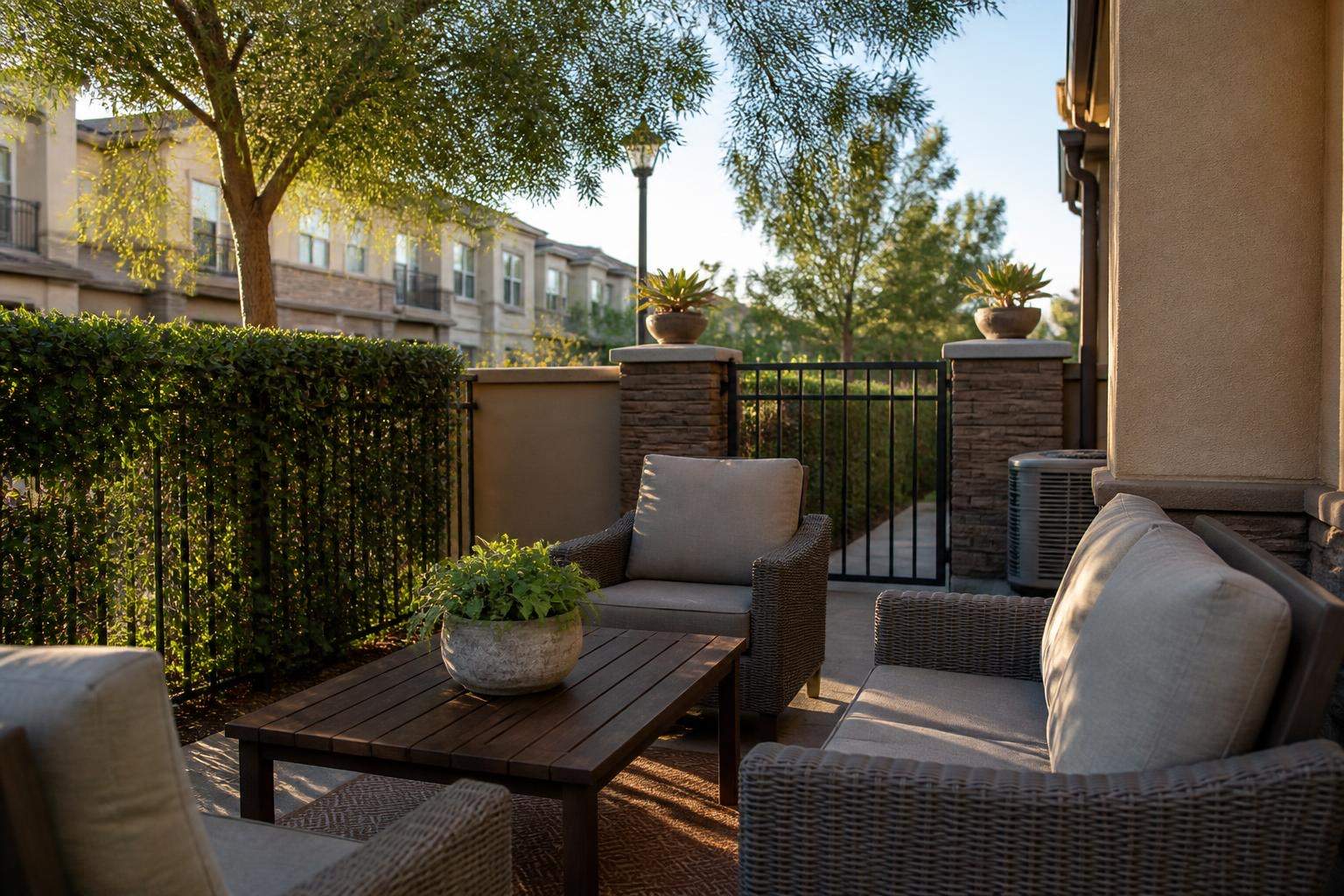
A basic conversation set with a loveseat, two chairs, and a coffee table needs approximately 10 feet by 10 feet (100 square feet). A larger group with a sofa, two chairs, a coffee table, and two end tables needs 12 feet by 12 feet (144 square feet). An L-shaped sectional with a coffee table needs 10 feet by 12 feet (120 square feet) minimum, depending on the sectional size.
Browse our furniture collections to see how different pieces scale together. Our showroom displays are set up in realistic room sizes to help you visualize how each grouping fits.
A single chaise lounger needs a footprint of approximately 3 feet by 7 feet plus clearance, so plan for a 5-foot by 9-foot area (45 square feet) per chaise. Pairs of chaises side by side with a small table between them need about 9 feet by 9 feet.
Sizing by Space Type
Balcony (30 to 60 square feet)
Space for a bistro set or two individual chairs with a side table. Stick to compact, lightweight pieces. Folding or stackable options maximize flexibility.
Small Patio (60 to 120 square feet)
Room for a 4-seat dining set or a small conversation group, but typically not both. Choose the function that matters more to you, dining or lounging, and commit to it.
Medium Deck or Patio (120 to 200 square feet)
Enough space for a 4 to 6-seat dining set plus a small lounge area, or a larger dining set alone. This is where most Florida homeowners land, and it offers good flexibility with smart furniture choices.
Large Lanai or Deck (200 to 400 square feet)
Room for a full dining zone, a conversation area, and possibly an accent piece like a chaise or bar table. Multiple zones with clear definition and generous walkways between them make a space this size feel both luxurious and functional.
Expansive Outdoor Living Area (400+ square feet)
Space is not a constraint, but empty space becomes the challenge. Avoid the temptation to fill every area. Create defined zones with purpose and leave open areas for visual breathing room and foot traffic flow.
When to Go Smaller vs Larger
Go smaller than you think you need when the patio serves a secondary space like a breakfast nook or reading corner, when you entertain infrequently, or when the patio has a strong view you do not want to block with furniture mass.
Go larger than the minimum when you entertain regularly, when the patio is your primary living space for a significant part of the year (which in Florida means most of the year), or when comfort for extended sitting matters more than open floor space.
If you are between two sizes, the larger set usually proves to be the better choice for Florida homeowners who actually use their outdoor spaces regularly. You can always edit accessories and side pieces, but you cannot make a too-small dining table comfortable for six guests.
Visit our Jupiter showroom at 105 Center Street or contact us to find the perfect piece for your outdoor space.

About the Author
Chas Crofoot
Chas Crofoot is the owner of Beach House Patio Furniture, a family-owned outdoor furniture company in Jupiter, Florida. Since 1979, Chas and his team have manufactured and sold high-quality patio furniture — specializing in wicker, cast aluminum, aluminum, poly lumber, and PVC pipe styles built to withstand the Florida climate. With over four decades of hands-on experience in outdoor furniture design and manufacturing, Chas brings deep expertise in material selection, durability, and comfort for coastal living.