
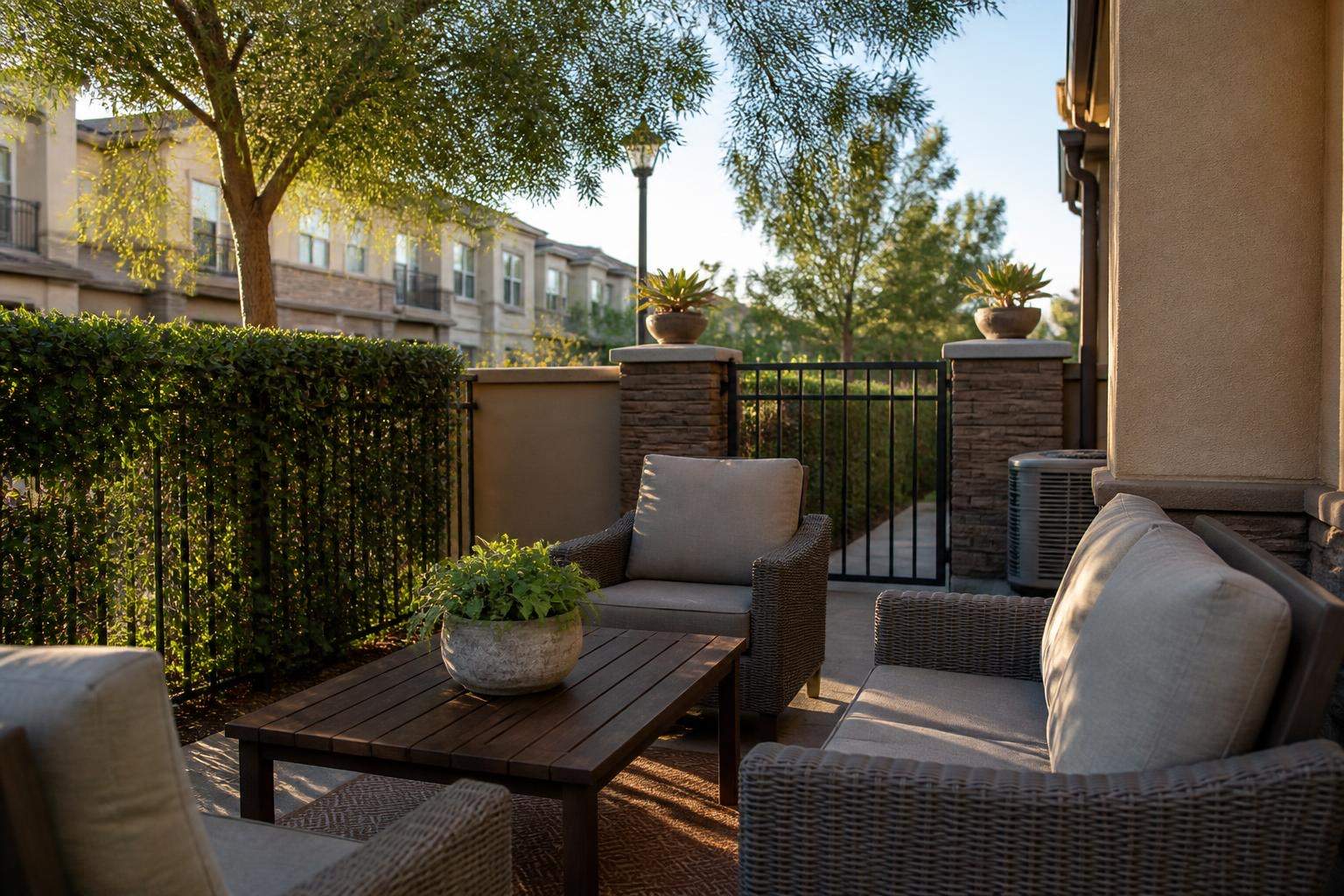


How Palm Beach County Homeowners Style Their Lanais
The lanai is to Palm Beach County what the living room is to colder climates: the place where daily life actually happens. It is where morning coffee gets sipped, where dinners stretch past sunset, where books get read and conversations go long. Unlike a basic patio or deck, a lanai is screened, usually covered, and treated as a genuine extension of the home rather than a separate outdoor space.
If you are furnishing or refreshing a lanai in Palm Beach County, understanding how local homeowners approach this space helps you make smarter choices. Here is what we see working well across thousands of lanai setups in the area.
What Makes Lanai Living Unique
A screened and covered lanai occupies a middle ground between indoor and outdoor living. The screen keeps insects out and reduces wind, but it does not fully control temperature or humidity. The roof protects from direct rain and sun, but moisture still gets in during heavy storms and humidity is the same as the outdoor air.
This in-between status affects every furnishing decision. You need materials that can handle humidity and occasional moisture, but you do not need the extreme weather resistance required for fully exposed patios. This opens up more material options and allows for design choices that lean closer to indoor comfort than typical outdoor furniture.
The screened enclosure also creates a room-like feeling that open patios lack. You have walls (even if they are screens), a ceiling, and a defined floor space. This means you can apply interior design principles, room layout, color coordination, layered lighting, more directly than you would on an open patio.
Popular Layout Patterns
The most common lanai layout in Palm Beach County follows a two-zone approach. Zone one is a dining area, typically positioned near the kitchen or family room door for easy food transport. Zone two is a conversation or lounge area, placed further from the house where the best views usually are.
In larger lanais, a third zone appears. This might be a reading nook with a single chair and side table, a game table for cards, or a bar area. The key is that each zone has clear definition through furniture arrangement rather than physical dividers.
For rectangular lanais, which are the most common in Palm Beach County homes, the dining area works best at one end and the lounge area at the other, with a clear pathway between them. For L-shaped lanais, each wing naturally becomes its own zone.
Traffic flow matters more on a lanai than on an open patio because the space is enclosed. Leave at least 36 inches for the main walkway between zones and 30 inches minimum between furniture and the screen walls. Furniture pushed against screens looks cramped and can damage the screening over time.
Material Choices for Screened Environments
Because lanais are screened and covered, you can use materials that would not hold up in a fully exposed setting. Wicker furniture is the single most popular material on Palm Beach County lanais. The screened environment protects wicker from the worst UV degradation and direct rain, letting it maintain its appearance for many years. The texture and warmth of wicker also fits the room-like feel of a lanai better than metal or plastic options.
High-quality synthetic wicker, sometimes called all-weather wicker, is the specific type that dominates local lanais. It offers the look of natural rattan with far better resistance to humidity and temperature fluctuations. Natural rattan or cane can work on a lanai but requires more careful humidity management.
Aluminum frames with cushions are the second most popular choice, especially for dining sets. Cast aluminum with detailed designs provides an upscale look that works with the traditional and transitional styles popular in the area.
Matching Indoor-Outdoor Flow
The best-designed lanais in Palm Beach County feel like a natural extension of the home’s interior, not a sudden shift to outdoor furniture. This does not mean matching everything exactly, but the style, color palette, and quality level should flow logically from one space to the next.
If your interior leans toward coastal contemporary, carry that through to the lanai with clean-lined furniture in neutral tones with blue or green accents. If your home has a more traditional feel, wicker with rolled arms and detailed cushion patterns maintains that character.
Flooring continuity helps too. Many newer Palm Beach County homes extend the same tile from the interior living area out to the lanai. If your floors differ, an outdoor area rug on the lanai can bridge the visual gap.
Lighting, Fans, and Accessories
Ceiling fans are non-negotiable on a Palm Beach County lanai. Even in a screened space, air circulation is essential for comfort during warm months and for keeping mosquitoes from hovering near the screen walls where they try to reach you. A fan rated for damp locations is the right choice for a covered lanai.
Lighting transforms a lanai from a daytime space to an all-hours living area. Popular options include string lights for ambient glow along the ceiling perimeter, recessed ceiling fixtures on dimmers for flexible brightness, table lamps with outdoor-rated bases for task lighting, and LED candles in hurricanes for tabletop warmth without fire risk.
Accessories that work on local lanais include outdoor-rated artwork, which holds up well in the protected screened environment, potted tropical plants that thrive in the filtered light, and decorative outdoor-rated pillows and throws that add the layered comfort feel of an indoor room.
Local Design Trends
Palm Beach County lanai design has been shifting in a clear direction over the past several years. The heavily themed tropical look with wicker peacock chairs and parrot-print cushions has given way to a cleaner, more sophisticated coastal style.
Current popular choices include deep seating groups in gray or charcoal wicker with white or cream cushions, natural wood-tone accents in teak or faux-teak finishes, blue-and-white color schemes that reference the coastline without being literal about it, and mixed materials combining wicker seating with aluminum dining pieces.
The overall trend is toward lanais that feel like sophisticated outdoor rooms rather than decorated porches. This reflects the reality that in Palm Beach County, the lanai is genuinely one of the most-used rooms in the home year-round.
If you are a Palm Beach Gardens homeowner or live anywhere in Palm Beach County, we invite you to visit our Jupiter showroom to see how these styles come together in person.
Visit our Jupiter showroom at 105 Center Street or contact us to find the perfect piece for your outdoor space.

About the Author
Chas Crofoot
Chas Crofoot is the owner of Beach House Patio Furniture, a family-owned outdoor furniture company in Jupiter, Florida. Since 1979, Chas and his team have manufactured and sold high-quality patio furniture — specializing in wicker, cast aluminum, aluminum, poly lumber, and PVC pipe styles built to withstand the Florida climate. With over four decades of hands-on experience in outdoor furniture design and manufacturing, Chas brings deep expertise in material selection, durability, and comfort for coastal living.