

A screened lanai sits in an unusual middle ground for outdoor furniture. It is shielded from direct rain, wind-driven salt spray, and the harshest midday sun, yet it still breathes the same warm, humid air as the rest of the yard. That is exactly why wicker is such a natural fit for Jupiter, Palm Beach Gardens, and Tequesta lanais, and also why the wrong wicker can look tired within a couple of seasons. Below we walk through how we help homeowners choose lanai wicker that feels like an indoor living room but still holds up to Palm Beach County humidity.
The right set depends on how the lanai is actually lived in, whether it is a quiet morning-coffee spot, the main gathering space for a family, or a vacation rental that turns over every week. Foot traffic, how often the screens let a blowing rain drift in, and how much time the cushions spend in filtered sun all change what we would recommend. Use the sections below as a practical guide before you order a sofa, sectional, or conversation set for a screened space.
Why Resin Wicker Outperforms Natural Wicker on a Florida Lanai

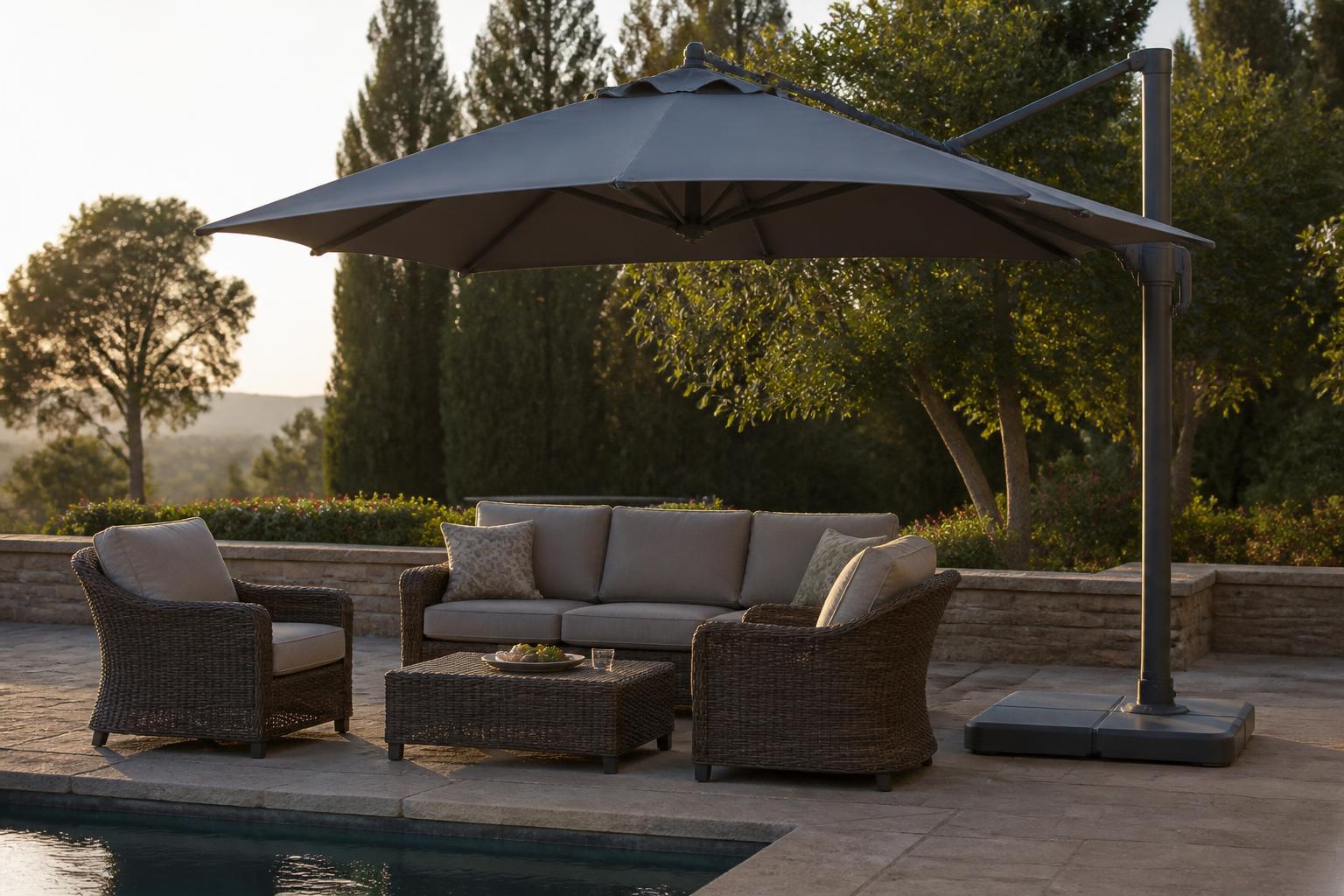
Traditional rattan and paper-based wicker were never built for South Florida. Under a lanai roof they still absorb humidity, and over time they crack, unravel, and grow mildew in the seams. All-weather wicker solves this by weaving a UV-stabilized resin, usually a high-density polyethylene, over a powder-coated aluminum frame. The resin does not soak up water, it resists the UV that still filters through screen, and it wipes clean with soap and water. You get the soft, rounded look people love about wicker with none of the seasonal splitting.
The single most important question to ask is what the weave is wrapped around. An aluminum frame will not rust when a summer storm blows mist through the screens, while a steel or “iron-look” frame can bleed rust stains onto your tile within a year. On a lanai that hosts a family every evening, that frame choice is the difference between furniture that lasts a decade and furniture you replace after two rainy seasons.
What to Check Before You Order a Wicker Set

A wicker set can look almost identical in two showrooms and perform very differently on your lanai. These are the details we point customers toward before they buy:
- Resin and weave quality: Look for solution-through-color HDPE resin that holds its shade instead of a thin painted coating that fades and turns brittle. A tight, UV-stabilized weave keeps its shape; a loose or bargain weave sags where people sit most.
- Frame material: Powder-coated aluminum is what you want under the weave. It stays light enough to rearrange for cleaning and will not rust in the damp air a screen enclosure traps.
- Cushion fabric and depth: Solution-dyed acrylic covers dry faster and resist mildew far better than printed polyester. Deep seats feel wonderful, but they need airflow underneath and a quick-dry foam core so they do not stay damp after an afternoon storm.
- Traffic flow: A lanai has fixed screen posts and door swings. Measure so a sofa or sectional does not block a slider or the path out to the pool.
Because screen enclosures can take wind damage in a strong storm, it is worth reviewing NOAA hurricane safety guidance for when to bring cushions and lighter pieces indoors. And since a shaded lanai still passes a surprising amount of ultraviolet light, EPA sun safety guidance is a useful reference for why UV-rated fabric matters even under a roof.
How a Screened Lanai Changes What Wicker Has to Handle
A screen roof does real work. It cuts direct sun, blocks most rain, and keeps leaves and bugs off the furniture. What it does not stop is humidity, pollen, and the fine mist that blows sideways through the screens during a fast-moving afternoon storm. Cushions left out overnight can feel damp by morning, which is why quick-dry foam and breathable acrylic covers matter more here than thread count or plushness.
Location on the lanai matters too. Along the coast from Jupiter to Tequesta, salt air still drifts inland and reaches enclosed spaces, so aluminum frames and stainless or coated hardware simply outlast bargain sets. If the lanai faces west, low afternoon sun rakes in under the screen and fades cheap fabric fast. A quick check of where the sun actually lands around four o’clock often changes the color and fabric we would recommend for that specific home.
Sizing a Wicker Set to the Lanai, Not the Showroom
The most common regret we see is a set that looked perfect in an open showroom and then swallowed a real lanai. Start by measuring the usable floor between screen posts, door swings, and any pool-access path, then leave roughly 18 inches of walking clearance around each piece so people can move without turning sideways. Modular sectionals are forgiving because you can drop or add a corner to fit an L-shaped screen cage, and a pair of lounge chairs with a loveseat often seats the same number of people as a bulky sectional while keeping the view to the pool open.
When you are ready to compare pieces, start with our wicker patio furniture selection, then bring rough measurements so we can lay a set out on paper before anything is ordered. If you want to see how different frames and weaves read in a South Florida setting, explore our lanai furniture options for ideas that already account for our climate.
Keeping Lanai Wicker Looking New
Resin wicker is low-maintenance, not no-maintenance, especially under a lanai roof where dust and pollen settle in a screened space with less airflow. Rinse the weave every few weeks and wipe it with mild soap and water. Skip the pressure washer, which can drive water into the cushion cores and loosen the weave over time. After a blowing rain, stand cushions on edge or bring them in so air reaches both sides and mildew never gets a foothold. When a hurricane watch is issued and the screen enclosure is most at risk, that is the moment to move cushions indoors and secure the lighter pieces. A yearly look at the frame feet and hardware keeps the set stable on tile or pavers for years.
Frequently Asked Questions
Is all-weather wicker really okay on a screened lanai in Florida?
Yes. Resin HDPE wicker over a powder-coated aluminum frame is built for exactly this environment. The screen roof only makes it easier by cutting direct sun and rain, but you still want a UV-stabilized weave and acrylic cushions because humidity and blowing mist reach every lanai in Palm Beach County.
Can I leave the cushions out year-round?
For everyday use, yes, if they are solution-dyed acrylic with a quick-dry foam core. We still suggest bringing them in during hurricane watches and standing them on edge to dry after a blowing storm so mildew never gets started in the seams.
How do I keep the wicker from looking dusty on a screened lanai?
A quick rinse and a wipe with mild soapy water every few weeks handles the pollen and dust that collect in an enclosed space. Avoid pressure washers, which can loosen the weave and soak the cushions rather than clean them.
Will a large sectional fit my lanai?
Sometimes, but a modular set or a chair-and-loveseat grouping usually fits a screen cage better and keeps door swings and the pool path clear. Bring your measurements and we will lay the pieces out before you order so nothing blocks a slider.
Come See Wicker Laid Out for a Real Lanai
If you want help choosing wicker patio furniture for a screened lanai, contact Beach House Patio Furniture at (561) 972-4661. We serve Jupiter, Palm Beach Gardens, Tequesta, and the surrounding Palm Beach County communities, and we can help you match resin quality, frame material, and cushion fabric to the way your family actually uses the space. Start with the details on our contact page, then bring your lanai measurements so we can plan the layout with you.

About the Author
Chas Crofoot
Chas Crofoot is the owner of Beach House Patio Furniture, a family-owned outdoor furniture company in Jupiter, Florida. Since 1979, Chas and his team have manufactured and sold high-quality patio furniture — specializing in wicker, cast aluminum, aluminum, poly lumber, and PVC pipe styles built to withstand the Florida climate. With over four decades of hands-on experience in outdoor furniture design and manufacturing, Chas brings deep expertise in material selection, durability, and comfort for coastal living.