

The debate between teak vs poly lumber patio furniture comes down to one fundamental question: do you value the natural beauty and feel of real hardwood enough to commit to ongoing maintenance, or do you prefer a material that looks close to wood and requires lower routine maintenance? On the Treasure Coast, where salt air, UV intensity, and afternoon rain are daily realities, both materials have clear strengths and weaknesses that play out differently than they would in a milder, drier climate. Here is what we see from customers in Jupiter, Tequesta, Stuart, and the Palm Beaches who live with both options year-round.
Teak: The Natural Hardwood Standard
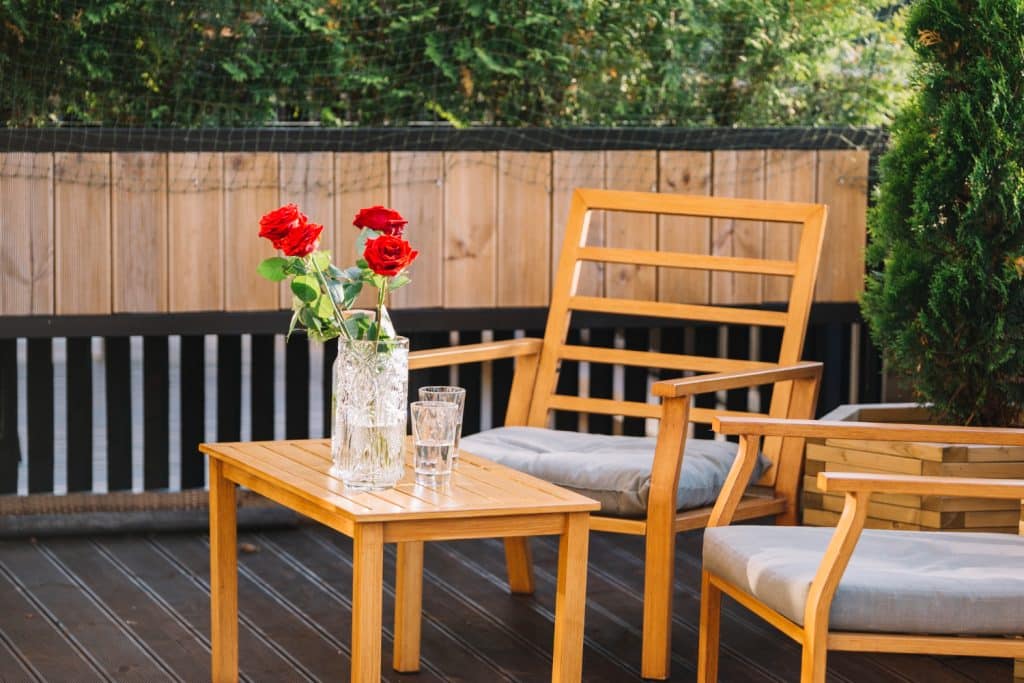
Teak has been the benchmark for premium outdoor furniture for centuries, and for good reason. The wood’s natural properties make it one of the few materials that can survive direct outdoor exposure without chemical treatment.
Grade-A teak — sourced from the heartwood of mature teak trees — contains high concentrations of natural oils and silica that make it inherently resistant to rot, insects, and moisture absorption. These oils act as a built-in preservative, repelling water at the cellular level and creating an environment that is hostile to fungi and termites. This biological resistance is what separates teak from virtually every other wood species used in outdoor furniture.
New teak starts with a warm golden-brown color that most buyers find visually striking. However, in South Florida’s intense UV environment, that golden color weathers to a silver-gray patina within six to nine months of outdoor exposure. This transition is purely cosmetic — it does not affect the wood’s structural integrity or durability — but it surprises homeowners who expected the warm tone to last.
Maintaining the original golden color requires teak oil or sealer application every two to three months in Florida conditions. That is more frequent than the annual treatment schedule recommended in northern climates because Florida’s UV intensity and rain frequency strip protective coatings faster. Each treatment takes about an hour for a dining set and requires cleaning, drying, and applying the product in dry weather — a real commitment when afternoon thunderstorms are a daily occurrence from June through September.
Teak furniture is heavy and dense, which cuts both ways in Florida. The weight provides excellent wind resistance during storms, meaning a teak dining table is less likely to become a projectile during tropical weather. On the other hand, that weight makes hurricane prep difficult — a four-person teak dining set can weigh 150 to 200 pounds, requiring multiple people to move it indoors when a storm threatens.
Poly Lumber: The Engineered Alternative
Poly lumber is an engineered building material made from recycled high-density polyethylene (HDPE) plastics — primarily post-consumer waste like milk jugs and detergent bottles. It was developed as a sustainable, low-maintenance alternative to natural wood for outdoor applications.
The manufacturing process melts and extrudes HDPE plastic into boards that mimic the dimensions of traditional lumber. Unlike painted or stained wood, the color in poly lumber runs all the way through the material. This means scratches and scuffs do not reveal a different color underneath, and there is no paint or stain to chip, peel, or require reapplication. For coastal homeowners tired of annual refinishing, this through-body color is one of the most appealing features.
For Treasure Coast shoppers, the more useful comparison is how each material behaves in salt air, direct sun, afternoon rain, and routine patio use. Those local conditions should drive the material choice more than a generic showroom description.
Many major poly lumber brands publish longer residential warranties than natural wood brands, but coverage varies by manufacturer, product line, exposure, and care. Review the written warranty for the exact term, exclusions, fading language, hardware coverage, and claim process before you buy.
Durability in Treasure Coast Conditions

The Treasure Coast’s specific combination of environmental stressors creates a real-world durability test that reveals the practical differences between teak and poly lumber more clearly than any lab specification sheet.
Teak handles salt air well — the natural oils repel salt-laden moisture at the surface level, and the dense grain structure resists the kind of salt penetration that destroys softer woods. However, the wet-dry cycle of Florida’s rain patterns causes a phenomenon called surface checking, where small cracks develop on the wood’s surface as it repeatedly absorbs moisture and dries out. Consistent sealing minimizes checking, but it does not eliminate it entirely in Florida conditions.
Poly lumber is designed to resist salt, rain, and humidity better than many natural materials. Because it does not absorb water the way wood can, it avoids many common wet-dry cycle problems. It still needs basic cleaning and sensible storm preparation, but it is a practical option for homeowners who want a lower-maintenance setup in direct coastal exposure.
Both materials resist insect damage, though teak has a small vulnerability. Carpenter bees are attracted to unsealed teak and will bore into the wood to create nesting galleries. The damage is usually cosmetic rather than structural, but the holes are unsightly and can let moisture into the interior of the wood if left unrepaired. Sealing or oiling the teak regularly discourages carpenter bees by filling the surface pores they target.
One area where teak often feels more comfortable is heat management. Poly lumber, especially in darker colors, can feel hotter than teak in direct afternoon sun. If the seating will sit in full sun, compare samples in person, consider lighter colors, and plan for cushions, shade, or umbrella coverage.
Cost Comparison: Purchase Price vs Lifetime Value
Comparing teak and poly lumber on price requires looking beyond the initial purchase to understand total cost of ownership over the life of the furniture.
Pricing varies widely by brand, size, construction, and finish. Grade-A teak usually sits in the premium tier because of material sourcing and manufacturing costs, while poly lumber ranges from entry-level pieces to premium collections. At the mid-range level, the decision is often less about one material always being cheaper and more about the buyer’s maintenance expectations.
Teak also carries recurring care costs if you want to preserve the golden tone. Cleaners, oils, sealers, and optional restoration service can add up over time. Poly lumber usually requires less routine care, though it still needs cleaning and should be handled according to the manufacturer’s warranty and care instructions.
Poly lumber’s lower-maintenance profile can reduce total ownership effort despite similar upfront pricing at the mid-range level. There are no teak oils or sealers to apply, and routine soap-and-water cleaning is usually the main care habit. Compare the written warranty, cleaning guide, exclusions, fading language, hardware coverage, and claim process for the exact brand before treating any material as care-free.
Environmental and Aesthetic Factors
Both teak and poly lumber carry environmental considerations that matter to an increasing number of Treasure Coast homeowners making purchasing decisions.
Many poly lumber products use recycled HDPE plastic, which can appeal to buyers who want a lower-maintenance material with recycled content. Ask the manufacturer for specifics on recycled content and end-of-life recycling if those factors matter in your buying decision.
Teak sourcing matters significantly from an environmental standpoint. Look for FSC-certified plantation teak to ensure the wood comes from sustainably managed forests rather than old-growth deforestation in Southeast Asia. Illegal teak logging remains a problem in Myanmar, Laos, and other regions, and uncertified teak furniture may be sourced from these operations. The FSC certification provides third-party verification of responsible forestry practices.
Aesthetically, teak has a warmth, grain texture, and tactile quality that poly lumber cannot fully replicate. Even with modern wood-grain embossing techniques, poly lumber feels like plastic under your hands and lacks the natural variation in color and grain pattern that makes each teak piece unique. For buyers who prioritize the sensory experience of natural materials, this difference is significant and no amount of engineering can close the gap.
On the other hand, poly lumber offers consistent color options including grays, blacks, whites, and bright accent colors that natural wood cannot match without paint. If your outdoor design calls for specific colors to coordinate with your home’s exterior or coastal aesthetic, poly lumber provides options that teak simply does not offer.
Frequently Asked Questions
Does teak furniture need to be covered on the Treasure Coast?
Teak furniture does not need to be covered for structural protection — the wood handles rain, humidity, and salt air well on its own. However, covering teak reduces UV exposure and slows the graying process, which means less frequent oiling and sealing. If maintaining the golden color is important to you, a breathable furniture cover between uses helps extend the time between maintenance treatments.
Is poly lumber furniture comfortable to sit on in hot weather?
Poly lumber surfaces can get noticeably hot in direct Florida sun, especially in darker colors. Outdoor cushions, shade, and lighter color choices can improve comfort. If the furniture sits under a pergola, covered patio, or umbrella, surface heat is usually easier to manage.
Which lasts longer in saltwater environments: teak or poly lumber?
Poly lumber often requires less upkeep in saltwater environments because it resists moisture absorption and does not need oiling. Teak can also perform well structurally, but it needs more regular cleaning, sealing, or oiling if you want to preserve the golden appearance. The better choice depends on whether you prefer natural wood character or lower routine maintenance on the Treasure Coast.
Whether you lean toward the natural beauty of teak or the lower-maintenance appeal of poly lumber, the key is matching the material to your lifestyle and maintenance commitment. Visit our Jupiter showroom to compare both options side by side, or call (561) 972-4661 for personalized recommendations based on your property and preferences.
For broader context on recycled material claims, the EPA recycling guidance is a useful starting point when comparing how plastic recovery and resin choices are described.

About the Author
Chas Crofoot
Chas Crofoot is the owner of Beach House Patio Furniture, a family-owned outdoor furniture company in Jupiter, Florida. Since 1979, Chas and his team have manufactured and sold high-quality patio furniture — specializing in wicker, cast aluminum, aluminum, poly lumber, and PVC pipe styles built to withstand the Florida climate. With over four decades of hands-on experience in outdoor furniture design and manufacturing, Chas brings deep expertise in material selection, durability, and comfort for coastal living.