
Styling a Wicker Sectional for a Small Covered Patio
A small covered patio does not have to feel cramped. With the right wicker sectional and a few smart styling decisions, you can create an inviting outdoor living area that feels spacious, comfortable, and put together. The key is understanding your space, choosing the right configuration, and resisting the urge to overfill every square foot.
Here is a practical guide to making a wicker sectional work beautifully on a compact covered patio, whether you are working with 80 square feet or 150.
Start by Measuring Your Space Accurately
Before you shop, grab a tape measure and map out your covered patio. Measure the total length and width, then note the locations of doors, columns, ceiling fans, and any other fixed elements. Write these numbers down. You will need them.
For a sectional to work comfortably, you need at least 36 inches of clear walkway between the furniture and any wall, railing, or obstacle. This is the minimum for people to move through without squeezing. If your patio opens to a yard or pool, keep the path to that transition clear and wide.
A common mistake is buying a sectional based on how it looks in a showroom or online photo, where it is staged in a much larger space. Always check the dimensions of each section piece and map them onto your actual patio measurements. Painter’s tape on the floor works well for visualizing the footprint before you buy.
L-Shape vs U-Shape: Choose Wisely for Small Spaces
For most small patios, an L-shaped sectional is the better choice. It tucks neatly into a corner, creates defined seating without consuming the center of the space, and leaves room for a small coffee table or side table.
U-shaped sectionals feel luxurious but require significantly more floor space. If your patio is under 120 square feet, a U-shape will likely dominate the area and make movement difficult. Save the U-configuration for larger lanais or pool decks.
Another option worth considering is a loveseat-sized sectional with a single corner piece. This gives you the sectional look and versatility with a smaller footprint. Many wicker sectionals are modular, meaning you can start with fewer pieces and add more later if you move to a larger space.
Use Color to Open Up the Space
On a small covered patio, the color of your wicker frame and cushions can make the space feel noticeably larger or smaller. Lighter wicker tones like natural, driftwood, or white-wash reflect more light and create an airy feel. Dark espresso or black frames can look sophisticated but tend to make small spaces feel heavier.
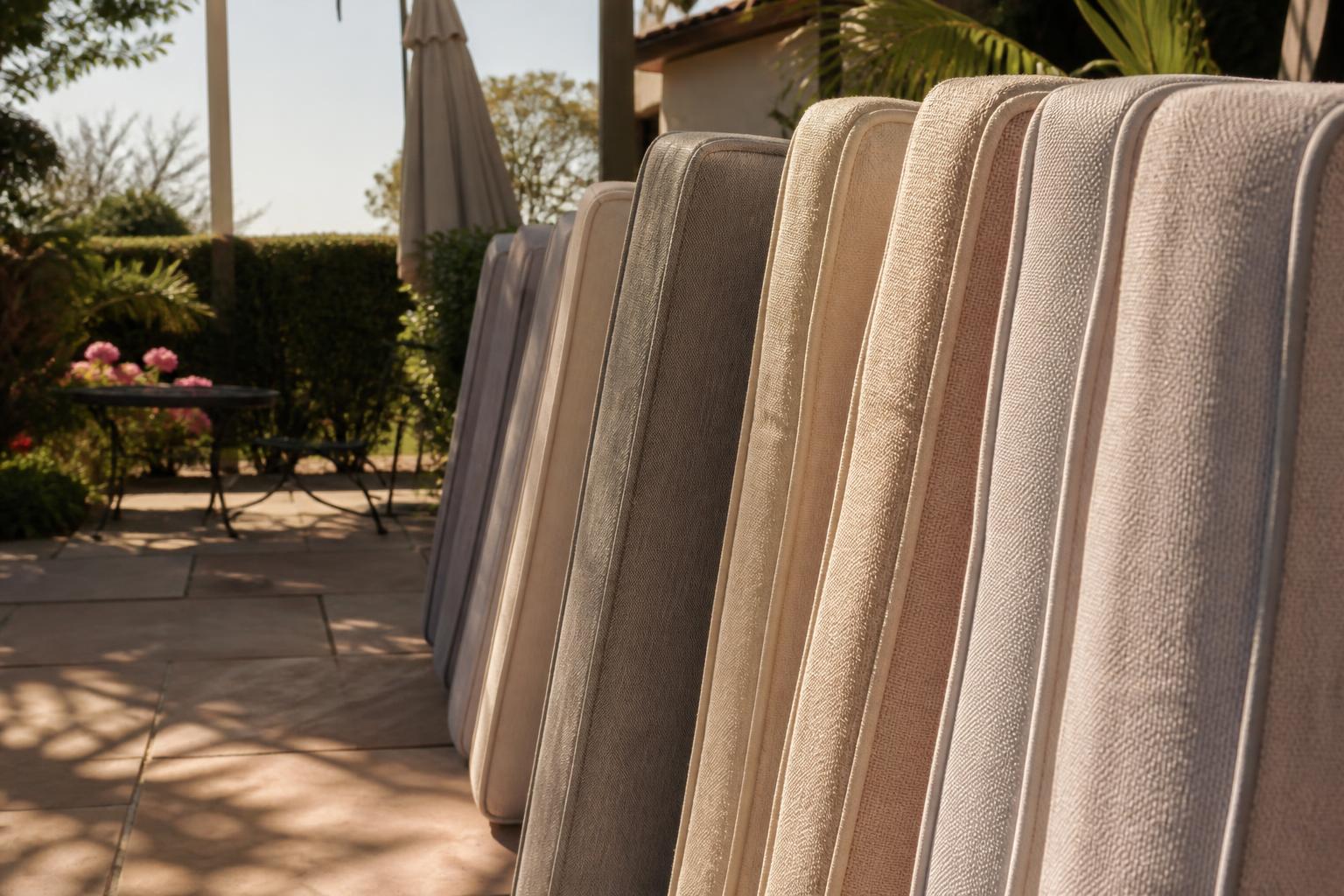
For cushions, stick with light to medium tones as your base. Cream, sand, soft gray, or pale blue all work well in Florida’s coastal setting. You can add pops of color through throw pillows rather than committing to bold cushion colors that might overwhelm the space.
If your patio ceiling is white or light-colored, the reflected light will enhance the effect of lighter furniture tones. This is one of the advantages of a covered patio: the ceiling acts almost like a light diffuser.
Pillow Arrangements That Do Not Overwhelm
Throw pillows are where personality comes in, but on a small sectional, restraint matters. A good rule is two to three accent pillows per seat, maximum. On a three-seat L-shaped sectional, that means six to nine pillows total, and lean toward the lower end.
Choose two complementary patterns and one solid that ties them together. For a Florida look, consider pairing a subtle botanical print with a geometric pattern and a solid in a coordinating tone. Avoid oversized 24-inch pillows on smaller sectionals. Stick with 18-inch or 20-inch pillows that do not eat up your actual seating space.
Lumbar pillows are a smart addition because they add comfort and style without taking up seat width the way square pillows do.
Side Table Placement and Scale
A coffee table in front of a small sectional can block the walkway and make the space feel cramped. Consider these alternatives instead. A small round side table at the end of the sectional serves drink-holding duty without blocking foot traffic. A C-shaped table that slides under the sectional arm provides a surface right where you need it and tucks away when not in use.
If you do want a coffee table, choose one with a smaller footprint than you think you need. A 24-inch round table is usually sufficient for a small sectional grouping. Glass-top tables or open-base designs feel lighter visually than solid surfaces.
Rug Pairing for Definition
An outdoor rug anchors the sectional and defines the seating area, which is especially helpful on a patio with uniform tile or concrete flooring. Choose a rug large enough for the front legs of the sectional to sit on, but not so large that it runs to the walls. A 5×7 or 6×9 rug works for most small sectional arrangements.
Flat-weave outdoor rugs dry faster and resist mold better than thick-pile options, an important consideration even on a covered patio in Florida where humidity and wind-driven rain are constants.
Maximize Seating Without the Clutter
If you need extra seating beyond the sectional for entertaining, choose pieces that can be moved or stacked. A pair of lightweight wicker ottomans can serve as extra seats when guests arrive and function as footrests or side tables the rest of the time. Avoid adding heavy accent chairs that permanently occupy floor space you cannot spare.
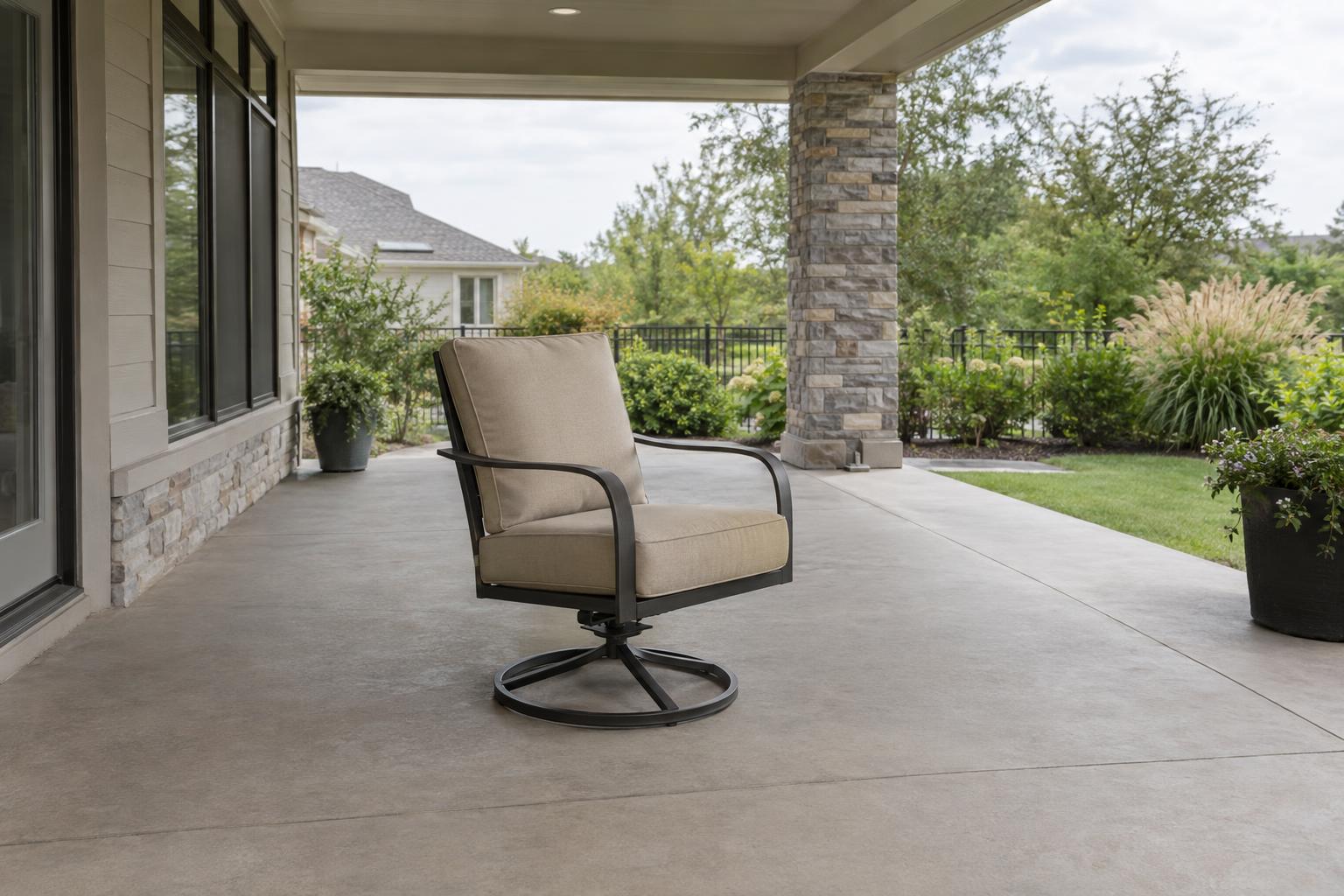
Our wicker furniture collection includes modular sectionals and individual pieces that let you build exactly the configuration your patio needs. We also carry coordinating deep seating options that pair beautifully with sectional groupings when you want to add a single accent piece without overcrowding.
The beauty of a well-styled small patio is that every piece earns its place. When you get the scale right and edit with intention, a compact covered patio becomes one of the most-used rooms in your home.
Visit our Jupiter showroom at 105 Center Street or contact us to find the perfect piece for your outdoor space.

About the Author
Chas Crofoot
Chas Crofoot is the owner of Beach House Patio Furniture, a family-owned outdoor furniture company in Jupiter, Florida. Since 1979, Chas and his team have manufactured and sold high-quality patio furniture — specializing in wicker, cast aluminum, aluminum, poly lumber, and PVC pipe styles built to withstand the Florida climate. With over four decades of hands-on experience in outdoor furniture design and manufacturing, Chas brings deep expertise in material selection, durability, and comfort for coastal living.