

Choosing patio furniture for a saltwater environment is fundamentally different from shopping for outdoor furniture inland. If you live within a mile of the Atlantic along the Treasure Coast or Palm Beaches, airborne salt particles settle on every exposed surface daily, creating a thin corrosive film that accelerates wear on metals, degrades natural fibers, and clouds glass surfaces faster than most homeowners expect. The wrong material choice means watching your outdoor set corrode, pit, and fall apart in just a couple of seasons. This guide covers what actually holds up in a patio furniture saltwater environment based on what we see from customers along the Jupiter, Tequesta, and Palm Beach coastline.
How Salt Air Damages Outdoor Furniture

Understanding the mechanism behind salt air damage helps explain why certain materials fail so quickly near the coast and why others survive for decades with minimal care.
Sodium chloride particles carried in ocean breezes create a thin salt film on every outdoor surface. This film is hygroscopic, meaning it attracts and traps moisture from the air. On metal surfaces, this persistent moisture layer accelerates oxidation — the chemical process that produces rust on iron and steel, and pitting on lower-grade aluminum alloys. The corrosion does not stop when the breeze dies down because the salt residue stays on the surface until physically removed.
The severity scales dramatically with proximity to the water. Corrosion rates within 1,500 feet of the shoreline can be 10 to 20 times higher than homes just a few miles inland. If you can see the ocean from your patio, your furniture is in the most aggressive corrosion zone and material selection becomes a critical decision rather than a cosmetic preference.
Salt does not just affect metal. It degrades natural wood finishes by drawing moisture into the grain, weakens natural wicker fibers by breaking down the cellular structure of rattan, and clouds glass tabletops with mineral deposits that require specialty cleaners to remove. The combination of salt, UV exposure, and South Florida’s high humidity creates a triple threat that no material is fully immune to without some level of ongoing maintenance.
Best Materials for Coastal Homes
Not all outdoor furniture materials are created equal when salt air enters the equation. The following options have proven themselves in coastal South Florida conditions based on years of real-world performance data from our customers.
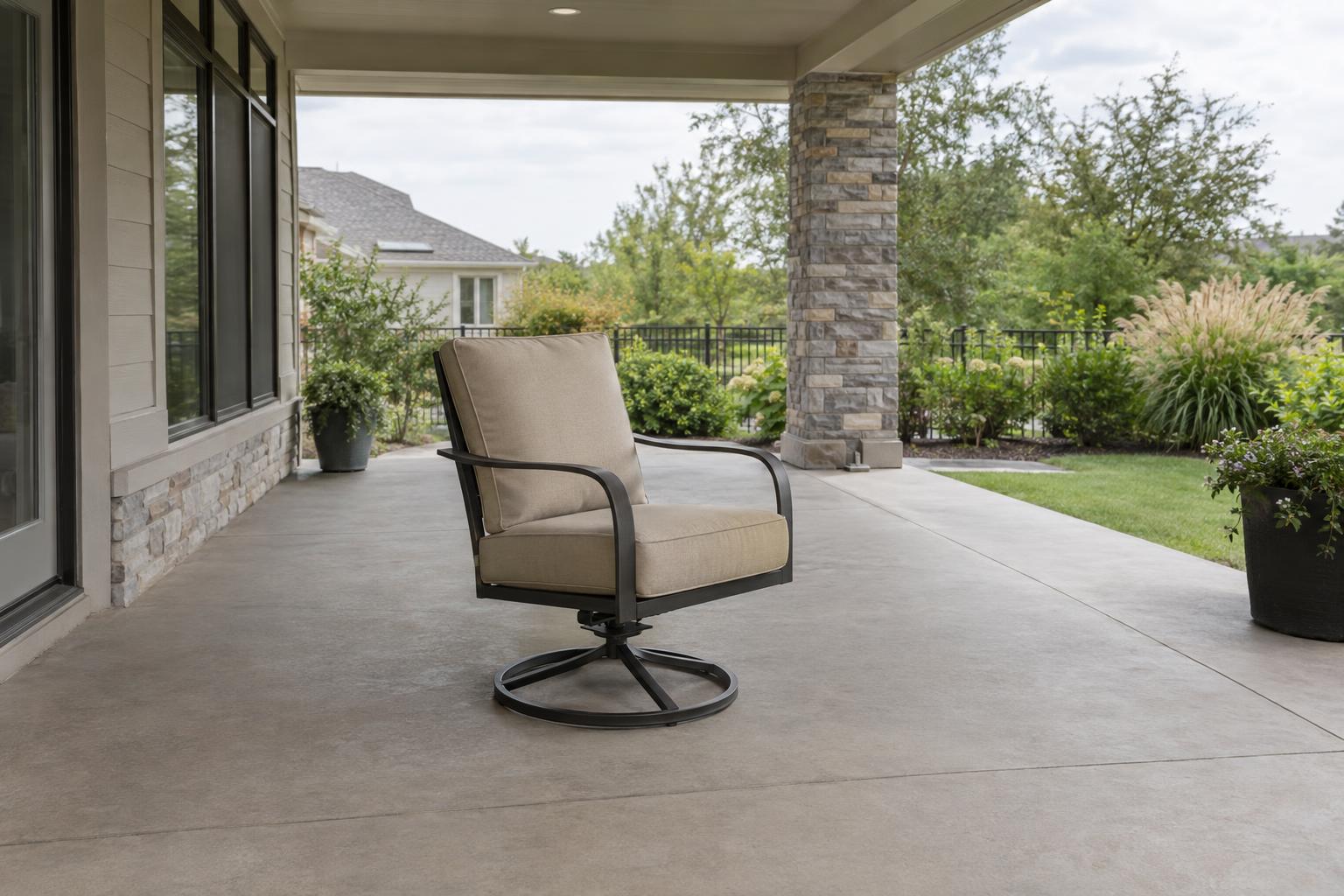
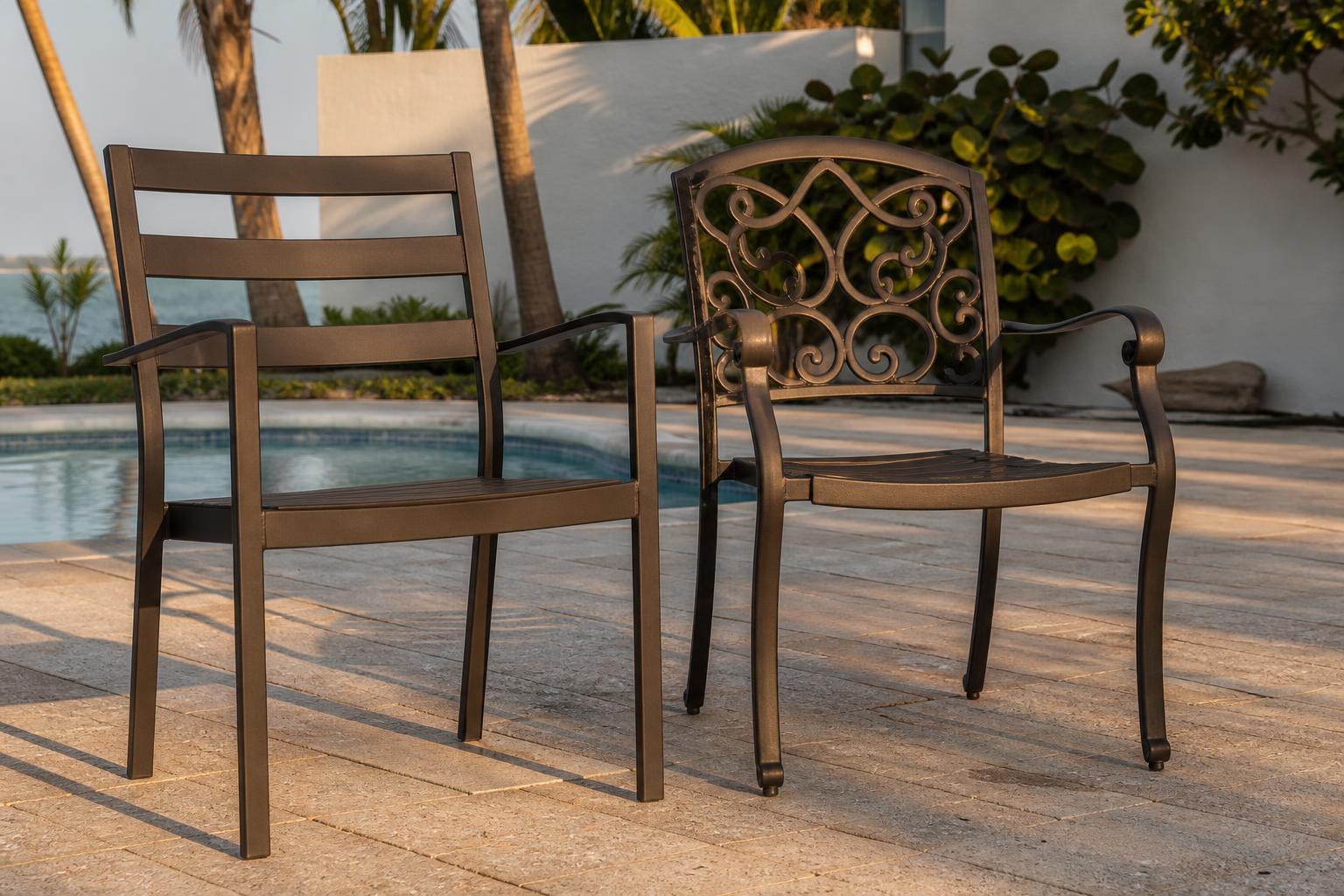
Marine-grade aluminum, specifically 6061 or 6063 alloy, with a quality powder-coated finish is the top performer for saltwater environments. Aluminum is naturally corrosion-resistant because it forms a protective oxide layer on its surface that prevents further oxidation. Combined with a thick powder coat, marine-grade aluminum furniture resists salt air, UV, and moisture with minimal maintenance. It is also lightweight enough to move quickly during hurricane prep, which is a practical advantage on the coast.
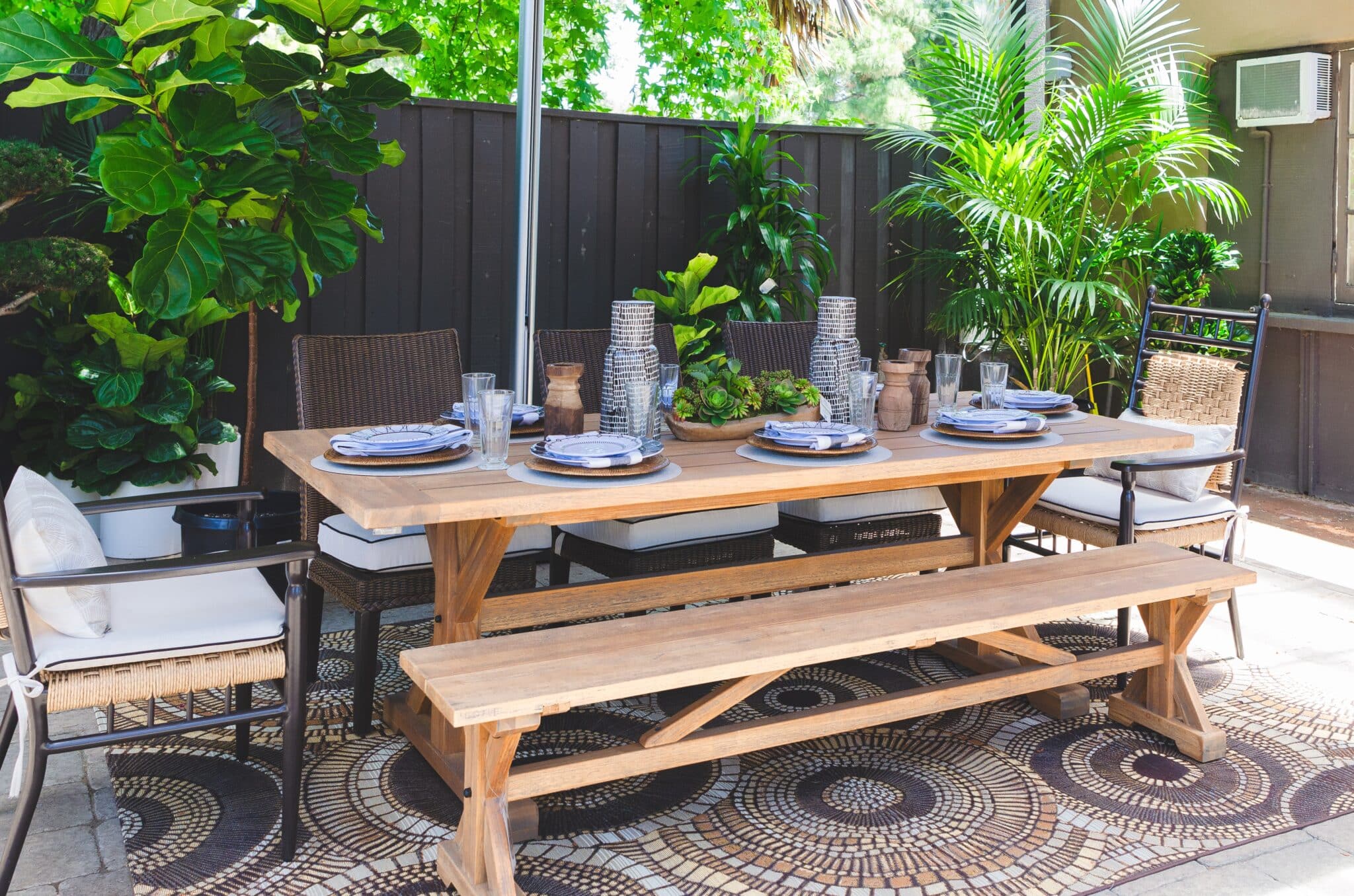
High-density polyethylene (HDPE) resin wicker woven over aluminum frames offers the visual warmth of wicker weave without any of the vulnerability that natural materials carry in salt air. HDPE is a plastic polymer that does not absorb moisture, does not corrode, and does not attract mold. When built on a powder-coated aluminum frame, this combination delivers some of the longest service life of any outdoor furniture category in coastal conditions.
Hardware matters as much as the primary frame material. 316 stainless steel hardware — not the more common 304 grade — is the only stainless steel that holds up long-term in direct saltwater exposure. The difference is molybdenum content: 316 stainless contains 2 to 3 percent molybdenum, which significantly improves resistance to chloride-induced pitting. When evaluating outdoor furniture for a coastal home, check the fastener specifications, not just the frame material.
If you are furnishing a home further inland — Orlando, Naples, or Central Florida — Palm Casual carries rust-resistant aluminum sets built for Florida humidity that offer excellent value when salt air is not the primary concern.
Protective Coatings and Finishes That Work
The coating or finish on your outdoor furniture is the first line of defense against salt air. Understanding the differences between coating types helps you evaluate quality beyond brand names and price tags.
Powder coating is superior to wet paint for salt environments across every performance metric. The powder coating process applies a dry powder electrostatically and cures it under heat, creating a finish that is thicker, more uniform, and more resistant to chipping and peeling than any brush-applied or spray-applied wet paint. A quality powder coat on outdoor furniture typically measures 3 to 5 mils thick, compared to 1 to 2 mils for wet paint, giving it significantly more barrier protection against salt penetration.
Look for furniture with e-coated (electrocoated) primers underneath the powder coat. This two-layer system provides a secondary barrier in case the powder coat chips or scratches. Electrocoating uses an electrical current to deposit a uniform primer layer into every crevice and joint of the frame, including areas that spray-applied primers miss. This level of protection is standard on marine-grade outdoor furniture but uncommon on budget-tier products.
Anodized aluminum adds a hardened oxide layer through an electrochemical process that converts the aluminum surface itself into aluminum oxide. This hardened layer resists salt pitting better than raw aluminum and does not chip or peel like applied coatings. The trade-off is a limited color palette — anodized finishes are typically restricted to metallic silvers, bronzes, and blacks rather than the wide color range available with powder coating.
For additional protection on any coated surface, clear marine sealants designed for boat hardware can be applied to furniture joints and fastener heads. These sealants create a flexible, waterproof barrier at the points most vulnerable to salt intrusion — where frame pieces connect and where fasteners penetrate the coating.
Maintenance Schedule for Saltwater Properties
Even the best materials and coatings require a maintenance routine when you live near the ocean. The good news is that the routine is simple and takes minimal time when done consistently.
The single most effective maintenance habit is rinsing all outdoor furniture with fresh water weekly. A garden hose rinse takes five minutes and washes away the salt film before it can trap moisture and start the corrosion cycle. This one habit prevents more salt damage than any coating, material upgrade, or protective spray you can buy. Think of it the same way boat owners rinse their vessels after every outing — the principle is identical.
Every three to four months, apply car wax or marine-grade UV protectant to powder-coated surfaces. The wax fills microscopic pores in the coating and creates a hydrophobic layer that causes salt-laden moisture to bead and roll off rather than sit and penetrate. Use a non-abrasive automotive wax or a marine wax specifically rated for outdoor use.
Quarterly, inspect all hardware connections — screws, bolts, and rivets — for white powdery residue. This residue is aluminum oxide, an early sign of galvanic corrosion that develops when dissimilar metals contact each other in a salty, moist environment. If you spot it early, clean it off with a nylon brush and apply a thin coat of marine-grade anti-corrosion spray. If you ignore it, the corrosion can eventually weaken the joint to the point of failure.
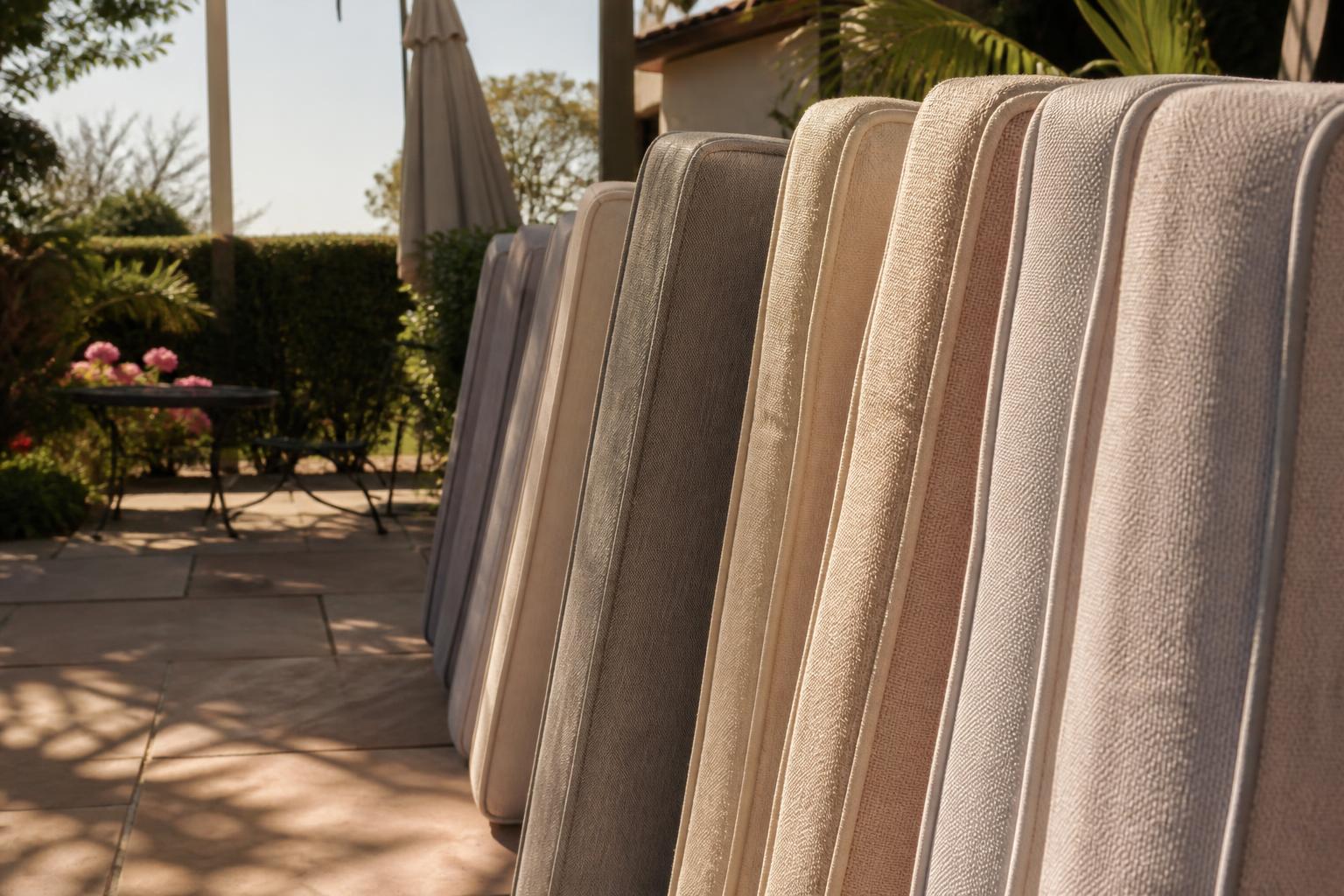
Cushion fabrics need attention too. Rinse outdoor cushions with fresh water weekly and allow them to air dry completely before replacing them on the furniture. Salt crystals trapped in the fabric weave act as abrasives that break down fibers faster than UV or moisture alone. Sunbrella and similar solution-dyed acrylic fabrics handle this treatment well — standard polyester fabrics do not hold up as well to repeated salt exposure and rinsing cycles.
Materials to Avoid Near the Ocean
Knowing what not to buy is just as valuable as knowing what works. Several common outdoor furniture materials and construction shortcuts fail rapidly in coastal salt air conditions.
Wrought iron and untreated steel are the worst choices for coastal locations. These metals rust aggressively in salt air, and even with paint, any chip, scratch, or wear point becomes a corrosion entry point within weeks. Once rust starts on iron or steel, it spreads underneath the surrounding paint and accelerates until the structural integrity of the frame is compromised. We see iron furniture fail within one to two seasons on oceanfront properties.
Natural wicker and rattan should not be used outdoors in any coastal Florida setting. Natural fibers absorb salt-laden moisture, which breaks down the cellular structure of the material from the inside out. Mold colonizes the damp fibers quickly in South Florida humidity, and the combination of salt absorption, mold, and UV exposure causes structural weakness that leads to collapse of woven areas within a single season.
Be wary of imported furniture with 304 stainless steel or zinc-plated hardware. While 304 stainless resists corrosion in most environments, it does not contain enough molybdenum to resist chloride pitting near saltwater. Zinc-plated hardware is even worse — the zinc layer corrodes first (which is its design purpose) but in salt air it corrodes so quickly that the underlying steel is exposed within months. Check hardware specs before purchasing, and replace any 304 stainless fasteners with 316 grade if needed.
Teak is a nuanced case. The wood itself survives salt air well due to its natural oil content and dense grain structure. However, maintaining teak’s golden-brown appearance requires regular oiling in coastal conditions. Left untreated, teak grays out within six months on the coast — which some homeowners consider a desirable patina and others consider neglect. If you choose teak, commit to the maintenance or accept the gray appearance.
Frequently Asked Questions
How often should I rinse patio furniture near the ocean?
Rinse outdoor furniture with fresh water at least once a week if you live within a mile of the ocean. Properties directly on the waterfront benefit from rinsing every two to three days, especially during windy periods when salt spray is heavier. This single habit is the most effective way to prevent salt corrosion on any material.
Is aluminum or stainless steel better for coastal patio furniture?
Marine-grade aluminum (6061 or 6063 alloy) with powder coating is generally the better choice for patio furniture in saltwater environments. It is lighter, more affordable, and naturally corrosion-resistant. If stainless steel is used, ensure it is 316 grade — the more common 304 grade does not hold up to prolonged chloride exposure near the coast.
Can I use a furniture cover to protect against salt air?
Furniture covers help reduce direct salt deposition but are not a substitute for regular rinsing. If salt residue is on the furniture when you put the cover on, the cover traps moisture against the salt and can actually accelerate corrosion. Always rinse and dry furniture before covering it, and choose vented covers to prevent condensation buildup underneath.
Protecting your outdoor furniture investment in a saltwater environment comes down to choosing the right materials and staying consistent with a simple maintenance routine. Stop by our Jupiter showroom at 105 Center Street to see our full selection of coastal-rated patio furniture, or call (561) 972-4661 to discuss what will work best for your specific property.

About the Author
Chas Crofoot
Chas Crofoot is the owner of Beach House Patio Furniture, a family-owned outdoor furniture company in Jupiter, Florida. Since 1979, Chas and his team have manufactured and sold high-quality patio furniture — specializing in wicker, cast aluminum, aluminum, poly lumber, and PVC pipe styles built to withstand the Florida climate. With over four decades of hands-on experience in outdoor furniture design and manufacturing, Chas brings deep expertise in material selection, durability, and comfort for coastal living.