
Wicker vs PVC Patio Furniture: Which Is Right for Your Florida Home?
If you’re shopping for outdoor furniture in Florida, two materials keep coming up: wicker and PVC pipe. Both are built for the climate, both are comfortable, and both will last for years on your patio. But they’re very different in how they look, feel, and hold up over time.
At Beach House Patio Furniture, we’ve been manufacturing both wicker and PVC furniture since 1979. We know exactly where each material shines — and where it doesn’t. Here’s an honest, side-by-side comparison to help you choose.
What Is Outdoor Wicker Furniture?
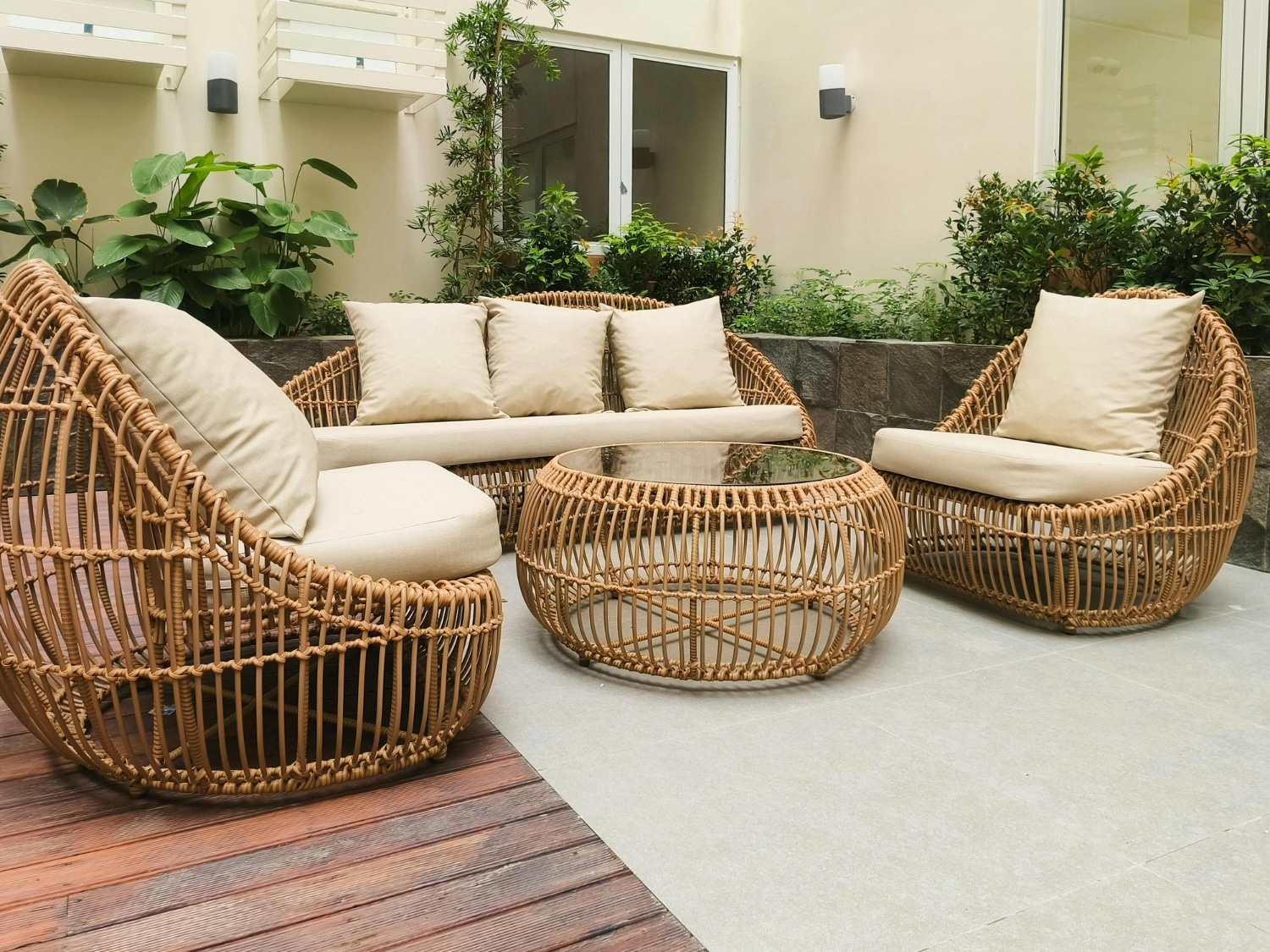
Modern outdoor wicker isn’t the natural rattan your grandparents had on their porch. Today’s wicker is made from high-density polyethylene (HDPE) resin woven over powder-coated aluminum frames. It looks like traditional wicker but is engineered specifically for outdoor use.
The HDPE resin is UV-stabilized, so it won’t fade or crack in direct Florida sun. The aluminum frame underneath won’t rust, even in salt air. And the whole piece is surprisingly lightweight for how sturdy it feels.
Best for: Covered patios, lanais, screened-in porches, poolside lounging areas, and any space where you want a warm, textured look.
What Is PVC Pipe Furniture?
PVC pipe furniture uses marine-grade PVC pipe as both the frame and structural support. The pipe is cut, fitted, and bonded into furniture shapes, then fitted with cushions in your choice of fabric. It’s the material you’ll see at beach resorts, yacht clubs, and pool decks across South Florida.
PVC is completely waterproof — it doesn’t absorb moisture, won’t mildew from the inside, and handles chlorine splash without fading. It’s also the lightest patio furniture material available, which makes it easy to rearrange or move indoors before a storm.
Best for: Pool decks, uncovered patios, oceanfront porches, boat docks, and any area with heavy water exposure.
Side-by-Side Comparison
| Feature | Wicker (HDPE Resin) | PVC Pipe |
|---|---|---|
| Durability | 10-15 years with care | 15-20+ years |
| Weight | Medium (aluminum frame) | Very light |
| Water resistance | Good — drains through weave | Excellent — fully waterproof |
| Salt air tolerance | Excellent (aluminum + resin) | Excellent (marine-grade PVC) |
| UV resistance | Excellent (UV-stabilized HDPE) | Excellent (UV-resistant PVC) |
| Comfort | Plush deep-seating cushions | Sling or cushion options |
| Style | Warm, traditional, resort feel | Clean, casual, coastal |
| Maintenance | Hose down, mild soap | Hose down, mild soap |
| Hurricane prep | Move indoors (moderate weight) | Easy to stack and store (lightest) |
| Price range | $$–$$$ | $–$$ |
| Fabric options | 500+ outdoor fabrics | 500+ outdoor fabrics |
| Best placement | Covered patios, lanais | Pool decks, open patios |
Durability in Florida Weather
Both materials handle Florida’s heat, humidity, and afternoon thunderstorms well. But there are differences worth knowing.
Wicker performs best under some cover. While HDPE resin is UV-stabilized, constant direct sun exposure over many years can eventually dull the color. A covered patio or lanai is the ideal setting. Rain drains right through the weave, so standing water isn’t a concern — but the cushions should be stored or covered during extended wet periods.
PVC is the tougher material in extreme conditions. It handles full sun, salt spray, chlorine, and direct rain without any degradation. There’s a reason it’s the standard at Florida resorts and beach clubs. If your furniture will sit uncovered by the pool year-round, PVC is the more practical choice.
Comfort and Style
This is where personal preference matters most.
Wicker gives you that classic resort look — deep-seating sofas, curved armchairs, and coffee tables with a warm, textured appearance. The cushions are thick and plush. If you’re furnishing a screened-in lanai where you’ll entertain guests, wicker creates the most inviting atmosphere.
PVC has a cleaner, more casual aesthetic. It’s the furniture you see at beach bars and pool clubs — bright cushions on white frames, easy to wipe down, designed for bare feet and wet swimsuits. PVC chaise loungers are especially popular because they handle sunscreen and pool water without staining.
Maintenance Compared
Both are low-maintenance, but PVC has a slight edge here.
Wicker cleaning: Hose down monthly, use mild soap and a soft brush on the weave if dirt accumulates. Cushions should be stored or covered during extended rainy periods. Once or twice a year, check the weave for any loosening at stress points.
PVC cleaning: Hose down whenever it looks dirty. That’s essentially it. PVC doesn’t absorb anything, so there’s nothing to deep-clean. The frames can be wiped with a damp cloth. Cushion care is the same as wicker — store or cover during heavy rain.
Cost Considerations
PVC furniture generally costs less than wicker for comparable seating. A PVC dining set for four might run 20-30% less than a wicker set of similar size. However, wicker’s thicker cushions and more complex construction justify the difference for many buyers.
Both materials offer excellent long-term value because neither rusts, rots, or needs refinishing. When you factor in the 10-20 year lifespan, the per-year cost of either material is remarkably low compared to wood or wrought iron that needs annual maintenance.
At Beach House Patio Furniture, we manufacture both materials in-house, so our wicker furniture and PVC pipe furniture are factory-direct — no middleman markup.
Which Should You Choose?
Choose wicker if:
- Your patio or lanai has a roof or screen enclosure
- You want a warm, upscale look for entertaining
- Deep-seating comfort is your top priority
- You’re furnishing a living-room-style outdoor space
Choose PVC if:
- Furniture will sit by the pool or on an uncovered deck
- You need something truly waterproof
- Easy storm prep matters (lightest to move and stack)
- Budget is a primary factor
- You want chaise loungers for sunbathing
Choose both if: You have multiple outdoor zones — wicker on the covered lanai for dinner parties, PVC by the pool for afternoon lounging. Many of our Jupiter customers do exactly this.
Why Not Consider Other Materials Too?
Wicker and PVC are two of the five material families we manufacture. Depending on your needs, you might also want to explore:
- Cast aluminum — Heavy, elegant, zero rust. Ideal for windy locations and formal dining setups.
- Aluminum sling — Lightweight frames with weather-resistant sling fabric. Great for dining and lounging.
- Poly lumber — Made from recycled plastic. Looks like wood, never needs staining. Adirondack chairs and dining sets.
See Both Materials in Person
The best way to decide is to sit in both. Visit our Jupiter, FL showroom at 105 Center Street, Jupiter, FL 33458 and try wicker and PVC side by side. Our team can walk you through fabric options — we carry over 500 outdoor fabrics that work with either material.
Call us at (561) 972-4661 or contact us online to schedule a visit. We’re a family-owned manufacturer — no pressure, just honest advice from people who’ve been building outdoor furniture since 1979.

About the Author
Chas Crofoot
Chas Crofoot is the owner of Beach House Patio Furniture, a family-owned outdoor furniture company in Jupiter, Florida. Since 1979, Chas and his team have manufactured and sold high-quality patio furniture — specializing in wicker, cast aluminum, aluminum, poly lumber, and PVC pipe styles built to withstand the Florida climate. With over four decades of hands-on experience in outdoor furniture design and manufacturing, Chas brings deep expertise in material selection, durability, and comfort for coastal living.