
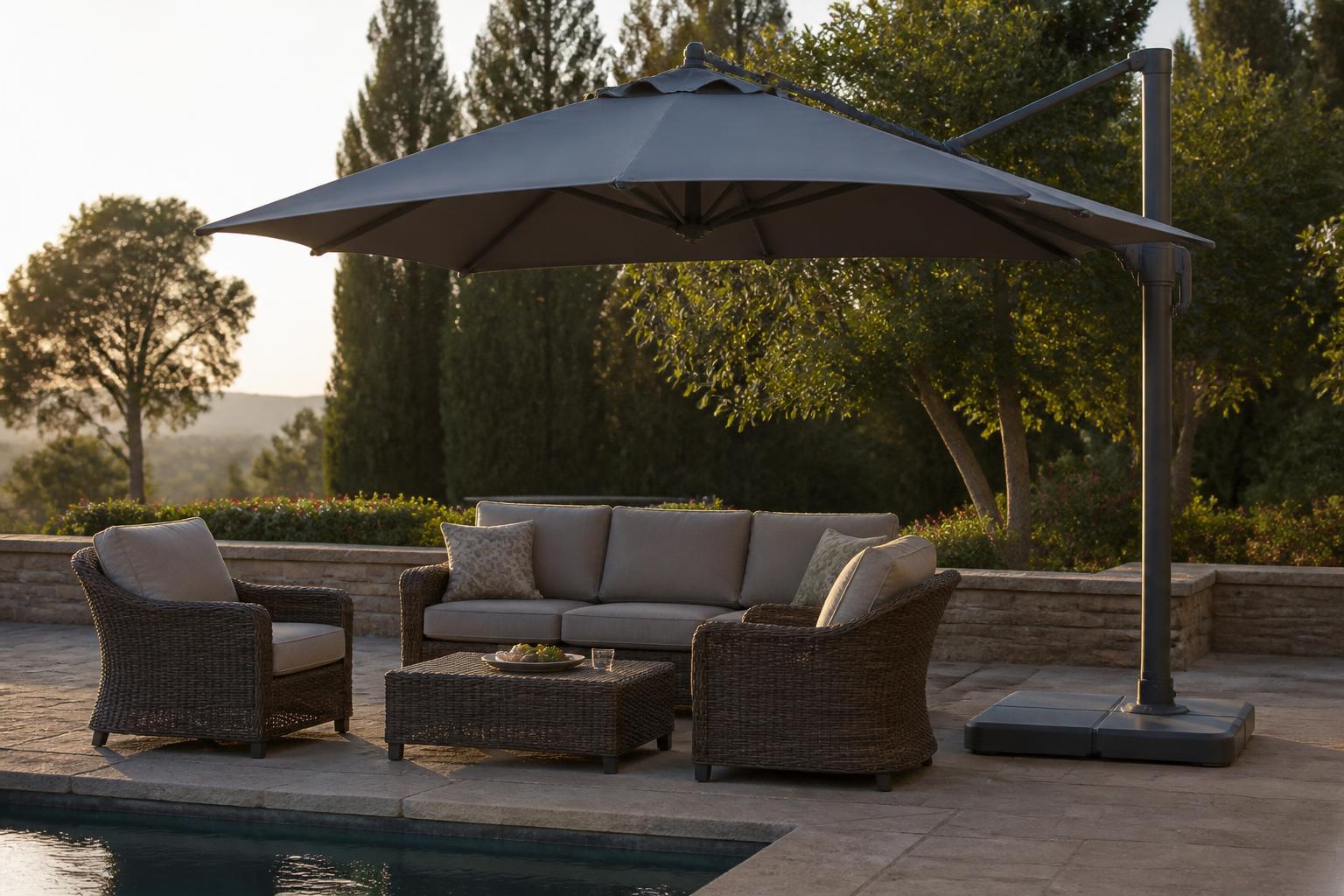
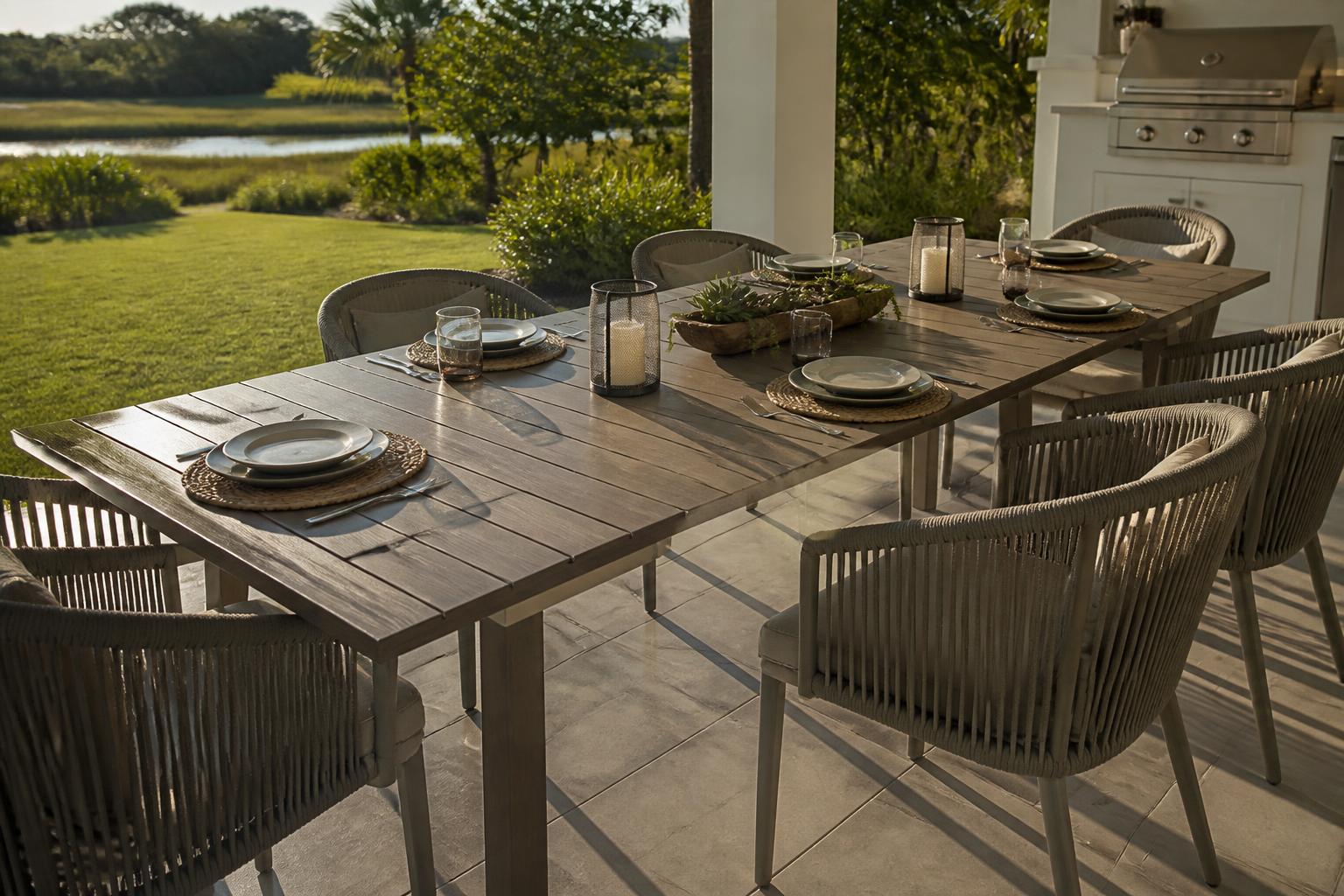

outdoor dining bench seating late summer guests is a practical decision for Beach House Patio Furniture customers who want outdoor spaces that look finished and still work through South Florida weather. The right outdoor dining benches should fit the room, feel comfortable, and hold up to sun, humidity, salt air, summer rain, and frequent use. This guide explains how to compare options before you buy.
Start with the setting: patios getting ready for August visitors, Labor Day meals, and longer evenings. A piece that looks right by itself can feel awkward once chairs are pulled out, cushions get wet, or guests need to move from the door to the pool. The goal is more useful seating when family and guests spend extra time outside without creating new maintenance problems.
How to Choose Outdoor Dining Bench Seating Late Summer Guests

Good patio furniture planning starts with how the space will be used on a normal week, not only during a party. Think about morning coffee, wet towels, pets, sunscreen, kids, serving trays, and the path from the kitchen or sliding door. The more specific the use case is, the easier it is to choose the right scale, material, and layout.
For outdoor dining benches, comfort and clearance should be tested together. Sit in the piece, check arm height, measure the full footprint, and imagine the nearby table, umbrella base, plants, and pool gear. If a chair only works when nobody is sitting in it, the layout needs adjustment before delivery.
Material also matters. Aluminum, cast aluminum, PVC, poly lumber, resin wicker, sling fabric, and performance cushions all handle moisture and heat differently. Ask how each option drains, how it should be cleaned, and what parts can be replaced later.
Showroom Checks Before You Commit
A short checklist keeps the decision grounded in real use instead of only color and style. Bring measurements and photos so the team can see doors, screens, railings, steps, pavers, and tight corners.
- Scale: Confirm the piece works after chairs are pulled out and people are walking through the area.
- Drainage: Ask how the frame, fabric, and cushions handle wind-driven rain.
- Maintenance: Compare cleaning steps honestly before choosing a material.
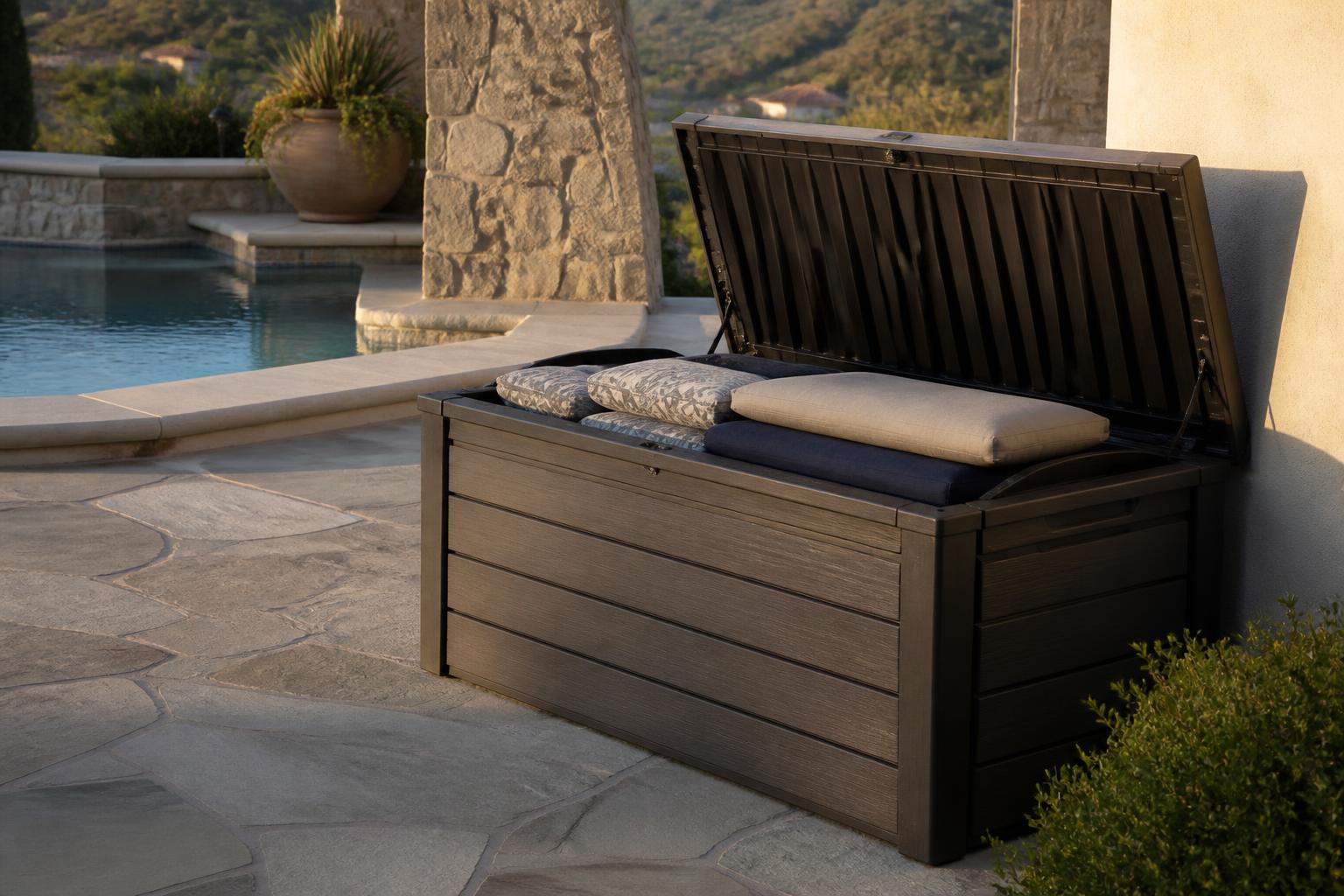
- Storage: Decide what can stay out, what needs to move, and where it will go before storms.
Use the Beach House Patio Furniture showroom to compare pieces side by side. Photos help, but sitting in the furniture and checking the scale usually reveals details that online measurements miss.
Florida Weather Details to Plan Around
South Florida patios work hard. Direct sun can heat dark surfaces, afternoon storms can soak cushions, and salt air can shorten the life of weak hardware. Covered patios still catch wind-driven rain, and screened enclosures can stay humid after a storm.
Storm planning should be part of the purchase, especially during summer. Review NOAA hurricane safety guidance, then ask which pieces are easy to move, stack, cover, or secure. The best setup is not furniture that ignores severe weather. It is furniture that can be managed quickly when the forecast changes.
Shade is also part of comfort. The EPA sun safety guidance is a useful reminder that sun exposure affects how people use outdoor spaces. Umbrellas, covered areas, lighter colors, and breathable fabrics can make a dining or lounge area more usable.
Fit, Care, and Delivery Questions

Before ordering, ask how the furniture should be cleaned and what products to avoid. Salt, sunscreen, food, chlorine, and wet towels all affect surfaces differently. A simple rinse may be enough for some materials, while cushions and specialty fabrics need more specific care.
Delivery access can change the recommendation. Measure gates, stairs, elevator doors, balcony entries, and screened enclosure openings. If a large piece has to turn through a narrow door, the showroom should know that before the order is finalized.
If you are comparing layouts in a nearby community, review Palm Beach Gardens patio furniture options and think about how the same planning ideas apply to your home. Local examples make it easier to balance scale, color, maintenance, and guest flow.
Mistakes That Make Patios Harder to Use
One common mistake is buying the largest set that fits the empty patio. Once people sit down, pull chairs back, open an umbrella, and walk around with food or towels, that layout can become too tight. Leave space for real movement.
Another mistake is ignoring drying time. Deep seating, rugs, and cushions can be comfortable, but they need airflow and a place for water to escape. If the patio is covered, check whether summer wind still pushes rain onto the furniture.
Finally, be honest about maintenance. Some homeowners enjoy seasonal cleaning and fabric changes. Others want low-maintenance pieces that can be rinsed and reset quickly. Either choice can work when the furniture matches that expectation.
One more useful step is to rank the decision by comfort, care, and movement. A patio that looks finished but feels awkward will not get used as often. Write down the two or three things that matter most before visiting the showroom, such as quick drying, easy lifting, enough seats, or a cleaner view from inside the home.
Think about future changes too. A layout that works for two people may need to support grandchildren, visiting relatives, rental guests, or seasonal entertaining later. Choosing pieces with replaceable cushions, practical finishes, and flexible placement can protect the investment beyond one summer.
For outdoor dining benches, also think about how the piece will look from inside the home. Patios are part of the daily view through sliders and windows. A well-scaled setup should look intentional even when nobody is outside, with enough open space to feel calm rather than packed.
Frequently Asked Questions
How early should I plan patio furniture for late summer?
Start several weeks before the space needs to be ready. Popular fabrics, finishes, and delivery windows can tighten before holiday weekends and storm season.
Should every piece use the same material?
No. Mixed materials can work well when the colors, scale, and care needs make sense together. Many patios use one material for dining and another for lounge seating.
What should I bring to the showroom?
Bring measurements, photos, and notes about sun, rain, doors, screens, railings, and how many people usually use the space.
Is heavier patio furniture always better?
Not always. Weight can help stability, but furniture also needs to be movable or securable when storms approach. The right balance depends on the patio.
Talk With Beach House Patio Furniture
If you are comparing outdoor dining bench seating late summer guests for a real patio, visit Beach House Patio Furniture at 105 Center Street in Jupiter. Call (561) 972-4661 or use the contact page to ask about materials, sizing, delivery, and care before the end of August rush.

About the Author
Chas Crofoot
Chas Crofoot is the owner of Beach House Patio Furniture, a family-owned outdoor furniture company in Jupiter, Florida. Since 1979, Chas and his team have manufactured and sold high-quality patio furniture — specializing in wicker, cast aluminum, aluminum, poly lumber, and PVC pipe styles built to withstand the Florida climate. With over four decades of hands-on experience in outdoor furniture design and manufacturing, Chas brings deep expertise in material selection, durability, and comfort for coastal living.